




Victorian Brass Music Rack
A victorian brass music rack is a sturdy furnishing designed to hold sheet music or periodicals, bringing period charm to any room.
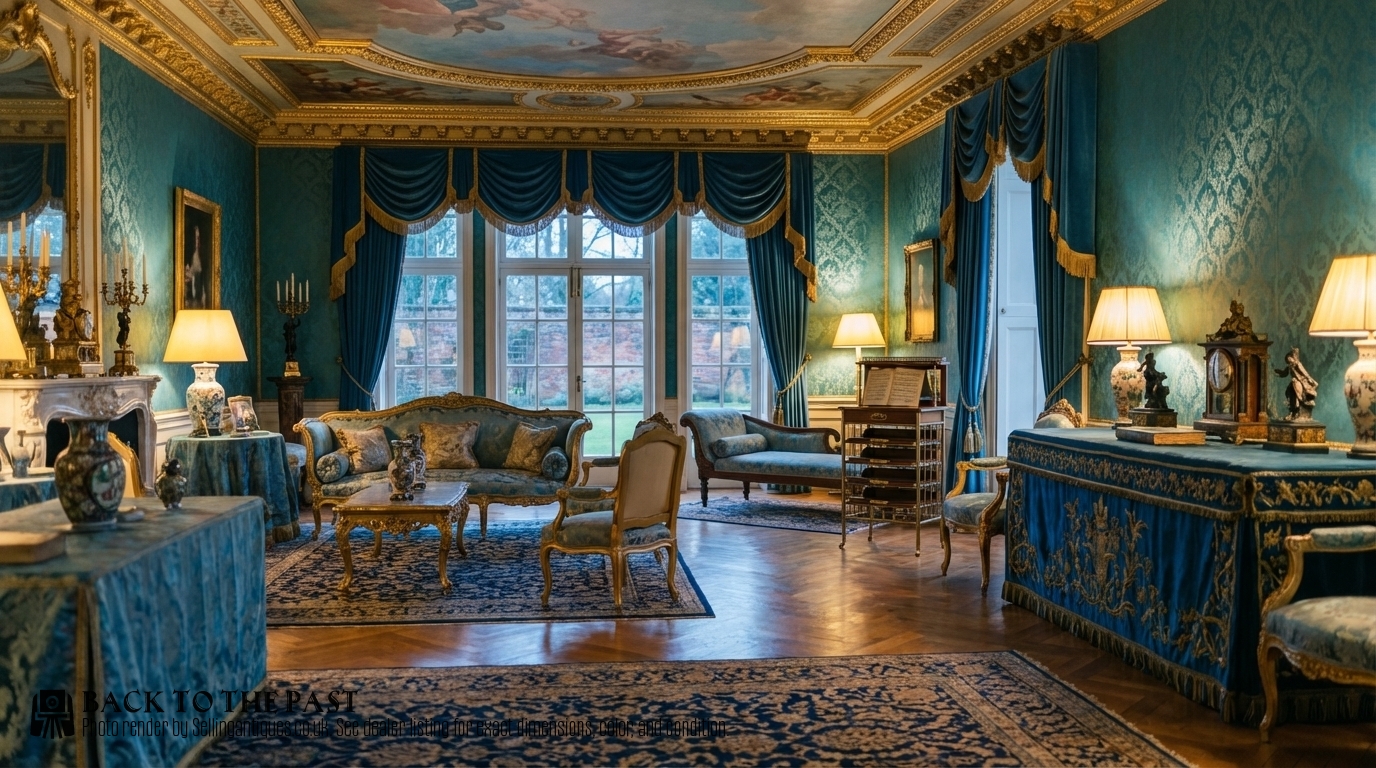
Victorian Brass Music Rack
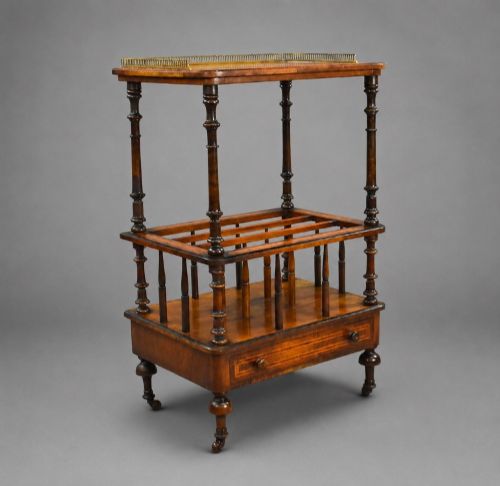
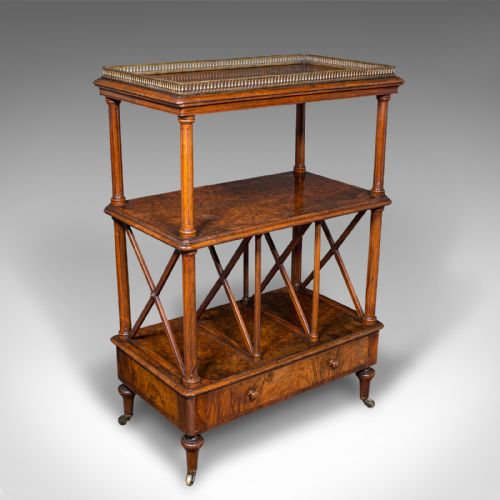
When searching for a victorian brass music rack, buyers encounter a selection of furnishings spanning the nineteenth century, including canterburys, music stands, and magazine racks. These items frequently combine brass components with rich timbers like mahogany, burr walnut, and rosewood to create practical storage for households.
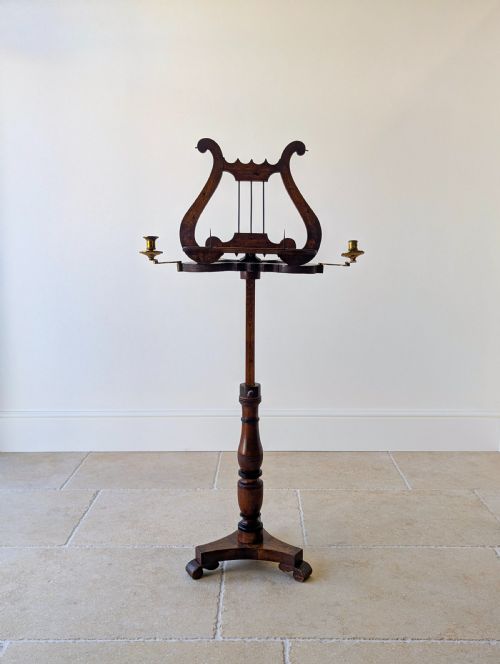
The pieces on this page range from compact music stands and revolving magazine holders to elaborate canterburys fitted with drawers or lower shelves. Many examples incorporate classical motifs such as lyre shapes alongside marquetry inlay and glass details.
While the search term highlights brass, the physical evidence shows that these items often unite metalwork with dense hardwoods. Buyers are most likely to meet Victorian canterburys and music stands that integrate brass bars or framework into timber bodies.
Materials and construction methods
Craftsmen built these pieces using solid and veneered hardwoods such as mahogany, rosewood, burr walnut, and satinwood, often accentuating the timber surfaces with detailed marquetry inlay. Brass provided the structural framework, revolving mechanisms, or decorative rails that held papers and books securely.
Joinery techniques suited to the nineteenth century ensured that drawer boxes, shelving tiers, and upright supports remained durable under daily household use. Metal fittings were cast and polished to complement the deep tones of the polished wood.
Several pieces double as occasional tables, proving that nineteenth century sheet music storage was expected to hold a tea cup just as easily as a Mozart sonata.
Factors determining quality
The standard of a piece depends upon the selection of timber veneers, the crispness of the inlay work, and the weight of the brass components used in its construction. Finer examples display harmonious grain patterns in the burr walnut or rosewood alongside precise joinery and smooth mechanical action in revolving models.
Simpler items rely on basic turned supports and straightforward timber construction without elaborate marquetry. The presence of secondary functions, such as integrated drawers or combined whatnot tiers, alters the complexity and finished character of the furnishing.
The Victorian Brass Music Rack Glossary
- Canterbury
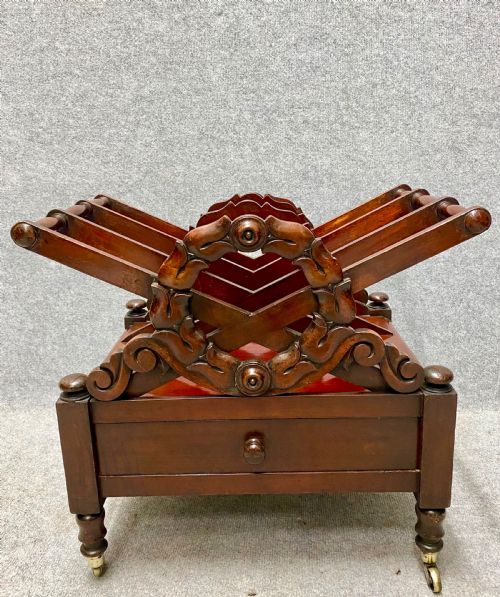
- A low stand featuring upright divisions, originally designed for holding sheet music or periodicals. Victorian examples frequently incorporate drawers or lower shelves.
- Lyre-form
- A decorative shape resembling an ancient stringed instrument, commonly used for the central music rest or upright supports of stands.
- Etagere
- An open piece of furniture consisting of a series of shelves for displaying small objects. These often combine with canterburys in nineteenth century interiors.
- Marquetry
- Decorative inlay work using various coloured woods to create pictorial patterns or geometric designs on furniture surfaces.
- Whatnot
- A multi-shelved piece of furniture used for storage and display. They appear here combined with music racks and canterburys.
Victorian Brass Music Rack: Frequently Asked Questions
What is a Canterbury?
A Canterbury is a low storage furnishing fitted with vertical partitions designed specifically to keep sheet music, books, or magazines organised. They were popular in nineteenth century parlours and music rooms.
Many versions include a small drawer beneath the partitions and rest upon castors for easy movement across carpets.
How were music stands used?
These stands held scores open at a convenient height for musicians playing instruments in the home. They allowed players to read sheet music comfortably while standing or sitting.
Over time, many of these stands adapted into general magazine racks or display pieces for contemporary living spaces.
How do I date these pieces?
Dating relies on observing timber choices, construction methods, and stylistic cues such as the presence of Regency curves or late Victorian ebonised finishes. Reference dates in titles point towards specific stylistic periods.
Cabinetmakers of the nineteenth century frequently updated traditional forms with contemporary brass hardware and marquetry techniques.
Are brass music racks sturdy?
The combination of dense hardwoods and metal components creates robust furnishings capable of supporting heavy volumes of paper. Brass bars provide resilient structural separation for stored items.
Proper care involves dusting the timber and metal surfaces regularly without using abrasive chemical cleaners.