

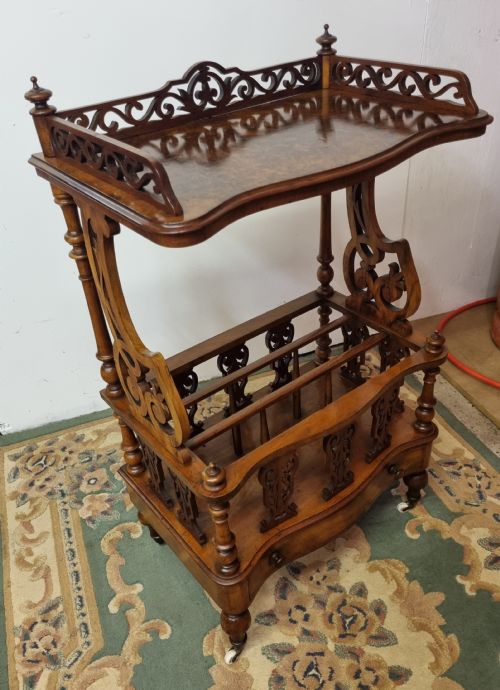


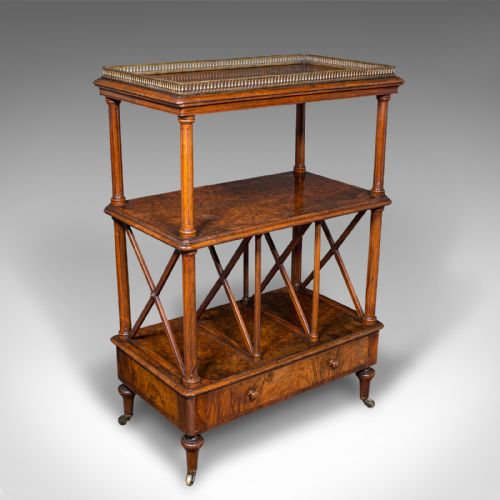

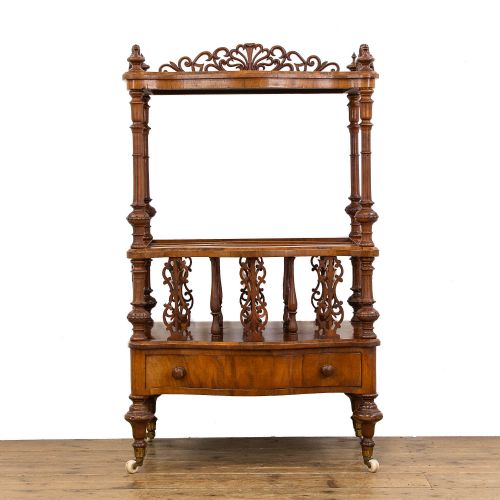


Sheet Music Shelf Cabinet
A sheet music shelf cabinet organises scores with tiered tiers and upright compartments, bringing period woodwork directly into a sitting room.
Sheet Music Shelf Cabinet
When you search for a sheet music shelf cabinet, you encounter versatile multi-tiered furniture designed for domestic performance spaces. These pieces combine open display shelving with enclosed storage compartments, often integrating specific slots for paper sheets.
On this page, you are most likely to meet Victorian burr walnut examples alongside Edwardian and Regency variants. These forms frequently merge the traits of a Canterbury, an etagere, and a music cabinet into a single compact footprint.
Materials and construction methods
Cabinet makers utilised richly grained timbers such as walnut, burr walnut, mahogany, and rosewood for the primary carcases. These woods were frequently selected for their decorative figure, occasionally accented with ebony inlay.
Structural details include turned feet, glass panels, and brass hardware such as original castors. Gilt bronze mounts and ceramic elements also appear on specific artistic interpretations.
The documented forms span music stands, whatnots, etageres, and multi-functional side cabinets resting on turned feet and castors.
What separates the finest examples
Quality rests upon the selection of timber veneer and the precision of the cabinet work. Burr walnut surfaces displaying rich, natural figuring indicate superior material selection by the maker.
The integration of multiple functions, such as combining open shelving with a drawer and specialised music dividers, distinguishes more complex workshop production from standard utility items.
Gabriel Viardot
The Sheet Music Shelf Cabinet Glossary
- Canterbury
- A low stand fitted with upright divisions for holding sheet music or portfolios. It often incorporates a drawer beneath the partitions.
- Etagere
- A piece of furniture consisting of a set of open shelves for displaying small objects. These tiers graduate in size from bottom to top.
- Burr walnut
- Timber taken from a walnut tree growth, yielding complex, swirling grain patterns. Cabinet makers prized this for veneering prominent surfaces.
- Japonisme
- A late nineteenth-century artistic style reflecting Japanese aesthetic influences. It appears in specific decorative furniture designs of the period.
Sheet Music Shelf Cabinet: Frequently Asked Questions
What is a sheet music shelf cabinet?
A sheet music shelf cabinet is a multi-functional piece of furniture designed to hold musical scores while providing open display space on upper shelves. These items merge the utility of a music stand with the tiered structure of an etagere.
They appear primarily in nineteenth-century and early twentieth-century styles, utilising decorative timbers like burr walnut and mahogany to suit formal reception rooms.
How were these cabinets used originally?
In period homes, these cabinets stood beside pianos or in music rooms to keep unbound scores, folios, and sheet music orderly and accessible. The open shelves accommodated decorative objects, books, or small ornaments.
Lower partitions or drawers kept individual sheets flat and sorted, preventing the paper damage common in haphazard stacking.
How do I distinguish Victorian from Edwardian pieces?
Victorian examples often employ heavily figured burr walnut, rich rosewood, and dense ebony inlay with darker, heavier proportions. They frequently feature serpentine shapes and turned supports with original castors.
Edwardian pieces tend to display lighter construction and simpler lines, reflecting the shifting interior tastes of the early twentieth century while maintaining the dual purpose of shelving and music storage.
Can I use a music cabinet for modern books?
These cabinets adapt readily to modern interiors for storing art books, magazines, or small collections rather than sheet music alone. The upper shelves serve well for display purposes.
Care should be taken to place volumes within the weight limits intended for nineteenth-century domestic shelving units.