
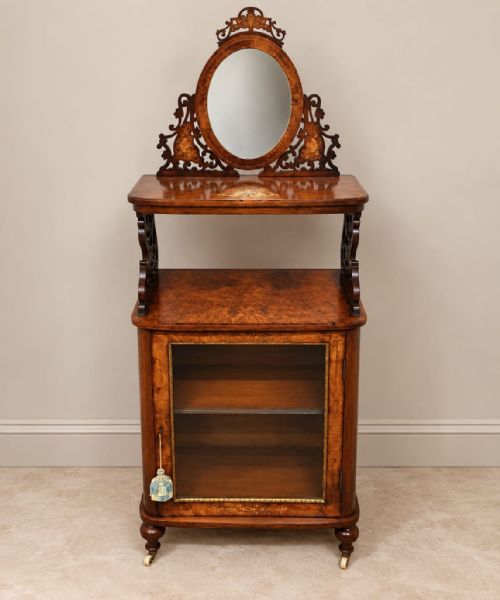
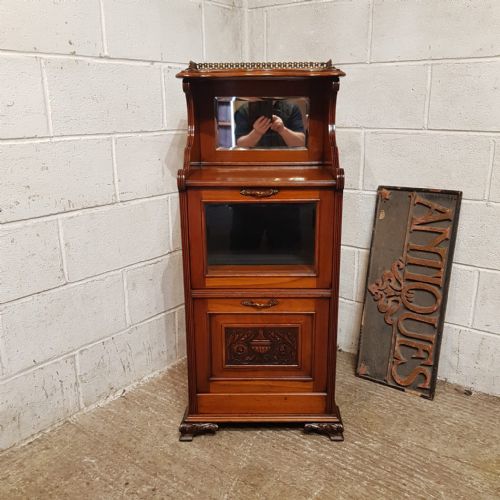


Victorian Music Cabinet Mirror
These Victorian music cabinet mirror pieces combine polished timbers with mirrored glass, offering both storage and reflection for the home.
Victorian Music Cabinet Mirror
When searching for a victorian music cabinet mirror, buyers encounter a specific intersection of domestic utility and decorative display from the nineteenth century. These forms typically combine storage for sheet music or books with an integrated mirror back, serving both parlour and drawing room functions.
The versions most commonly met on this page span the Victorian and late Victorian periods, alongside related Edwardian and Art Nouveau examples. Makers shaped these pieces from woods such as mahogany, walnut, rosewood, and burr walnut, frequently incorporating marquetry inlay and brass details.
Object types vary from dedicated music cabinets and side cabinets to display cabinets, etageres, and canterburys. Many feature bevelled mirrors and compact footprints designed for sheet storage and surface display.
How they were made
Cabinet makers utilised dense hardwoods including mahogany, walnut, rosewood, and gonçalo alves as the structural foundation for these pieces. Burr walnut surfaces and marquetry inlay provided decorative contrast on doors and panels.
Glass mirrors, often bevelled, were integrated into upper frames or back panels, secured with brass hardware. Interior shelving and compartments accommodated sheet music, books, and small display items.
Some music cabinets doubled as pot cupboards and bedside vanities, proving that Victorians stored sheet music in surprisingly versatile company.
What varies in quality
The choice of timber dictates much of the character, with figured burr walnut and rosewood sitting apart from simpler mahogany constructions. Marquetry inlay executed with precision demonstrates greater workshop investment than plain veneered surfaces.
Hardware selection and glass quality distinguish the construction, particularly the presence of bevelled mirror plates and solid brass fittings. The integration of the mirror back with the lower cabinet structure reflects the skill of the cabinet maker.
The Victorian Music Cabinet Mirror Glossary
- Canterbury
- A low stand with partitioned sections, originally designed to hold sheet music or folios. It often sits on castors and pairs with cabinet forms.
- Marquetry inlay
- Decorative patterns formed by fitting contrasting veneers into a prepared wood background. It appears frequently on Victorian cabinet doors.
- Etagere
- A piece of furniture consisting of a set of open shelves for displaying small objects. These often incorporate mirrors and cabinet bases.
- Bevelled mirror
- Plate glass with edges ground and polished to an angled edge. This treatment catches the light and adds depth to the glass.
Victorian Music Cabinet Mirror: Frequently Asked Questions
What is a music cabinet mirror?
A music cabinet mirror is a nineteenth-century storage piece featuring an integrated mirror and compartments designed for sheet music.
These items combined practical storage with decorative display for the Victorian home.
How were these cabinets used?
They served primarily in parlours and drawing rooms to organise sheet music, folios, and small decorative objects.
The upper mirror provided reflected light while the surface held ornaments.
What woods were used?
Cabinet makers utilised mahogany, walnut, rosewood, and gonçalo alves for construction.
Surfaces often incorporated burr walnut veneers and marquetry inlay details.
How do I date these pieces?
Dating relies on stylistic markers associated with the Victorian, Edwardian, and Art Nouveau periods.
Materials like burr walnut and marquetry point toward nineteenth-century workshop practices.