






Antique Canterbury on Castors
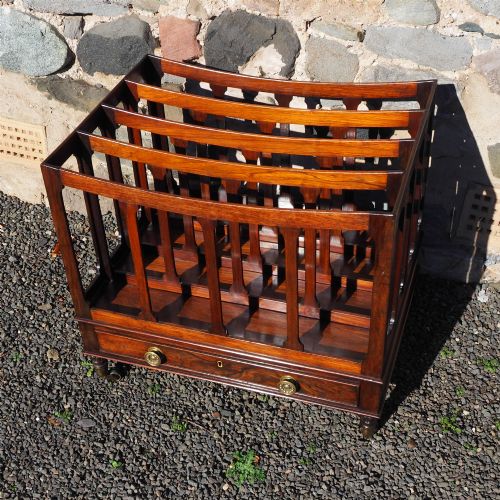
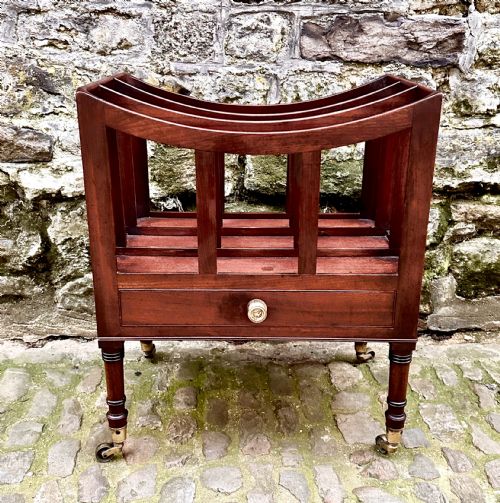
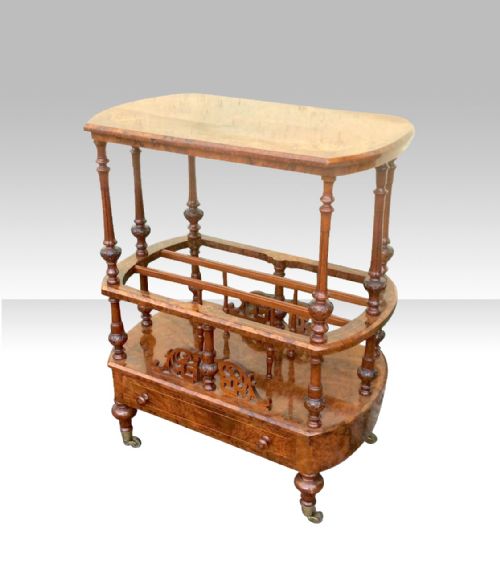
An antique canterbury on castors is a wheeled wooden stand designed for holding sheet music, books and newspapers.
Antique Canterbury on Castors
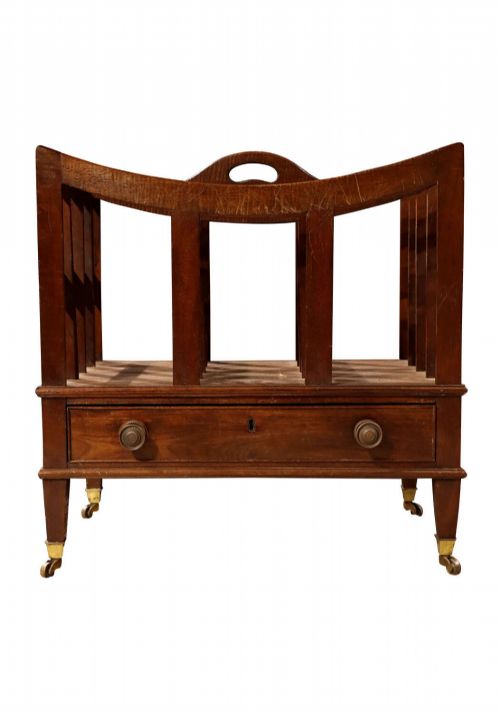
An antique canterbury on castors is a compartmented stand designed to hold sheet music, books and periodicals close to hand. These pieces appear across the Georgian, Regency, William IV, Victorian and Edwardian periods.
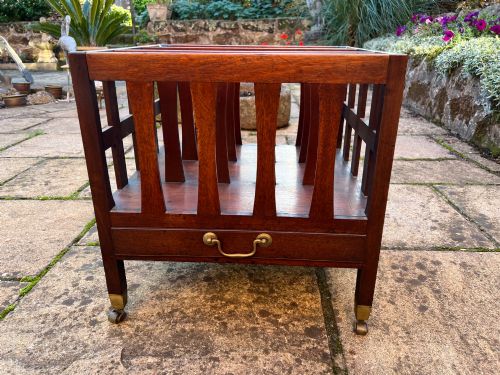
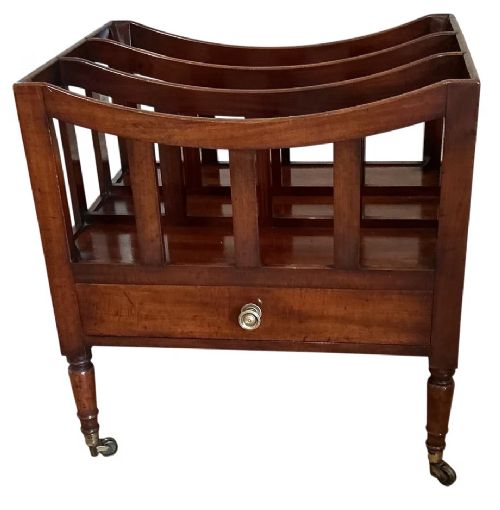
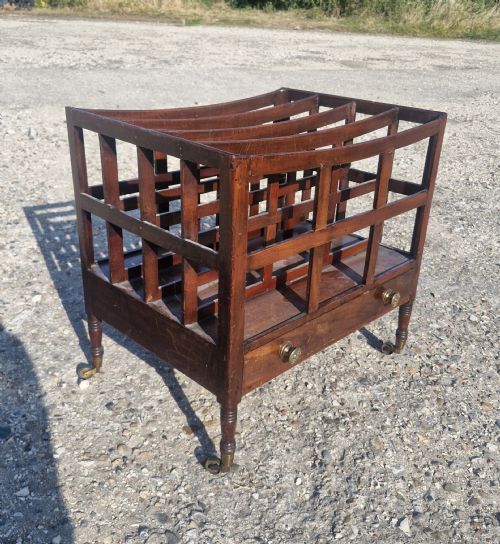
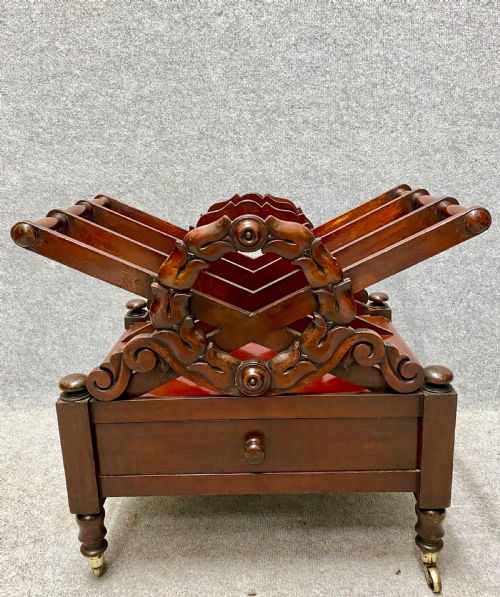
The version most commonly met on this page is constructed from mahogany or rosewood, often featuring slatted partitions and a single drawer beneath the main body. Examples range from boat-shaped Regency designs to elaborate Victorian walnut and burr walnut iterations.
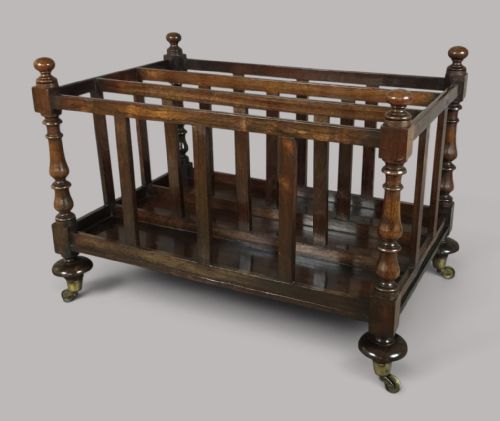
Formations vary from simple four-division magazine racks to multi-tiered music canterburys and folio stands. Many incorporate turned legs supported by brass castors to allow smooth movement across a room.
How they were made
Cabinet makers utilised dense hardwoods such as mahogany, rosewood and walnut to build the structural framework and vertical dividers. These timbers were selected for their stability and capacity to take a fine polished finish.
Detailing often included ebony banding, marquetry inlay and wreath-carving to enrich the visible surfaces. Metal components such as brass castors permitted mobility while protecting the flooring beneath.
Antique Canterbury on Castors Retail Price Guide 2026
Typical asking prices for canterbury on castors among the pieces listed under this phrase on Sellingantiques today, from the lower quarter to the upper quarter. They describe what is for sale here now, not the wider market.
Listings feature pieces spanning the Georgian, Regency, William IV, Victorian and Edwardian eras, constructed primarily in mahogany, rosewood and walnut.
What varies in quality
The refinement of the joinery and the selection of timber dictate the standing of a piece. Finer examples display carefully matched wood grains, precise division joinery and integrated drawers with hand-cut dovetails.
Proportion and decorative restraint also separate standard items from superior workshop output. Pieces attributed to prominent makers exhibit crisper carving and more harmonious proportions across the frame.
Gillows of Lancaster·J.C.Loudon
The Antique Canterbury on Castors Glossary
- Canterbury
- A low stand with partitions for holding sheet music, newspapers or books. The form dates back to the late eighteenth century and frequently includes wheels.
- Castor
- A small wheel mounted in a swivel frame attached to the legs of furniture. These allow heavy wooden stands to be rolled across carpets and flooring.
- Folio stand
- A large storage rack designed to hold loose prints, drawings or oversized sheets of music. These often share similarities with standard multi-division canterburys.
- Marquetry inlay
- Decorative patterns formed by fitting contrasting veneers into prepared recesses on the wooden surface. This technique appears on Victorian walnut pieces.
- Boat-shaped
- A curved hull-like outline typical of certain Regency designs. This profile softens the rectangular geometry of the traditional rack.
Antique Canterbury on Castors: Frequently Asked Questions
What is an antique canterbury on castors used for?
These stands were originally built to hold sheet music, folios, newspapers and magazines near a piano or seating area. They kept reading materials organised and upright in the main rooms of a house.
Today, they function well in living spaces for holding modern periodicals, books and vinyl records while retaining their traditional mobility on castors.
How do I identify a Regency canterbury?
Regency examples frequently display boat-shaped outlines, slender turned legs and sabre or ring-turned supports. The woodwork often relies on figured mahogany with minimal applied ornamentation.
They date from the early nineteenth century and prioritise clean structural lines over the heavier carving seen in later Victorian pieces.
What is the difference between a music canterbury and a magazine rack?
Music canterburys were specifically proportioned to accommodate bound volumes of sheet music and scores. They commonly incorporate a shallow drawer underneath for smaller musical accessories.
Magazine racks and newspaper stands from later periods tend to feature lighter partitions designed for unbound daily periodicals rather than heavy musical folios.
How do I care for a mahogany canterbury?
Keep the wood away from direct heat sources and strong sunlight to prevent the polish from drying and the timber from splitting. Regular dusting with a soft, dry cloth preserves the finish.
Apply a traditional beeswax polish occasionally to nourish the hardwood and maintain the depth of the grain without building up a heavy residue.