
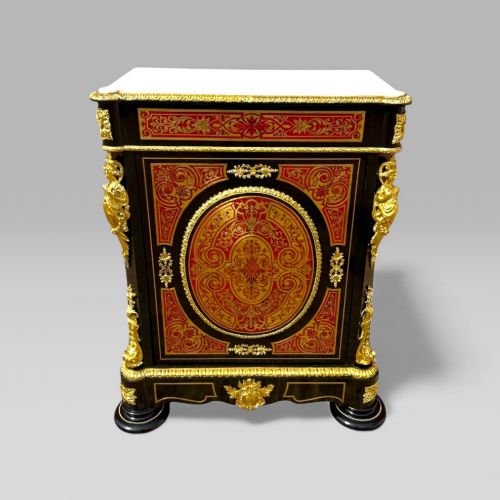
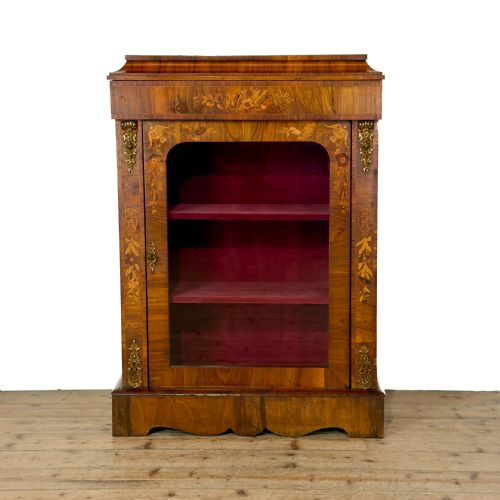

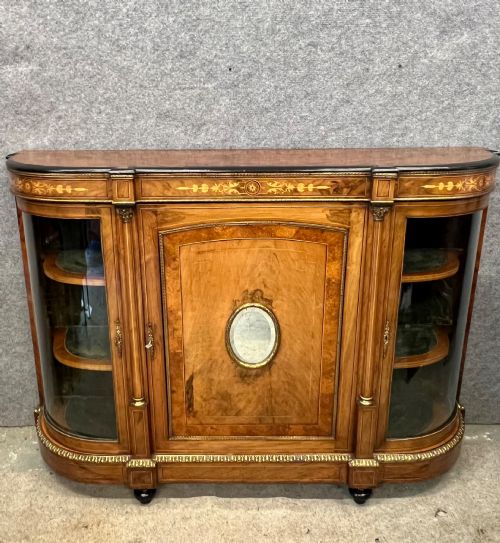
Ormolu Mounted Pier Cabinet
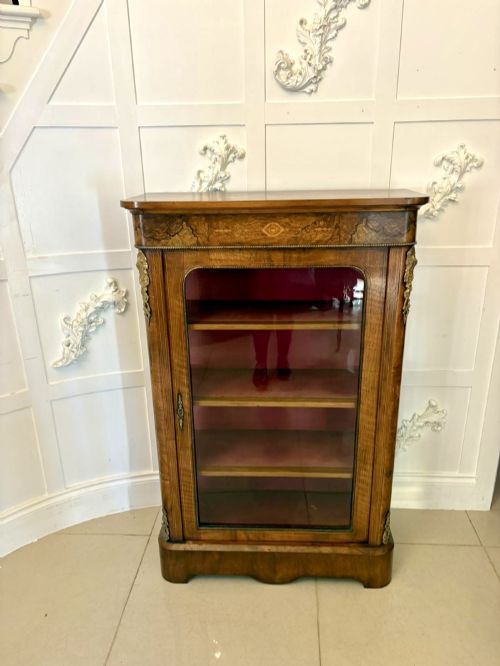
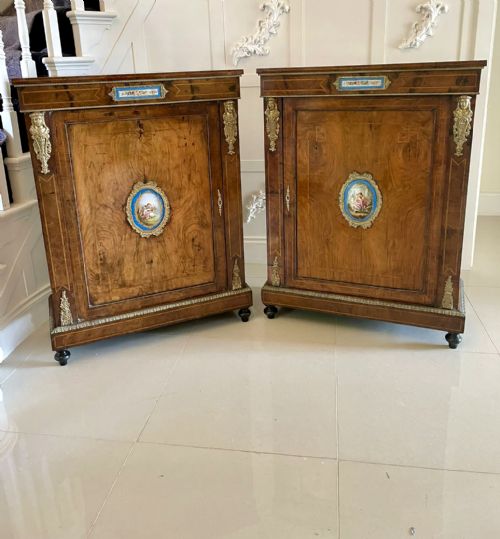
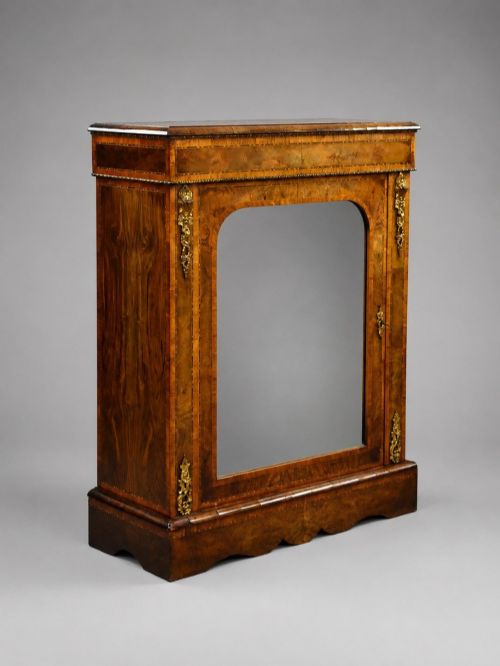
An ormolu mounted pier cabinet brings gilt bronze mounts and figured timber together in a disciplined display piece designed for formal Victorian and Regency drawing rooms.
Forms and Origins
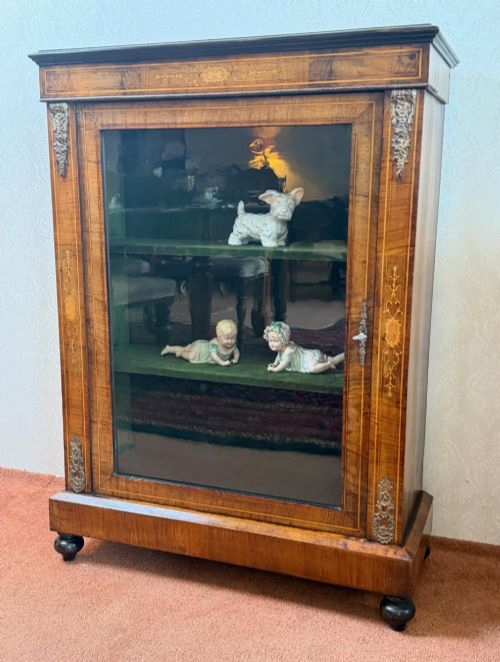
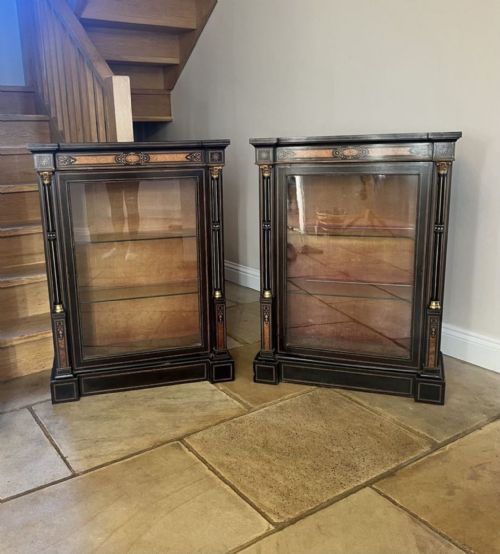
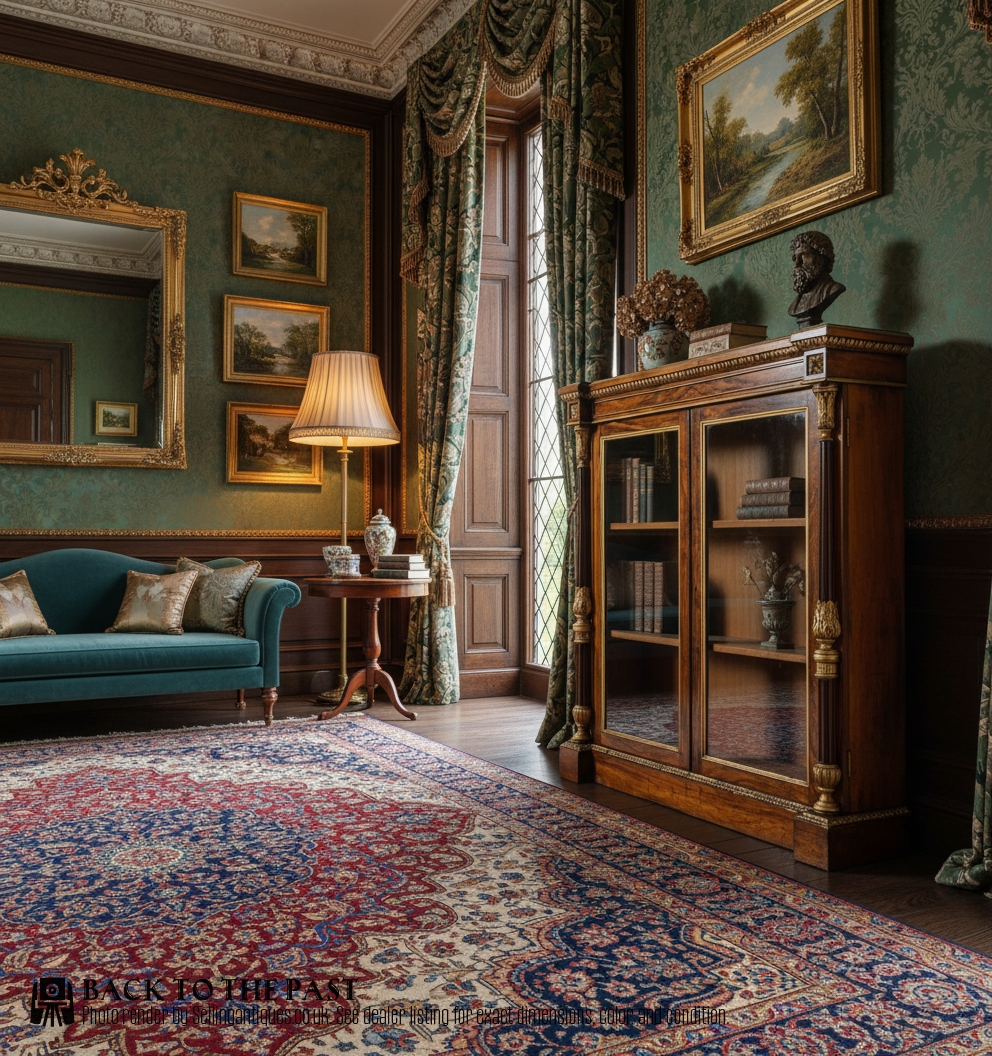
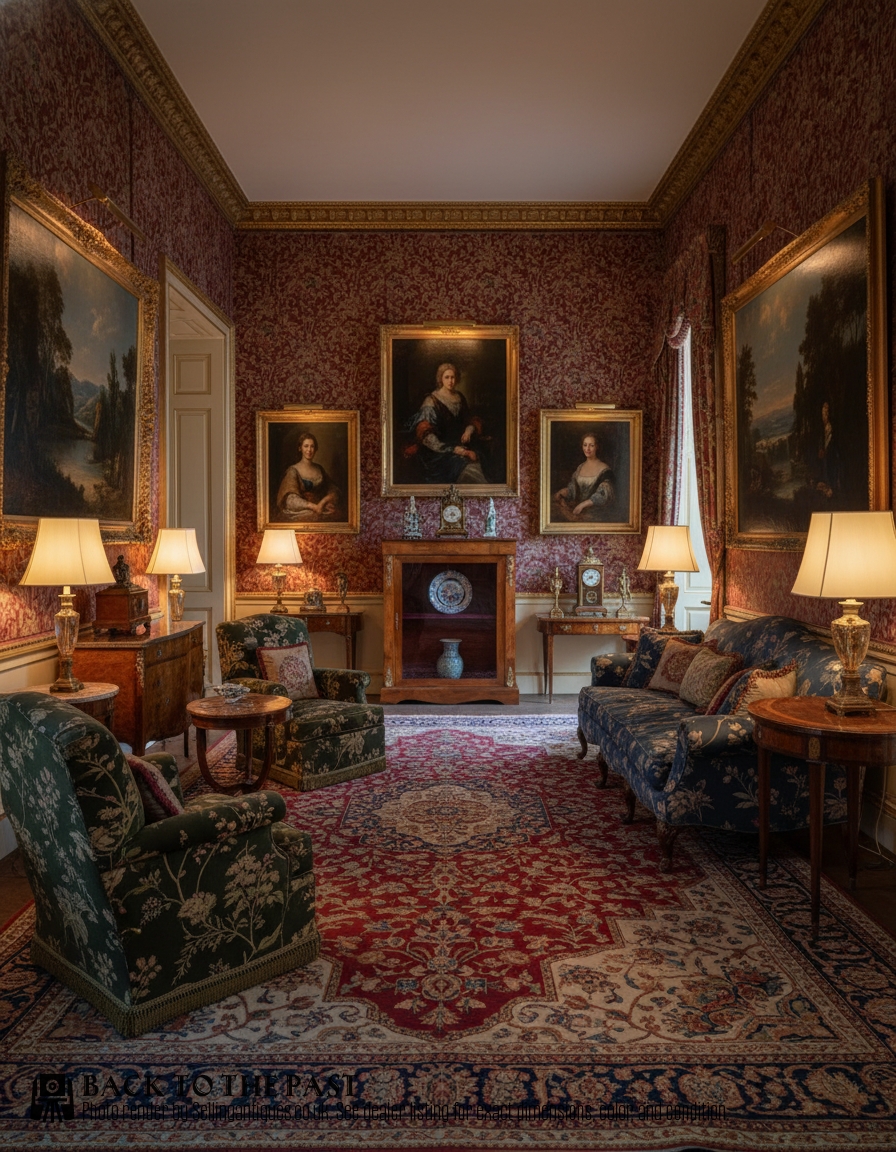
An ormolu mounted pier cabinet stands against the narrow stretch of wall between windows, serving as a glazed display vessel for prized ornaments and porcelain. The pieces appearing here predominantly date from the Victorian era and the mid-nineteenth century, with occasional Regency examples.
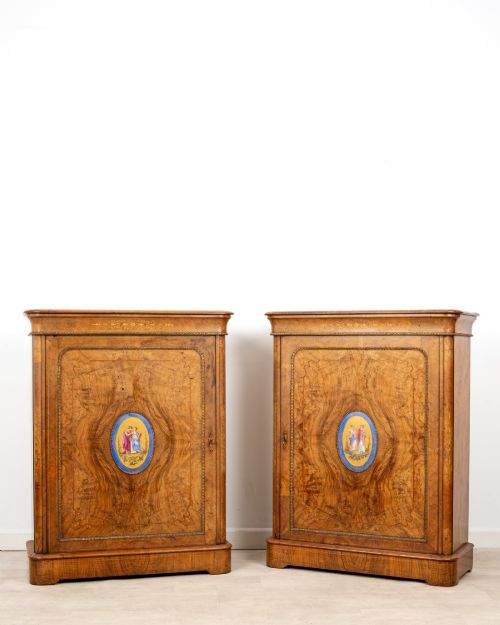
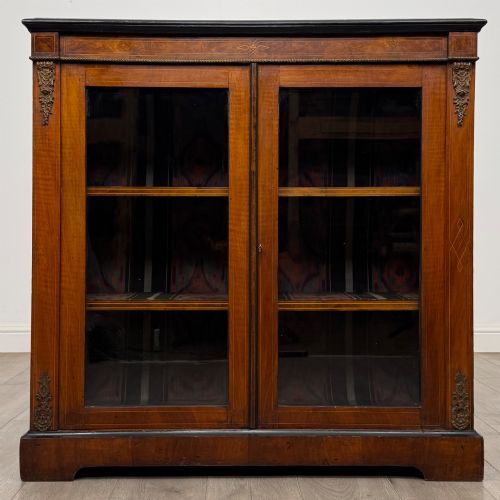
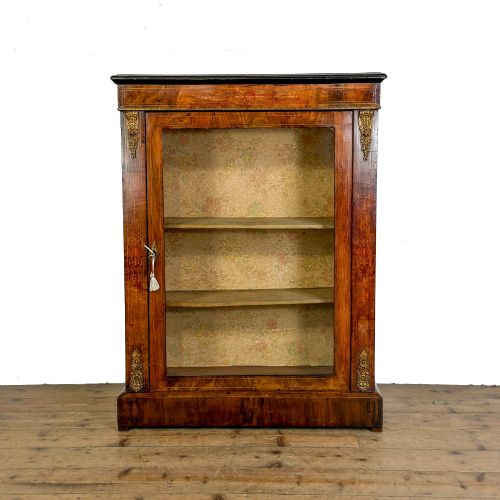
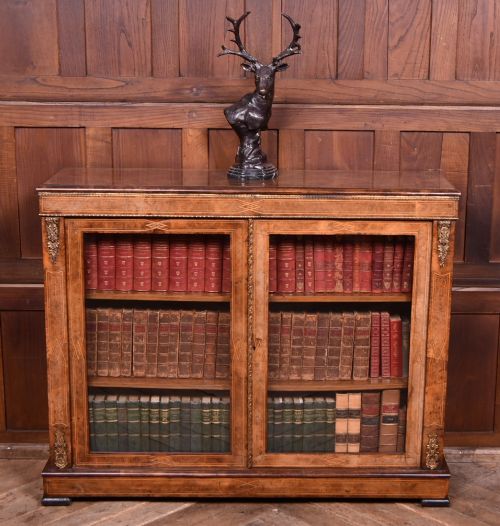
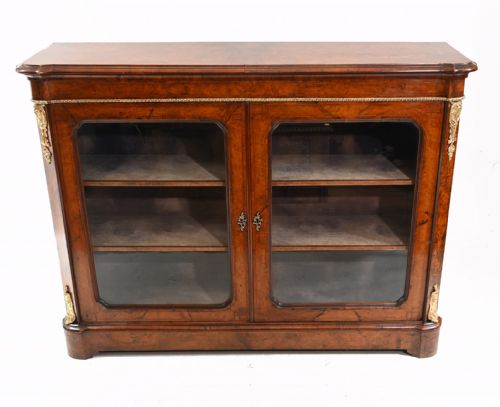
Most examples take a single-door glazed format in walnut or burr walnut, though pairs and larger two-door cabinets also emerge. English makers dominate the record, alongside occasional French pieces utilising kingwood and purple heart.
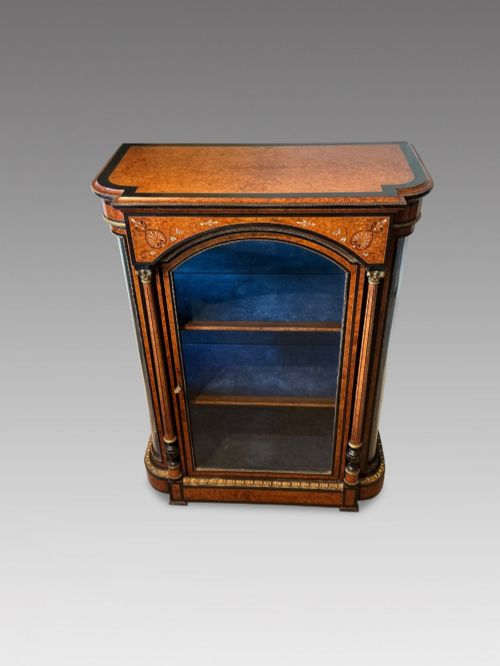
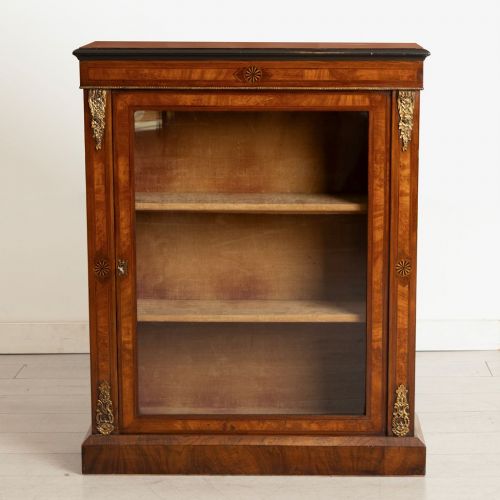
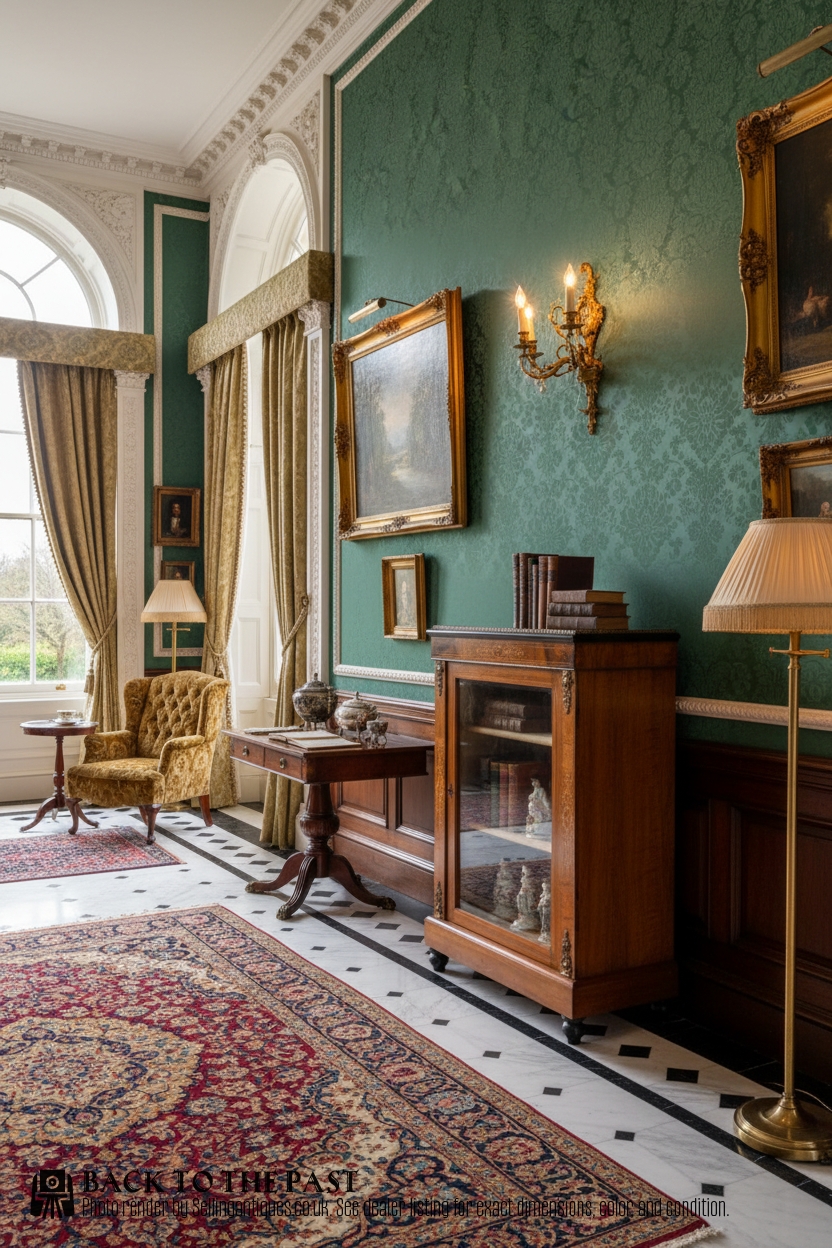
Interior shelving sits behind glass panels, framed by classical or foliate gilt-bronze mounts and delicate stringing. The form evolved to showcase the natural figure of the wood alongside contrasting lighter inlays.
Materials and Technique
Cabinet makers built these pieces upon solid carcases of timber before applying decorative veneers of walnut, burr walnut, olive wood, or kingwood. Boxwood inlay and marquetry panels provide geometric or floral contrast across the primary surfaces.
Cast ormolu mounts are applied to the corners, friezes, and feet, held by pins or screws through the timber. Glass panels are secured within the timber doors to protect the interior display space from dust.
Retail Price Guide 2026
Typical UK retail prices for ormolu mounted pier cabinet, calculated from the Sellingantiques database of over a million retail prices indexed since 2003. This retail price guide relies exclusively on Sellingantiques data; no external sources or auction records are used, so the figures do not describe the wider market.
Inlays spanning boxwood, marquetry, and Tonbridgeware appear frequently alongside kingwood and purple heart on exhibition-grade examples.
Judging Quality
The distinction between standard domestic production and exhibition quality lies in the selection of timber veneers and the crispness of the bronze casting. Highly figured burr walnut and intricate marquetry demand superior skill in preparation and application.
Finely chased ormolu mounts with sharp detail and deep gilding elevate a cabinet above those fitted with simpler, flatter cast metalwork. The integration of banding in contrasting woods like boxwood or purple heart further distinguishes the better workshops.
Druce And Co
The Ormolu Mounted Pier Cabinet Glossary
- Ormolu
- Gilt bronze applied as decorative mounts to furniture frames and doors. The technique involves a mercury-gilding process on cast brass or bronze.
- Pier Cabinet
- A low display cabinet specifically proportioned to sit against the wall space between two windows. These pieces often feature glazed doors and velvet-lined interiors.
- Burr Walnut
- Timber taken from the gnarled growths on walnut trees, yielding complex swirling grain patterns. It requires expert veneering due to its tendency to move.
- Marquetry
- Inlaid patterns formed by fitting together contrasting pieces of veneer into a solid background. This technique decorates doors and friezes on formal cabinets.
- Tonbridgeware
- Small-scale mosaic woodwork forming pictorial or geometric patterns from tiny coloured wood blocks. It appears as banding or inlay on specific cabinet panels.
Frequently Asked Questions
What is an ormolu mounted pier cabinet?
It is a narrow glazed display case designed for nineteenth-century drawing rooms, featuring gilt bronze mounts and decorative wood veneers.
These cabinets typically stood between windows to hold ceramics and small ornaments.
How do I date an antique pier cabinet?
Dating relies on timber choices, construction methods, and stylistic cues recorded across Victorian and Regency examples. Burr walnut veneers and specific ormolu mount designs point directly to mid-nineteenth-century production.
Examining the interior timber and backboards provides further evidence of the period.
Where were these cabinets placed in a home?
They were built specifically for the pier wall, which is the narrow section of masonry between two adjacent windows.
Placing them there captured natural light across the glass doors and the gilt ormolu mounts.
How do I care for walnut and ormolu?
Walnut benefits from occasional application of traditional wax to maintain the grain and prevent the timber from drying out. Ormolu mounts require gentle dusting with a dry cloth without abrasive cleaners that remove the gilding.
Keeping the cabinet away from direct sunlight protects both the veneer and the interior linings.