
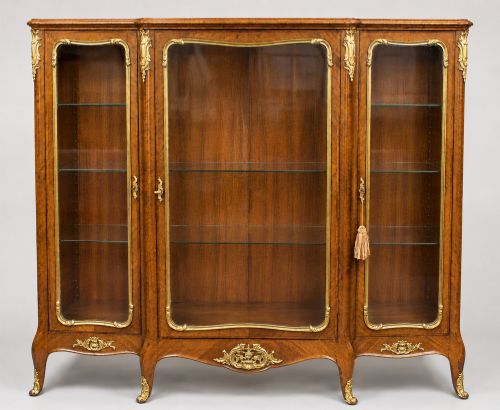
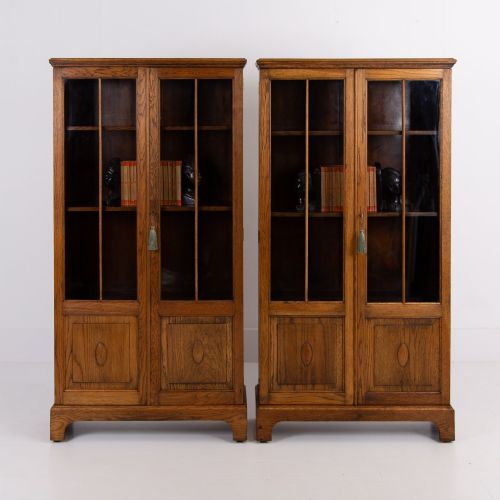
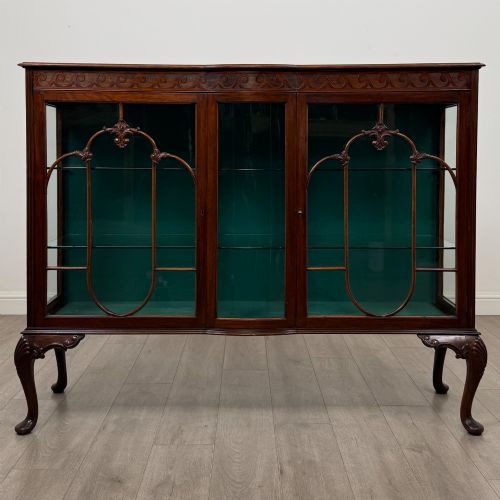
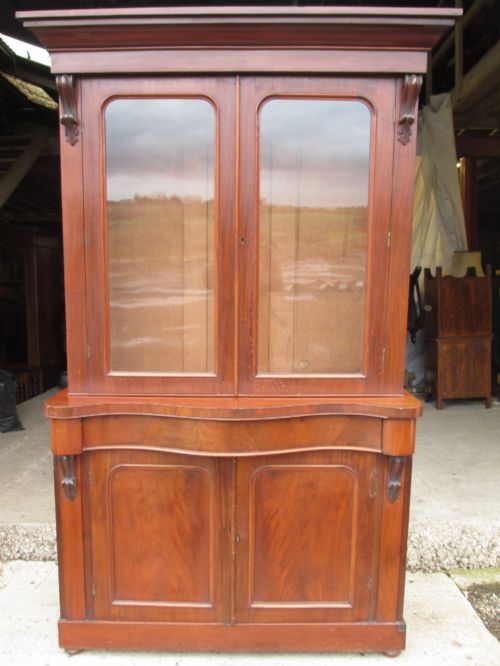
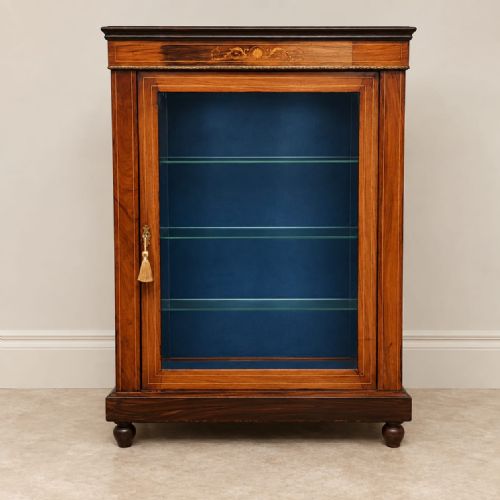
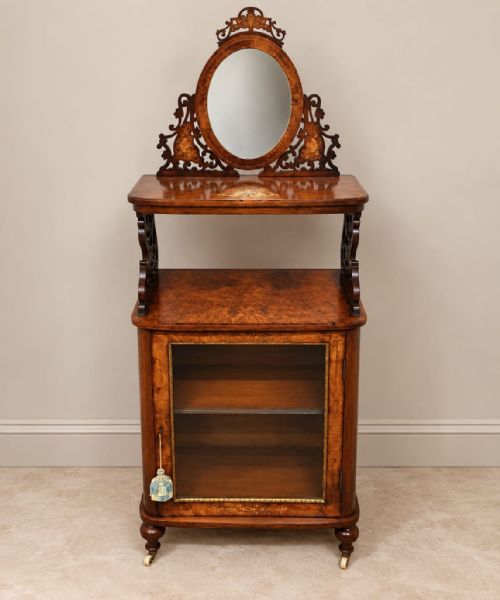
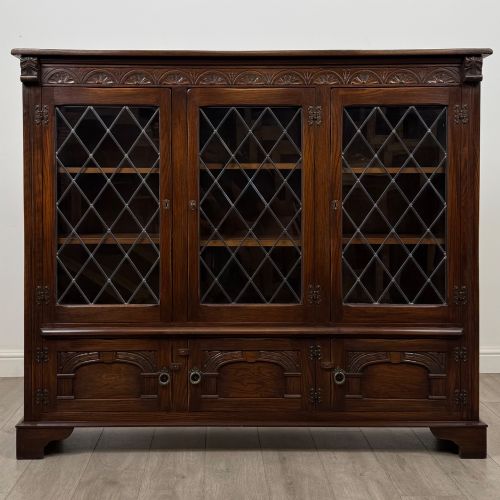
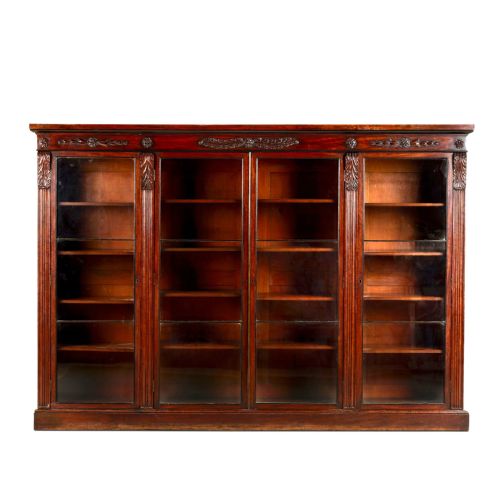
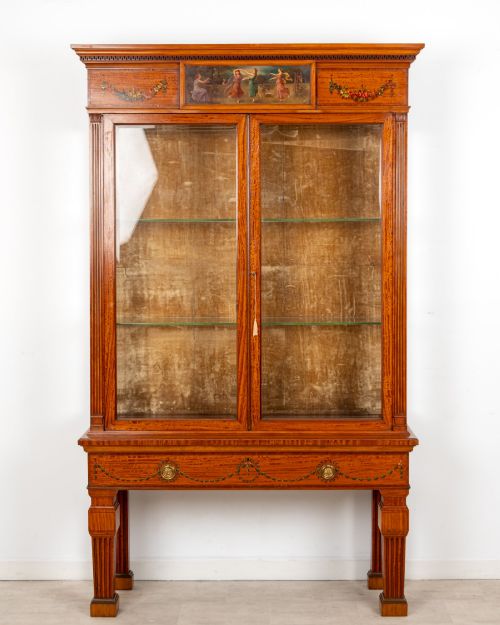
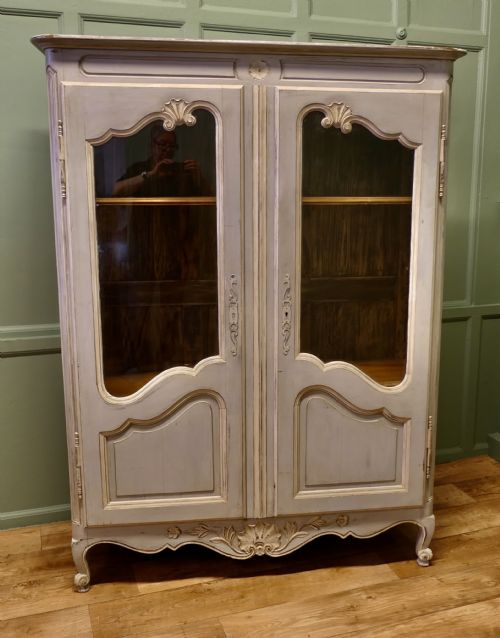
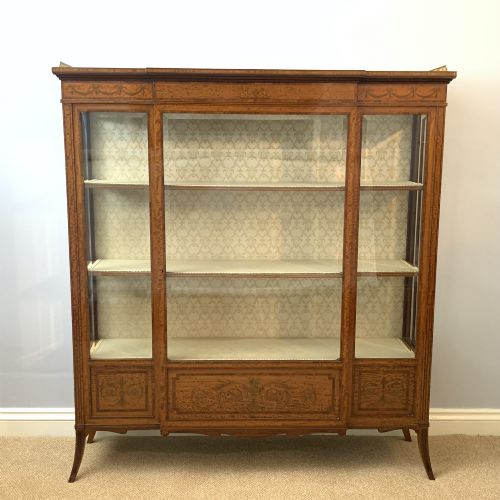
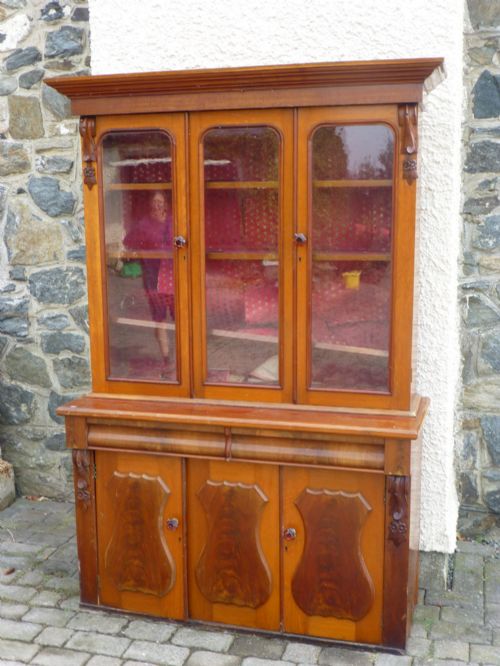
Antique Glass Door Cabinet
An antique glass door cabinet offers a refined display for treasured possessions, combining architectural cabinetry with clear visibility.
What these cabinets are
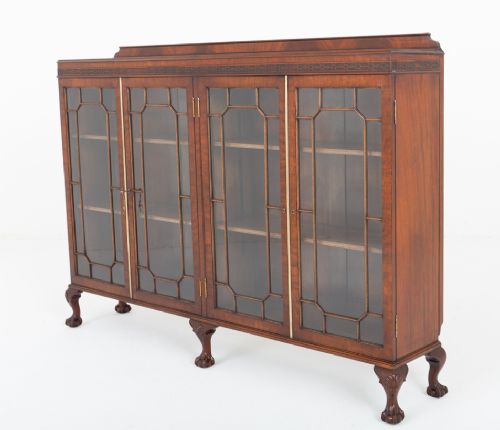
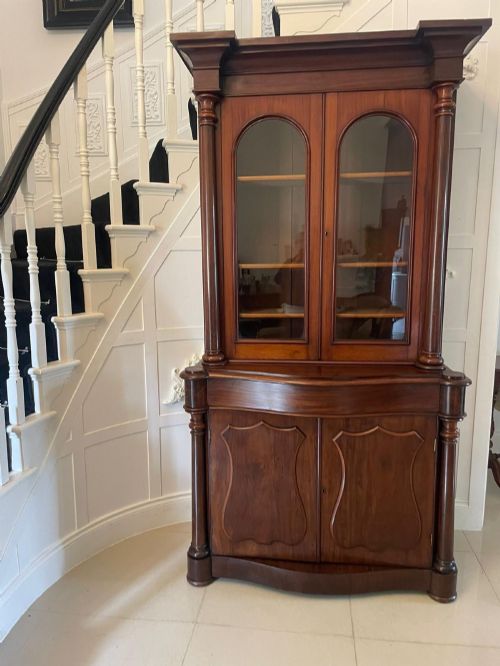
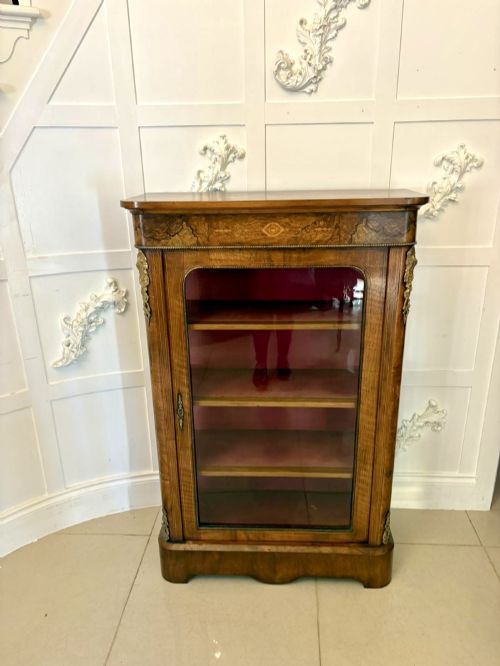
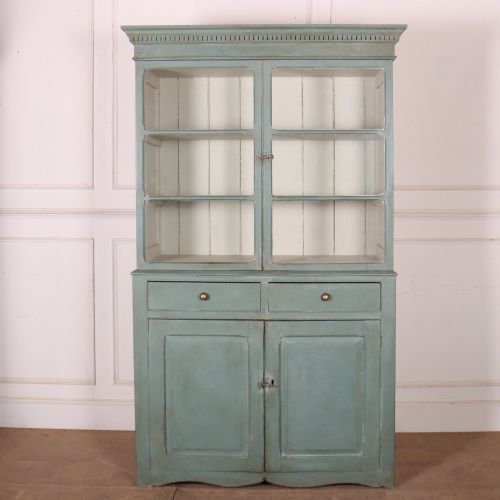
When you search for an antique glass door cabinet, you are looking at formal display furniture designed to showcase ceramics, books and small collections while protecting them from dust. These pieces appear primarily as side cabinets, pier cabinets and credenzas, serving formal reception rooms and drawing rooms.
The Victorian and Regency periods dominate the selection, bringing substantial timber carcases fitted with single or double glazed doors. You are most likely to meet Victorian walnut and mahogany examples featuring glazed fronts alongside marquetry inlay or barley twist columns.
Earlier Regency pieces introduce classical bronze mounts and crisp mahogany surfaces, while later Victorian iterations lean into figured burr walnut and ebonised finishes. Some smaller tabletop forms, specifically jewellery boxes with bevelled glass doors, also emerge from the nineteenth century.
How they were made
Cabinet makers utilised dense hardwoods including mahogany, walnut and rosewood as foundational timber for these carcases, frequently selecting highly figured burr walnut veneers for visual depth. Secondary woods provided structural stability behind polished exterior surfaces.
Glazing involved securing panes within timber framing, sometimes supplemented by bevelled edges on later nineteenth-century glass. Metalwork played a structural and decorative role, with brass fixtures and bronze or ormolu mounts fitted to doors and framing.
Surface ornamentation relied on intricate marquetry inlay using contrasting timbers, alongside ebonising and turned elements like barley twist columns. French polishing sealed the timber grain to produce a deep, lustrous sheen that highlighted the natural figure of the wood.
Retail Price Guide 2026
Typical UK retail prices for glass door cabinet, calculated from the Sellingantiques database of over a million retail prices indexed since 2003. This retail price guide relies exclusively on Sellingantiques data; no external sources or auction records are used, so the figures do not describe the wider market.
Listings feature Victorian, Regency and 1860 periods, utilising glass, burr walnut, brass, mirror, mahogany, bronze, walnut and ormolu.
What varies in quality
The calibre of an antique glass door cabinet rests largely on the choice and matching of timber veneers, where symmetrical burr walnut or figured mahogany displays exceptional grain handling. Lesser examples rely on plain timber stock with minimal decorative graining.
Hand-cut marquetry inlay and the precision of bronze or ormolu mounts distinguish superior workshops from standard production. Crisp detailing in turned elements like barley twist columns points to skilled hand-carving rather than mass-produced uniformity.
Structural integrity reveals itself in the heavy timber carcase construction and the smooth operation of glazed doors within their rebates. Refined interior fittings and original bevelled glass further elevate the standing of a piece within its period.
The Antique Glass Door Cabinet Glossary
- Pier Cabinet
- A narrow display cabinet designed to fit against the wall space between windows. These upright pieces typically feature a single glass door.
- Credenza
- A low-standing sideboard or side cabinet used for display and storage. Nineteenth-century examples often incorporate glazed central doors flanked by curved side compartments.
- Marquetry
- Decorative veneer work forming intricate patterns using various coloured woods. Craftsmen cut contrasting timbers to fit precisely into a pre-cut background.
- Ormolu
- Gilt bronze ornamentation applied to furniture mounts. This technique involves coating cast bronze with a finely ground gold mercury amalgam before heating.
- Burr Walnut
- Timber taken from the abnormal growth of a walnut tree, yielding highly swirled grain patterns. Cabinet makers prized these sections for high-status veneering.
Frequently Asked Questions
What is an antique glass door cabinet used for?
These cabinets served primarily as formal display furniture in nineteenth-century drawing rooms and reception spaces. They allowed owners to exhibit porcelain, small silver and curiosities while keeping delicate items safe from dust and handling.
Today, they continue to function as elegant display cases in domestic interiors. Their glass panels provide clear visibility for collections while adding architectural presence to a room.
How do I date a Victorian glass cabinet?
Dating relies on examining the timber species, decorative motifs and construction techniques. Earlier Victorian pieces from around 1860 often feature robust mahogany or rosewood, sometimes with ebonised details.
Later decades introduced figured burr walnut, intricate marquetry inlay and specific decorative additions like barley twist columns. Examining the glass panes for slight imperfections and the timber framing for hand-tool marks helps confirm the era.
What is the difference between a pier cabinet and a credenza?
A pier cabinet is typically tall and narrow, designed specifically to sit against the flat wall space between two windows. It usually houses a single glazed door protecting vertical shelving.
A credenza is a lower, wider sideboard format often featuring a central glazed door flanked by curved side cabinets. While both use glass for display, their proportions and room placement differ significantly.
How do I care for antique veneered furniture?
Protect antique veneered surfaces by placing cabinets away from direct sunlight and strong heat sources. Rapid temperature changes can cause timber to dry out and veneers to lift.
Dust regularly with a soft, dry cloth and apply a quality furniture wax sparingly to nourish the polish. Avoid using modern aerosol sprays or silicone-based polishes that can damage the historical finish.