

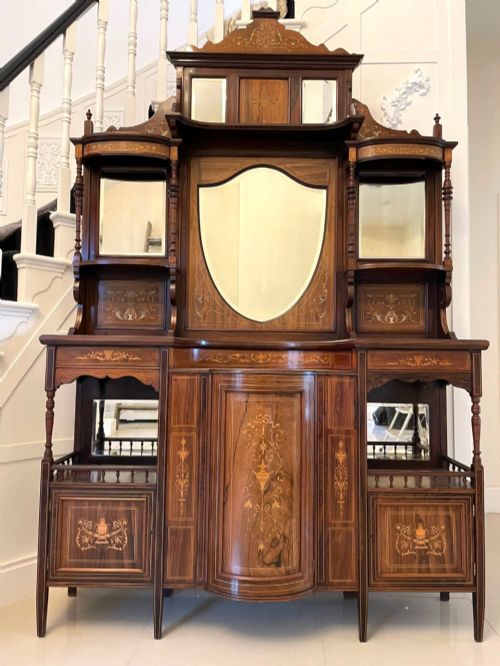
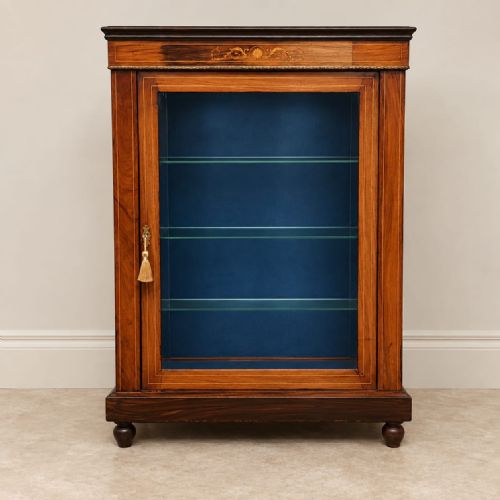

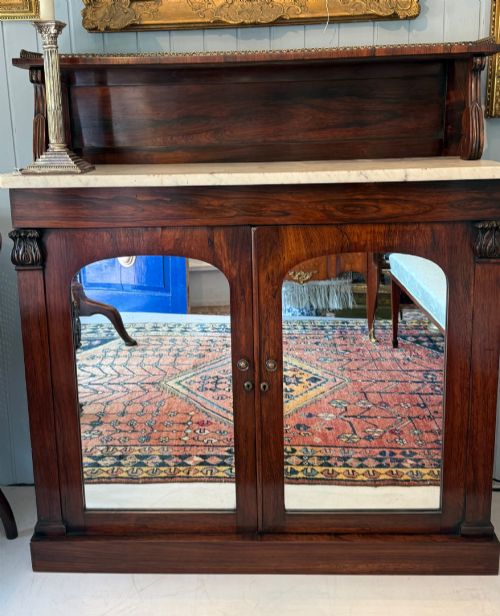
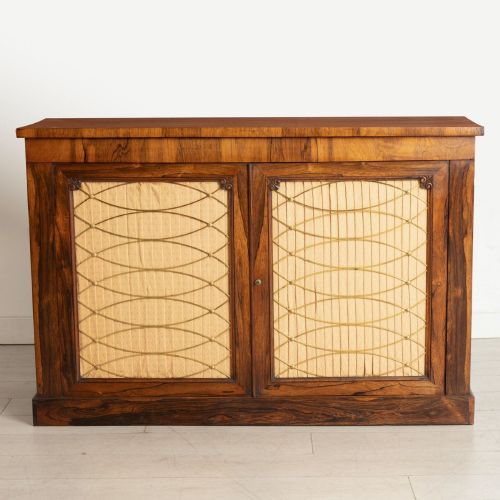
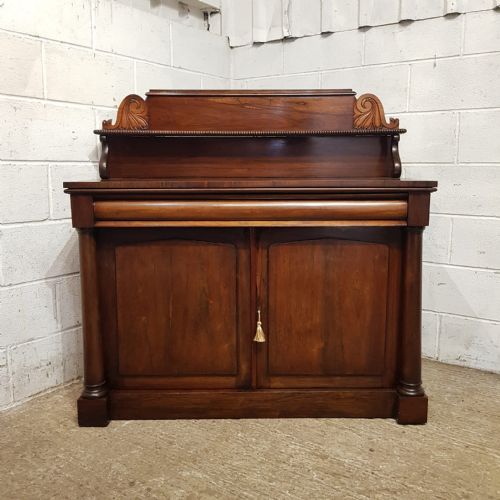
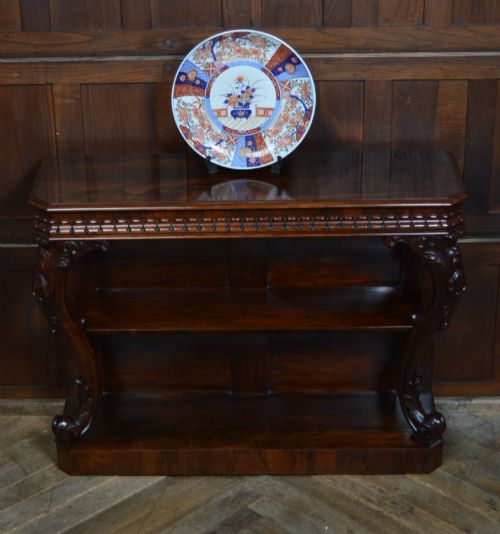
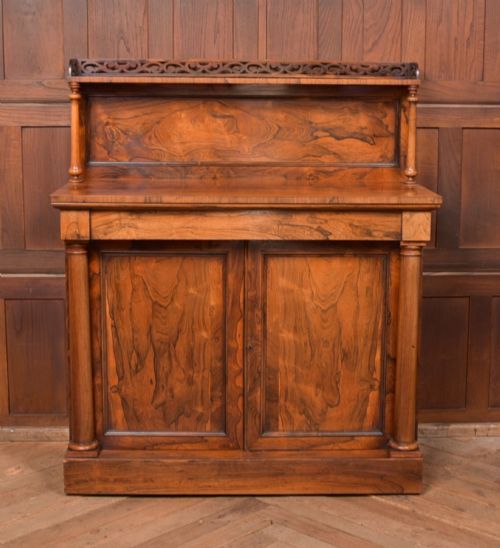
Victorian Rosewood Credenza
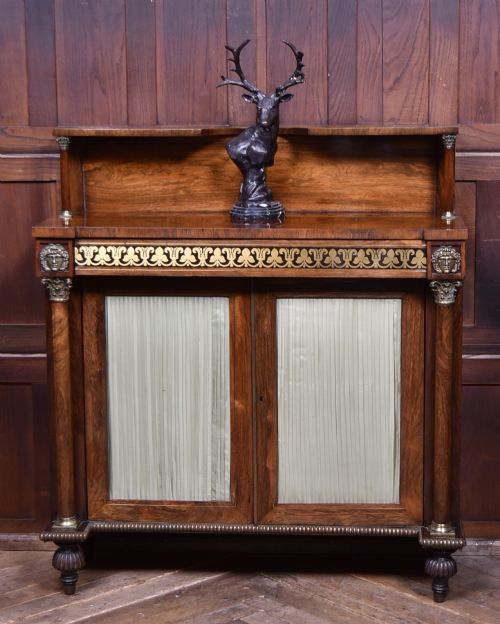
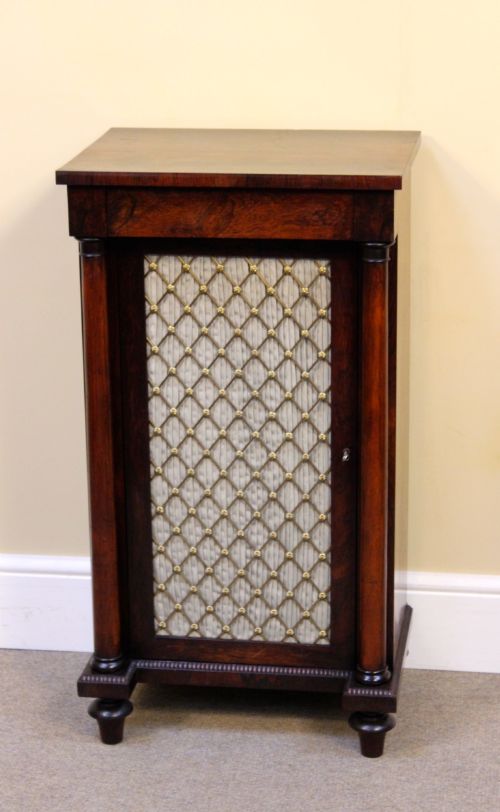
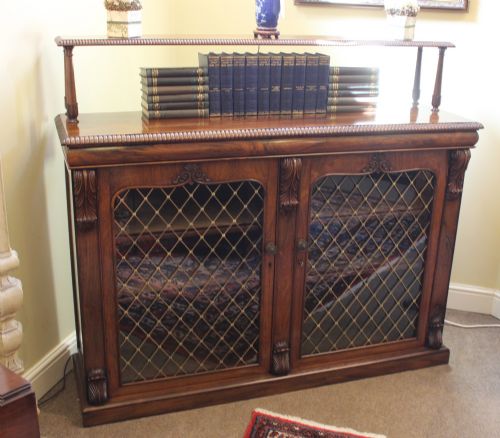
A victorian rosewood credenza brings heavy grain and polished brass mounts to a room, offering low display space and panelled cupboards.
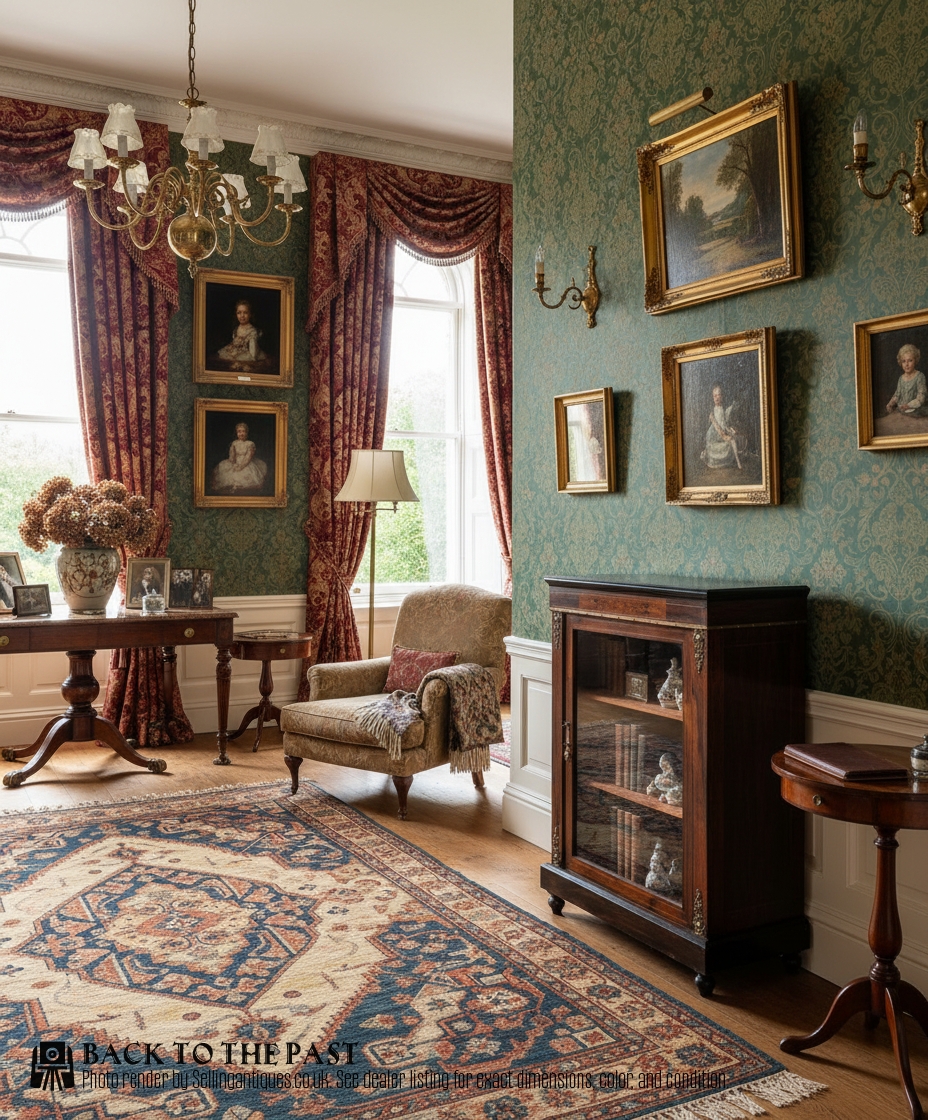
Victorian Rosewood Credenza
A victorian rosewood credenza is a low, polished cabinet designed for the principal rooms of nineteenth-century houses, built to display porcelain or store linens. These pieces frequently appear alongside related sideboards, chiffoniers, and display cabinets from the same decades.
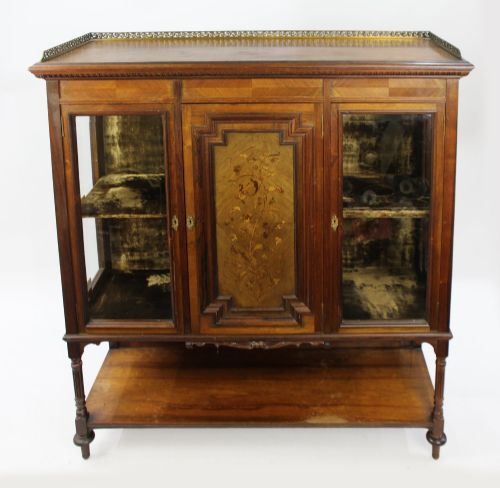
The versions most common on this page date from the middle to the late nineteenth century, spanning the Victorian and William IV periods. They combine serpentine or breakfront timber carcases with enclosed cupboards and central glass doors.
Makers and workshops of the era employed diverse influences, ranging from straightforward domestic formats to pieces with marquetry inlay or aesthetic movement lines. The form bridges the gap between a side table and a formal display cabinet.
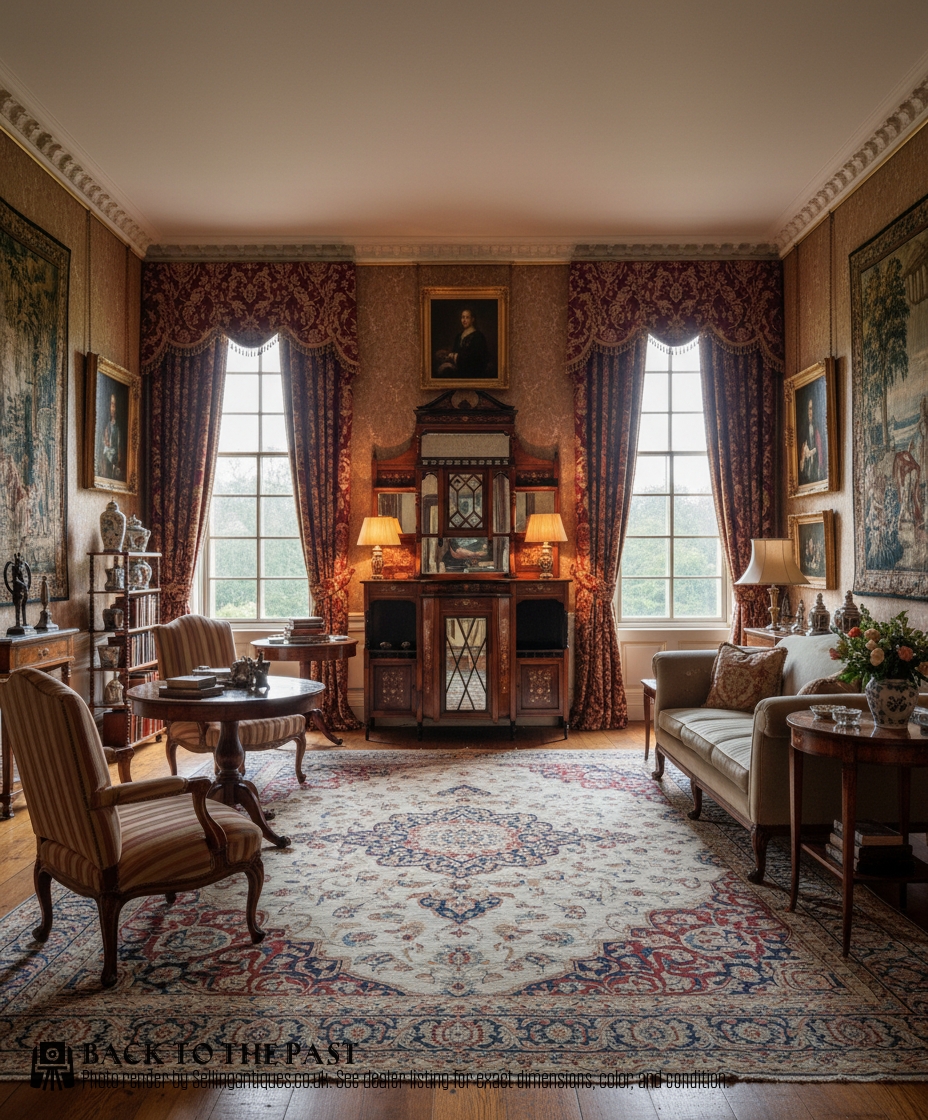
How they were made
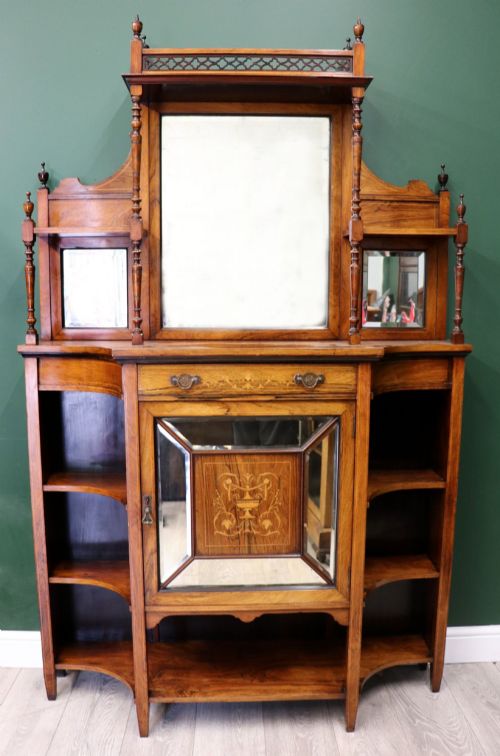
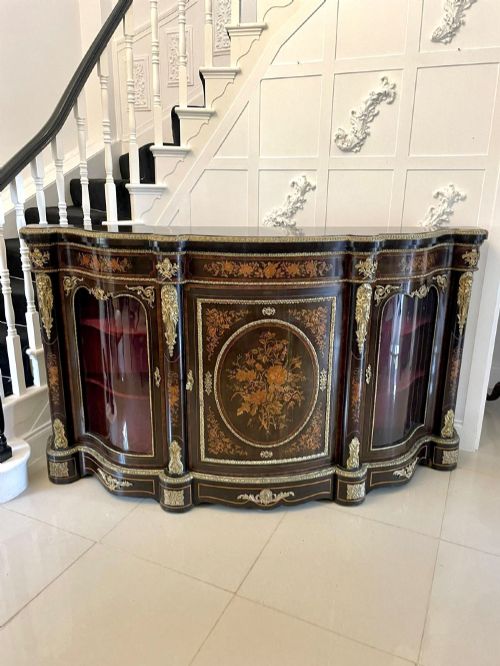
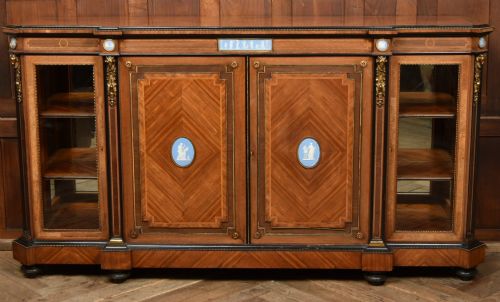
Cabinet makers built these carcases using dense rosewood veneers laid over secondary timbers, often incorporating glass panels in the doors and mirrored backs within the upper sections. Fine examples integrate floral marquetry inlay alongside contrasting stringing in ebony and other timbers.
Mounts and structural highlights utilise cast or chased ormolu and polished brass, framing the doors and borders of the cabinet. Marble tops, frequently in white or veined varieties, sit directly upon the timber carcase to provide a durable display surface.
Victorian Rosewood Credenza Retail Price Guide 2026
Typical asking prices for victorian rosewood credenza among the pieces listed under this phrase on Sellingantiques today, from the lower quarter to the upper quarter. They describe what is for sale here now, not the wider market.
Listings for this phrase include pieces spanning the Regency, William IV, and Victorian periods, alongside later nineteenth-century Aesthetic Movement interpretations.
What varies in quality
The standard of a victorian rosewood credenza rests upon the depth of the timber grain and the precision of the marquetry or brass inlay. Plain panelled versions sit at the simpler end, whilst serpentine-fronted examples with elaborate ormolu mounts represent the higher tier of cabinet making.
The integration of materials also defines the grade of the piece, particularly where mirror glass, marble slabs, and finely cast brass mounts meet the polished rosewood structure. Workshop attribution, such as work linked to known firms, signals a higher level of internal joinery and material selection.
Collinson & Lock·Robert Strahan·Holland & Sons·Edwards and Roberts·Gillows
The Victorian Rosewood Credenza Glossary
- Credenza
- A low cabinet or sideboard, typically enclosed by doors, used for display and storage in nineteenth-century interiors. The form often incorporates curved ends and glazed central compartments.
- Chiffonier
- A compact sideboard or cabinet featuring a raised shelf or mirror back above enclosed lower cupboards. These pieces date across the Regency and Victorian eras.
- Ormolu
- Gilded bronze or brass mounts applied to furniture for decorative effect. It frames panels and accentuates structural lines on mid-nineteenth-century cabinets.
- Marquetry
- Decorative veneer work formed by fitting together small pieces of different coloured wood to create pictorial or geometric patterns. It appears frequently on late nineteenth-century cabinet doors.
- Serpentine
- A curved furniture front shaped with a convex centre flanked by concave ends. This contour requires skilled carpentry to match the grain across the bends.
Victorian Rosewood Credenza: Frequently Asked Questions
What rooms suit a credenza?
These low cabinets fit well in drawing rooms, dining rooms, or wide hallways where floor space is limited. Their low profile allows paintings or mirrors to hang directly above them without overcrowding the wall.
They function effectively as serving surfaces or display areas for ceramics and silver, maintaining the proportions typical of nineteenth-century reception rooms.
How do I clean rosewood?
Dust the timber regularly with a soft, dry cloth to prevent particles from settling into the grain. Avoid modern silicone sprays, which build up on the polished surface over time.
Apply a traditional beeswax sparingly if the timber appears dry, buffing it gently with a clean cloth to restore the natural lustre of the wood.
Are marble tops original?
Many nineteenth-century cabinets were fitted with marble slabs to provide a durable and cool surface for serving or display. These tops are generally heavy and rest directly upon the timber carcase.
Matching the edge profile and the stone type to the period helps confirm whether the marble belongs to the original construction of the cabinet.
How do chiffoniers differ from credenzas?
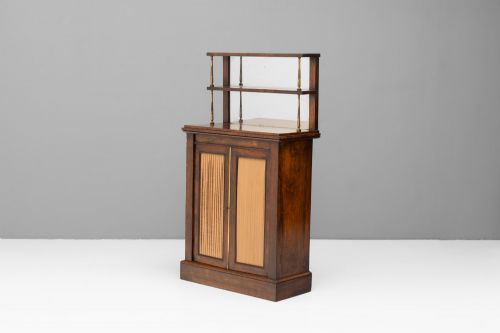
Chiffoniers are typically smaller and feature a raised superstructure or mirrored back supported by small pillars above the main cupboard. They originated earlier in the century as versatile living room storage.
Credenzas are generally lower and wider, often featuring symmetrical curved doors and a more uniform surface from end to end without a stepped upper tier.