
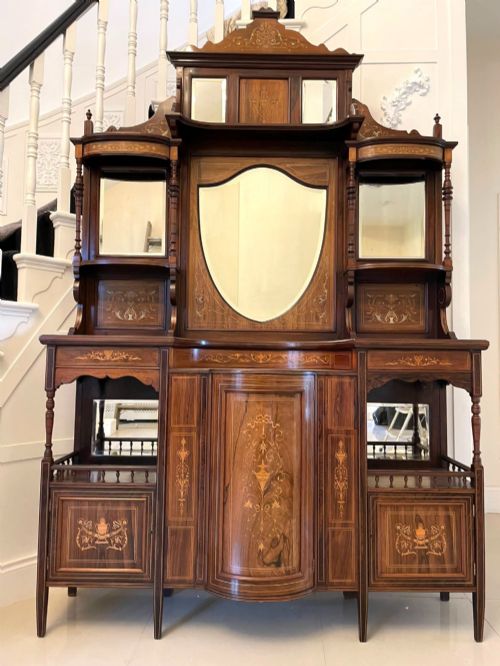
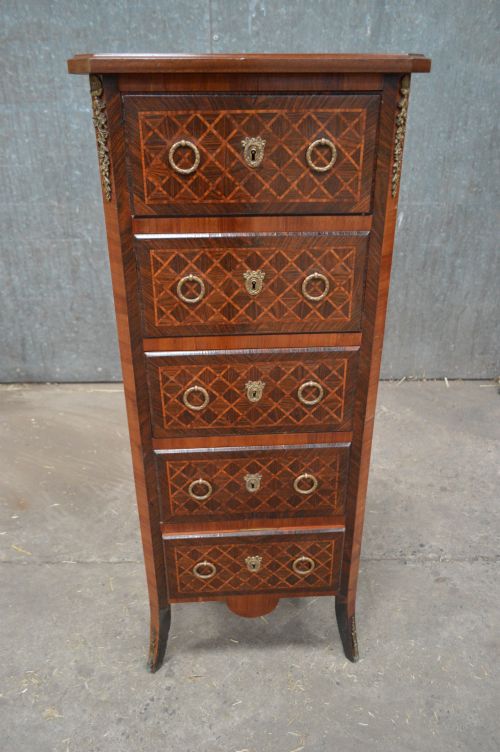


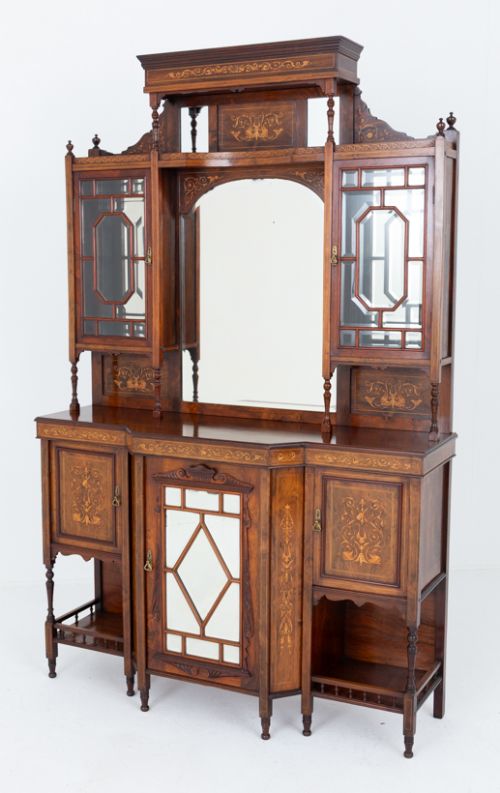


Inlaid Rosewood Chiffonier
An inlaid rosewood chiffonier brings rich timber and fine metalwork together in a functional low cabinet designed for the principal rooms of the house.
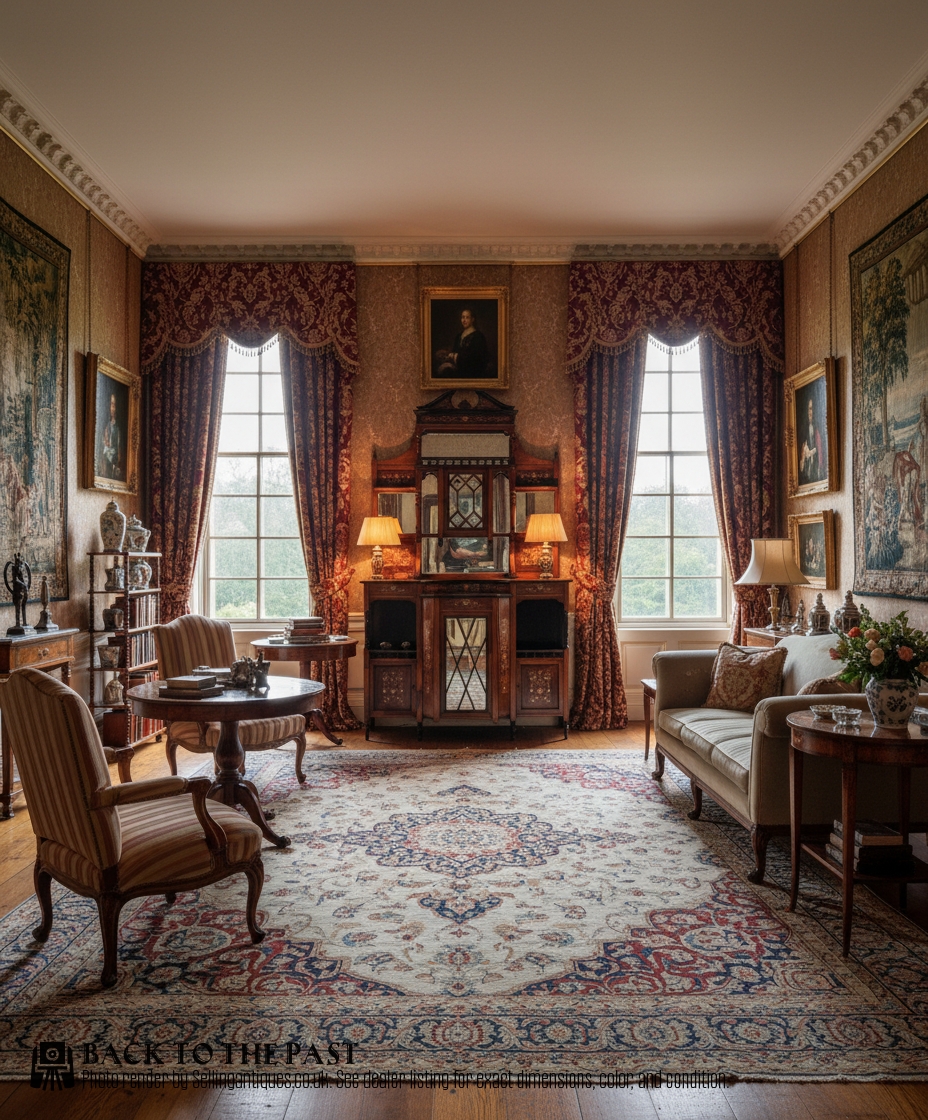
Inlaid Rosewood Chiffonier
When you search for an inlaid rosewood chiffonier, you encounter low timber cabinets designed principally during the Regency and Victorian eras, though examples extend into the Edwardian period. The form serves primarily as a side cabinet or bookcase, frequently incorporating enclosed cupboards beneath open or glazed upper shelving.
Most pieces seen here belong to the Regency period and the later Victorian decades, spanning styles from grand neoclassical lines to the more intricate aesthetic and marquetry movements of the late nineteenth century.
Materials and Technique
Cabinet makers utilised marquetry techniques to form floral and geometric motifs across the doors and friezes, sometimes pairing the rosewood with ebony, mirror glass backs and silk linings inside display compartments.
Listings feature brass inlay predominantly on Regency period examples, whilst Victorian and Edwardian pieces show a preference for floral marquetry and mirror backs.
Craftsmanship and Proportion
Quality reveals itself in the precision of the brass and light wood inlay, where tighter geometric alignment and finer floral marquetry distinguish superior pieces from simpler utilitarian cabinets.
The choice of rosewood veneers, the balance of the proportions between the upper superstructure and the base, and the retention of original brass mounts or glass elements determine the standing of each individual chiffonier.
John McClean·Collinson and Lock·James Plunckett·Maple and Co
The Inlaid Rosewood Chiffonier Glossary
- Chiffonier
- A low cabinet, typically featuring a combination of drawers, cupboards and sometimes an upper shelf tier supported on small pillars. It evolved from a simple sideboard into a versatile piece for displaying and storing dining or parlour items.
- Marquetry
- The art of forming decorative patterns on a wooden surface by fitting together small pieces of tinted woods, ivory or metal. This technique creates intricate pictorial or geometric designs across cabinet doors.
- Stringing
- Thin lines of contrasting wood inlay used to outline panels, drawers and tabletops. Boxwood and satinwood are frequently utilised in this manner against darker rosewood backgrounds.
- Breakfront
- A furniture facade where the central section projects forward from the flanking wings. This architectural arrangement adds depth and shadow to larger side cabinets and chiffoniers.
Inlaid Rosewood Chiffonier: Frequently Asked Questions
What is an inlaid rosewood chiffonier used for?
These cabinets served primarily in dining rooms and drawing rooms to store plate, linen, books and decorative objects. The surfaces and upper shelves also provided display space for porcelain and ornaments.
Today, they function well in reception rooms and hallways as statement sideboards that offer practical enclosed storage alongside display capabilities.
How do I identify a Regency chiffonier?
Regency pieces often display classical architectural proportions with precise brass inlay, brass gallery rails and simpler rectilinear forms. They date from the early part of the nineteenth century.
Later Victorian versions frequently incorporate more elaborate floral marquetry, mirror backs or glass display doors influenced by later revival styles.
Are all these cabinets made of solid rosewood?
Cabinet makers constructed most of these pieces using finely figured rosewood veneers applied over secondary structural timbers such as mahogany or pine. This technique prevented warping while showcasing the richest grain patterns.
Solid rosewood was generally reserved for smaller mouldings, columns and decorative turnings rather than entire carcass structures.
How should I care for rosewood furniture?
Protect the timber by keeping the cabinet away from direct sunlight and steady sources of artificial heat to prevent the rosewood from drying out or fading. Dust gently with a dry, soft cloth and avoid commercial silicone polishes.
Maintaining a stable room temperature and humidity level preserves both the polished wood surface and the delicate boxwood or brass inlay.