
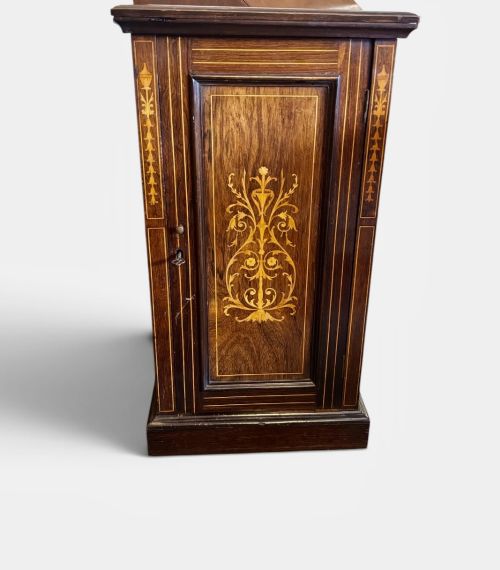
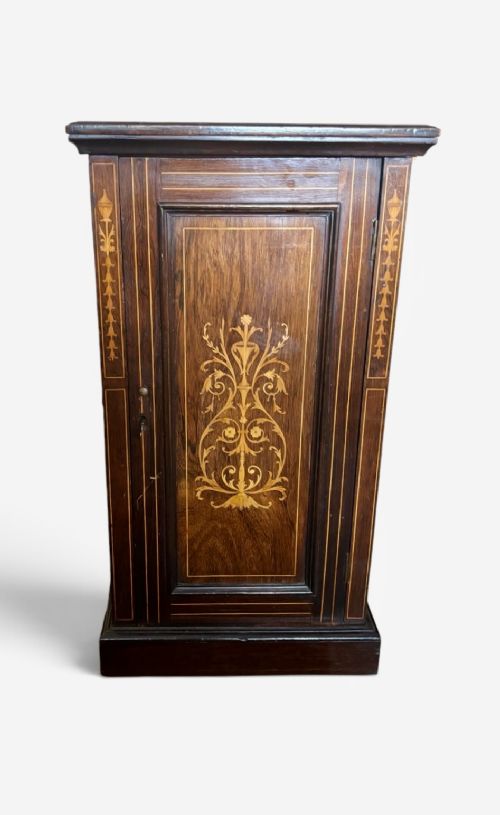


Inlaid Rosewood Music Cabinet
An inlaid rosewood music cabinet combines fine timber with intricate marquetry to hold sheet music in the principal reception rooms of Victorian and Edwardian homes.
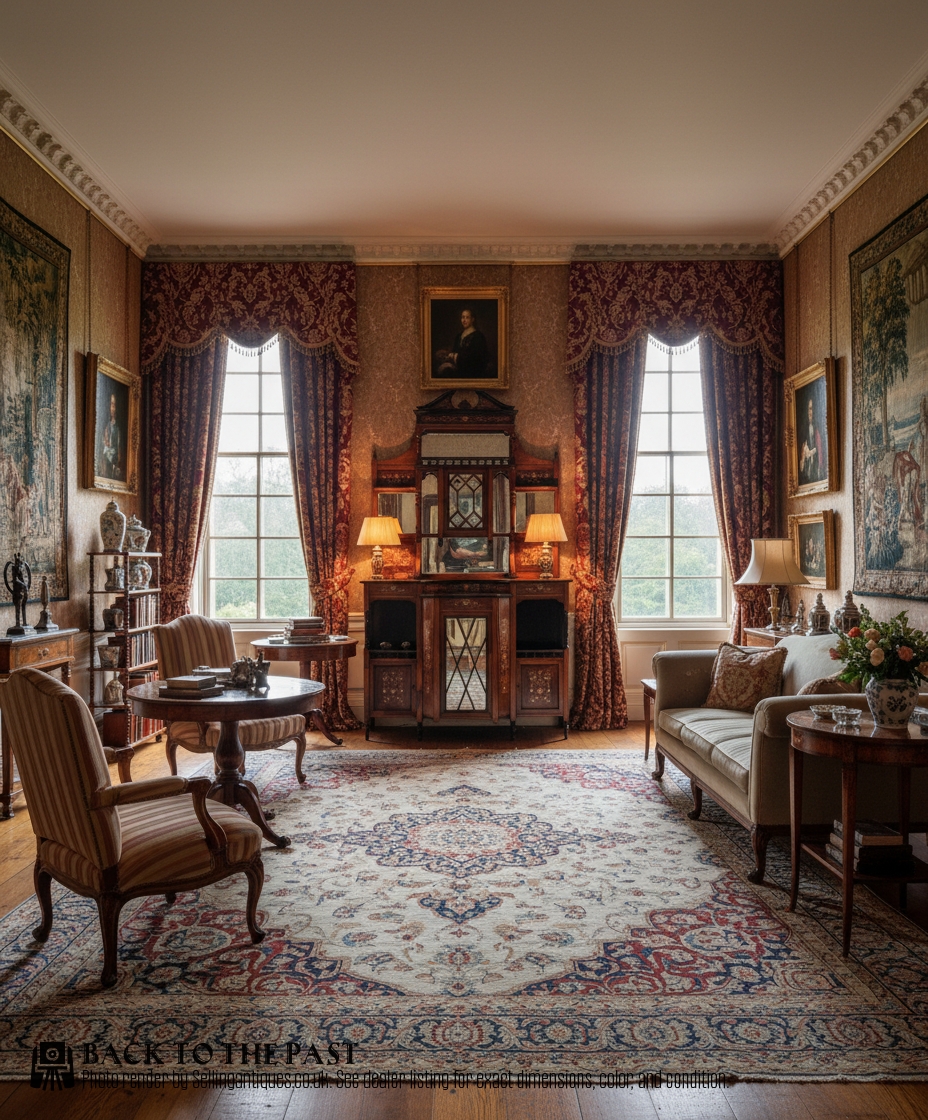
Inlaid Rosewood Music Cabinet
When you search for an inlaid rosewood music cabinet, you meet upright, narrow furniture designed specifically for domestic sheet music storage during the nineteenth and early twentieth centuries. These pieces appear predominantly from the Victorian, Late Victorian, and Edwardian periods, constructed as tall cabinets or side cabinets.
The form frequently includes interior shelving or dedicated partitions originally intended for sorting musical scores. Many examples feature glazed doors for display or mirrored upper sections typical of parlour furniture from these eras.
Materials and construction methods
Makers built these cabinets using dense rosewood foundations, often supported by secondary timbers like mahogany and accented with contrasting boxwood and satinwood stringing. Marquetry inlay forms floral or geometric motifs across the exterior surfaces, reflecting the decorative tastes of the Victorian Aesthetic Movement and Edwardian French Revival.
Hardware details such as brass handles and hinges complement the polished timber frames. Glazed panels and mirror glass appear in the doors and backsplashes of specific variants, finished with precise joinery suited to polite parlour spaces.
Early nineteenth-century domestic composers must have rejoiced at finally having somewhere designated to stop sheet music sliding behind the chaise longue.
Judging execution and refinement
Quality rests in the precision of the marquetry inlay and the selection of figured rosewood veneers. Finer examples display meticulous contrast in the boxwood and satinwood details without lifting or gaps along the timber grain.
Structural integrity of the narrow frame and the preservation of original interior divisions distinguish superior pieces from utilitarian alternatives. The sharpness of the brass mounts and the clarity of any mirrored or glazed components also separate standard production from exceptional work.
The Inlaid Rosewood Music Cabinet Glossary
- Marquetry Inlay
- Decorative patterns formed by fitting contrasting veneers into a prepared wooden surface. This technique creates pictorial or geometric designs on cabinet doors.
- Rosewood
- A dense, heavily grained tropical timber prized for rich dark coloration and polished finishes. It serves as the primary exterior medium for these cabinets.
- Satinwood
- A luminous yellowish timber utilised for contrasting stringing and inlay work. It highlights borders and central floral motifs.
- Aesthetic Movement
- A late nineteenth-century design style emphasising visual refinement and craftsmanship. Cabinets from this movement often feature stylized floral marquetry.
Inlaid Rosewood Music Cabinet: Frequently Asked Questions
What fits inside an inlaid rosewood music cabinet?
These cabinets contain narrow interior shelves or partitions designed to hold paper sheet music and folios flat.
Modern owners frequently use the compartments for letters, art prints, or slim paperwork rather than musical scores.
How do I distinguish Victorian from Edwardian cabinets?
Victorian examples tend to display darker rosewood timbers, heavier proportions, and sometimes mirror backs or Aesthetic Movement motifs.
Edwardian pieces often appear lighter in construction, occasionally incorporating French Revival influences or simplified marquetry.
Where were these cabinets placed in period homes?
Families kept music cabinets in drawing rooms, parlours, or music rooms where pianos and other instruments stood.
Their narrow, tall footprint allowed them to fit neatly against wall spaces without obstructing foot traffic.
Are glazed doors original to music cabinets?
Many period cabinets feature glazed or mirrored doors designed to display bound volumes of music or decorative items.
Solid timber doors also appear frequently, prioritizing privacy and protection for loose sheet collections.