


Mirrored Music Cabinet
A mirrored music cabinet holds sheet music behind glass while reflecting the room with a glass panel, combining utility and parlour display.
Mirrored Music Cabinet
A mirrored music cabinet is a compact piece designed to store sheet music, scores, and documents within the Victorian and Edwardian parlour. These items surface frequently as music cabinets, side cabinets, and display cabinets originating from the nineteenth and early twentieth centuries.
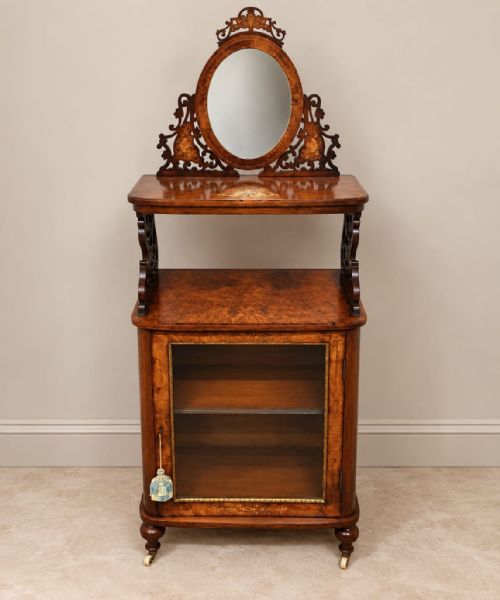
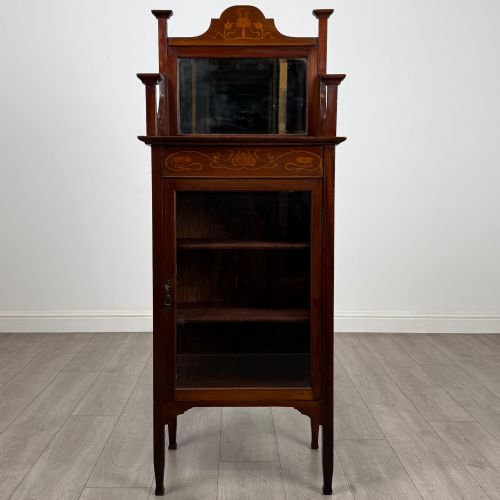
The materials and styles span Victorian, Edwardian, late Victorian, Art Nouveau, and Victorian Aesthetic Movement aesthetics. You will encounter forms constructed in mahogany, rosewood, walnut, and burr walnut, often featuring marquetry inlay or brass fittings alongside the mirror element.
Makers and designers of the period produced these pieces to serve multiple functions in the home, combining a cupboard or shelf interior with a mirror back, door, or panel. The listings here represent the primary variations found in walnut and mahogany from the 1880s through to the Edwardian era.
What varies in quality
The refinement of the timber selection and the complexity of the marquetry inlay set the standard across these pieces. Cabinets utilising burr walnut, rosewood, or Gonçalo Alves display greater depth of grain than plain mahogany equivalents.
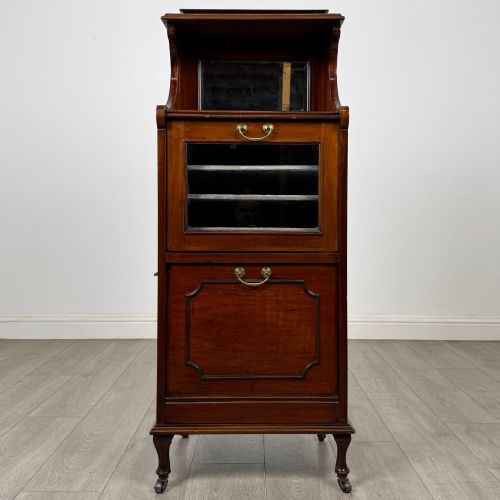
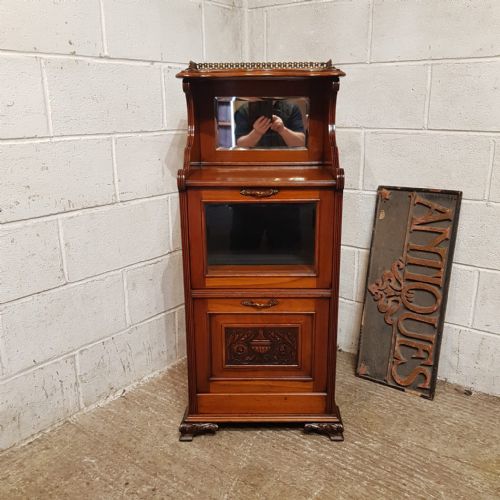
The integration of the mirror and brass hardware distinguishes standard utility items from finer parlour furniture. Superior examples maintain crisp carving, precise inlay work, and balanced proportions within the cabinet structure.
The site listings feature cabinets from the Victorian and Edwardian periods, constructed in mahogany, rosewood, walnut, and burr walnut with glass mirrors.
The Mirrored Music Cabinet Glossary
- Marquetry inlay
- Decorative patterns formed by fitting small pieces of veneer into the wooden surface of the cabinet. This technique allows for floral or geometric designs using contrasting timbers.
- Burr walnut
- A prized wood grain obtained from walnut tree growths, notable for its swirling and knotty patterns. It is frequently utilised on the primary facade of Victorian furniture.
- Canterbury
- A low compartmentalised stand originally designed to hold sheet music or folios. Many music cabinets incorporate similar internal divisions or drawer arrangements.
- Parlour cabinet
- A decorative storage piece intended for the formal reception rooms of the late nineteenth century. These items often integrate display shelves and mirrors to catch the light.
Mirrored Music Cabinet: Frequently Asked Questions
What is a mirrored music cabinet?
A mirrored music cabinet is a nineteenth or early twentieth-century wooden piece designed to store sheet music behind a door or within compartments. It incorporates a mirror into the front door panel or the upper backsplash.
These items were built primarily during the Victorian and Edwardian periods for use in domestic music rooms and parlours. They combine storage utility with the reflective and decorative qualities of period glassware.
How were they used originally?
Households utilised these cabinets to keep sheet music, folios, and documents organised and protected from dust in the parlour. The top surface often held small decorative objects or plants.
The mirror served to brighten the room by reflecting candlelight or window light, while the enclosed shelving kept the musical scores close to the piano.
How do I tell Victorian from Edwardian pieces?
Victorian examples generally feature heavier timbers like rosewood and walnut, often with rich marquetry inlay or Aesthetic Movement detailing. The construction is robust and dense.
Edwardian pieces tend to employ lighter mahogany tones or specific veneers like Gonçalo Alves, sometimes reflecting French Revival or early Art Nouveau influences. The overall visual weight is frequently lighter than mid-Victorian furniture.
Where should I place one at home?
A mirrored music cabinet fits well in a living room, hallway, or study where its compact footprint and internal shelving offer practical storage. The reflective glass helps to bounce light into darker corners of a modern interior.
It can function as a small drinks cabinet, bedside cupboard, or display point for collected objects while retaining its historic character.