


Inlaid Wooden Music Cabinet
An inlaid wooden music cabinet keeps scores tidy in mahogany, walnut or satinwood with delicate boxwood stringing.
Inlaid Wooden Music Cabinet
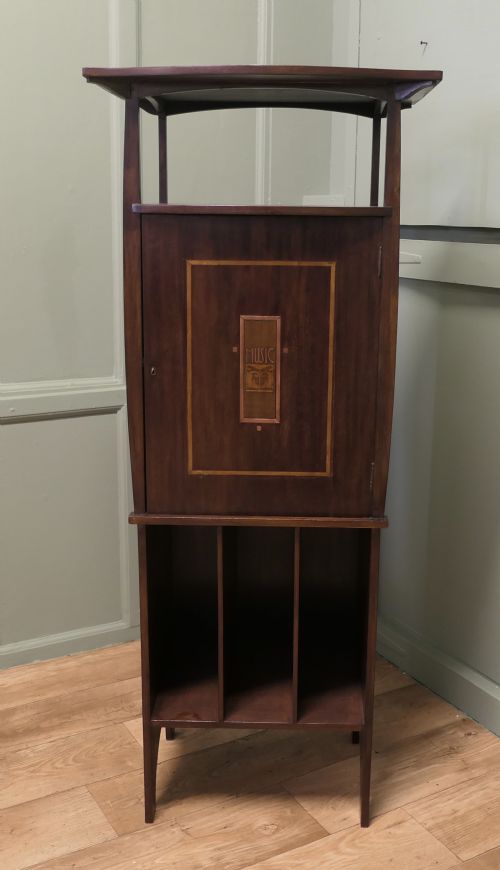
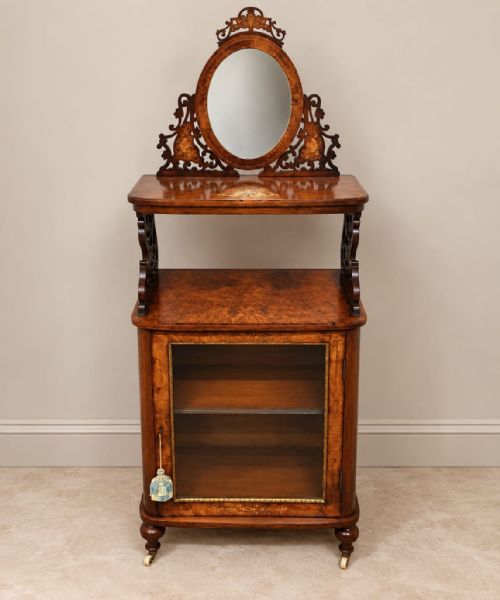
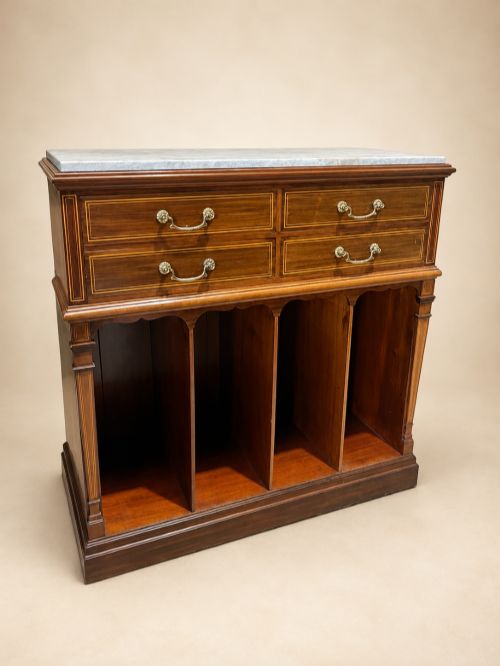
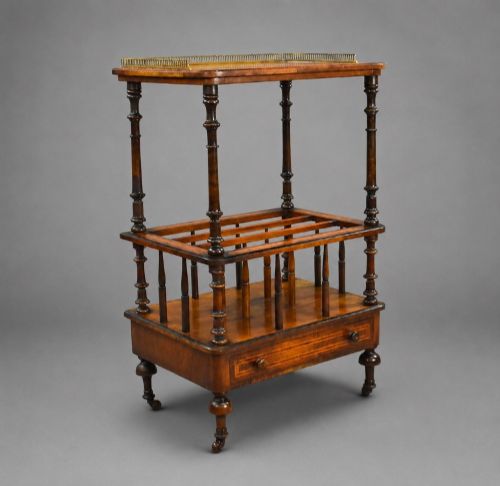
An inlaid wooden music cabinet serves as a dedicated piece of furniture designed to house sheet music, scores and folios within a domestic parlour or drawing room. When a buyer searches for an inlaid wooden music cabinet, they encounter forms that range from upright cupboards and narrow cupboards to canterburys, whatnots and side cabinets.
The pieces appearing on this page span the Victorian and Edwardian eras, alongside pieces from the 1920s and 1930s, reflecting the enduring popularity of domestic musical entertainment. Alongside standard music cabinets, the selection includes related storage forms such as magazine racks and bedside cabinets that share similar timber construction and decorative stringing.
How they were made
Cabinet makers utilised solid timbers and selected veneers such as mahogany, walnut, burr walnut and satinwood to construct the carcasing and panel doors. Brass hardware such as drop handles and hinges completes the functional elements of the structure.
Decoration relies heavily on contrasting stringing and marquetry in boxwood and other light woods, creating geometric borders or floral motifs across drawer fronts and cupboard doors.
Some nineteenth-century makers thoughtfully designed interior partitions so musicians could thumb through their waltzes without dropping the entire stack.
What varies in quality
Quality rests upon the choice of timber figure, such as the depth of grain in burr walnut or the consistent grain of selected mahogany, paired with the precision of the boxwood inlay. Finer examples display crisp marquetry work and well-fitted interiors designed specifically for vertical music storage.
Construction methods also distinguish standard production from superior workshops, visible in the dovetailing of drawers, the choice of secondary woods, and the integration of specialised shelving or partitions.
GM Elwood for JS Henry
The Inlaid Wooden Music Cabinet Glossary
- Marquetry
- A decorative technique where small pieces of veneer are assembled to form pictorial or geometric patterns on a wooden surface. It adds visual complexity to cabinet doors and tops.
- Canterbury
- A low, partitioned stand traditionally used for holding sheet music, books or newspapers. Many examples include a small drawer beneath the vertical divisions.
- Stringing
- Thin lines of contrasting wood inlay used to outline drawers, panels and tabletops. Boxwood is frequently utilised for this purpose against dark mahogany or walnut.
- Burr walnut
- Timber taken from the warted growth on a walnut tree, yielding highly figured and swirling grain patterns. It was favoured for high-status Victorian and Edwardian furniture.
Inlaid Wooden Music Cabinet: Frequently Asked Questions
What is an inlaid wooden music cabinet?
An inlaid wooden music cabinet is a specialised piece of furniture created to hold sheet music and scores in an organised manner. They typically feature drop-front drawers, vertical partitions or small cupboards.
These cabinets date mainly from the Victorian and Edwardian periods, often decorated with contrasting boxwood stringing and marquetry details.
How do you tell Victorian from Edwardian music cabinets?
Victorian music cabinets generally employ heavier timbers such as burr walnut and dark mahogany, often featuring rich marquetry and darker finishes. They reflect the ornate tastes of the nineteenth century.
Edwardian cabinets tend to be lighter in appearance, frequently utilising satinwood or lighter mahogany with refined Sheraton Revival styling and delicate inlay work.
Can these cabinets hold modern music books?
Most music cabinets were built to accommodate standard nineteenth and early twentieth-century sheet music and folios. The interior drawers and shelving depths vary by individual piece.
Buyers intending to store modern oversized scores should check the internal dimensions of the specific cabinet before purchase.
How do I care for inlaid wooden surfaces?
Inlaid wooden surfaces require stable indoor humidity and protection from direct sunlight to prevent the timber from drying and the veneer or stringing from lifting. Regular dusting with a soft, dry cloth is sufficient for daily maintenance.
Application of appropriate beeswax or furniture polish helps nourish the grain and preserve the finish without harming the delicate boxwood inlay.