


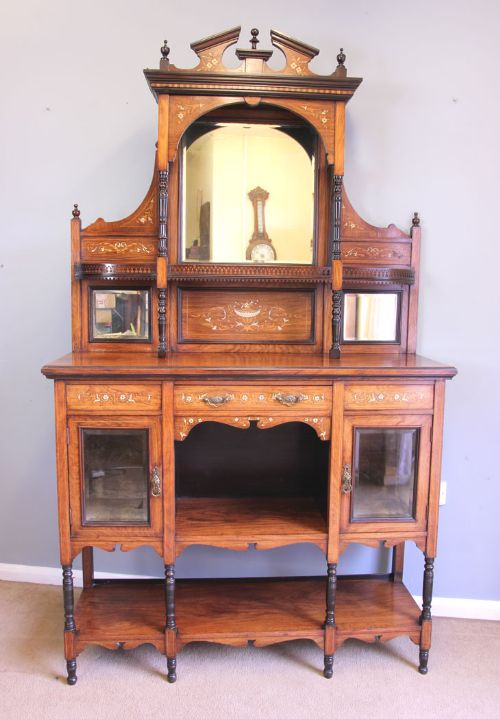
Rosewood Parlor Cabinet
A rosewood parlor cabinet brings rich grain and delicate inlay to a sitting room, offering both display space and concealed storage.
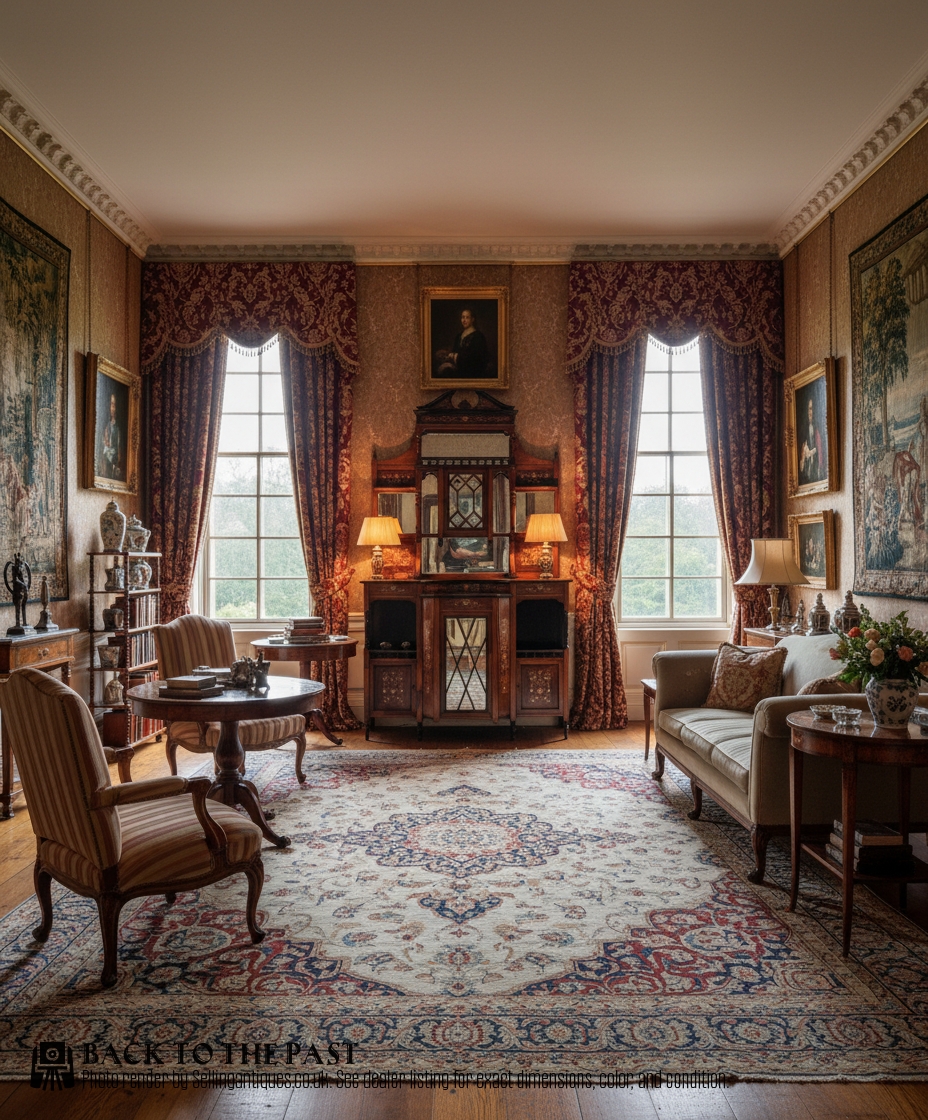
Rosewood Parlor Cabinet
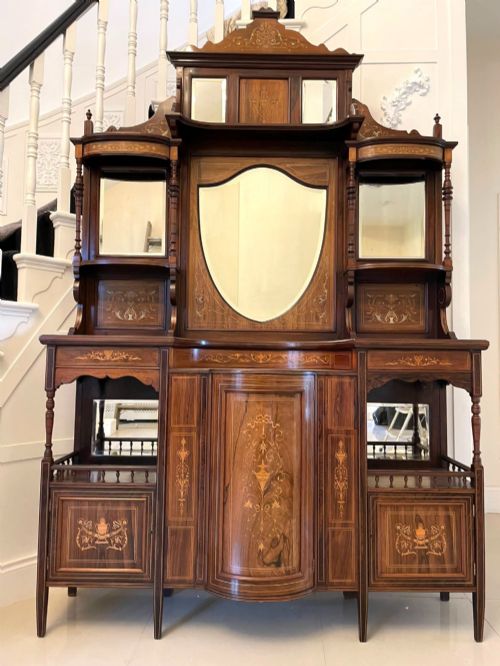
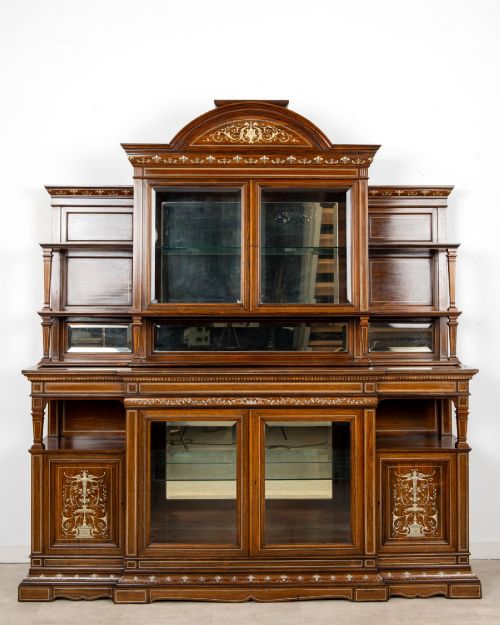
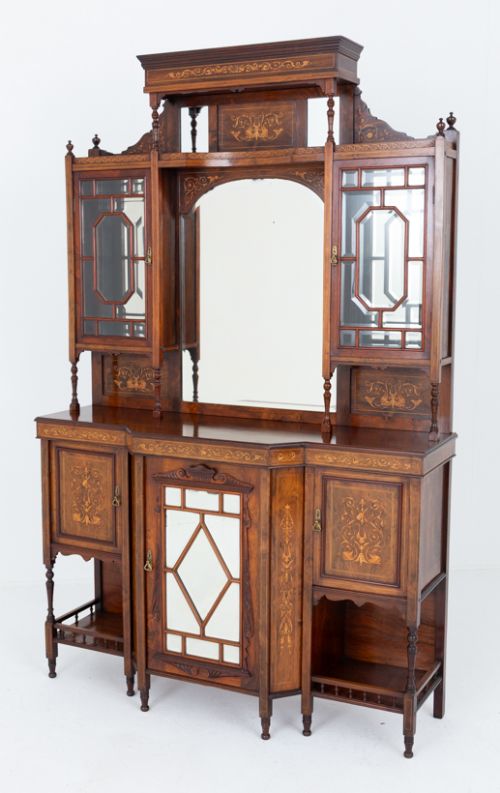
When you search for a rosewood parlor cabinet, you are looking at formal nineteenth-century and early twentieth-century furniture designed for the reception rooms of fine homes. These pieces combine display surfaces, glass-fronted compartments for china or books, and enclosed cupboards or mirrored backs. The versions most commonly encountered on this page date from the Victorian and Edwardian eras, spanning the mid-nineteenth century to around 1900.
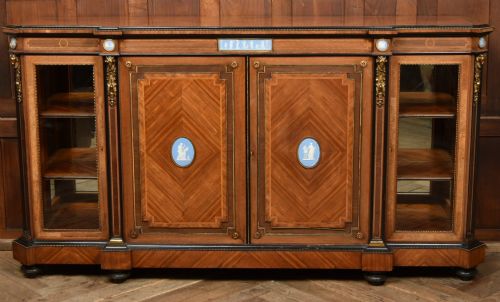
The forms vary from compact side cabinets and credenzas to larger display pieces and mirror-backed parlor cabinets. Many examples incorporate specific stylistic influences such as Sheraton Revival, Aesthetic Movement, and French Revival designs. Their primary function was both practical storage and the display of decorative objects, reflecting the tastes of the period.
Makers of the era utilised dense tropical hardwoods combined with lighter contrasting timbers to create visually striking focal points for the home. While some pieces are straightforward utility furniture, others exhibit sophisticated decorative schemes intended to impress guests in a formal parlor setting.
How they were made
The construction of a rosewood parlor cabinet relies on a sturdy carcase of pine or mahogany veneered with figured rosewood timber. Craftsmen applied contrasting light woods such as boxwood and satinwood for intricate marquetry and stringing details, creating geometric or floral patterns across the doors and panels. Brass hardware, mirrored glass panels, and occasionally jasperware plaques were integrated to enhance the visual complexity.
Surface finishing involved French polishing to bring out the deep reddish-brown tones and dark grain patterns characteristic of rosewood. In some instances, such as certain Regency pieces, wood was expertly painted and simulated to resemble the appearance of genuine rosewood. Interior elements often included velvet linings and adjustable shelving tailored for the display of curiosities.
Victorian parlor cabinets often hide velvet-lined shelves specifically designed to keep your prized ceramic teacups from sliding during a lively family debate.
What varies in quality
Quality in these cabinets is determined by the depth and selection of the rosewood veneer and the precision of the marquetry inlay. Cabinets featuring profuse, finely executed boxwood inlay or hand-painted details stand apart from simpler utilitarian pieces produced in volume. The crispness of the carving, the integration of bevelled mirror glass, and the substantial weight of the brass mounts indicate higher workshop standards.
Structural integrity also separates standard items from exceptional ones, particularly the stability of the timber joints and the preservation of the original French polish surface. Pieces associated with notable workshops demonstrate superior joinery and more refined proportions, retaining their original hardware and internal fittings over the decades.
Collinson & Lock·Edwards & Roberts
The Rosewood Parlor Cabinet Glossary
- Rosewood
- A dense, heavy timber prized for its dark grain and rich reddish-brown colour. It takes a high polish and was a favourite material for fine nineteenth-century cabinet work.
- Marquetry
- Decorative patterns formed by inserting pieces of contrasting veneer into a wood foundation. Craftsmen used boxwood and satinwood to create floral or geometric motifs.
- Credenza
- A low cabinet or sideboard, often featuring glass-fronted doors and mirrored backs. It served both functional storage and formal display purposes in Victorian interiors.
- Aesthetic Movement
- A late nineteenth-century design style that emphasised artistic visual qualities over traditional narrative or moral themes. Furniture from this movement often displays clean lines and refined orientalist influences.
- Sheraton Revival
- A late nineteenth-century revival style inspired by the light, elegant furniture designs of the eighteenth-century designer Thomas Sheraton. These pieces typically feature delicate inlay and tapered legs.
Rosewood Parlor Cabinet: Frequently Asked Questions
What is a parlor cabinet used for?
A parlor cabinet was designed for formal reception rooms to store household silver, fine linens, and writing materials while displaying porcelain and decorative objects on its upper shelves.
The enclosed lower cupboards provided concealed storage, while glass doors and mirrored backs created an impression of light and space in Victorian interiors.
How do I date a rosewood cabinet?
Dating relies on examining the secondary timbers, construction methods, and stylistic cues such as hardware and inlay motifs. Mid-Victorian pieces often show heavier proportions, whereas later Victorian and Edwardian examples lean towards revival styles with lighter veneer work.
Cabinet makers frequently incorporated design elements that reflect the prevailing aesthetic movements of their specific decade of production.
Are these cabinets made of solid rosewood?
Most nineteenth-century parlor cabinets use rosewood as a fine veneer applied over a stable secondary timber such as mahogany or pine. This technique prevented warping while allowing craftsmen to display the most highly figured grain patterns on the exterior surfaces.
Solid rosewood was generally reserved for smaller decorative items, mouldings, and turned support columns.
How do I care for antique rosewood furniture?
Maintain antique rosewood by placing it away from direct sunlight and heat sources, which can dry out the timber and crack the French polish. Regular dusting with a soft, dry cloth is sufficient for daily upkeep.
Avoid modern silicone polishes, as they can penetrate the historic finish and damage the delicate wood grain over time.