
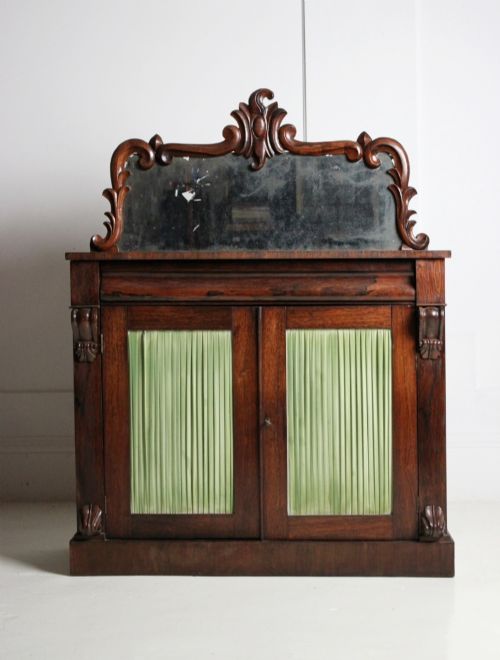
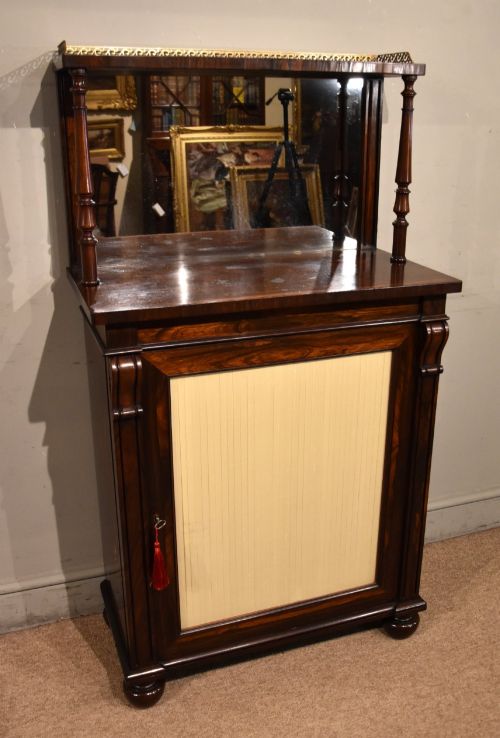
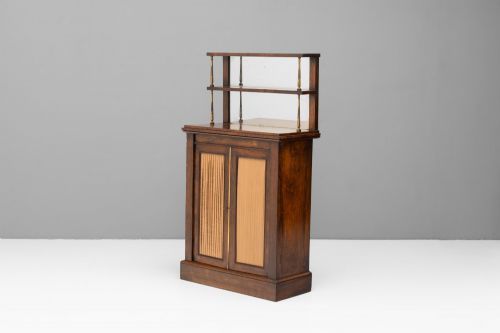


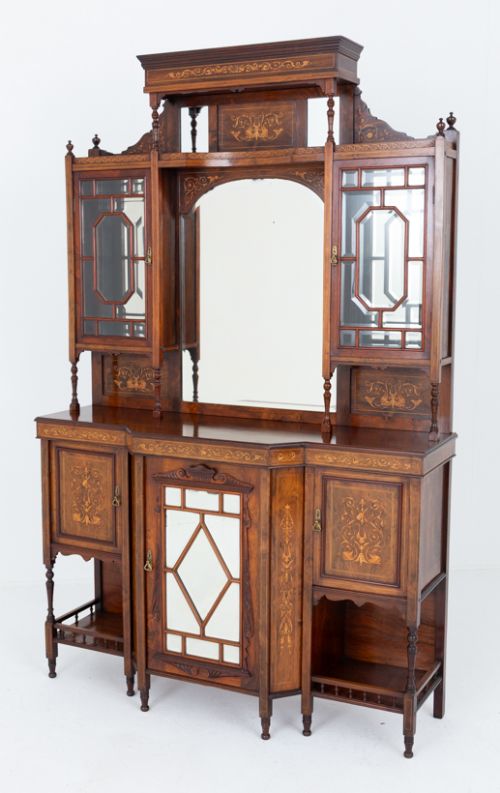


Rosewood Mirror Back Chiffonier
These rosewood mirror back chiffonier pieces bring rich grain and reflected light to a room, combining lower storage with display.
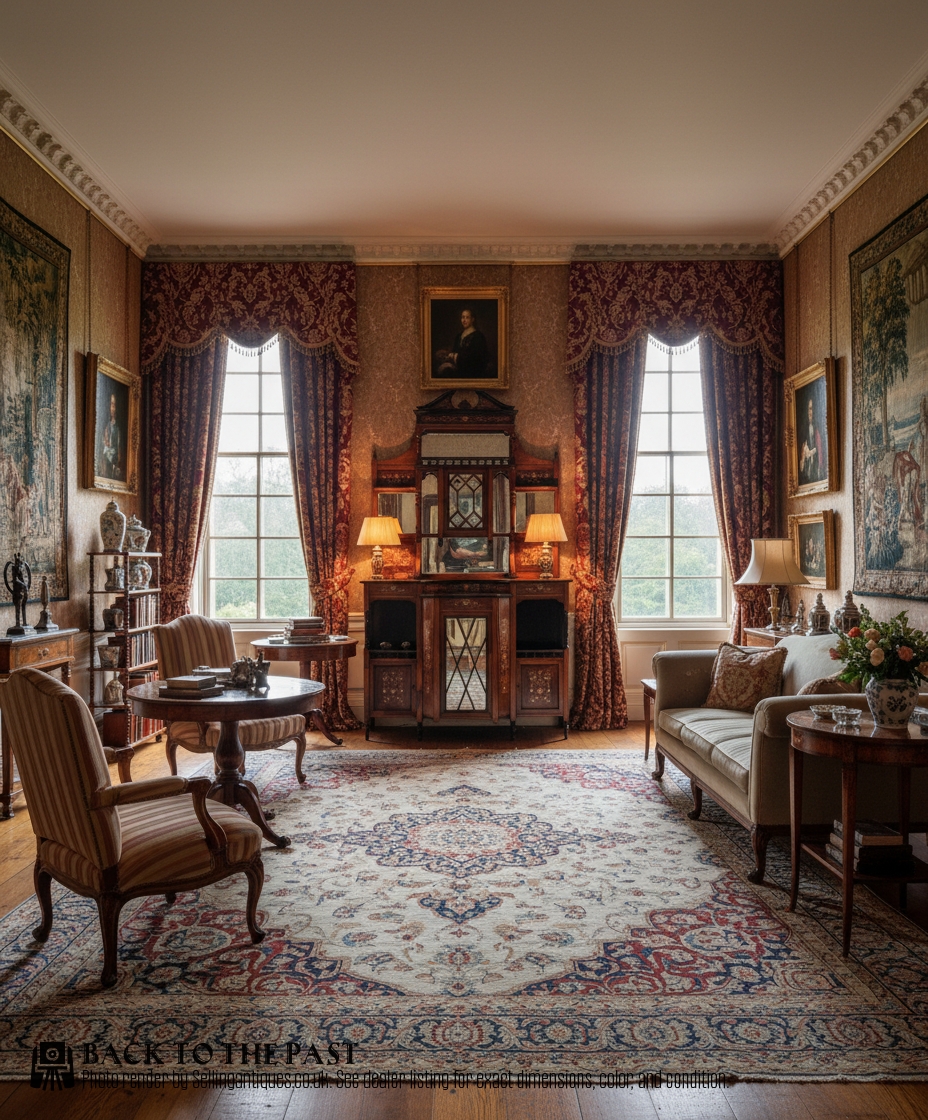
Rosewood Mirror Back Chiffonier
A rosewood mirror back chiffonier is a low-standing cabinet designed for living spaces and parlours, typically featuring a cupboard base and an upright back holding a glass mirror. These furnishings emerged strongly during the Regency and Victorian eras, evolving through George IV, William IV and late Victorian periods into detailed display cabinets.
The versions met on this page span the early nineteenth century through to nineteen hundred, encompassing related forms such as side cabinets, credenzas and bookcases alongside standard chiffoniers. Many examples display regional character, including Scottish Regency work, while others incorporate marble tops or open shelving for display.
Makers and workshops of the nineteenth century utilised dense tropical hardwoods to build these substantial pieces, often integrating brass or boxwood inlay to enhance the dark timber. The combination of enclosed storage below and reflective glass above made them central pieces of furniture in formal reception rooms.
Factors determining quality
Quality rests upon the crispness of the boxwood inlay and the precision of the marquetry work, where finer pieces display sharp, clean botanical or geometric motifs rather than blurred or heavy lines. The selection of the rosewood veneer itself marks the tier of the piece, with richly figured grain commanding greater attention than plain timber.
Structural integrity and the quality of the timber framing define the better examples, ensuring doors hang square and mirror frames remain rigid. Pieces bearing attribution to established workshops display superior interior secondary woods and more refined brass hardware.
Many a Victorian parlour mirror back reflects generations of heavy velvet curtains and damp British toast.
Holland and Sons·Gillows·Collinson and Lock·Stephen Webb
The Rosewood Mirror Back Chiffonier Glossary
- Chiffonier
- A low sideboard or cabinet featuring enclosed shelving below, frequently topped with a superstructure of drawers or a mirror back. This form became a staple of nineteenth-century drawing rooms.
- Marquetry
- Decorative patterns formed by inserting pieces of contrasting wood veneer into a prepared surface. It adds pictorial or geometric detail to the panels of late Victorian cabinets.
- Boxwood inlay
- Fine lines or motifs of pale boxwood set flush into the dark rosewood surface. This technique creates linear contrast along cabinet doors and cornices.
- Credenza
- A grand side cabinet originally used for serving food but later adapted as a luxurious display piece for the parlour. They share many stylistic traits with nineteenth-century chiffoniers.
- Breakfront
- A cabinet design where the central section projects forward from the flanking sides. This adds architectural depth to larger sideboards and display furniture.
Rosewood Mirror Back Chiffonier: Frequently Asked Questions
What is a rosewood mirror back chiffonier?
A rosewood mirror back chiffonier is a low nineteenth-century cabinet that combines closed storage in the base with a decorative mirror set into the upright back.
These pieces were designed for drawing rooms and parlours to display ornaments while reflecting light around the space.
How do I date a rosewood chiffonier?
Dating relies on observing stylistic markers such as Regency curves, William IV pilasters, or the busier marquetry typical of late Victorian production.
Construction methods, secondary timbers, and the presence of boxwood inlay also help narrow down the decade of manufacture.
Where were chiffoniers used?
Chiffoniers were placed in principal reception rooms, dining parlours, and drawing homes as functional side pieces for storing linen, silver, or books.
The mirror back version specifically served to brighten darker corners of Victorian homes by reflecting window light.
How do I care for antique rosewood?
Antique rosewood requires a stable environment away from direct sunlight and sudden temperature changes to prevent timber movement and veneer lifting.
Dusting with a dry, soft cloth and applying appropriate wax polish sparingly maintains the natural lustre of the wood.