



Victorian Parlour Chiffonier
A victorian parlour chiffonier brings the refined timber work and mirrored elegance of the nineteenth century straight into a modern interior.
Victorian Parlour Chiffonier
A victorian parlour chiffonier serves as a formal storage piece or display cabinet, combining low cupboards with upper shelving or glass fronts. These low side cabinets emerge across the nineteenth century and into the Edwardian period, evolving from simple sideboards into highly decorative parlour furnishings.
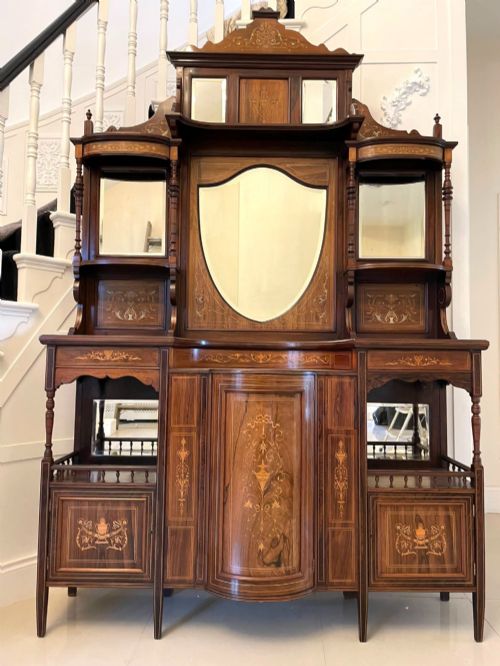
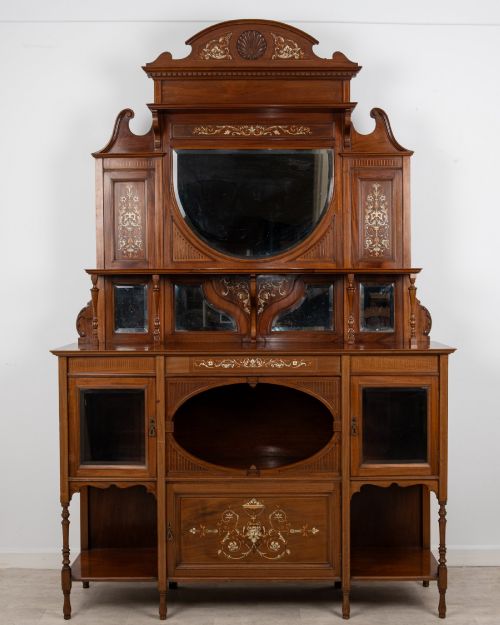
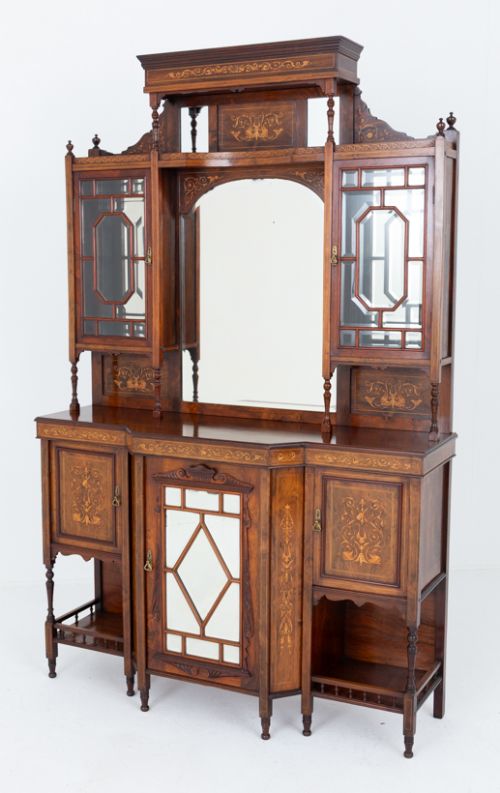
The versions met most frequently on this page span the Victorian and late Victorian eras, often featuring rosewood, mahogany, or walnut timbers. They frequently incorporate mirror backs and delicate boxwood inlay, reflecting the shifting tastes from heavy classical forms towards lighter Aesthetic Movement and Sheraton Revival designs.
Materials and construction
Cabinet makers utilised dense hardwoods such as rosewood, mahogany, and burr walnut as the primary structural foundations for these parlour pieces. These timbers were selected for their rich grain patterns and durability, providing a stable canvas for subsequent surface decoration.
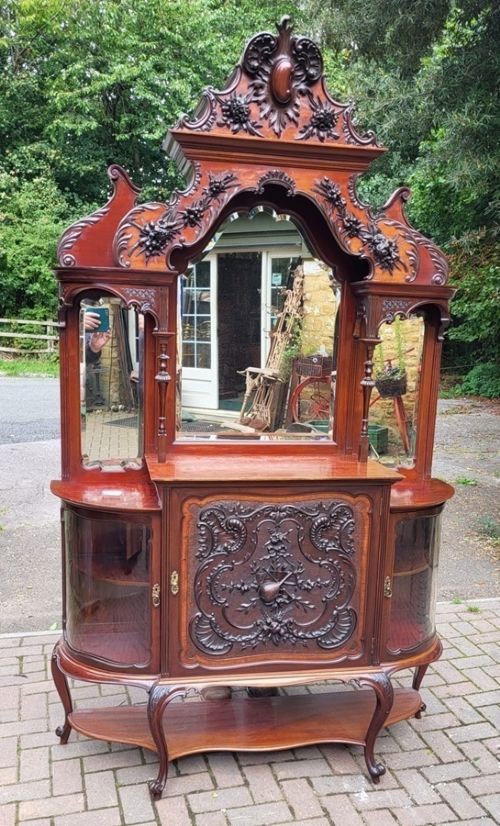
Surface embellishment relied heavily on contrasting boxwood inlay, marquetry, and ebonising, complemented by brass hardware and fitted glass panels. Carved wooden elements and mirrored backs were integrated into the upper superstructures, uniting storage utility with decorative display.
Distinctions in quality
Quality rests in the precision of the timber selection and the execution of the inlay work rather than the mere presence of ornamentation. Pieces featuring finely figured burr walnut or intricate rosewood marquetry demonstrate a superior hand from the workshop.
The integration of the mirror back and the crispness of any carved wooden details indicate the maker's level of skill. Superior examples maintain balanced proportions between the lower cabinet and the upper display framework, using quality brass fittings that remain original to the piece.
Garnett & Sons·Gillows
The Victorian Parlour Chiffonier Glossary
- Chiffonier
- A low cabinet or sideboard, typically featuring enclosed shelving below and sometimes an upper mirrored display structure. This form became a staple of the nineteenth-century parlour.
- Marquetry
- The art of applying pieces of veneer to a structure to form decorative patterns and pictures. Makers utilised contrasting timbers like boxwood to achieve detailed floral or geometric motifs.
- Ebonised
- Timber treated with a dark finish to imitate expensive ebony wood. This technique gained particular popularity during the Aesthetic Movement.
- Credenza
- A sideboard or display cabinet originating from Italian design, adopted in nineteenth-century British interiors for formal entertaining rooms.
- Sheraton Revival
- A late nineteenth and early twentieth century style drawing on the lighter, neoclassical furniture designs of Thomas Sheraton. These pieces often showcase delicate inlay and refined proportions.
Victorian Parlour Chiffonier: Frequently Asked Questions
What is a victorian parlour chiffonier?
A victorian parlour chiffonier is a low timber cabinet designed for the nineteenth-century reception room, combining enclosed storage with display surfaces. They typically served to hold tableware, books, or ornaments.
Over the decades, the form evolved to incorporate mirrored backs and glass display sections. They stand as a primary example of late nineteenth-century interior joinery.
How do I date a chiffonier?
Dating relies on observing the timber choices, inlay styles, and overall structural forms recorded across the nineteenth and early twentieth centuries. Rosewood and heavy carved mahogany commonly point to mid-Victorian periods.
Later pieces often display lighter Edwardian Sheraton Revival influences or ebonised Aesthetic Movement treatments. Examining the integration of the mirror back also helps narrow the decade of production.
Where were these cabinets placed?
These cabinets sat against the walls of formal parlours and drawing rooms to display prized ceramics and glassware. Their low profile ensured they did not dominate the room while offering useful surface space.
The inclusion of mirrored backs helped reflect candlelight and natural daylight around nineteenth-century reception rooms. Today, they serve a similar decorative and display function in domestic interiors.
What woods were used?
Cabinet makers relied primarily on rosewood, mahogany, and walnut to build these parlour pieces. Burr walnut and exotic veneers provided striking grain patterns for prominent display surfaces.
Contrasting boxwood inlay and ebonised finishes appeared frequently in later nineteenth-century examples. These materials dictated both the visual weight and the overall style of the furniture.