
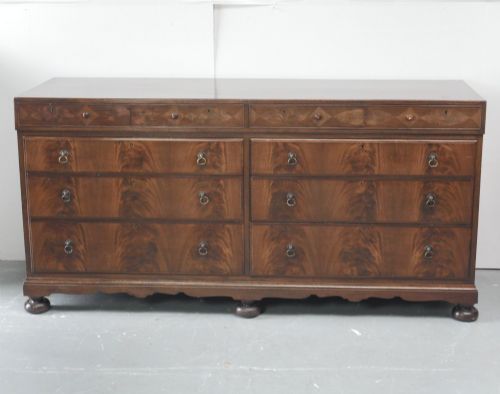
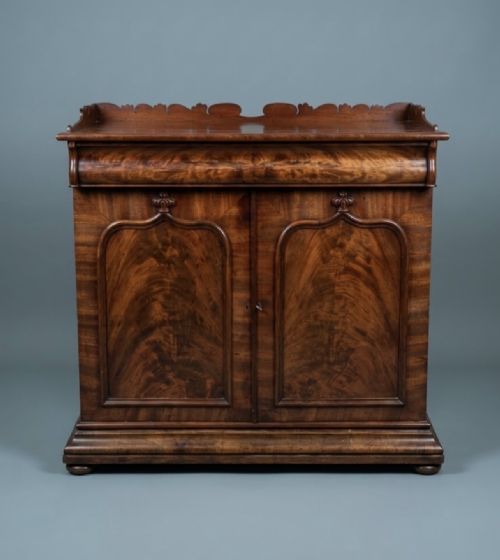
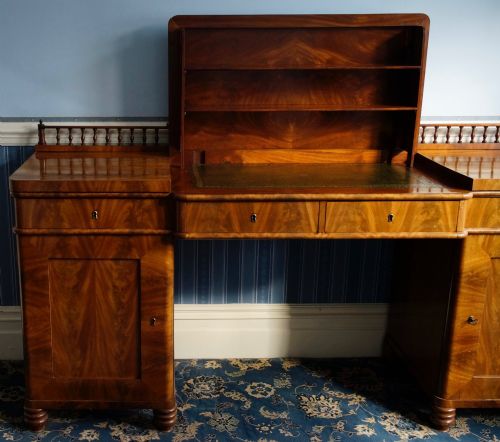
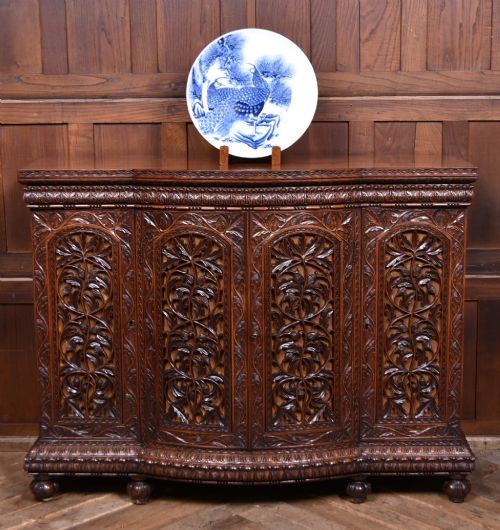

Antique Dark Wood Credenza
An antique dark wood credenza brings rich timber tones and enduring utility to a room, offering both display space and concealed storage.
What the pieces are
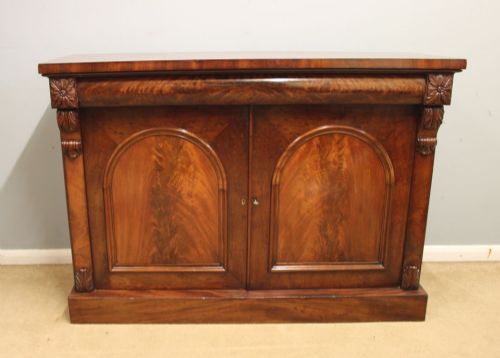
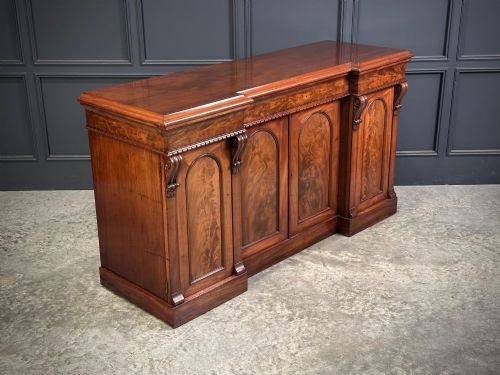
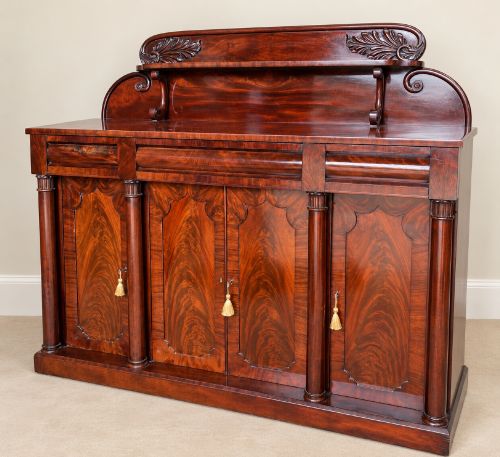
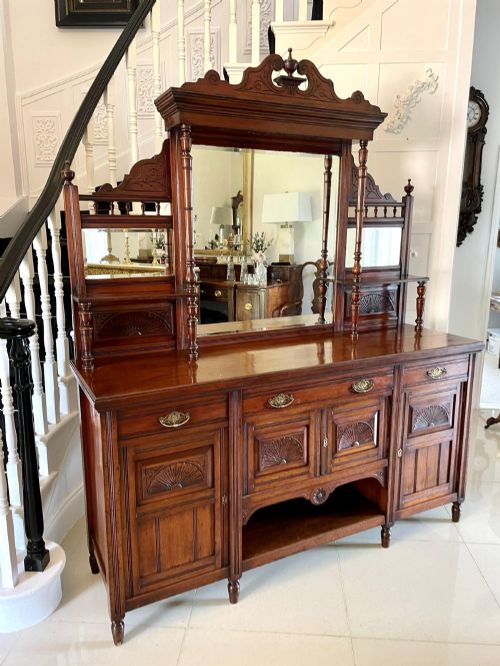
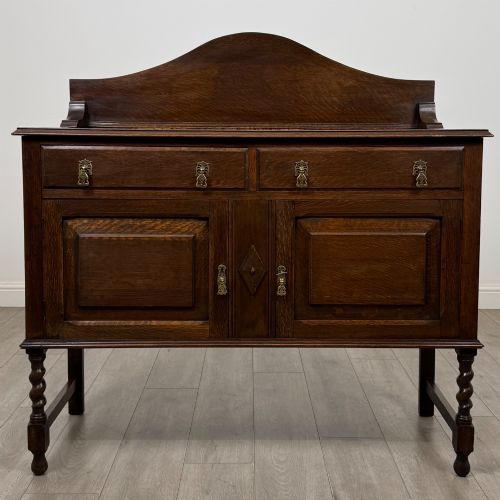
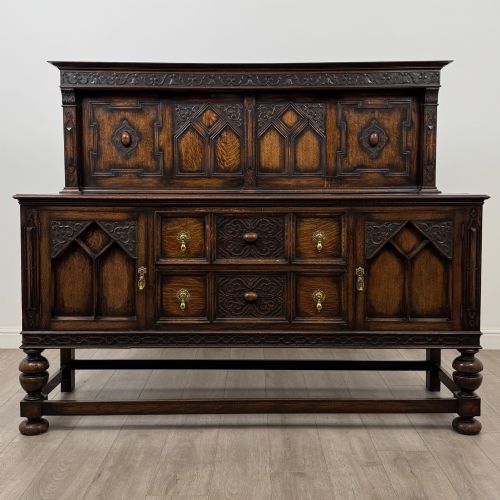
An antique dark wood credenza category encompasses substantial timber furniture designed for storage and display, appearing across several nineteenth-century periods. These forms range from substantial George III mahogany serpentine sideboards to later Victorian mirror back sideboards and chiffoniers.
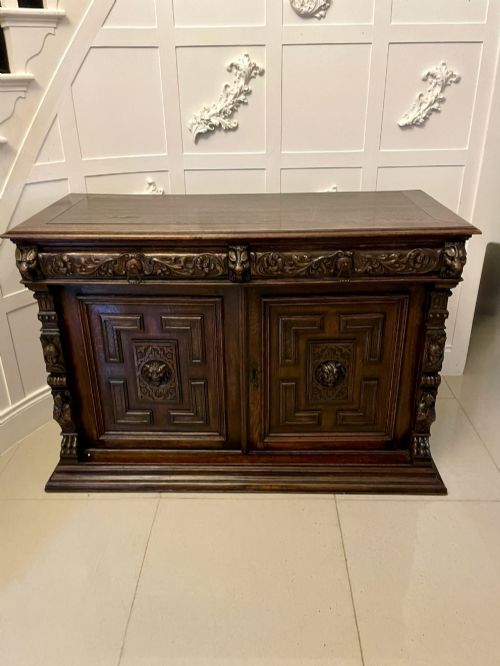
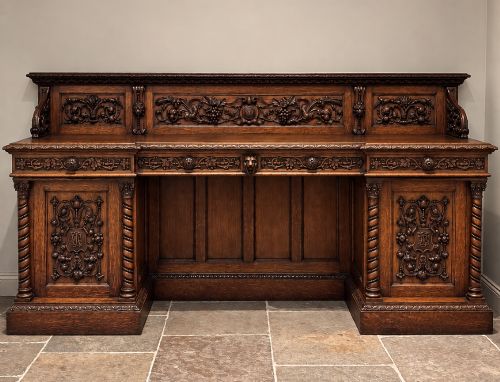
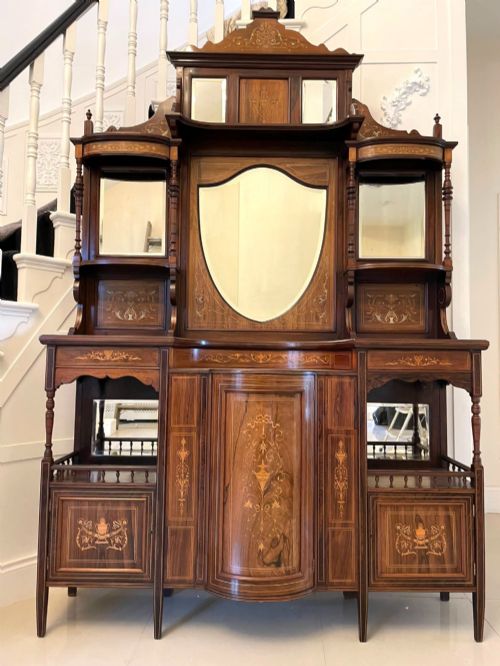
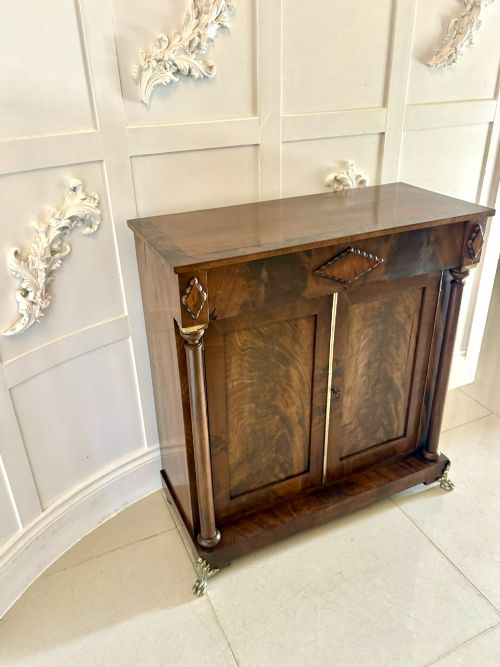
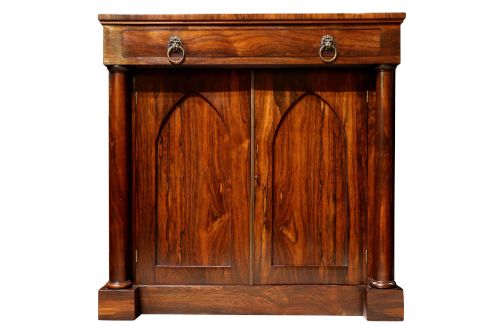
Buyers browsing this selection will encounter various iterations including Regency faux rosewood side cabinets, ebonised side cabinet credenza chiffoniers, and carved Italian walnut cabinets. Each piece reflects the formal dining and entertaining requirements of its era through fitted interior compartments and substantial proportions.
The objects span multiple stylistic movements such as Victorian Aesthetic Movement and Renaissance Revival, demonstrating the evolution of dark wood case furniture. Most examples utilise dense timbers like mahogany, rosewood, and walnut, frequently accented with brass or glass details.

How they were made
Cabinet makers utilised dense, durable timbers including mahogany, rosewood, and walnut, often selecting figured grain patterns for primary visual impact. Surfaces received hand-applied finishes that enhanced the natural dark tones of the wood.
Construction techniques incorporated hand-carved decorative elements, serpentine shaping, and architectural mirror backs. Workshops integrated materials such as gilt brass, fabric inserts, and glass panels to complement the primary timber framework.
Retail Price Guide 2026
Typical UK retail prices for dark wood credenza, calculated from the Sellingantiques database of over a million retail prices indexed since 2003. This retail price guide relies exclusively on Sellingantiques data; no external sources or auction records are used, so the figures do not describe the wider market.
What varies in quality
Superior examples demonstrate meticulous hand-carving and careful matching of timber grain across prominent surfaces, whereas simpler pieces rely on basic construction without decorative embellishment. The integration of specialised hardware, such as fine brass mounts and glass components, separates standard production from exceptional work.
The architectural ambition of the design - ranging from restrained George III serpentine fronts to elaborate Victorian mirror backs and Renaissance Revival carving - dictates the complexity and refinement of the finished piece.
The Antique Dark Wood Credenza Glossary
- Credenza
- A sideboard or cabinet originally used for displaying plate, featuring cupboards or shelving. This form evolved through the nineteenth century to serve dining rooms and libraries.
- Serpentine
- A front profile curving convexly in the centre and concavely at the ends. This shaping requires advanced carpentry skill in solid timber.
- Ebonised
- Wood finished to resemble ebony through staining or painting. This technique gained popularity during the nineteenth century for high-contrast furniture.
- Chiffonier
- A low sideboard or cabinet equipped with drawers and shelves, common in Victorian interiors. It provided convenient storage for china and linens.
- Faux rosewood
- Timber painted or grained to imitate genuine rosewood. Makers used this method to achieve exotic aesthetics using more accessible woods.
Frequently Asked Questions
Where should I place my credenza?
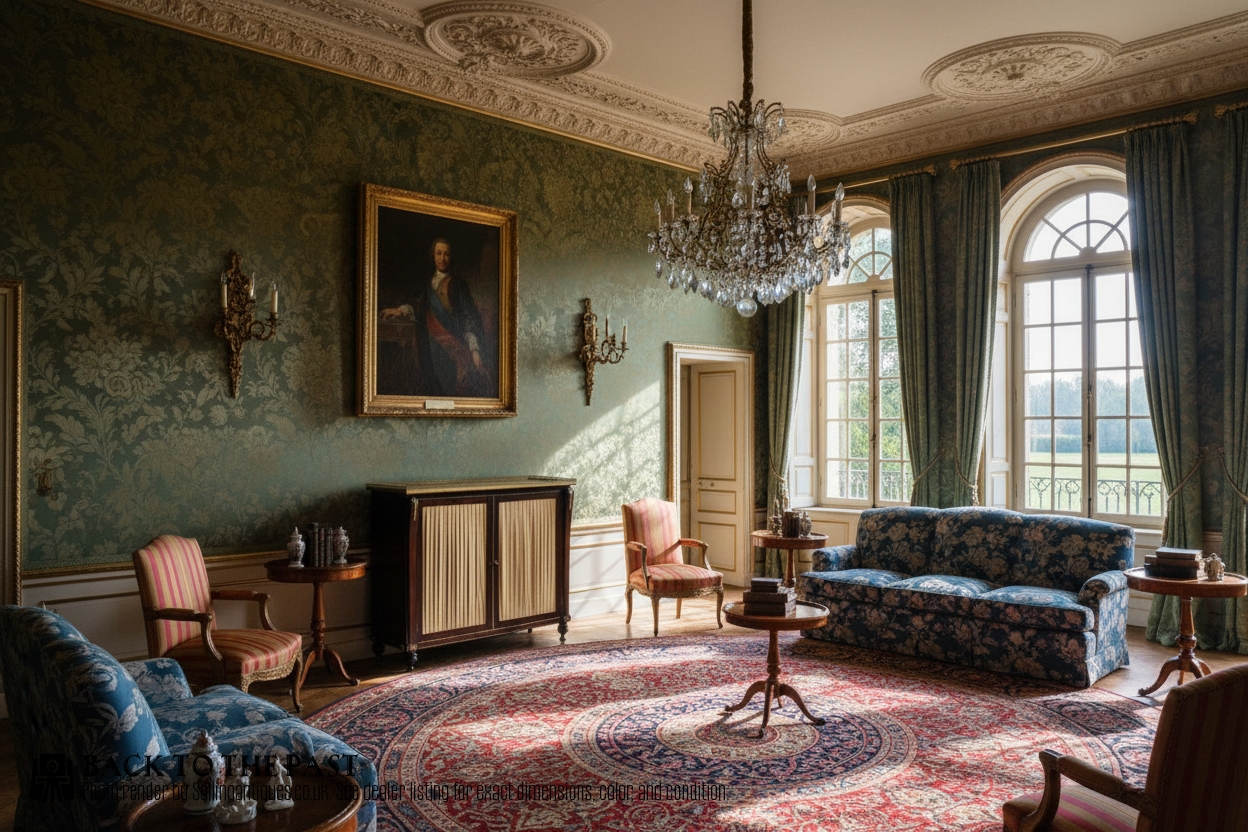
These substantial pieces anchor dining rooms, spacious hallways, or large living areas where their storage and surface display capabilities can be utilised effectively. Their finished timber backs and refined facades allow them to stand against interior walls or serve as room dividers.
Ensure the chosen location accommodates the physical depth and length of the specific cabinet, particularly for serpentine or mirror-backed variants that require adequate wall space.
How do I care for dark wood?
Maintain the timber surfaces by dusting regularly with a soft, dry cloth and avoiding placement near direct heat sources or strong sunlight. Periodic application of appropriate wax polish preserves the sheen and protects the historic finish.
Prevent moisture damage by using coasters and mats beneath any objects placed on the top surface.
What periods do these pieces represent?
The selection spans from the Georgian era through the Regency period and into Victorian times, encompassing styles like the Aesthetic Movement and Renaissance Revival. Each era introduced distinct proportions, carving styles, and hardware conventions.
Recognising these chronological shifts helps date specific examples according to their construction methods and decorative vocabulary.
How do I distinguish a sideboard from a credenza?
While terminology often overlaps in nineteenth-century furniture, traditional sideboards generally emphasise dining room service with central drawers flanked by cupboards. Credenzas historically feature enclosed cabinet space across the front, often raised on short legs or a plinth.
Reviewing the internal configuration and door arrangement clarifies the specific form of each piece.