

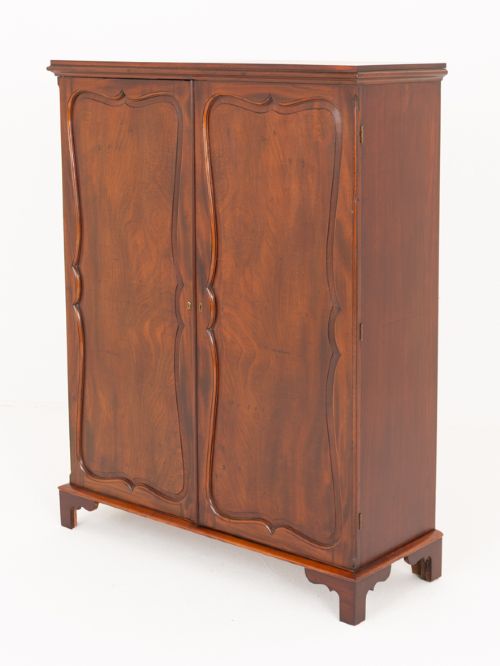
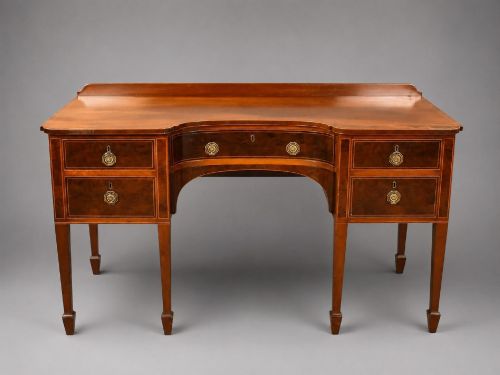
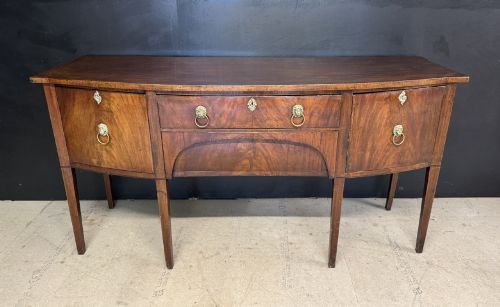
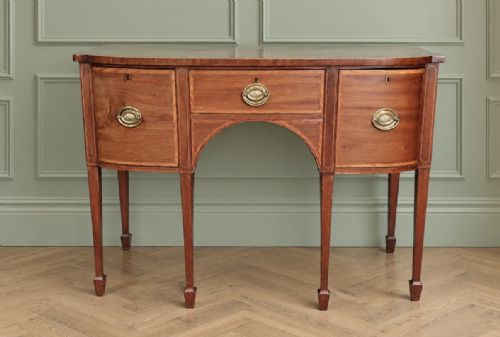
18th Century Mahogany Sideboard
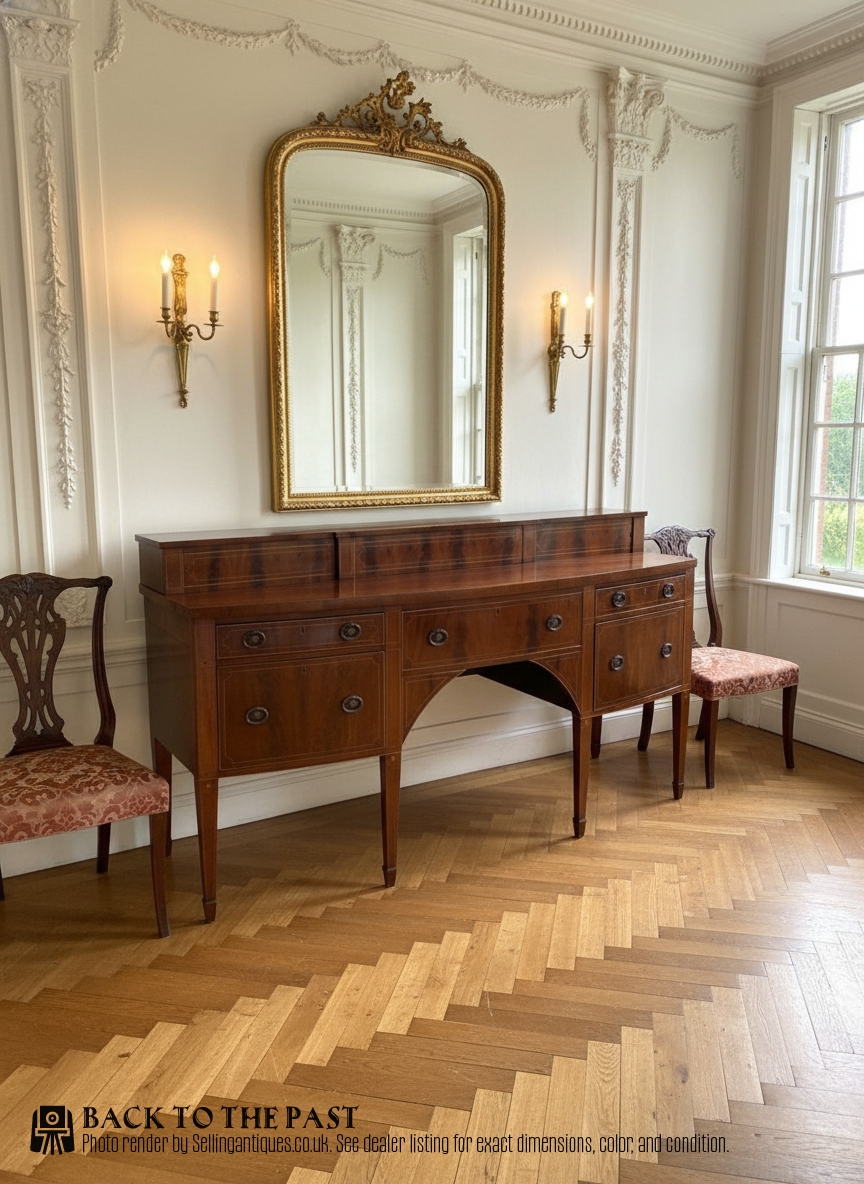
An 18th century mahogany sideboard brings confident Georgian design and rich timber grain into a modern dining space.
18th Century Mahogany Sideboard
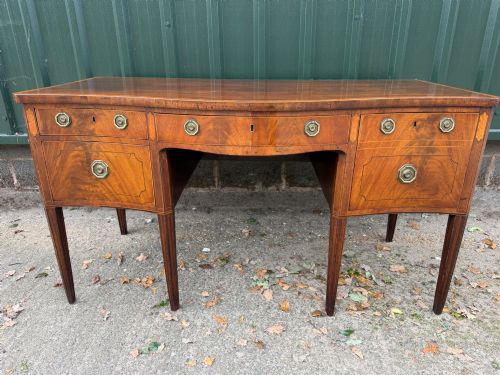
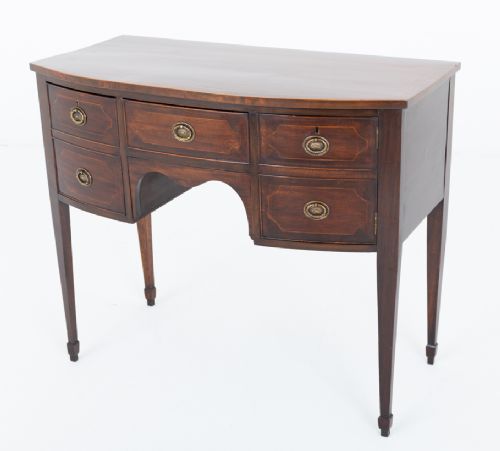
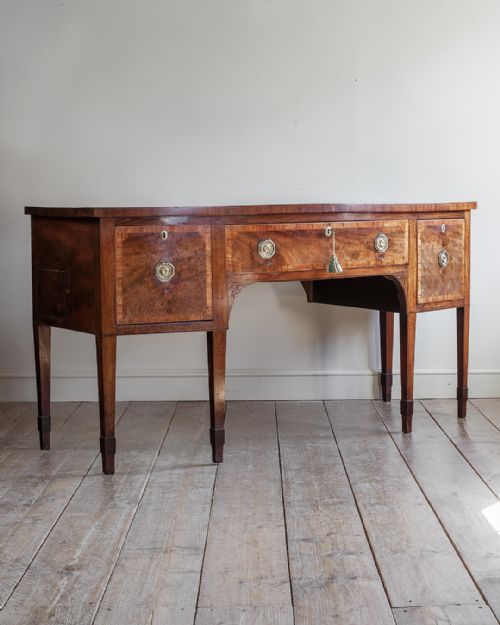
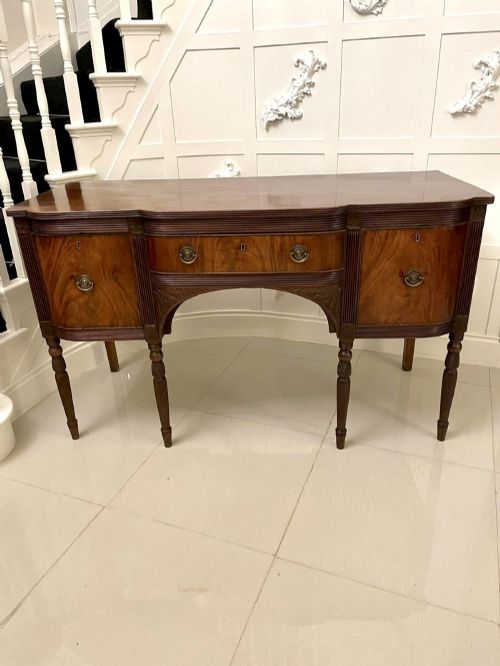
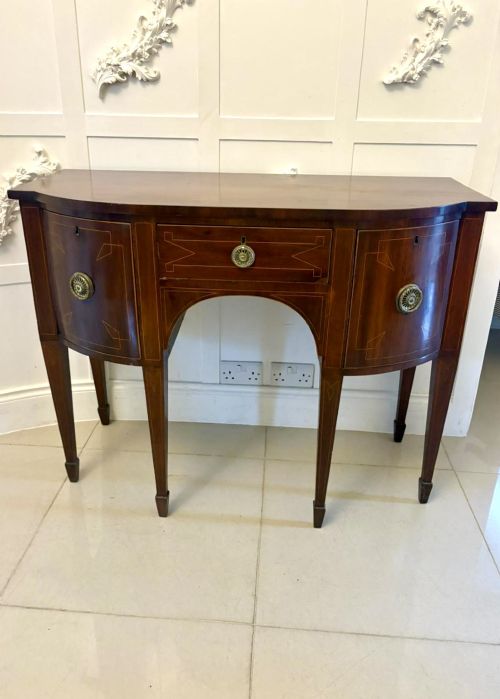
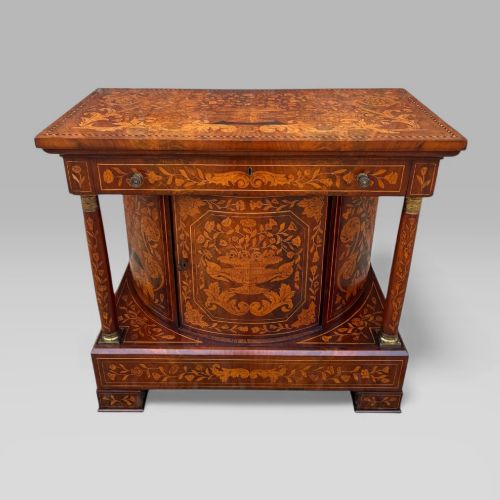
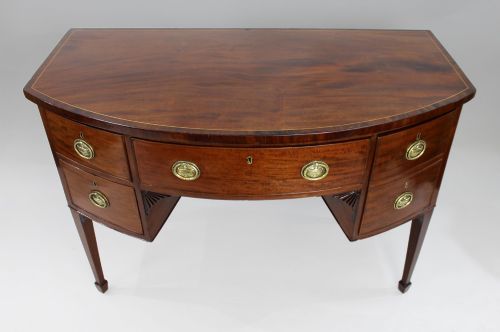
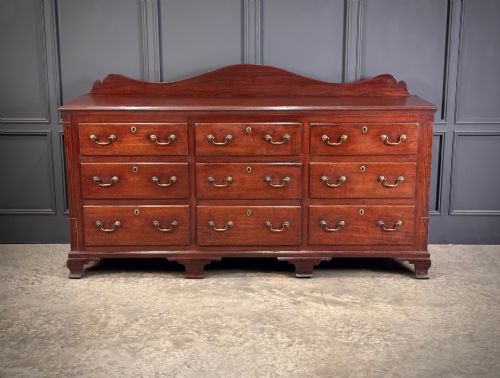
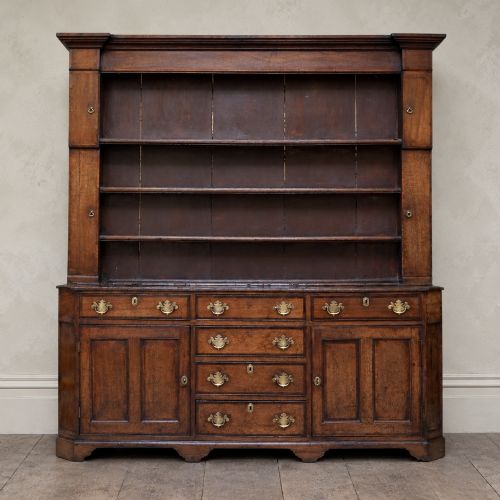
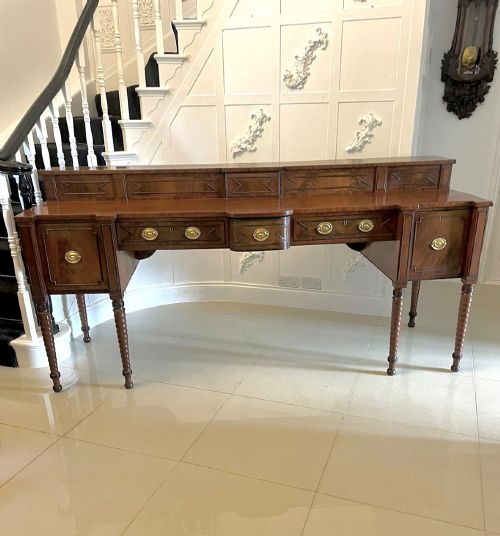
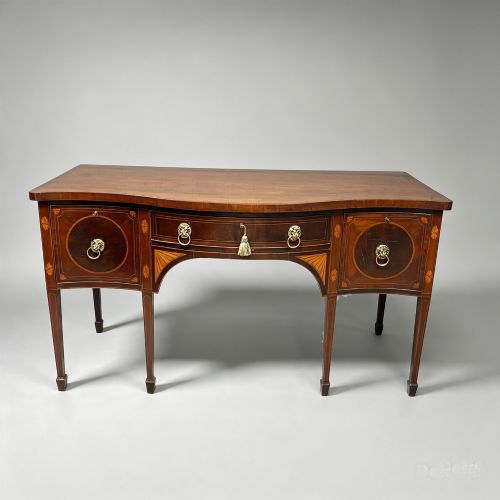
An 18th century mahogany sideboard is a substantial dining room furnishing designed for serving food and storing tableware, emerging in various refined silhouettes during the Georgian period. You will frequently encounter straight, bow-fronted, and serpentine shapes across these examples, alongside breakfront and pedestal variations.
The material vocabulary spans solid timber and carefully selected veneers, often enriched with contrasting stringing and banding. Many pieces date specifically to the George III and Sheraton eras, demonstrating the cabinetmaker's focus on functional elegance.
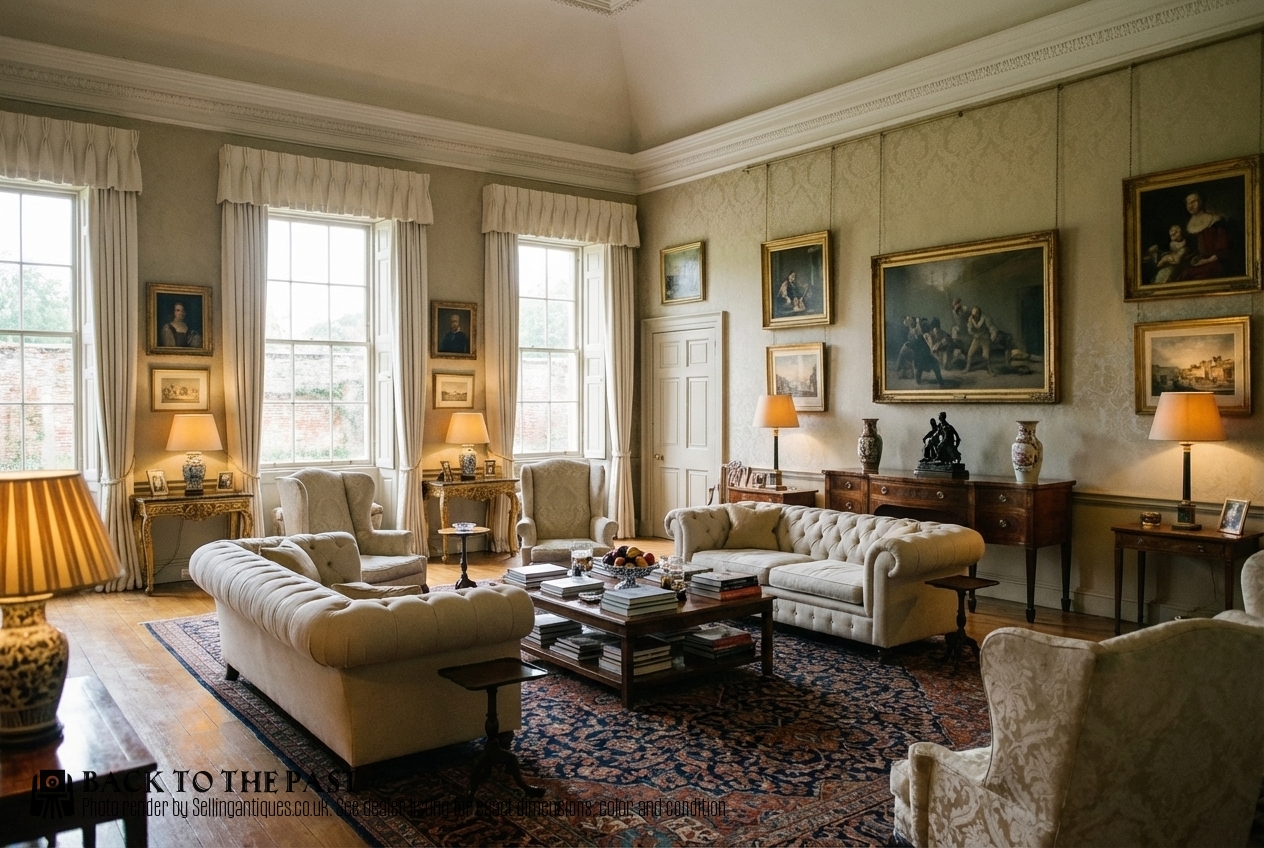
How they were made
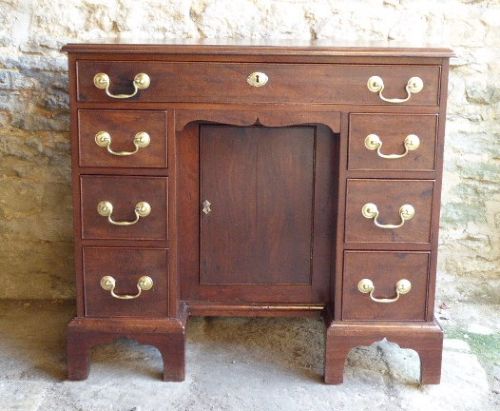
Cabinetmakers utilised solid mahogany and flame mahogany veneer laid over secondary timbers such as oak, achieving rich visual depth on curved and flat surfaces alike. Workshops shaped these carcasses using hand tools, tenon joints, and precise dovetailing for the drawer construction.
Decoration relied on contrasting lighter woods like satinwood and boxwood inlay, alongside purpleheart banding in specific designs. Polished brass handles and mounts completed the construction, fastened securely to the drawer fronts.
18th Century Mahogany Sideboard Retail Price Guide 2026
Typical asking prices for 18th century mahogany sideboard among the pieces listed under this phrase on Sellingantiques today, from the lower quarter to the upper quarter. They describe what is for sale here now, not the wider market.
The listings show numerous George III and Sheraton period pieces employing mahogany, satinwood inlay, and brass mounts.
What varies in quality
The distinction between ordinary and superior examples lies in the selection of the mahogany timber itself, particularly where figured or flame graining is deployed across the front panels. Master workshops exercised restraint and balance, ensuring that inlay work and stringing complemented the natural grain rather than cluttering the surface.
Proportion and the execution of complex curves, such as serpentine or bow fronts, separate standard items from exceptional ones. The retention of original brass hardware and the crispness of the secondary wood framing further define the higher tier of these dining room pieces.
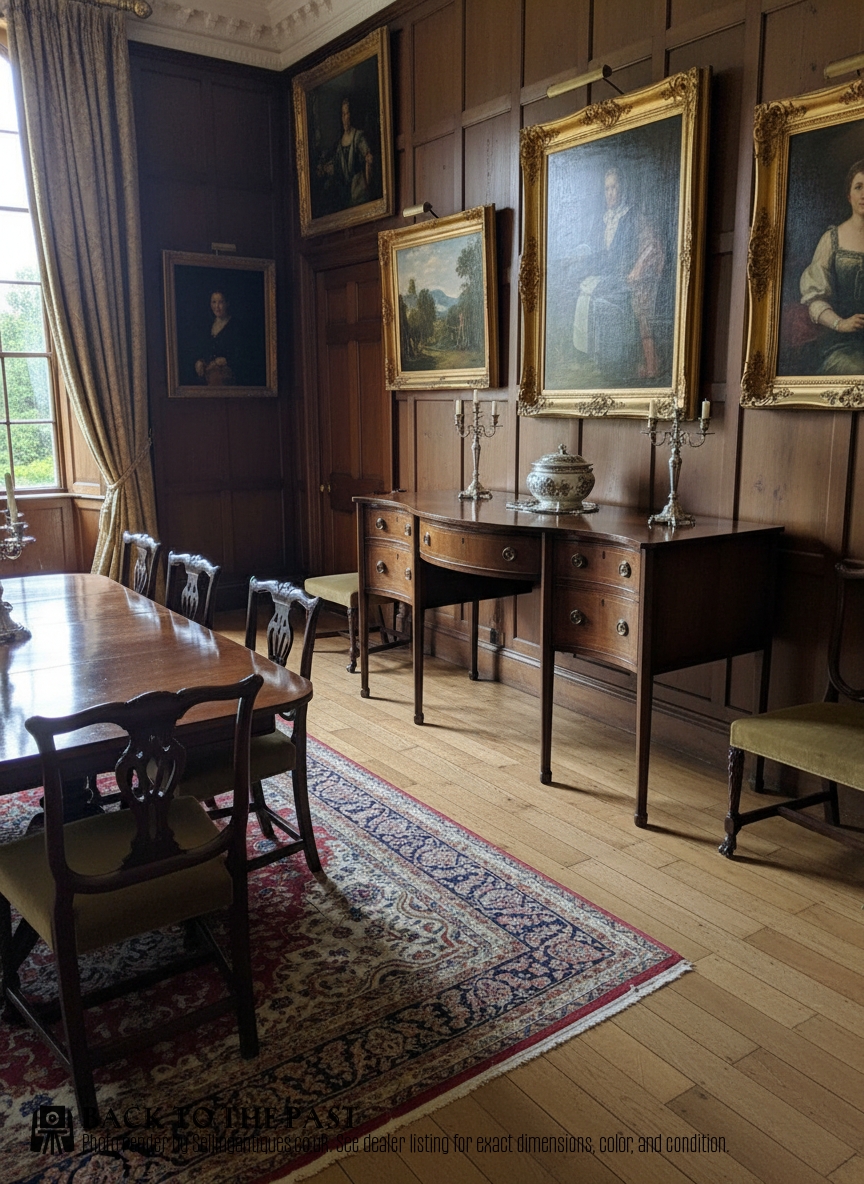
The 18th Century Mahogany Sideboard Glossary
- Serpentine
- A front contour characterised by a gentle convex curve in the centre flanked by concave curves towards each end. This shape requires advanced woodworking skill to execute properly on a mahogany sideboard.
- Bow-front
- A convex curving front profile that projects outward from the corners. It became a popular proportion for smaller Georgian serving tables and sideboards.
- Breakfront
- A cabinet or sideboard structure where the central section projects forward from the flanking wings. This architectural arrangement creates a strong shadow line and visual rhythm.
- Stringing
- Thin inlaid lines of contrasting light wood, such as boxwood or satinwood, used to edge drawer fronts and tabletops. It defines the geometry of the piece.
- Flame mahogany
- Timber cut from the fork of the mahogany tree where the branch meets the trunk, producing a distinctive flickering flame pattern. Cabinetmakers reserved this prized veneer for primary display surfaces.
18th Century Mahogany Sideboard: Frequently Asked Questions
How do I spot a George III sideboard?
George III sideboards typically display refined proportions, straight or curved fronts, and restrained satinwood or boxwood inlay.
They date from the second half of the 18th century and rely on the natural figure of mahogany for visual interest.
Where were these sideboards used?
These pieces stood in the dining rooms of large houses to hold serving trays, cutlery boxes, and serving dishes.
Servants placed food upon them before it reached the main dining table during formal meals.
How do I care for antique mahogany?
Keep the wood away from direct heat sources and strong sunlight to prevent the timber and veneer from drying out.
Apply traditional wax polish sparingly to maintain the natural sheen and protect the antique surface.