
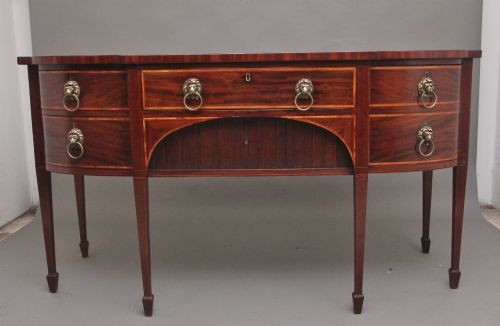
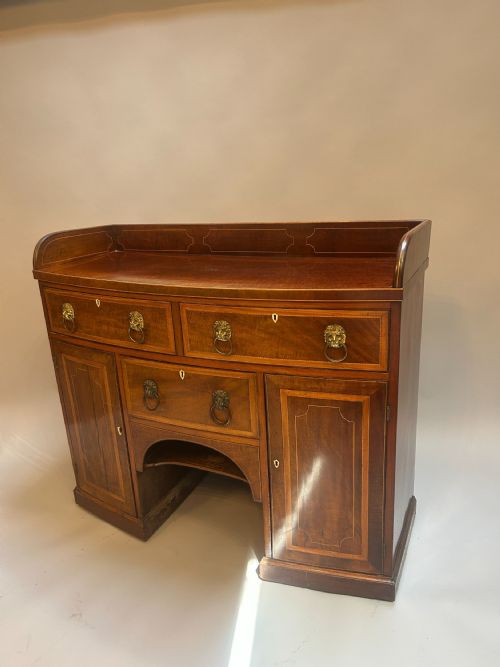
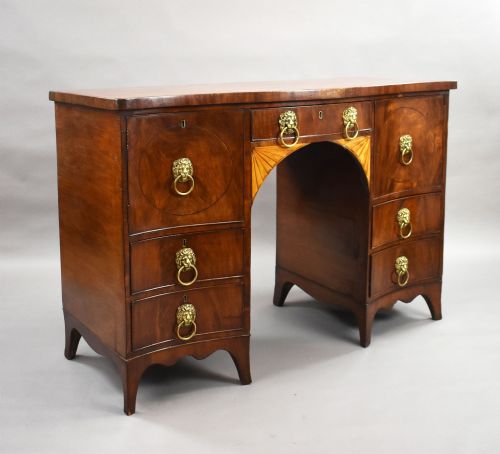


Lion Mask Handle Sideboard
A lion mask handle sideboard is a formal dining room serving piece defined by bold hardware, and mahogany examples from the Georgian and Regency periods are most common.
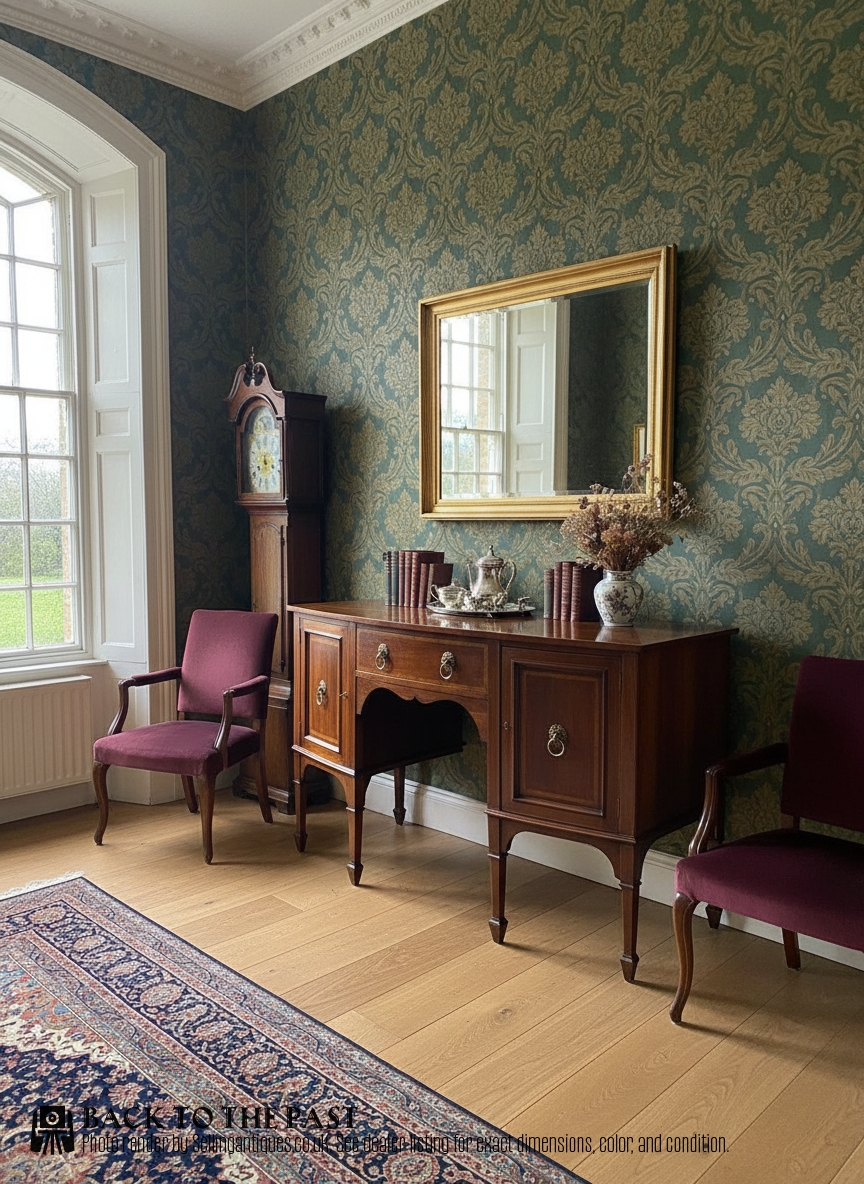
Lion Mask Handle Sideboard
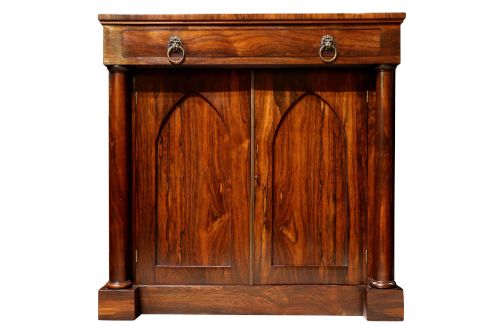
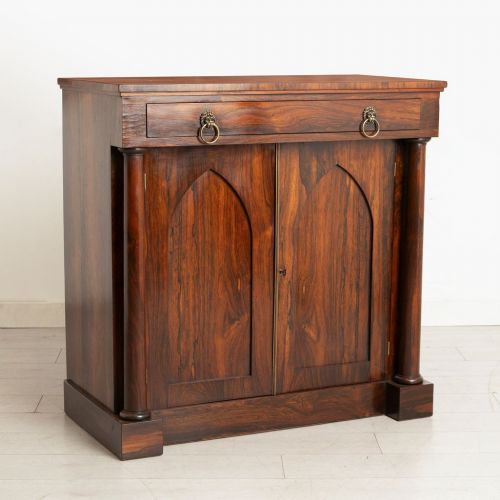
A lion mask handle sideboard is a substantial dining room storage form encountered primarily in mahogany across the Georgian, Regency, and Victorian eras. These items served as serving tables and cupboards for dining silver and glassware, bringing sculptural hardware to formal interiors.
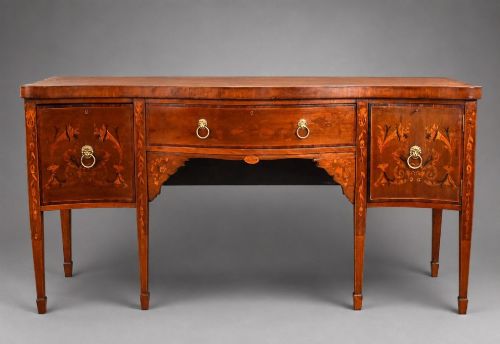
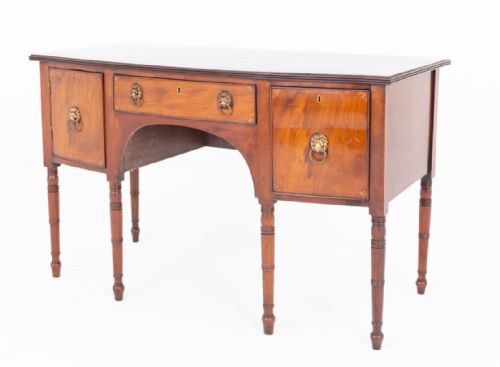
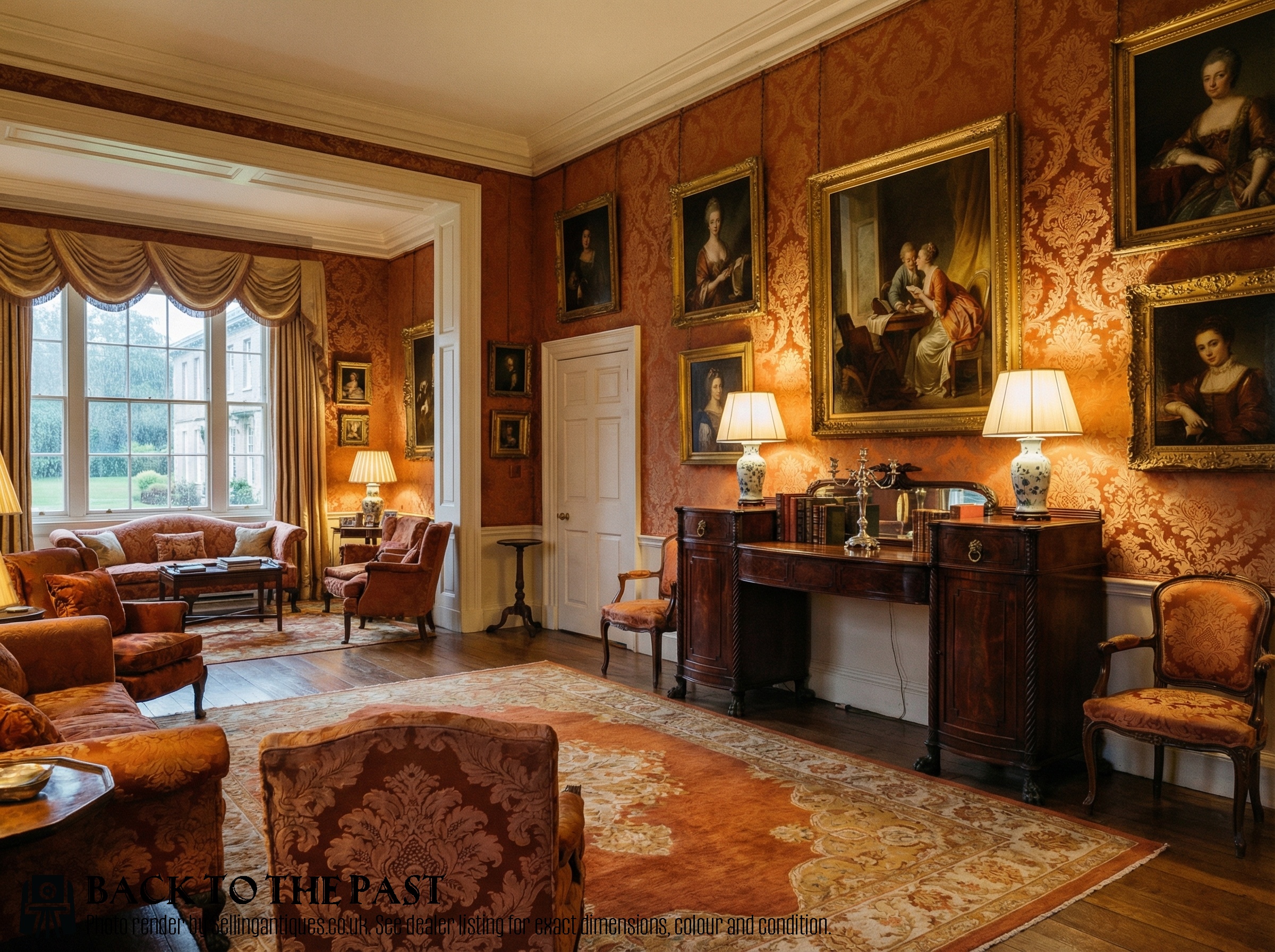
The versions most frequently found here are mahogany pieces from the Regency and George III periods, often featuring bowfront or breakfront shapes. Chiffoniers and serving tables also appear, carrying the characteristic drop rings or fixed pulls shaped as lion faces.
Makers utilised dense timbers, figuring the grain on doors and drawers while mounting brass lion mask rings on the drawer fronts or side pilasters. The form ranges from simple bowfront cabinets to grand breakfront credenzas.
How they were made
Cabinet makers constructed these carcasses from solid mahogany and applied veneers of flame mahogany, rosewood, or satinwood to the primary surfaces. Boxwood and ebony stringing often define the drawer edges and borders, contrasting sharply against the darker primary timber.
Brass fittings, specifically the cast lion mask handles holding drop rings, were secured through the drawer fronts with threaded posts and nuts. Secondary timbers such as oak or pine appear in the drawer linings and internal framing.
Lion Mask Handle Sideboard Retail Price Guide 2026
Typical asking prices for lion mask handle sideboard among the pieces listed under this phrase on Sellingantiques today, from the lower quarter to the upper quarter. They describe what is for sale here now, not the wider market.
Listings for this phrase feature mahogany prominently, accompanied by rosewood, satinwood, and ebony stringing across Georgian and Regency periods.
What varies in quality
The hierarchy of quality rests upon timber selection, timber figuring, and the crispness of the brass hardware casting. Exceptional pieces display highly figured flame mahogany veneers and finely detailed cast brass lion masks rather than simple stamped sheet metal.
Construction details such as hand-cut dovetails on the drawer boxes and precise inlay work separate standard workshop production from finer cabinet work. Proportion and the integrity of the original surface finish dictate the standing of an individual example.
H Mower & Stephenson
The Lion Mask Handle Sideboard Glossary
- Bowfront
- A curved cabinet front that swells outward in a convex arc, softening the corners of a dining room serving piece.
- Breakfront
- A large cabinet form where the central section projects forward from the flanking outer sections, creating depth and architectural presence.
- Chiffonier
- A compact sideboard or low cabinet equipped with doors enclosing shelves, popular during the Regency period.
- Stringing
- Thin inlaid lines of contrasting wood, such as boxwood or ebony, used to outline drawer fronts and panels.
- Flame mahogany
- A veneer cut from the fork of a mahogany tree that creates a distinctive swirling, flame-like pattern across the wood.
Lion Mask Handle Sideboard: Frequently Asked Questions
What is a lion mask handle sideboard?
A lion mask handle sideboard is a dining room storage piece featuring cast brass hardware shaped as lion faces holding drop rings. These items date primarily from the Georgian, Regency, and Victorian eras.
They provide surface space for serving food and interior cupboards for tableware, combining functional storage with decorative hardware.
How do I date a mahogany sideboard?
Dating relies on observing the overall style, leg shape, timber choice, and construction methods used inside the drawers. Georgian and Regency pieces typically show hand-cut dovetails and solid mahogany framing.
Later revival pieces often incorporate machine-cut elements or different secondary woods. Comparing the structural characteristics to known period examples helps clarify the date.
Where were these sideboards placed?
These sideboards stood against dining room walls to hold dishes, silver, and wine during family meals and formal entertaining. Their decorative backs and finished sides sometimes allowed placement in large hallways or drawing rooms.
They functioned as the main service station for food before it reached the dining table.
How do I care for antique mahogany?
Antique mahogany benefits from consistent indoor humidity and protection from direct sunlight to prevent the timber from fading or splitting. Regular dusting with a soft, dry cloth preserves the polished surface.
Applying occasional appropriate wax feeds the wood and maintains its natural lustre without building up heavy residues.