
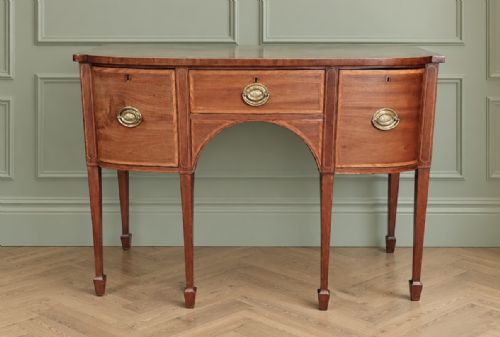
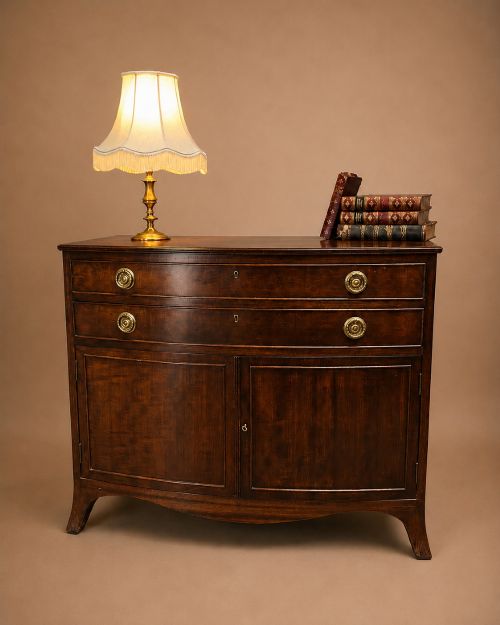
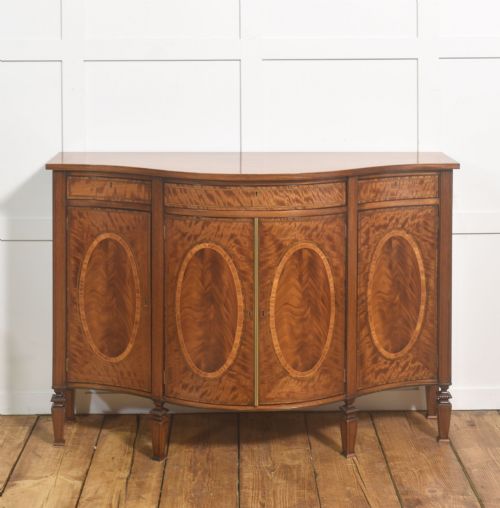
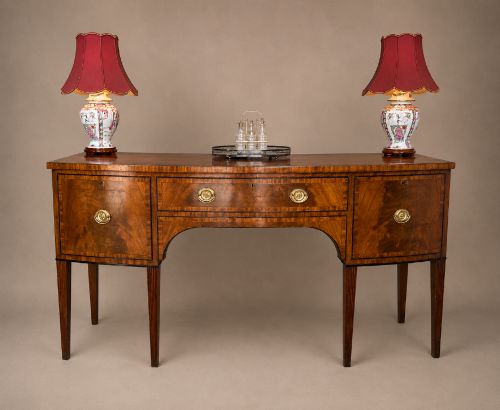
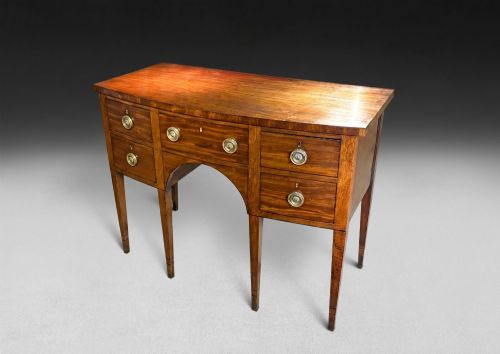
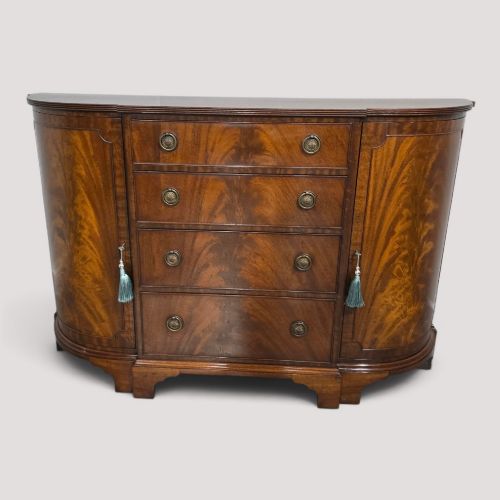
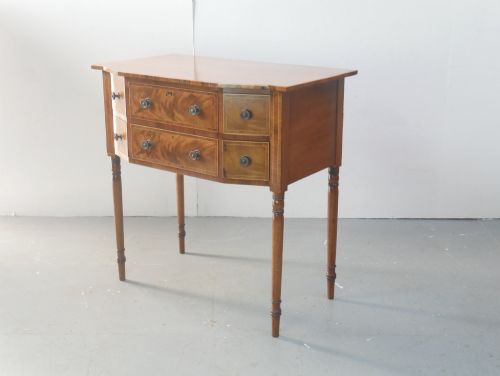
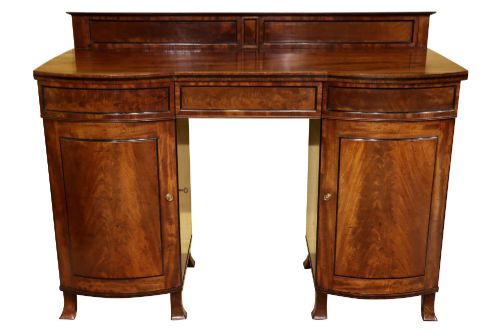
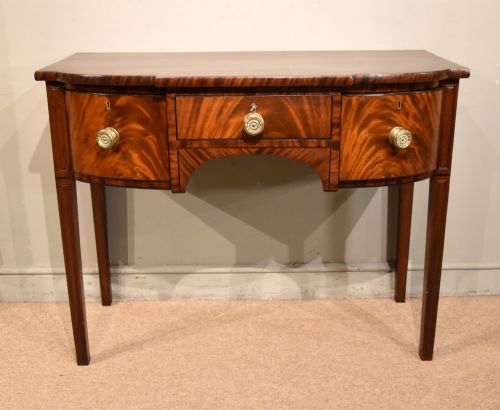
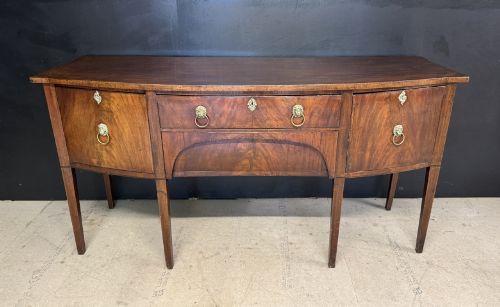
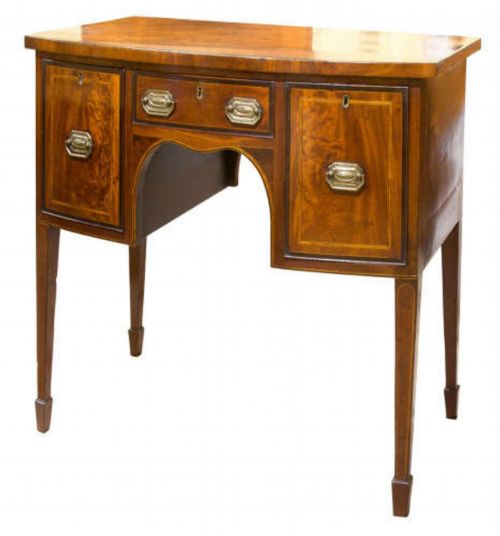
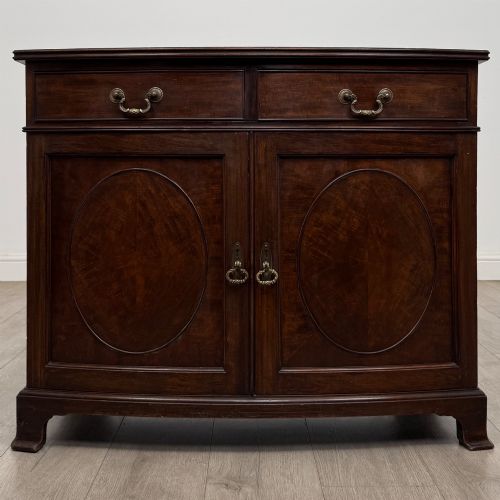
Bowfront Mahogany Server
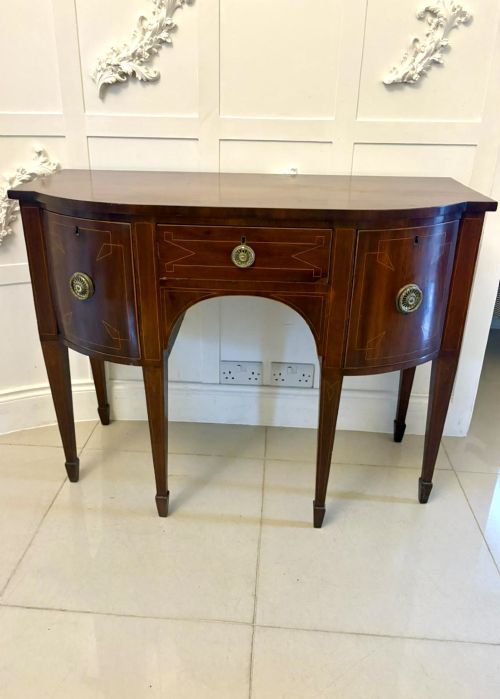
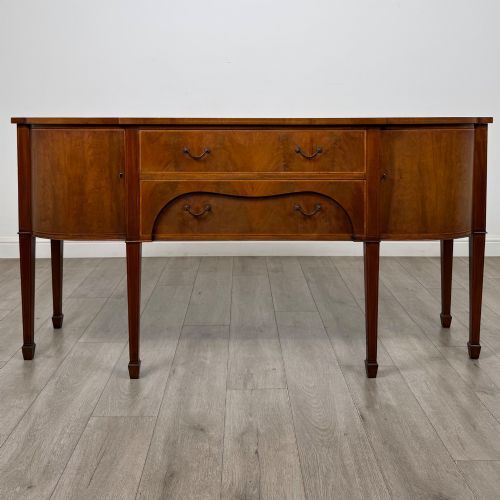
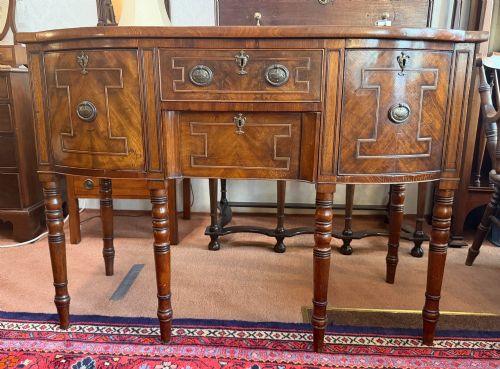
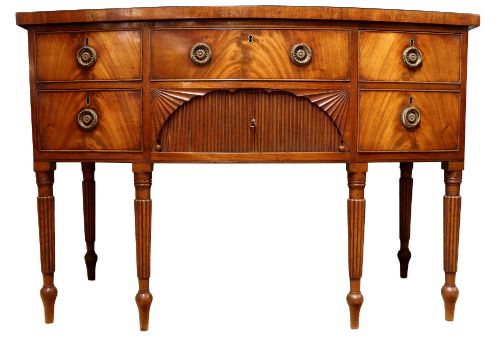
A bowfront mahogany server brings refined storage and rich timber grain to a dining room, combining curved drawer lines with deep warm tones.
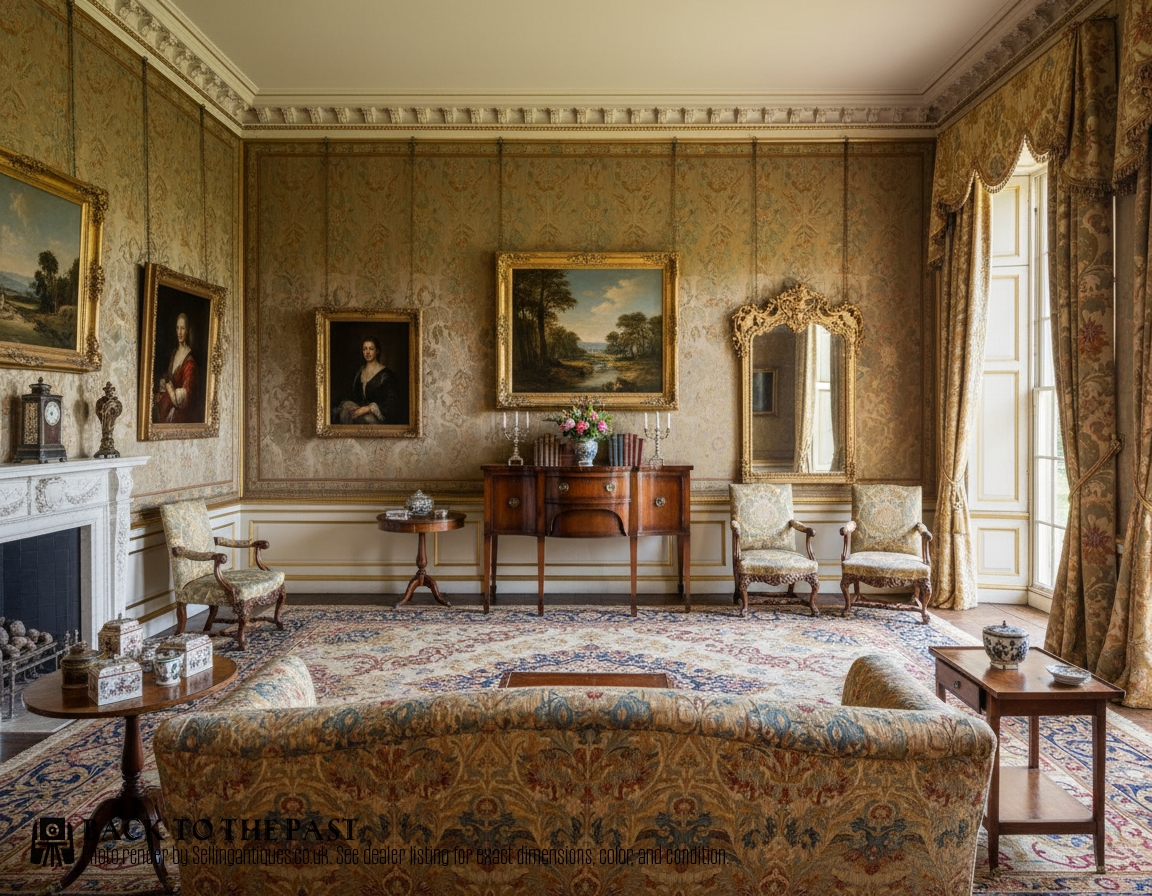
Understanding bowfront mahogany servers
A bowfront mahogany server presents a distinct curved cabinet front designed to fit neatly against dining room walls while offering generous interior space. These pieces emerge across several periods including the Georgian era, the Regency style, the Edwardian period, and the 1920s revival.
The form functions primarily as a sideboard or buffet, providing cupboards and drawers for dining accessories. Buyers most frequently encounter Georgian originals alongside Edwardian interpretations and later twentieth-century revival pieces.
Makers shaped these servers with proportions ranging from compact small formats to broader configurations. The curved silhouette softens the room's geometry while maintaining formal presence.
Materials and construction methods
Cabinet makers built these servers using solid timber and veneers, selecting mahogany for its deep colour and durability. Secondary woods often supported the internal framework while figured mahogany provided the striking exterior grain.
Detailed decoration incorporated contrasting stringing and banding in lighter timbers such as boxwood and satinwood. Brass fittings, including handles and sometimes keyhole escutcheons, completed the hardware across the drawer fronts.
Retail Price Guide 2026
Typical UK retail prices for bowfront mahogany server, calculated from the Sellingantiques database of over a million retail prices indexed since 2003. This retail price guide relies exclusively on Sellingantiques data; no external sources or auction records are used, so the figures do not describe the wider market.
Listings feature periods spanning from Georgian origins through Edwardian craftsmanship to 1920s revival pieces.
Assessing quality and craftsmanship
Quality rests in the selection of figured timber and the precision of the curved drawer fronts. Finer examples show careful book-matching of the grain and subtle contrasting inlay work that frames the structure without crowding it.
The integrity of the original brass hardware and the smoothness of the drawer construction distinguish superior pieces from simpler later alternatives. Proportions also dictate value, with smaller scaled servers holding particular appeal for modern interiors.
The Bowfront Mahogany Server Glossary
- Bowfront
- A convex curved cabinet front that swells outward in the centre. This shape gained popularity in the late eighteenth century to soften rectilinear room designs.
- Mahogany
- A durable tropical hardwood prized for its rich reddish-brown colour and stable grain. It became the dominant timber for high-quality British cabinet making.
- Inlay
- A decorative technique where contrasting materials are inserted into recessed portions of the base wood. Boxwood and satinwood frequently served this purpose on dark mahogany surfaces.
- Revival
- A later architectural or decorative style that consciously imitates the forms of an earlier era. The listings include examples from the Georgian revival of the early twentieth century.
- Escutcheon
- A protective plate surrounding a keyhole, usually made of brass on these servers. It prevents the surrounding wood from wearing during daily use.
Frequently Asked Questions
What is a bowfront mahogany server?
A bowfront mahogany server is a storage piece featuring a convex curved front built from mahogany wood. It serves dining spaces by holding tableware and linens.
Such furniture dates from the Georgian period through to later twentieth-century revivals, reflecting evolving tastes in interior design.
How do I date a mahogany server?
Dating relies on examining construction techniques, hardware, and secondary timbers used within the drawers and frame. Georgian pieces display hand-cut joinery and period-specific brasses.
Revival items from the Edwardian era or the 1920s often show machine-made elements and cleaner internal finishes while mimicking older styles.
Where should I place a server?
These servers fit well against dining room walls or in large hallways where their curved profile can be appreciated. Their shallow ends allow them to sit comfortably in spaces where a deep rectangular cabinet might obstruct movement.
Ensure the placement keeps the timber away from direct heat sources and strong sunlight to protect the polish.
How do I care for mahogany furniture?
Maintain the timber by dusting regularly with a soft, dry cloth and avoiding silicone-based polishes. Occasional application of quality wax preserves the depth of the grain.
Keep the room at a stable humidity level to prevent the solid wood and veneers from cracking or warping over time.