
Georgian Bowfront Buffet
A georgian bowfront buffet is a curved timber serving piece that brings refined storage and proportion to a dining room.
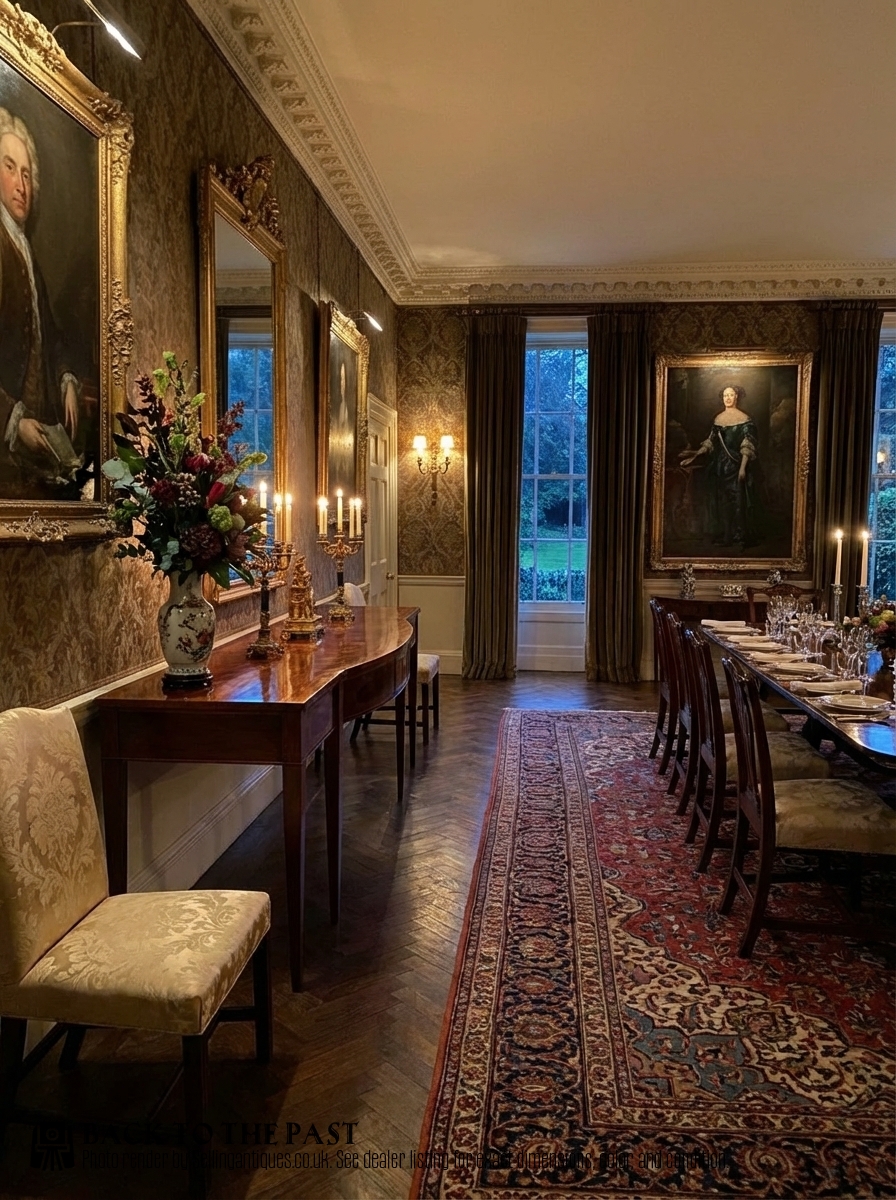
What a Georgian Bowfront Buffet Is
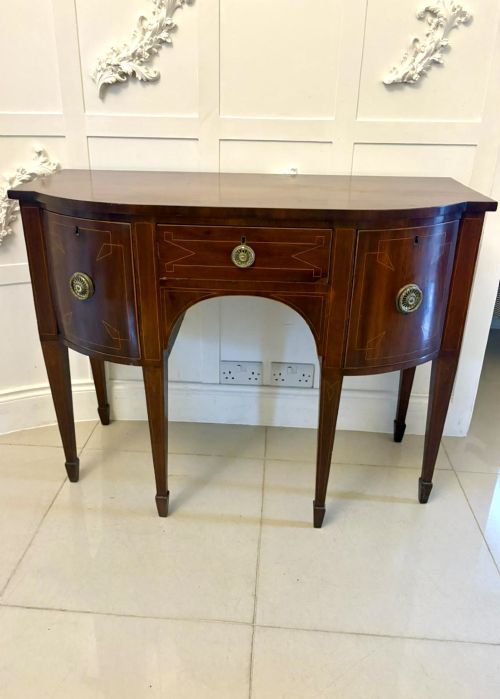
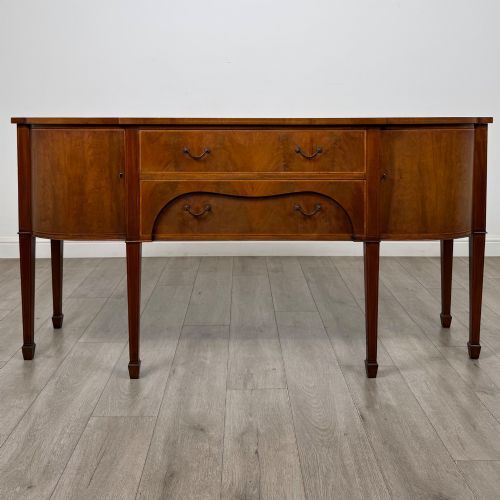
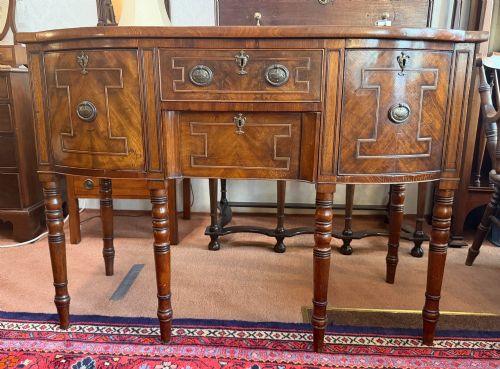
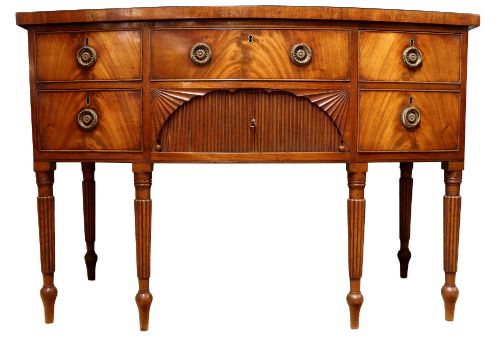
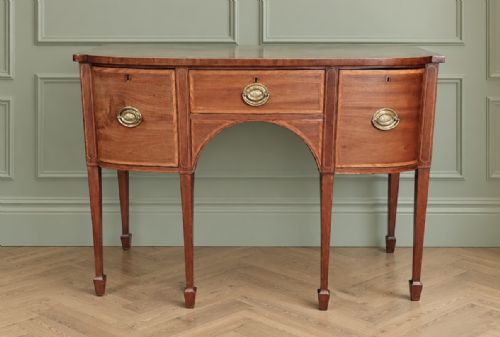
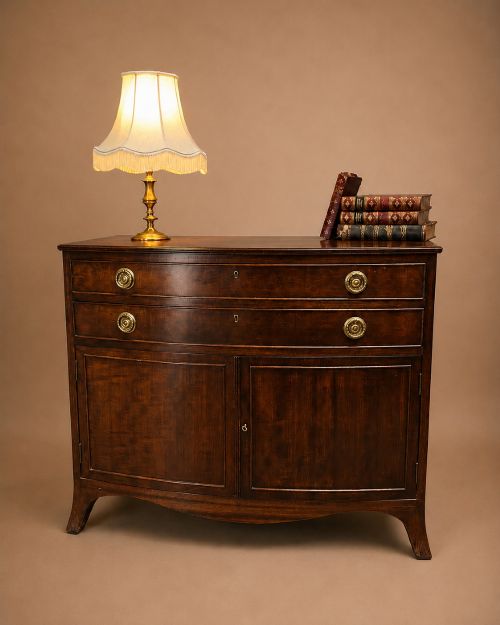
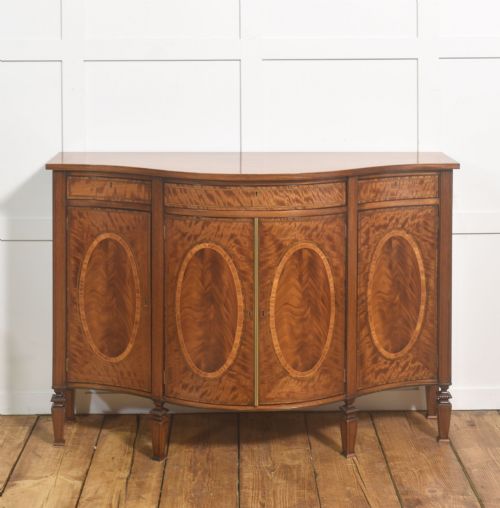
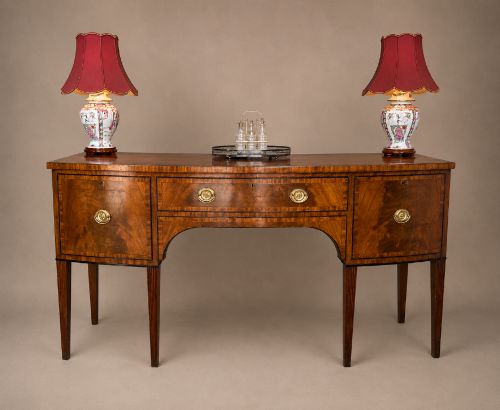
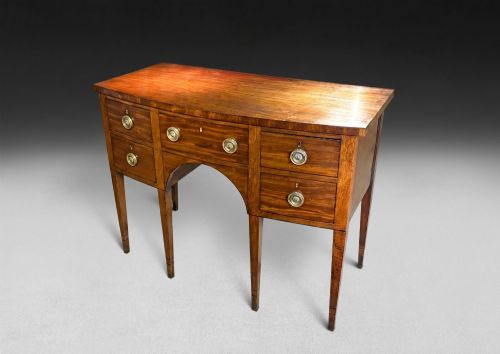
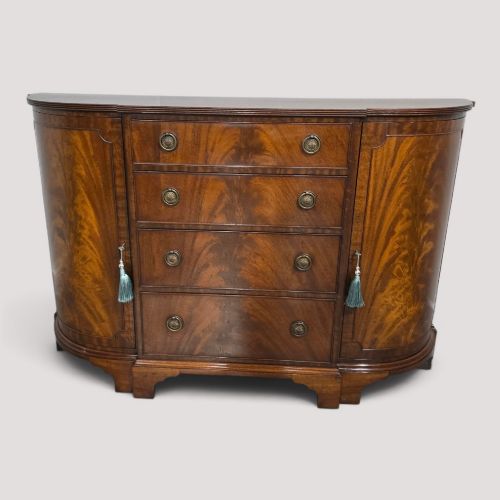
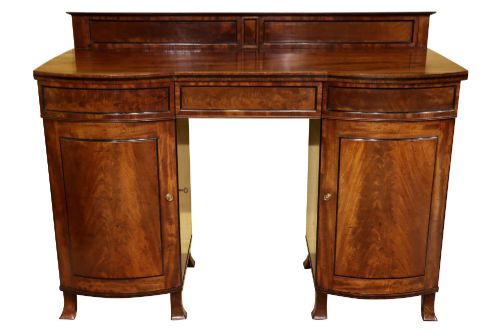
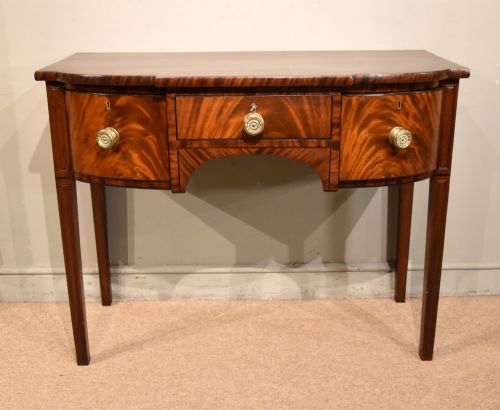
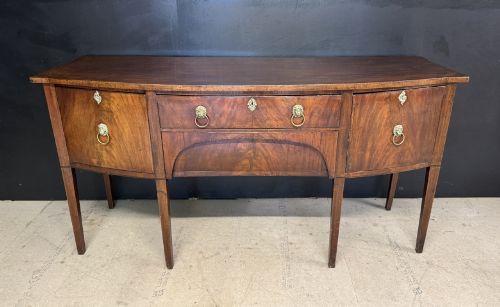
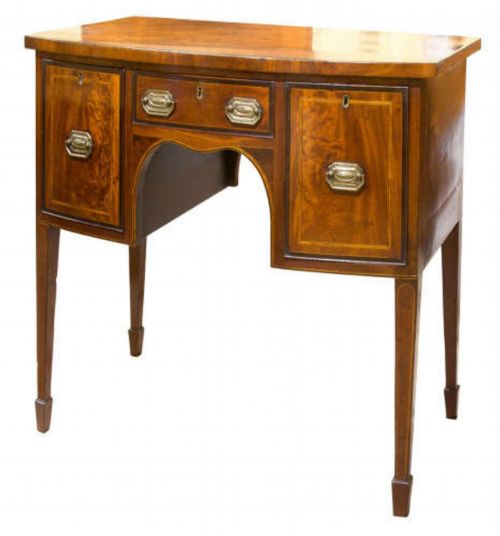
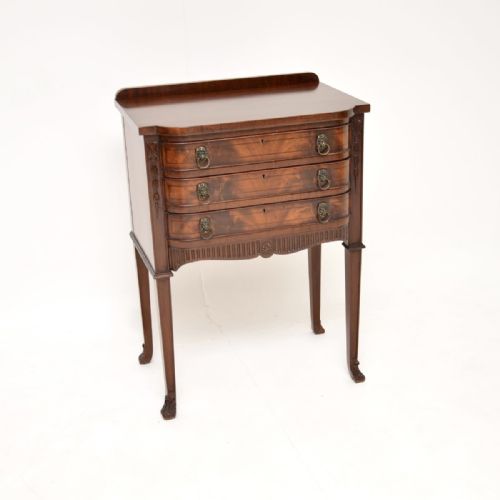
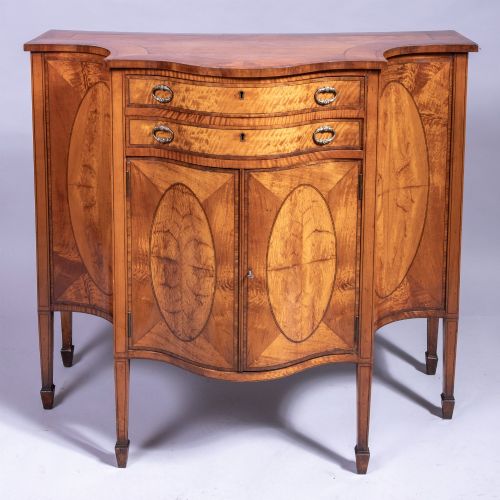
A georgian bowfront buffet appears on this page in forms described variously as sideboards, servers, and serving tables. These pieces date from the Georgian period, the eighteenth century, and around eighteen hundred.
The dominant material across these listings is mahogany, often accented with banding and stringing. Formats range from small proportions to broader George III Sheraton designs.
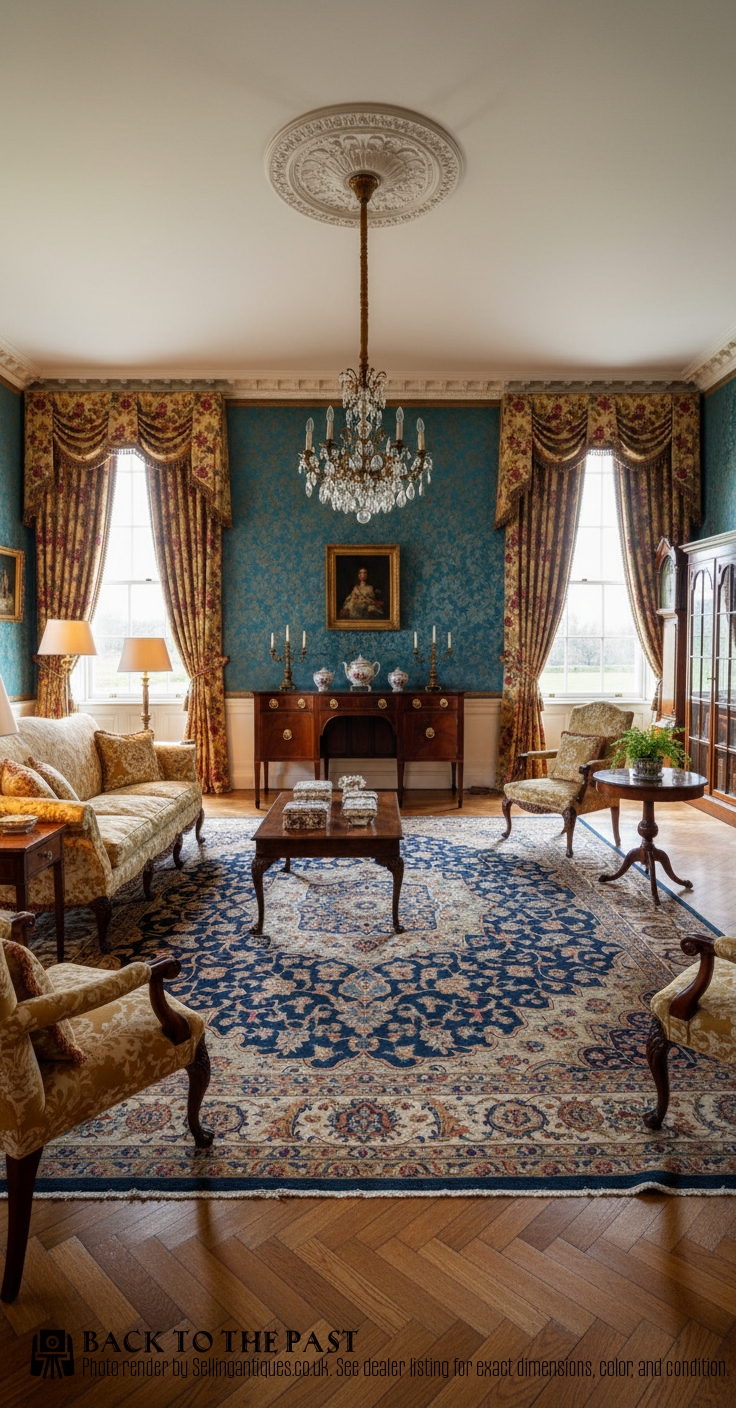
Materials and Construction
Cabinet makers utilised solid timber and veneers, constructing carcases primarily in mahogany. Details rely on contrasting timbers such as satinwood, boxwood, and purpleheart for banding and inlay.
Hardware incorporates cast brass for drawer pulls and escutcheons, following the conventions of eighteenth-century cabinet work.
Retail Price Guide 2026
Typical UK retail prices for georgian bowfront buffet, calculated from the Sellingantiques database of over a million retail prices indexed since 2003. This retail price guide relies exclusively on Sellingantiques data; no external sources or auction records are used, so the figures do not describe the wider market.
Factors That Determine Quality
Quality rests in the precision of the curved bowfront geometry and the careful selection of timber grain. Superior examples exhibit harmonious figuring in the mahogany face and balanced contrast in the inlaid banding.
Refinement of proportion distinguishes the better pieces, particularly in smaller formats where cabinet makers maintained elegant lines without excess bulk.
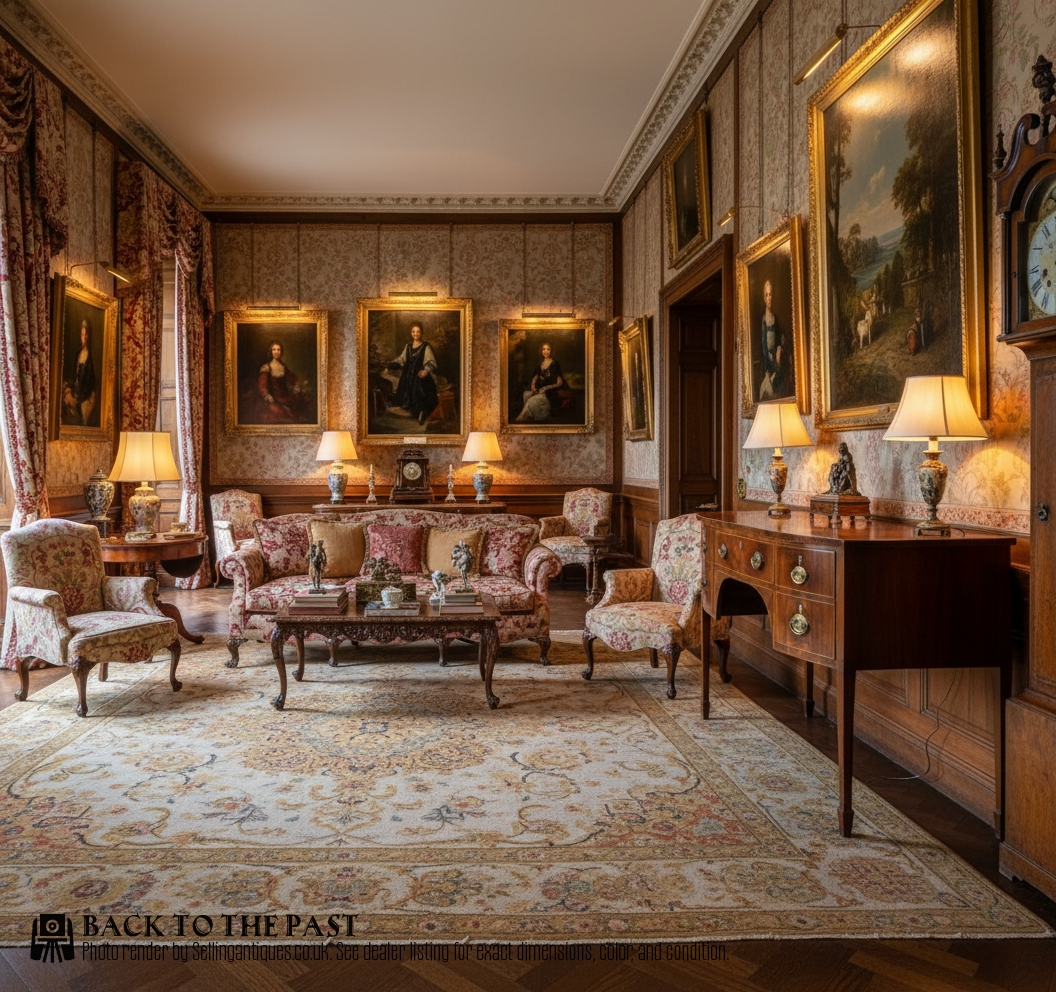
The Georgian Bowfront Buffet Glossary
- Bow-front
- A convex curved cabinet front that projects outward in an arc. This shape gained widespread favour in the late eighteenth century to soften room angles.
- Banding
- A narrow strip of contrasting veneer applied around the edges of drawer fronts or tabletops. It creates a defined border that frames the primary wood.
- Stringing
- An extremely thin line of inlaid wood used for linear decoration on furniture surfaces. It requires meticulous hand-cutting into the surrounding timber.
- George III
- The period of British history spanning from seventeen sixty to eighteen twenty. Furniture from this era is noted for classical restraint and fine proportions.
Frequently Asked Questions
What is a georgian bowfront buffet used for?
These pieces function traditionally as serving furniture in dining rooms, providing surface space for food and drink alongside enclosed storage for tableware.
Today they serve equally well in hallways or living spaces as decorative console storage.
How do I identify a georgian period piece?
Examination of timber types, construction methods, and hardware reveals the eighteenth-century origins of the piece. Look for solid mahogany carcases and period brasses.
Proportions remain balanced and classical, avoiding excessive ornamentation.
Where should I place a bowfront sideboard?
The curved profile allows these cabinets to sit comfortably against flat dining room walls while softening the visual flow of the room. Their shallow ends make them adaptable to narrow hallways.
Keep them away from direct heat sources to protect the mahogany veneer.
What woods were used in these sideboards?
Mahogany forms the primary structural and visual timber across these listings, providing a rich reddish-brown tone. Decorative highlights utilise contrasting woods like satinwood, boxwood, and purpleheart.
Secondary timbers inside drawers typically include oak or pine.