
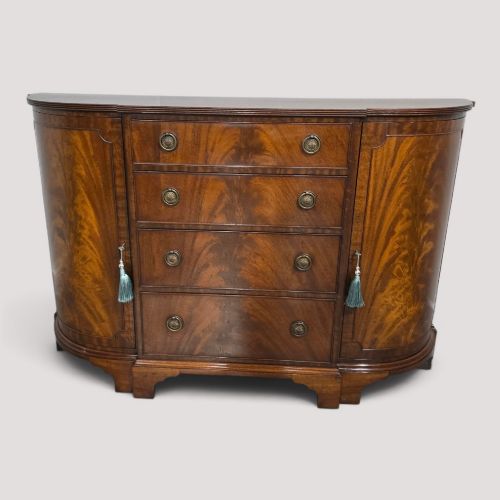
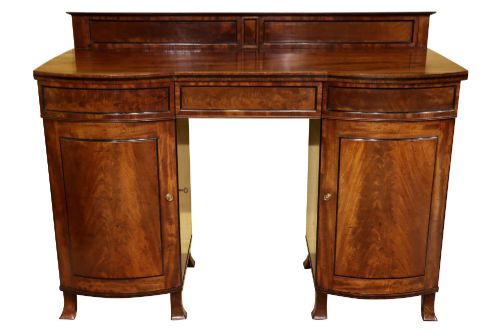
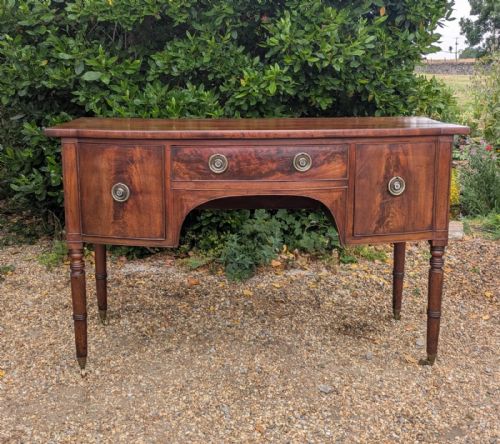
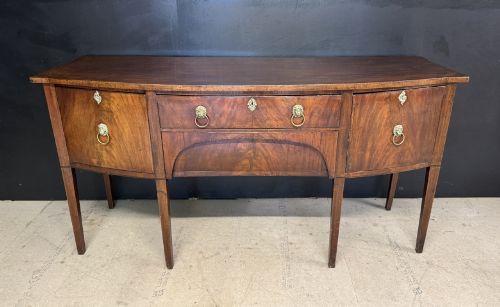
Bow Front Server
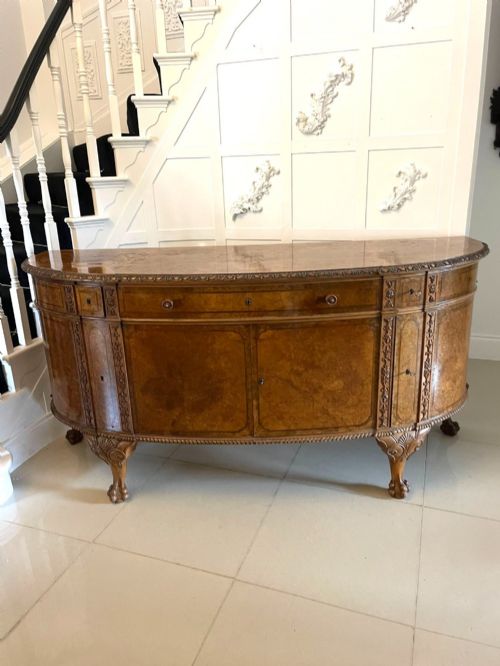
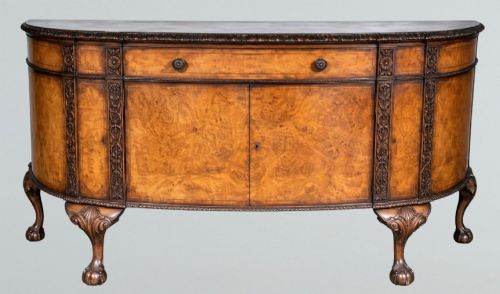
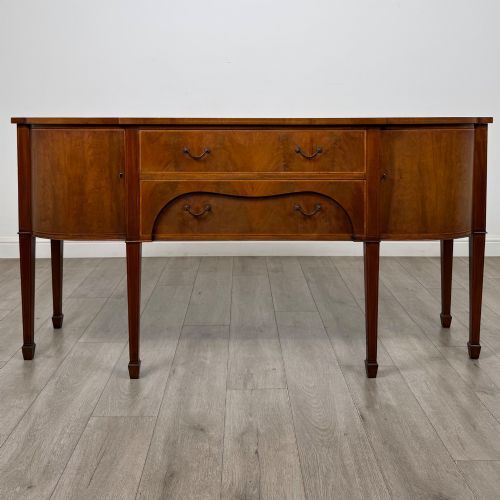
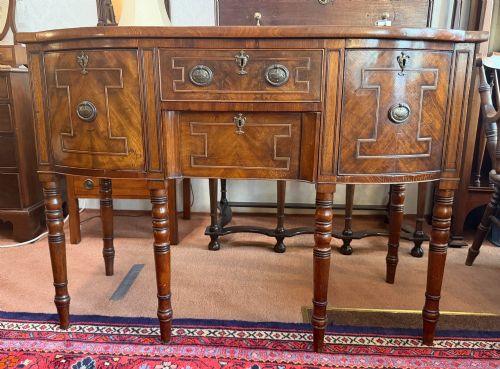
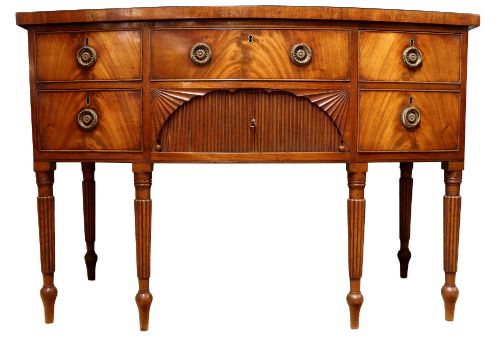
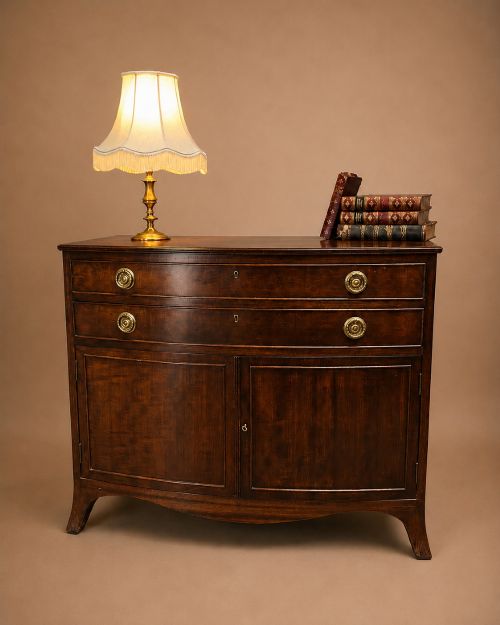
A bow front server brings graceful curved joinery and practical storage to a room, most often appearing as a mahogany sideboard from the Georgian or Regency periods.
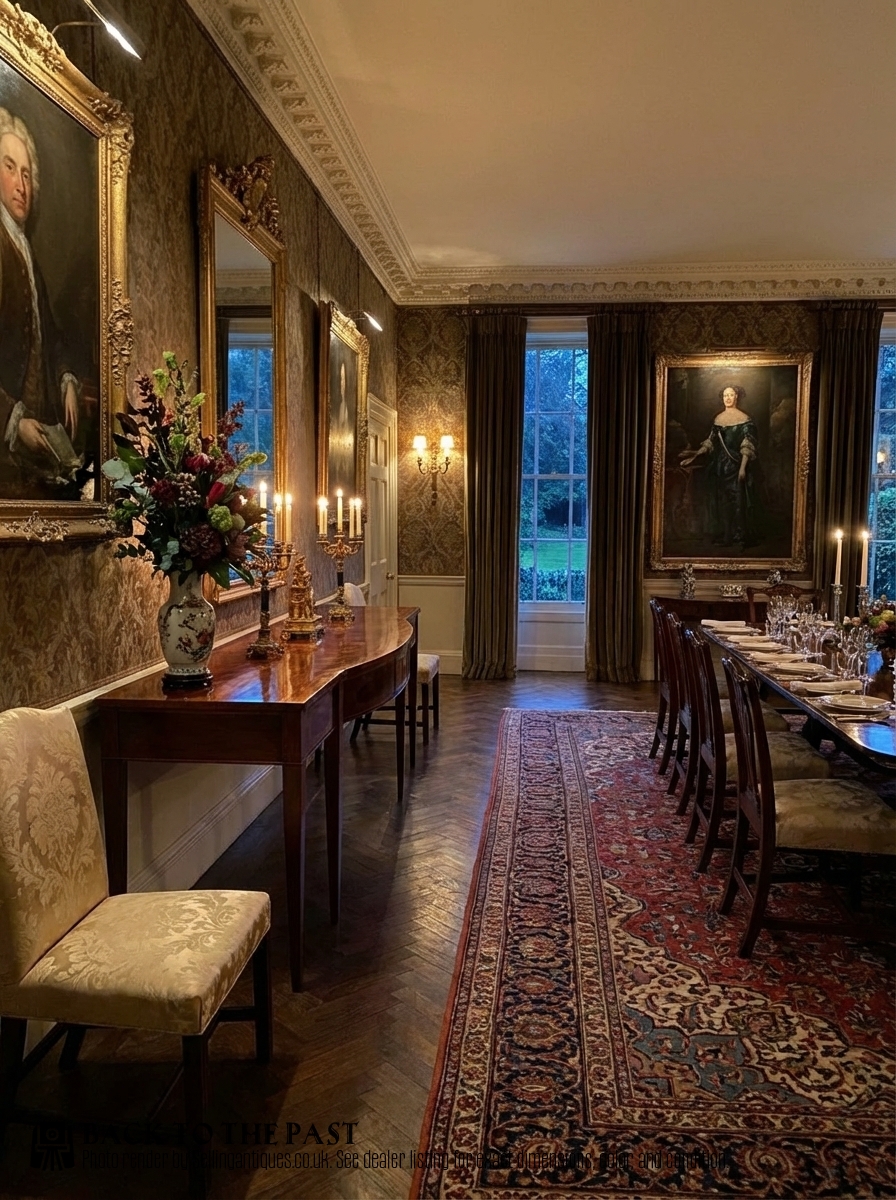
Bow Front Server
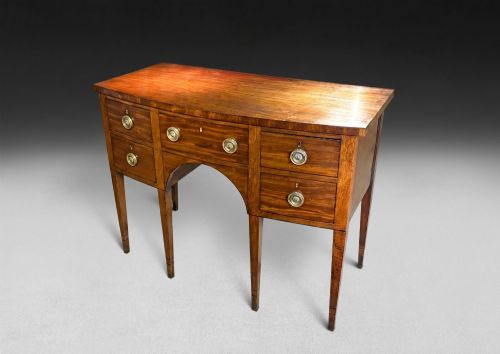
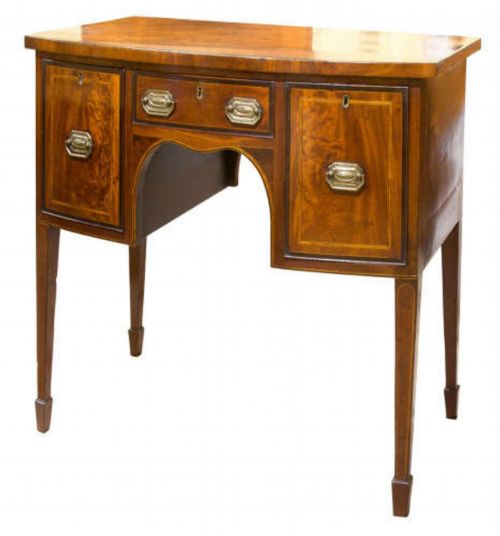
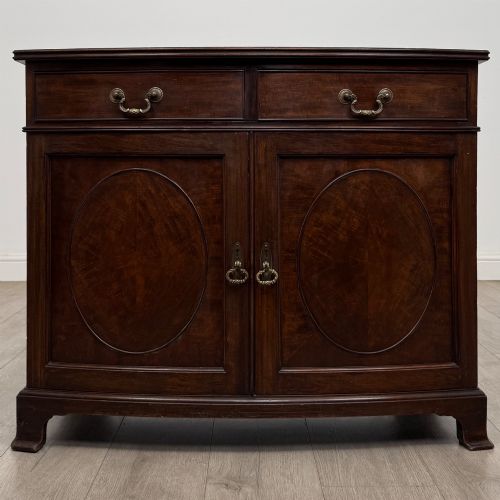
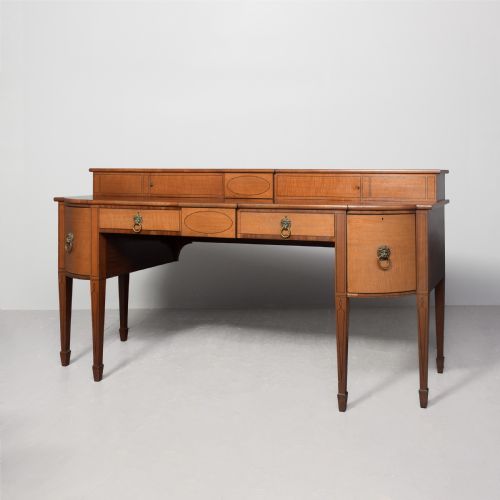
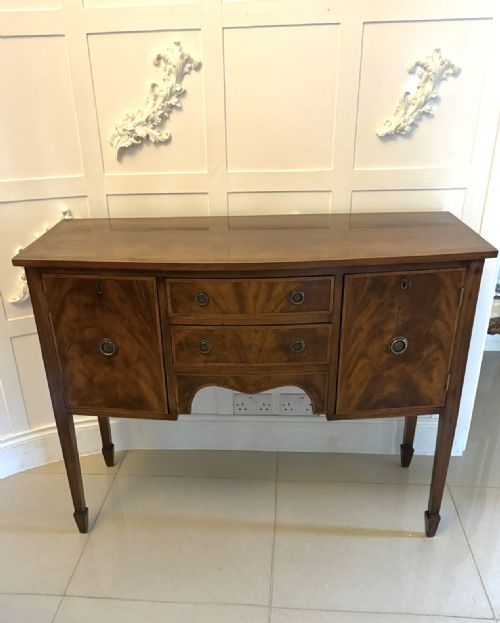
A bow front server is a form of dining room furniture designed for serving food and storing tableware, featuring a convex curved front that softens the linear feel of a traditional room. When exploring a bow front server, buyers encounter several variations in timber and form, ranging from compact side tables to grand pedestal sideboards.
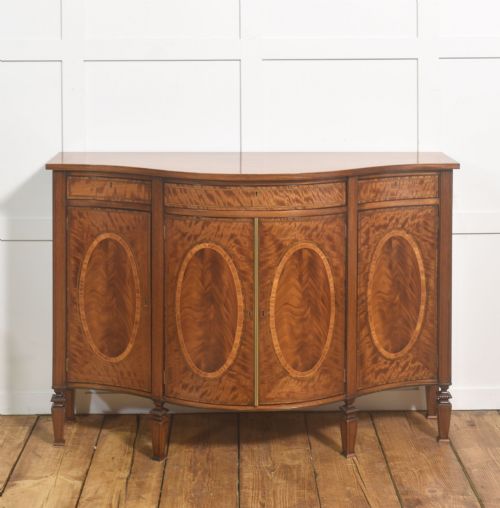
The selections span from the 18th century through the Edwardian era and into the 1920s, covering Georgian, Regency, and Sheraton Revival styles. Mahogany forms the backbone of these listings, accompanied by burr walnut, satinwood, and oak, often detailed with marquetry or bandings in boxwood and purpleheart.
How they were made
Cabinet makers built these pieces using solid timbers and carefully selected veneers over secondary woods, bending mahogany and walnut to create the characteristic convex curve. Flame mahogany veneer and burr walnut provided striking visual grain patterns across the front drawers and cabinet doors.
Inlaid decoration relied on contrasting woods such as boxwood and satinwood, frequently worked into geometric stringing or delicate marquetry motifs. Brass hardware, including original ring pulls and escutcheons, completed the construction alongside hand-cut dovetail joints on the drawers.
Bow Front Server Retail Price Guide 2026
Typical asking prices for bow front server among the pieces listed under this phrase on Sellingantiques today, from the lower quarter to the upper quarter. They describe what is for sale here now, not the wider market.
Materials span mahogany, burr walnut, satinwood, and oak, complemented by brass hardware and boxwood stringing across Georgian and Edwardian styles.
What varies in quality
Quality rests heavily on the crispness of the timber selection and the precision of the curved joinery, where finer examples display unbroken grain continuity across multiple drawers. The choice of secondary woods and the subtlety of boxwood or satinwood stringing also separate standard workshop output from exceptional cabinet work.
Proportion and hardware integration define the upper tier of these pieces, alongside the survival of original brass handles and smooth drawer action. Later revival pieces demonstrate varying degrees of decorative ambition, from simple mahogany frames to elaborate marquetry inlay and marble tops.
The Bow Front Server Glossary
- Bow front
- A convex curved cabinet front that projects outward in an arc, designed to soften room geometry and provide deeper central storage.
- Flame mahogany
- A veneer cut from the fork of a mahogany tree where the branches join the trunk, producing a rippling, flame-like pattern.
- Stringing
- Thin lines of contrasting wood inlay used to outline drawer fronts and tabletops in decorative geometric patterns.
- Pedestal sideboard
- A large dining room server consisting of two pedestal cupboards flanking a central section, popular during the Regency period.
- Marquetry
- The art of applying decorative pieces of veneer to a structure to form intricate pictorial or geometric designs.
Bow Front Server: Frequently Asked Questions
Where were these servers used?
These servers were traditionally placed in formal dining rooms to hold silverware, linen, and serving dishes during meals.
Today, buyers also place them in hallways and living rooms as console tables or storage cabinets.
How do I date a bow front server?
Dating relies on observing the secondary woods, handle styles, and leg construction characteristic of periods like Georgian, Regency, or Edwardian.
Cabinet-making techniques such as hand-cut dovetails and veneer thickness help distinguish 18th-century pieces from later 20th-century revivals.
Are these servers practical for modern storage?
Most pieces offer deep drawer configurations and cabinet space well-suited for contemporary dining storage or general household organisation.
Compact side tables and console versions provide surface area and minor drawer storage without dominating a room.
What is the difference between a sideboard and a server?
While terms often overlap in listings, servers generally tend toward lighter side table forms, whereas sideboards include integrated cupboards and drawers.
Both share the prominent curved bow front design intended to project elegance against a dining room wall.