
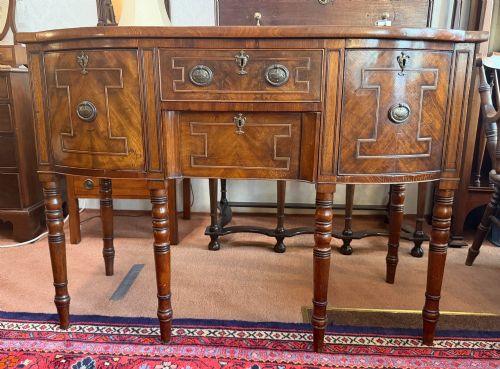
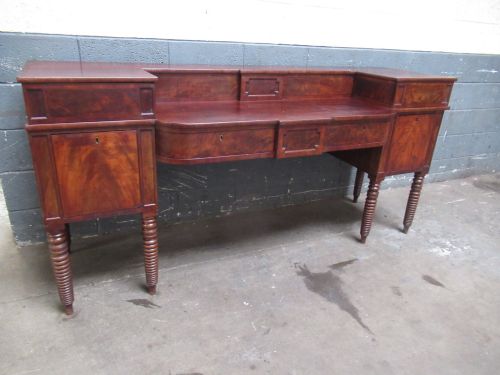
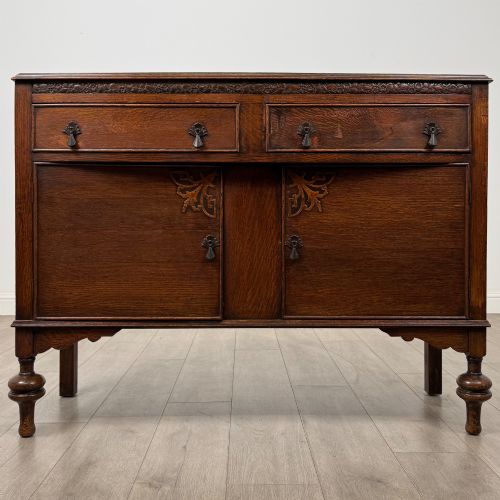
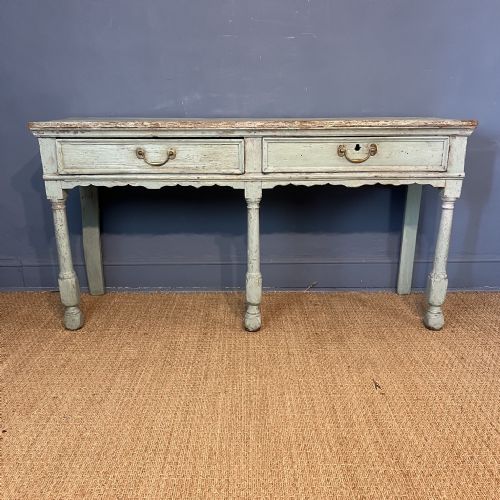
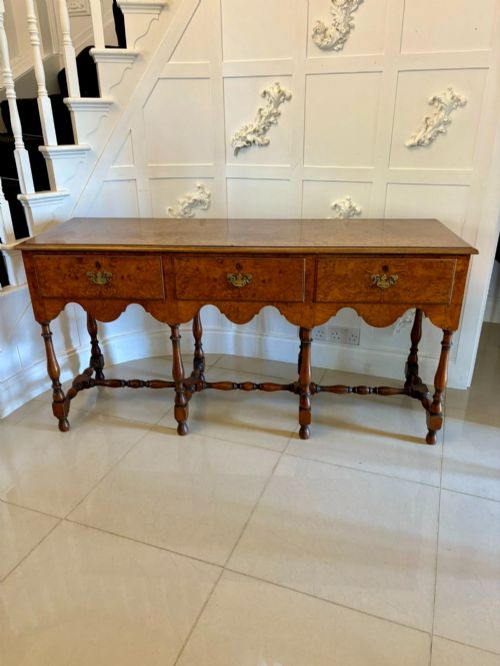
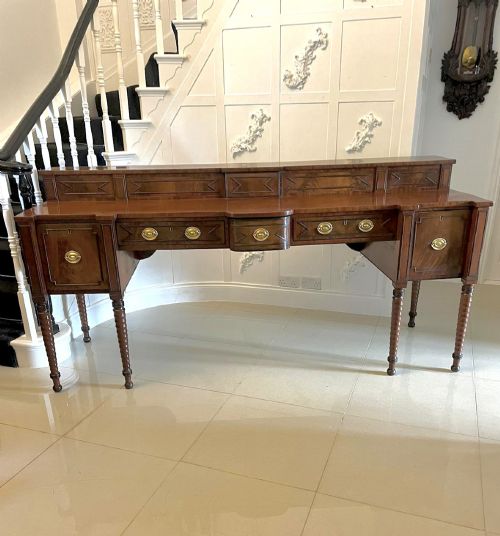
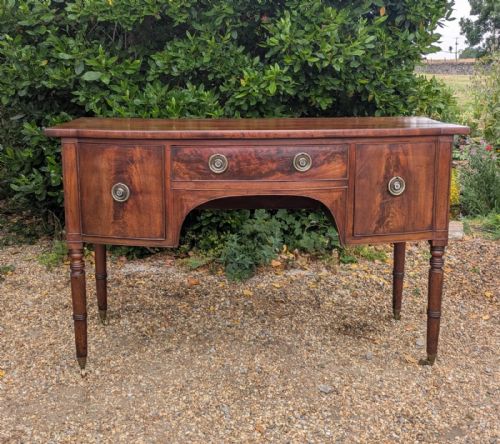
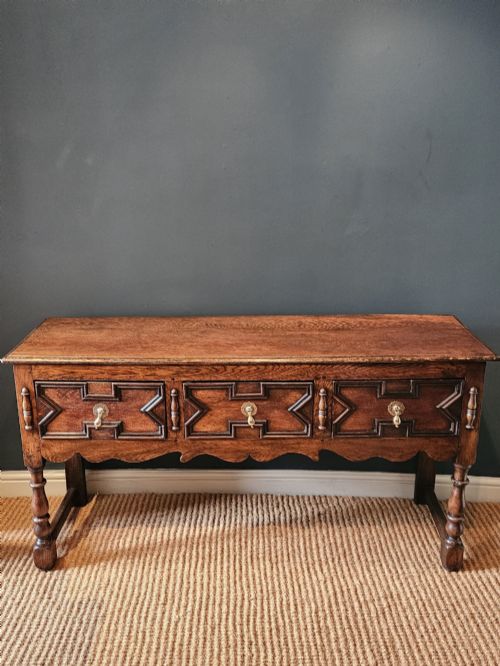
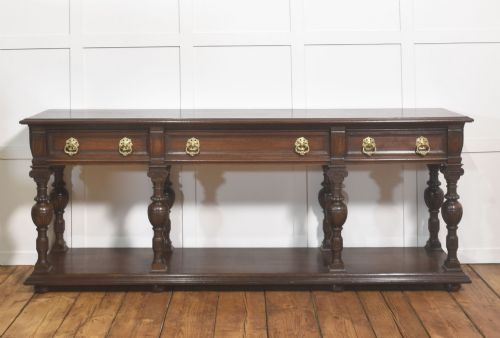
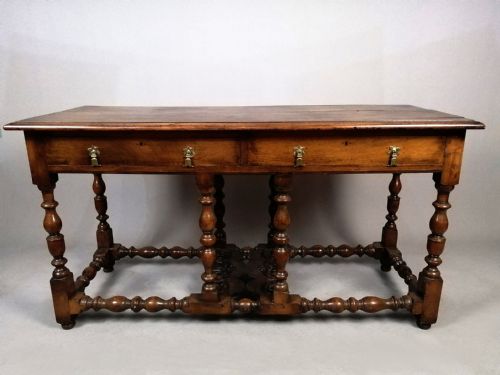
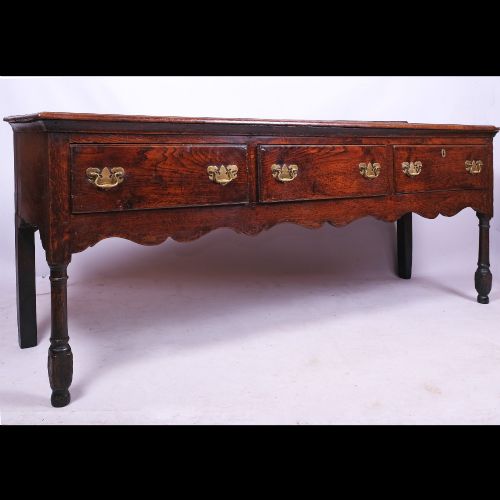
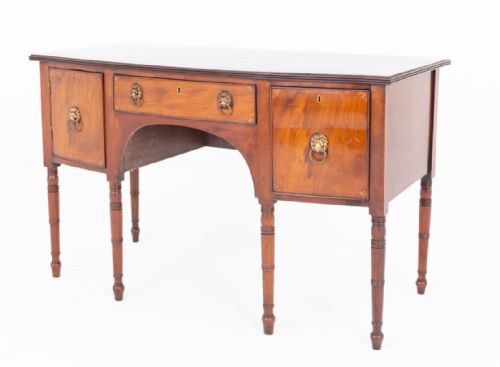
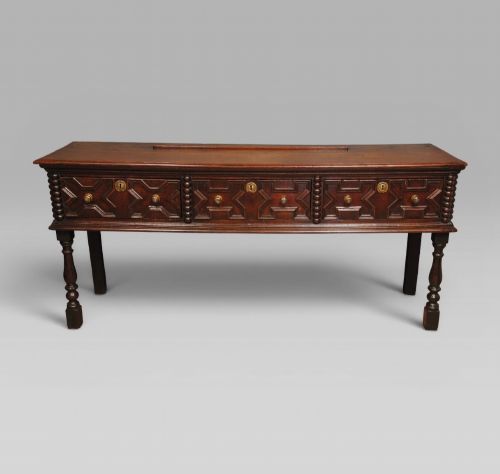
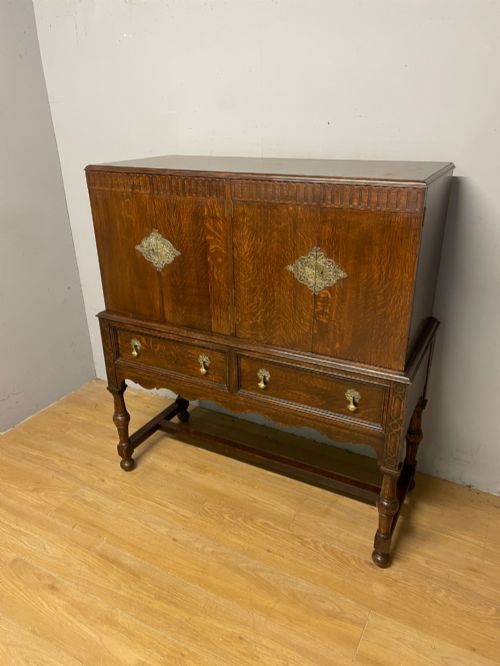
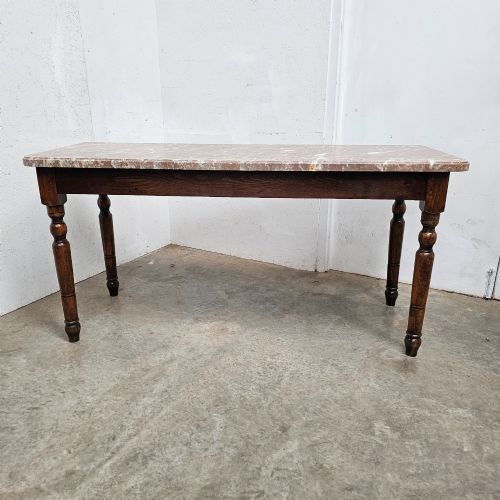
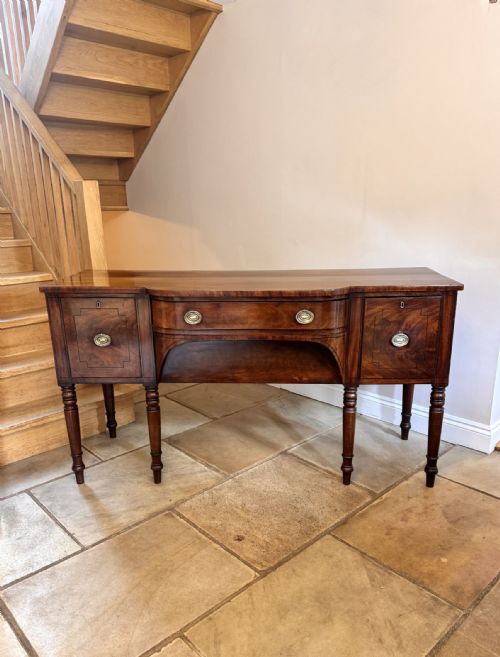
Turned Leg Sideboard
These turned leg sideboard examples offer the timeless utility of nineteenth-century timber storage, built to anchor a dining room or hall with quiet elegance.
What a turned leg sideboard is
A turned leg sideboard provides substantial storage capacity while maintaining a grounded presence through robust wooden supports. These pieces emerge from Georgian, Regency, and nineteenth-century periods, showcasing the enduring popularity of turned carpentry.
The items found here predominantly feature mahogany construction, often paired with oak linings or contrasting stringing. Forms vary from straight bow-fronts to grander serpentine shapes, reflecting the domestic needs of their original periods.
How they were made
Cabinet makers utilised dense native and imported timbers, selecting flame mahogany for primary display surfaces and oak for internal drawer construction. Ebony stringing and delicate brass hardware provide precise linear contrast against the warm reddish-brown wood.
Structural integrity relied on traditional joinery techniques, turning solid timber on lathes to create the characteristic cylindrical or tapering legs. Surface finishes were achieved through hand-applied polishing methods that enhanced the natural grain patterns.
Retail Price Guide 2026
Typical UK retail prices for turned leg sideboard, calculated from the Sellingantiques database of over a million retail prices indexed since 2003. This retail price guide relies exclusively on Sellingantiques data; no external sources or auction records are used, so the figures do not describe the wider market.
The inventory spans eighteenth-century Georgian eras through to the nineteenth century, uniting mahogany, oak, and brass materials.
What varies in quality
Superior examples distinguish themselves through the careful selection of figured timber veneers, where symmetrical grain patterns enhance the visual depth of the front elevation. The finesse of the wood turning on the legs and the precision of inlaid stringing signal the maker's skill.
Internal construction standards separate standard utility items from exceptional commissions, particularly in the dovetailing of drawers and the choice of secondary woods like oak. Original brass fixtures and intact secondary timber linings retain historical integrity.
The Turned Leg Sideboard Glossary
- Bow-front
- A convex curved cabinet front popular during the Georgian and Regency periods. This curved design softens the rigid geometry of a dining room.
- Flame mahogany
- Timber veneer cut from the branch forks of the mahogany tree, displaying a characteristic flickering flame pattern. Cabinet makers reserved this striking material for primary drawer fronts.
- Stringing
- Thin inlaid lines of contrasting wood or light-coloured material set into the surface of the furniture. This decorative technique outlines panels and drawers.
- Regency
- An English design period spanning the early nineteenth century, characterised by classical restraint and archaeological influence. Pieces from this era often feature dark wood contrasts.
Frequently Asked Questions
Where did people put a sideboard?
These large storage items typically stood against the dining room wall to hold serving dishes, cutlery, and linens during large household meals.
Smaller variations occasionally served multifunction roles in grand hallways or dressing areas as decorative console surfaces.
How do I care for antique mahogany?
Keep wooden surfaces away from direct sunlight and radiators to prevent the dry mahogany from splitting or warping over time.
Apply natural beeswax periodically and buff gently with a soft cloth to maintain the deep lustre of the historical polish.
What is flame mahogany?
Flame mahogany is a decorative wood veneer harvested from the junction where branches meet the main tree trunk. The resulting grain creates a distinctive, fiery pattern prized by period cabinet makers.
Craftsmen arranged these dramatic veneers symmetrically across the front drawers to draw the eye.
How do I identify a Regency sideboard?
Regency items often display classical architectural influences, featuring dark ebony stringing, brass inlays, and formal geometric proportions.
They frequently utilise rich flame mahogany veneers and sophisticated leg turnings that reflect early nineteenth-century neoclassical tastes.