
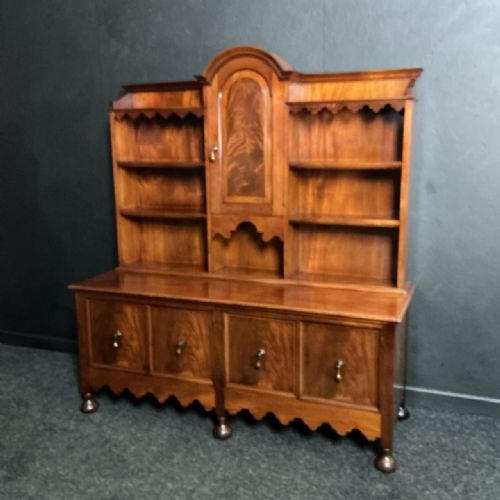
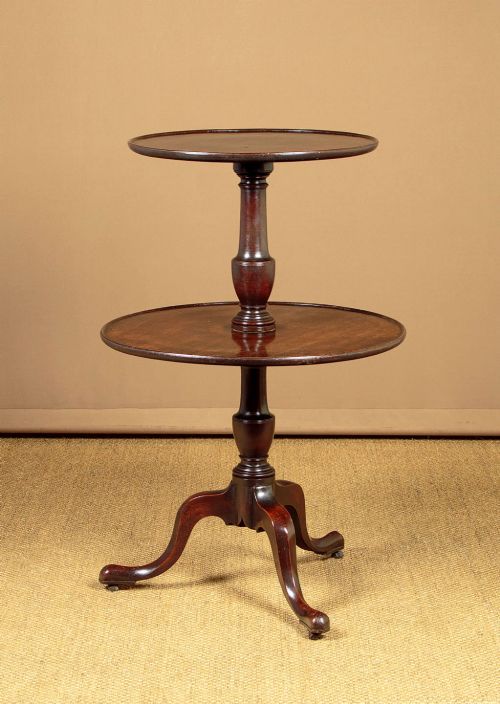
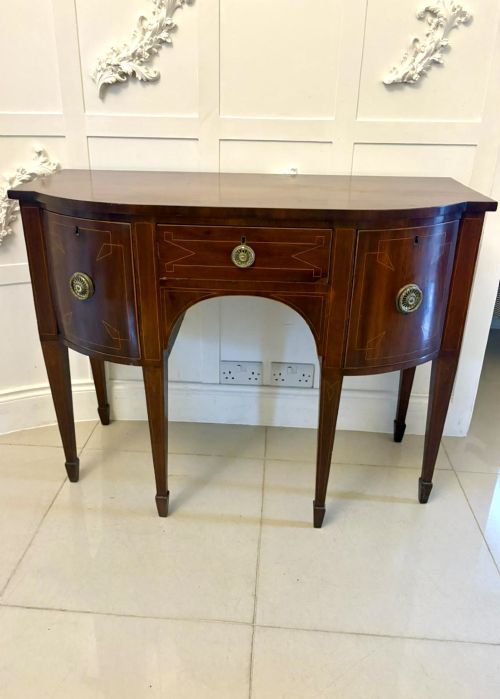
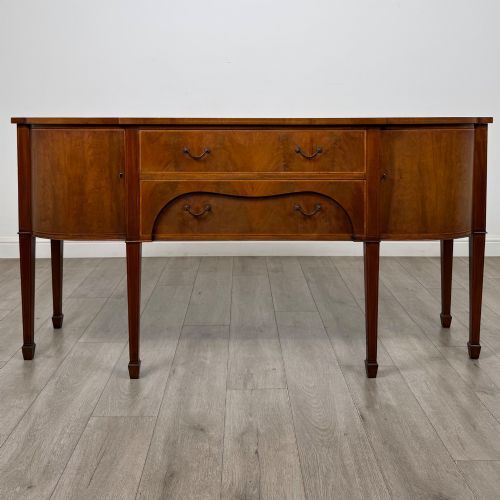
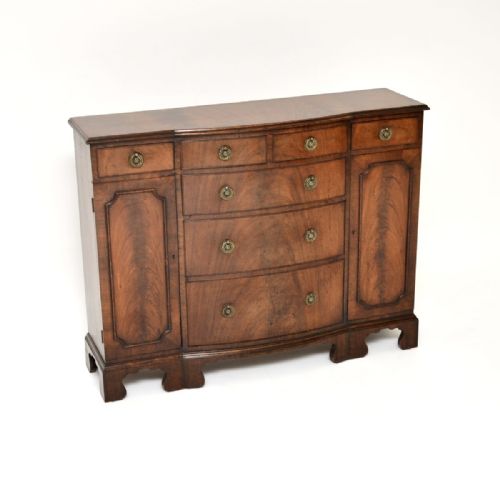
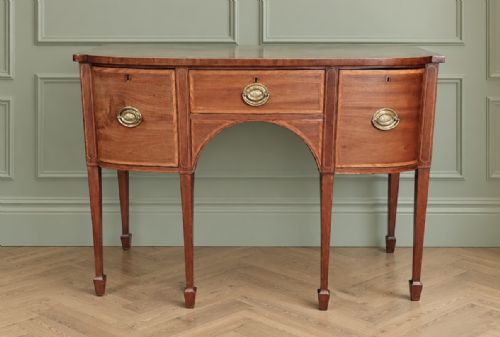
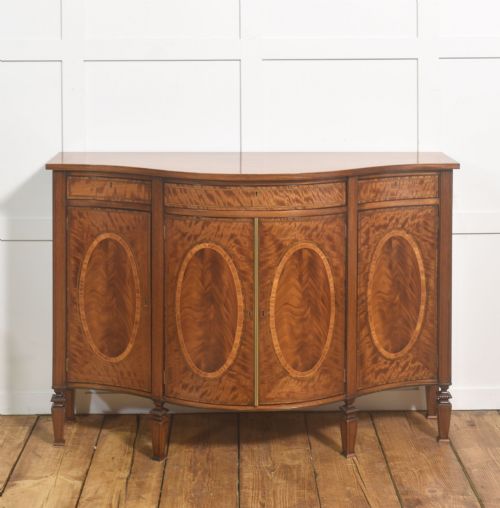
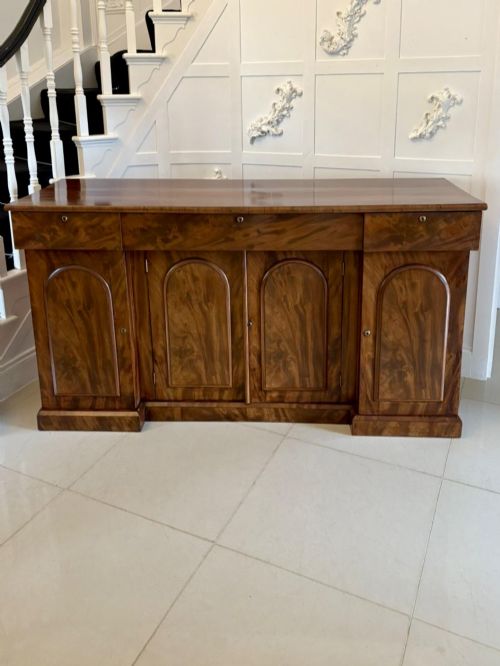
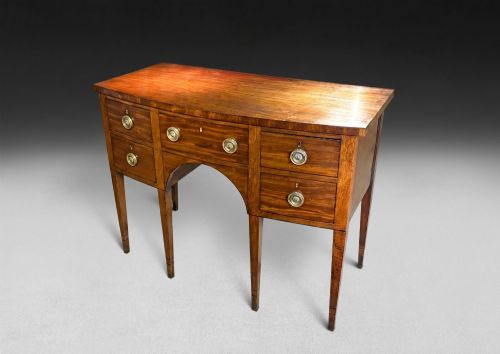
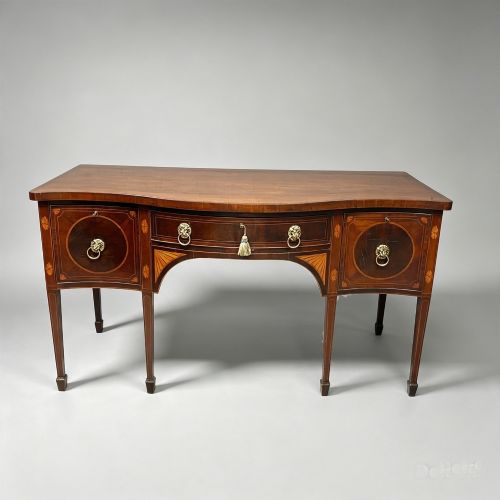
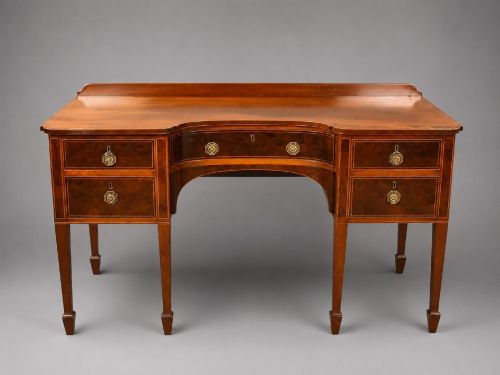
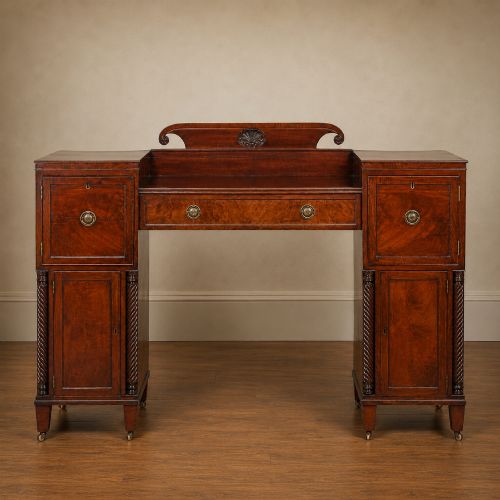
Brown Mahogany Buffet
Brown mahogany buffet pieces bring substantial presence to a dining space, uniting formal serving utility with rich timber grain.
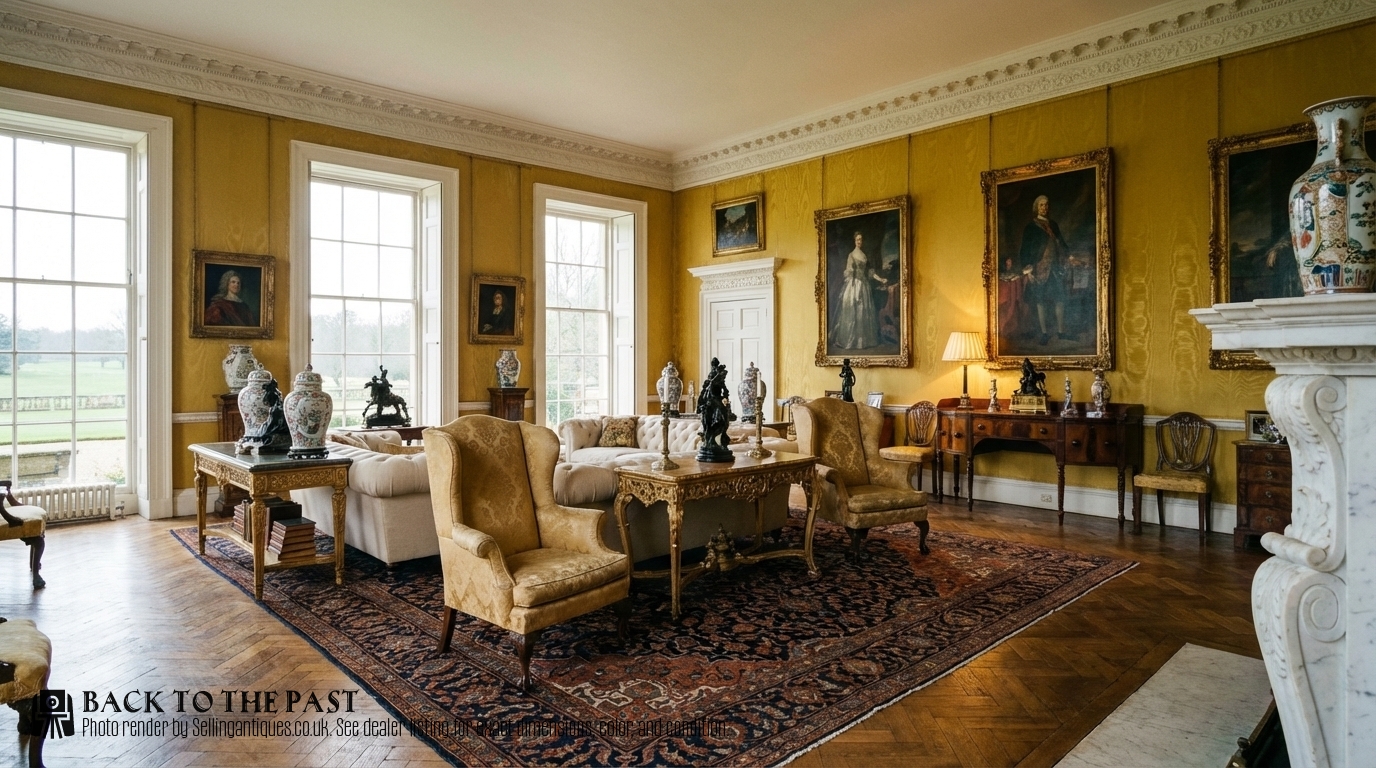
Brown Mahogany Buffet
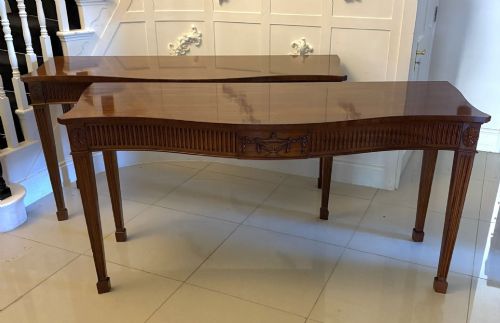
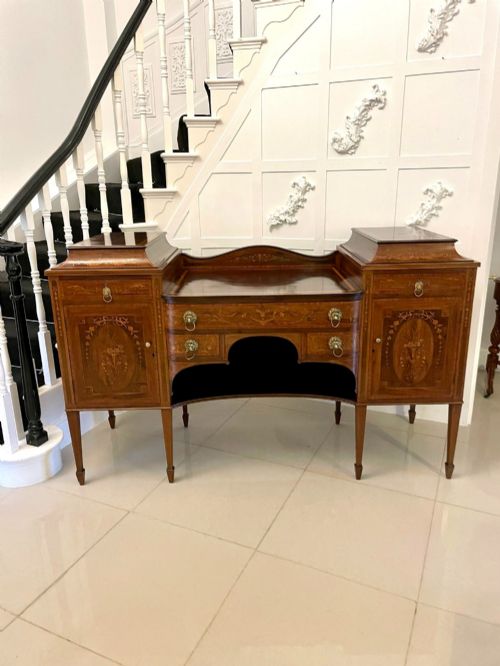
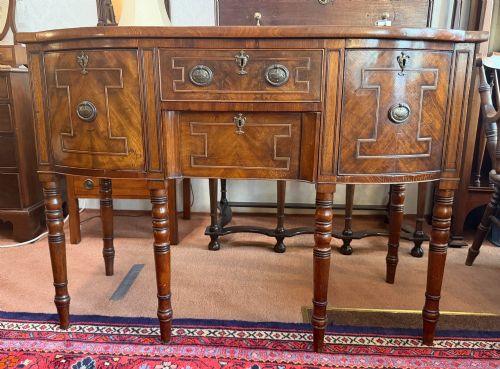
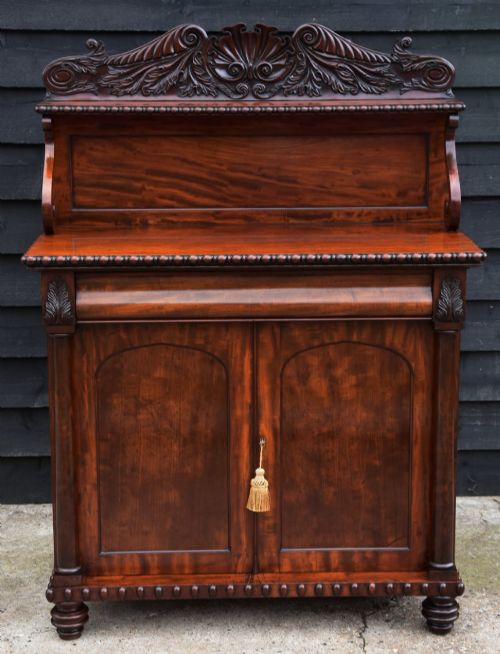
A brown mahogany buffet sits within a lineage of dining room serving furniture that includes sideboards, side cabinets, and console tables. These pieces accommodate dining silver, linen, and service items while anchoring the room with architectural weight.
The selections span from 18th century Georgian and Sheraton periods through Regency, Victorian, and Edwardian eras. Buyers encounter bow-front, serpentine, and breakfront profiles alongside smaller sideboards and chiffoniers.
Makers and workshops from London, Nottingham, and Scotland contributed to this inventory, utilising traditional forms designed for the dining room or drawing room.
How they were made
Craftsmen built these pieces primarily using solid mahogany and figured mahogany timbers, selecting flame veneer for decorative fronts and panels. Secondary woods like oak provided structural framing for drawers and internal carcasses.
Cabinet makers incorporated decorative details including satinwood and boxwood inlay, marquetry, and purpleheart banding. Brass fittings served as drawer pulls and handles, while hand-carved Neoclassical motifs adorned structural borders.
Brown Mahogany Buffet Retail Price Guide 2026
Typical asking prices for brown mahogany buffet among the pieces listed under this phrase on Sellingantiques today, from the lower quarter to the upper quarter. They describe what is for sale here now, not the wider market.
Listings feature mahogany, satinwood, boxwood, and oak across Georgian, Regency, Victorian, and Edwardian periods.
What varies in quality
The distinction between tiers rests upon the selection of timber figures, such as highly figured flame mahogany or book-matched veneers, paired with crispness in the hand-carved details. Higher grade pieces display meticulous alignment in crossbanding and inlay work across curved bow-front or serpentine drawer assemblies.
Construction methods also dictate grade, where dovetailed drawer boxes and substantial original brass hardware elevate a piece above standard utility items. The integration of secondary woods and the precision of joinery reflect the workshop standard of the period.
Hewetsons London·M D Miller And Sons Nottingham
The Brown Mahogany Buffet Glossary
- Bow-front
- A curved cabinet front that swells outward in the centre, creating a convex profile. This shape required advanced joinery to bend timber or shape solid mahogany blocks.
- Serpentine
- A front profile defined by a central convex curve flanked by concave sections, resembling a flattened S-shape. It represents a high level of cabinet-making skill.
- Crossbanding
- A decorative border technique where thin strips of veneer are laid perpendicular to the grain of the surrounding surface. Satinwood and boxwood frequently appear in this application.
- Chiffonier
- A low sideboard or cabinet featuring shelves or a raised back, developed during the Regency and Victorian periods for dining rooms. It provided compact storage for serving ware.
- Marquetry
- The art of forming decorative patterns using fitted pieces of various coloured veneers. Craftsmen applied this technique to drawer fronts and cabinet doors.
Brown Mahogany Buffet: Frequently Asked Questions
What is a brown mahogany buffet used for?
These items serve primarily as dining room storage furniture for serving dishes, cutlery, and linens during meals.
Beyond dining use, the flat top surface functions well for displaying lamps, decorative objects, or serving drinks during gatherings.
How do I identify a Georgian sideboard?
Georgian pieces typically exhibit classical proportions, straight or bow-front shapes, and restrained use of mahogany veneer without heavy Victorian ornamentation.
Look for hand-cut dovetails in the drawer construction and period-appropriate brass hardware fixed to the timber.
What is the difference between a sideboard and a buffet?
Sideboards traditionally feature longer legs and a more formal design intended for serving food in grand dining rooms.
Buffets often provide lower profile storage with enclosed cupboards reaching closer to the floor for heavier dishware.
How do I care for antique mahogany furniture?
Maintain the timber by keeping pieces away from direct sunlight and sudden temperature shifts that cause wood to crack.
Apply quality beeswax sparingly and buff gently with a soft cloth to preserve the natural lustre of the mahogany surface.