
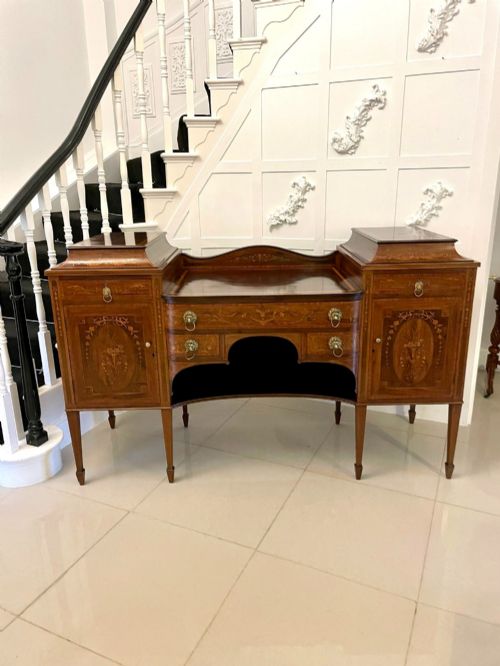
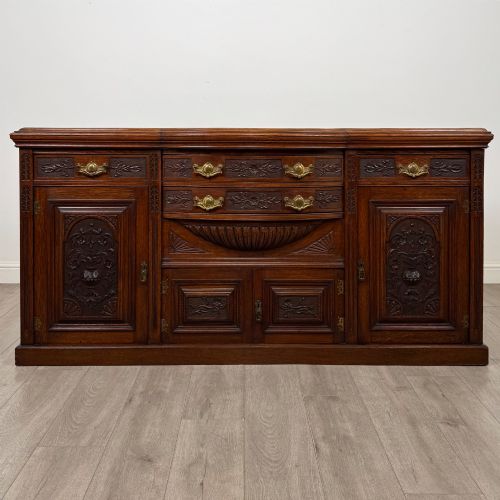
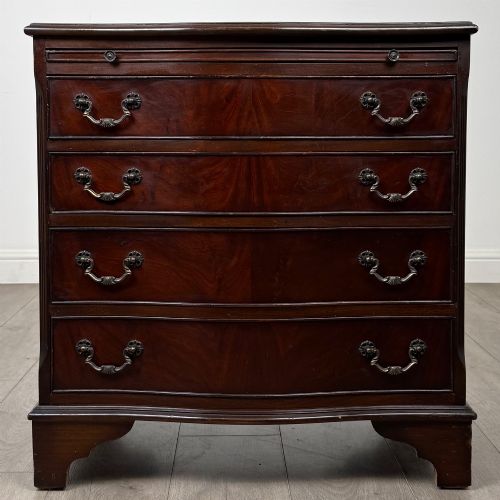
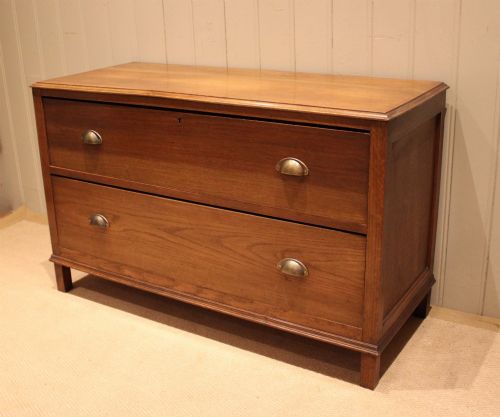
Brass Handle Sideboard
A brass handle sideboard brings together functional timber storage and warm metal hardware across Georgian, Victorian and Edwardian periods.
Brass Handle Sideboard
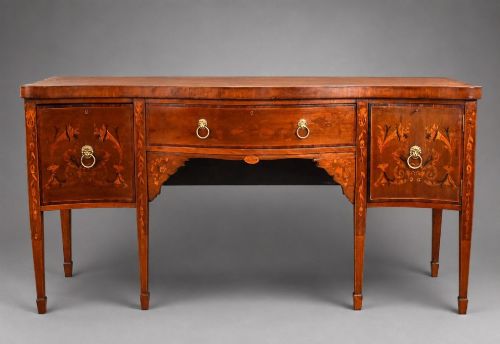
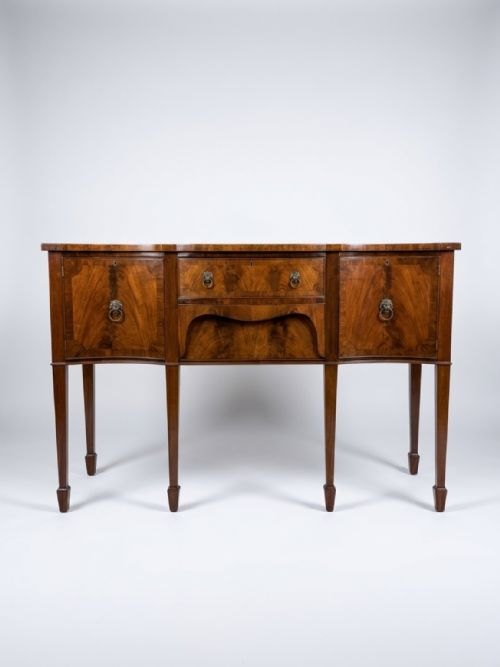
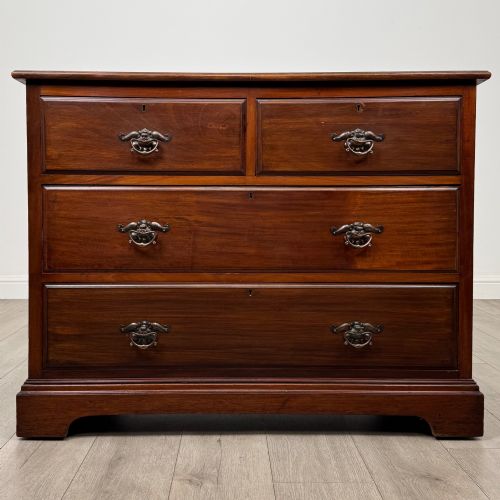
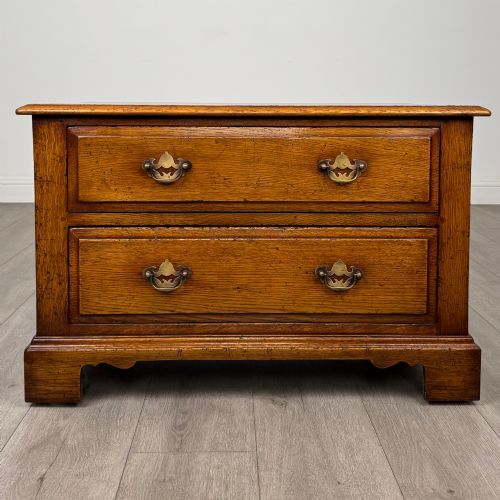
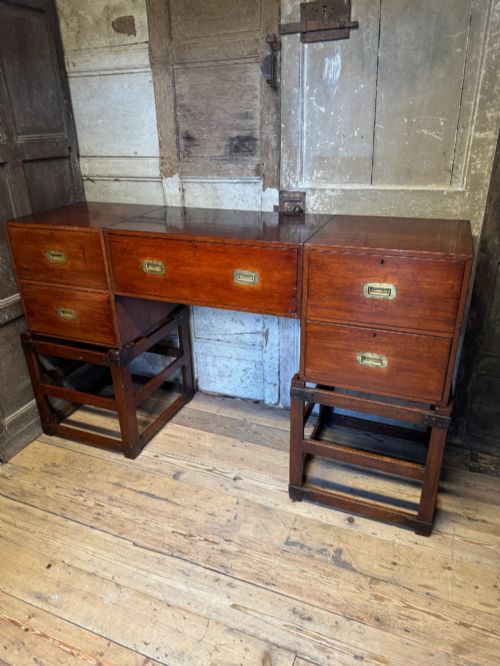
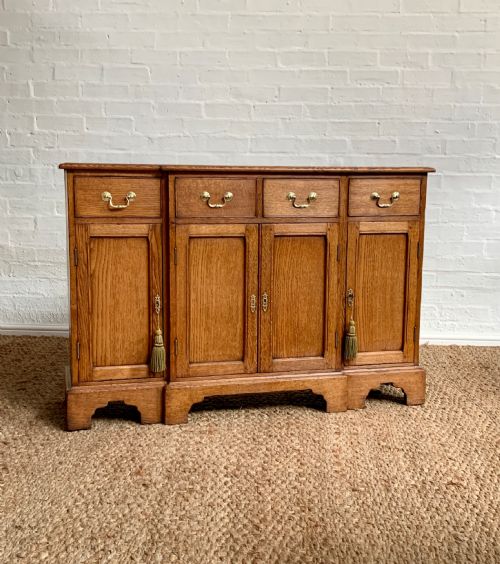
A brass handle sideboard encompasses various storage forms including Georgian and Regency servers, oak dresser bases, and mahogany chests of drawers. These items share the defining characteristic of metal hardware fitted to timber furniture built for dining rooms and living spaces.
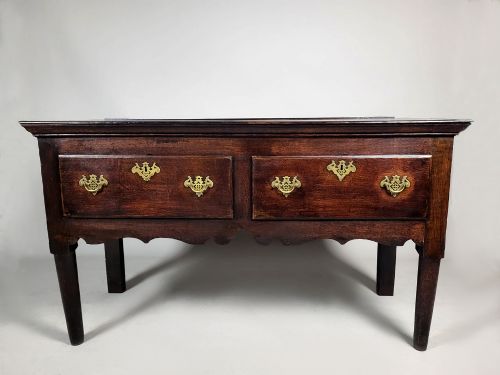
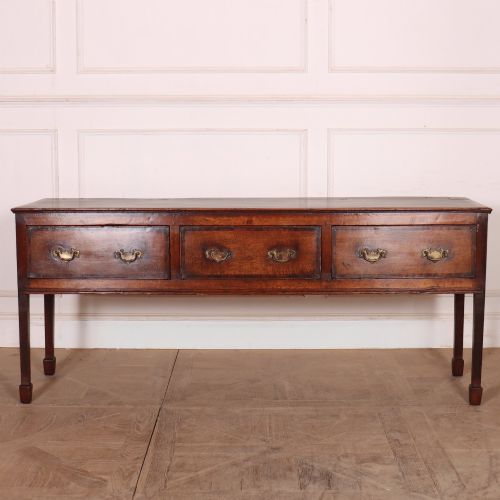
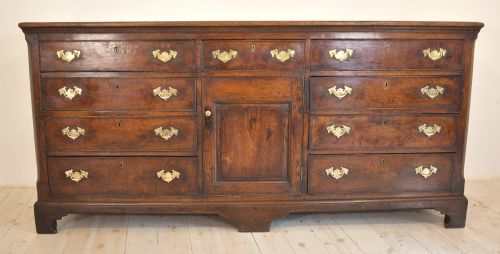
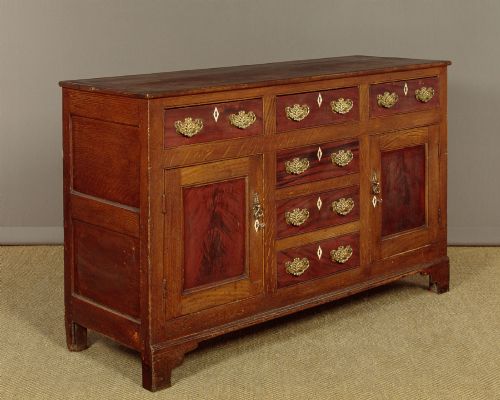
The version most commonly encountered on this page is the 18th century or Georgian oak dresser base, alongside 19th century mahogany sideboards featuring inlaid satinwood or boxwood details. Walnut, rosewood, and cherry wood pieces also appear among the selection.
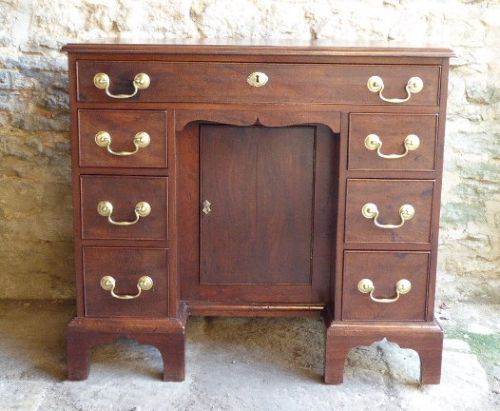
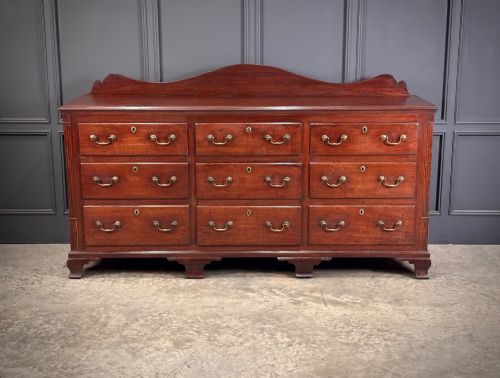
Proportions range from very narrow George III sideboard designs to large banks of drawers and low cabinet bases. Buyers encounter distinct regional variations such as Lancashire oak bases and French provincial commodes.
Materials and construction
Makers utilised dense native and exotic timbers including mahogany, oak, walnut, and rosewood for the primary carcases. Secondary woods often support internal drawer construction while decorative veneers and contrasting stringing utilise boxwood and satinwood.
Hardware consists principally of cast brass handles and backplates, sometimes described as original brasses. Joinery techniques reflect the period of origin, employing traditional drawer construction and carved or inlaid ornamentation.
Some provincial oak dresser bases carry the scent of centuries of dried herbs and kitchen memories locked within their timber drawers.
Assessing quality
Distinction across the range rests upon the crispness of timber carving, the precision of marquetry and string inlay, and the integration of the hardware. Superior examples display balanced proportions, particularly in serpentine and bow front formats.
The retention of original brass handles and untarnished timber surfaces elevates a piece from standard utility furniture to high craftsmanship. Selection of fine grain mahogany or figured oak also separates standard regional items from workshop masterpieces.
Hewetsons London
The Brass Handle Sideboard Glossary
- Serpentine
- A front profile characterised by a convex central section flanked by concave curves. This shape requires advanced cabinet-making skill to execute cleanly in mahogany or walnut.
- Dresser base
- A lower storage unit featuring drawers and sometimes cupboards or a potboard underneath. These pieces originated in farmhouse kitchens before moving into refined dining spaces.
- Bow front
- A convex curved cabinet front popular during the Georgian and Regency periods. It softens the linear appearance of a sideboard or chest.
- Marquetry
- The art of applying decorative veneer patterns using various coloured woods. Craftsmen cut precise shapes to form floral or geometric designs on drawer fronts and tops.
- Potboard
- An open slatted lower shelf fitted between the legs of an oak dresser base. Historically used for storing earthenware and heavy kitchen utensils.
Brass Handle Sideboard: Frequently Asked Questions
What is a brass handle sideboard?
A brass handle sideboard is a timber storage item fitted with metal pull handles, encompassing Georgian sideboards, Victorian buffets, and oak dresser bases.
These pieces served dining rooms and kitchens for storing tableware, linens, and provisions while displaying decorative hardware.
How do I date a sideboard?
Dating relies on identifying timber choices, construction methods, and stylistic cues such as Georgian serpentine fronts or Edwardian inlay.
Examining drawer linings and the style of the brass handles helps confirm whether the hardware and carcase belong to the same period.
Are brass handles original?
Original brass handles match the fixing marks, wear patterns, and metallurgical composition expected of the cabinet's manufacturing date.
Replacements are common in antique furniture, though many preserved pieces retain their first brasses.
Where were these pieces used?
These items functioned primarily in dining rooms as serving surfaces and storage units for heavy china and cutlery.
Earlier oak versions originated in large kitchens and halls before formal dining furniture evolved in the Georgian era.