
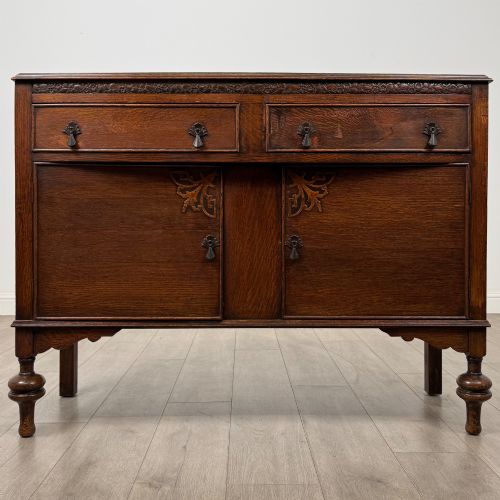
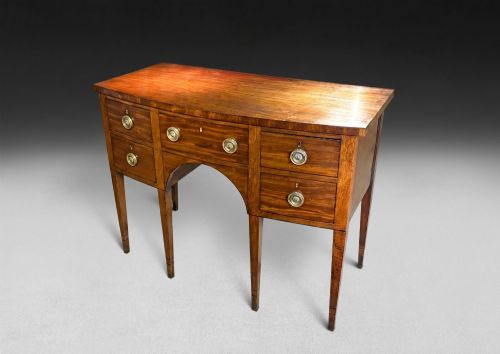
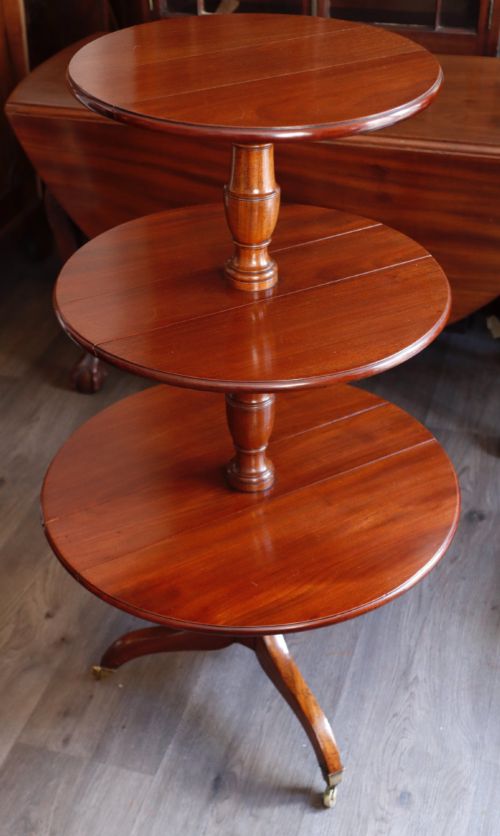
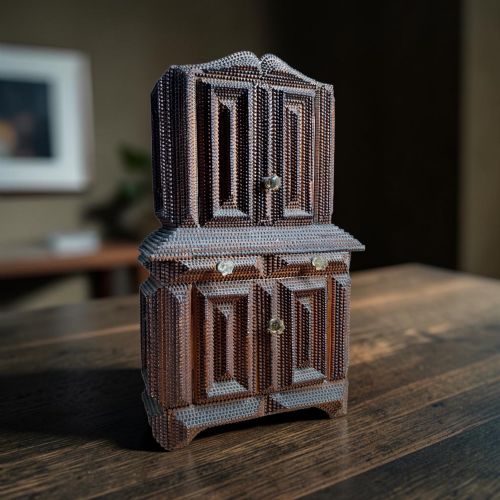
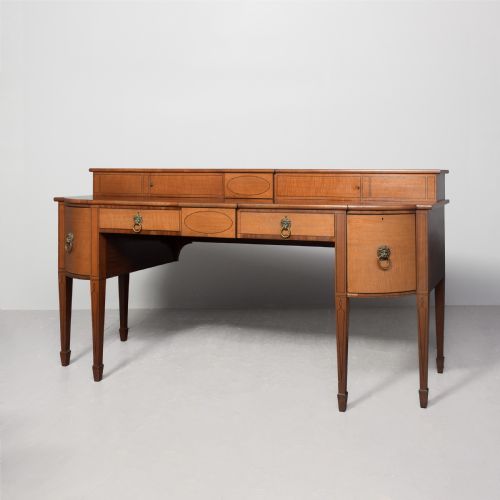
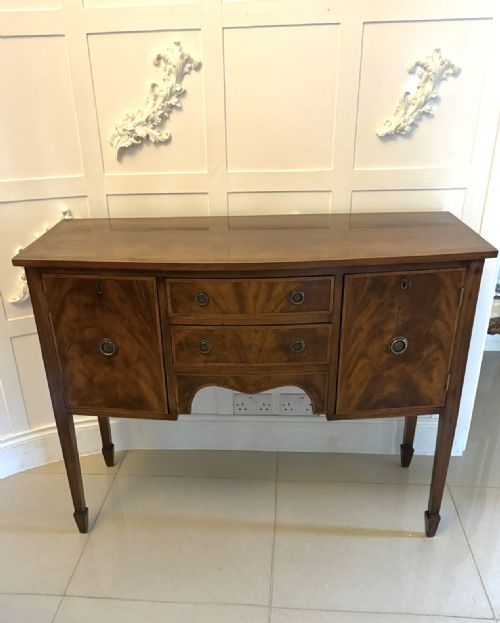
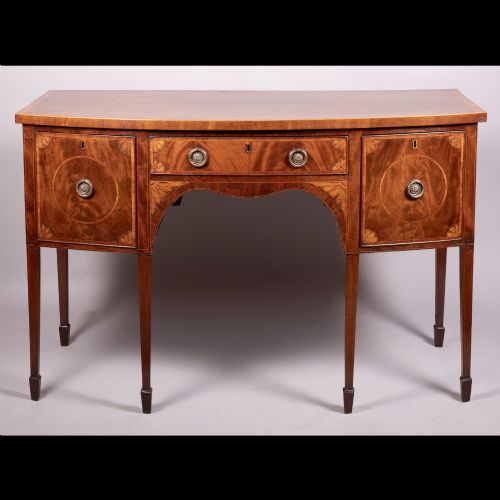


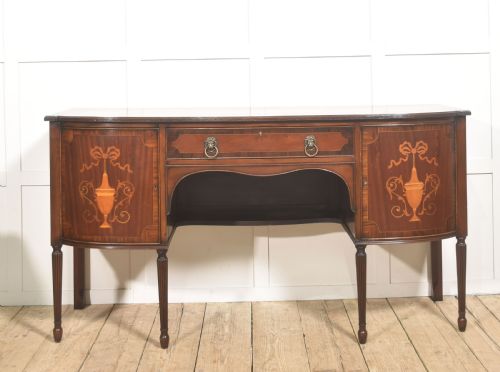

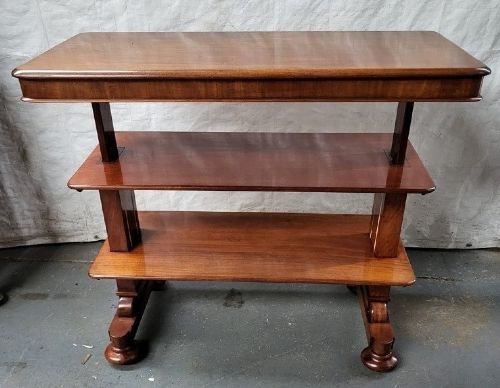
Brown Wood Buffet Table
A brown wood buffet table brings warmth and storied craftsmanship to a dining room, offering both practical surface space and concealed storage.
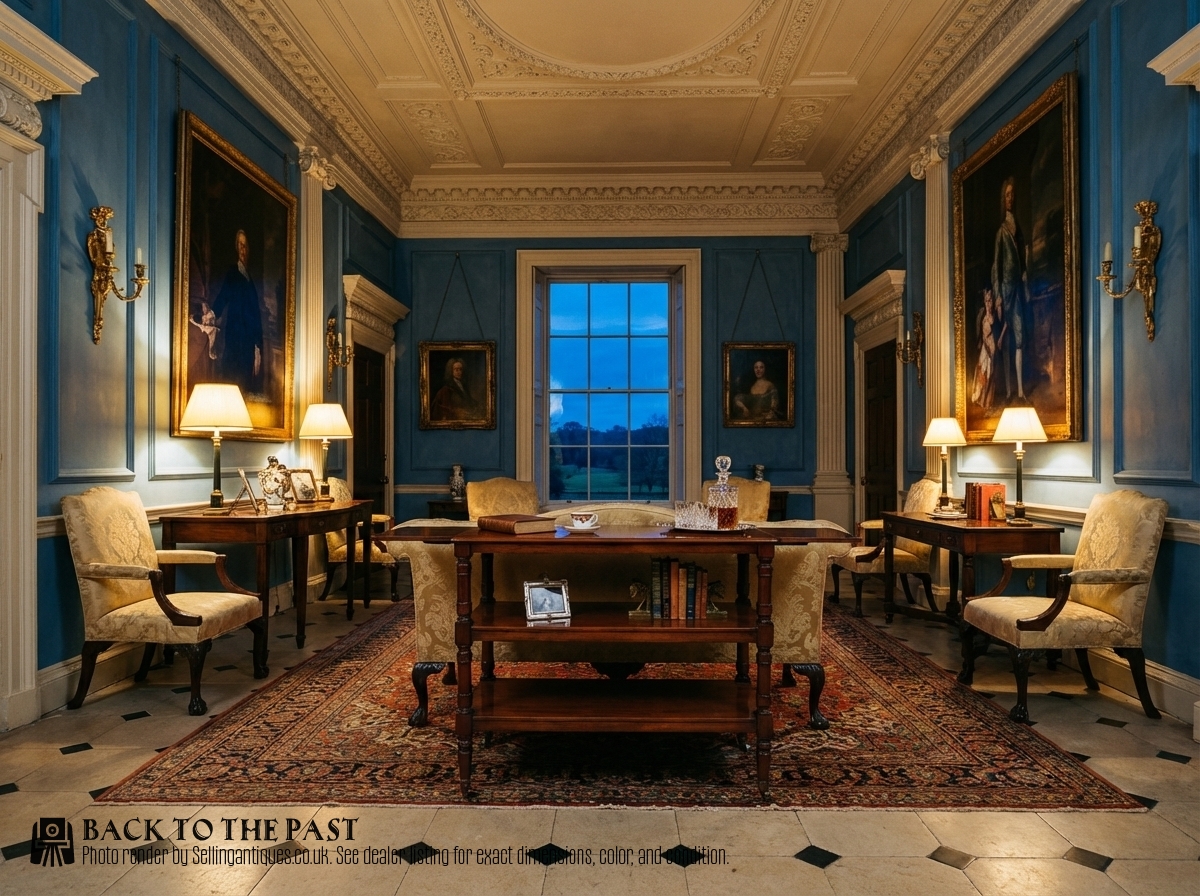
Understanding brown wood buffet table
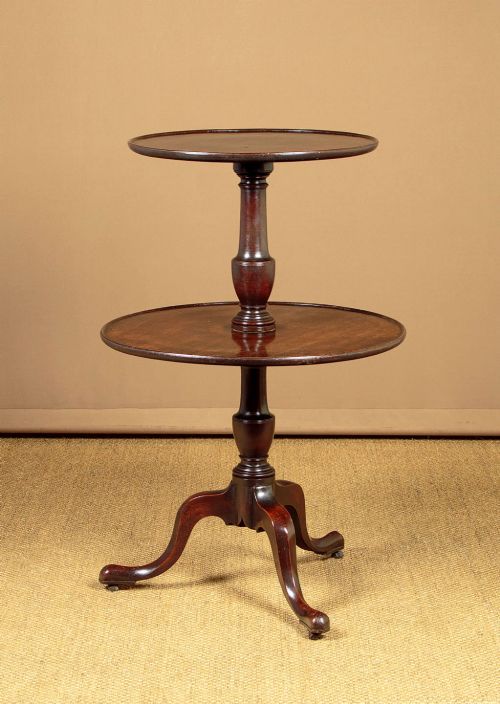
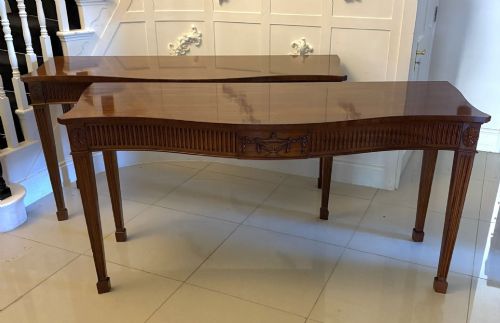
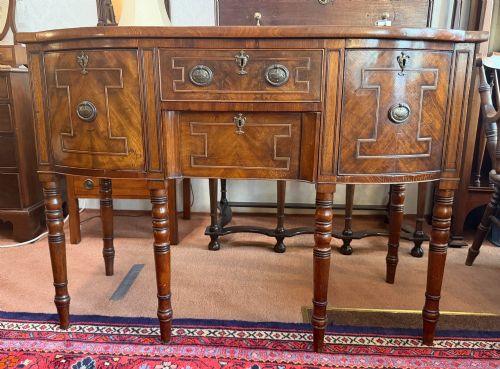
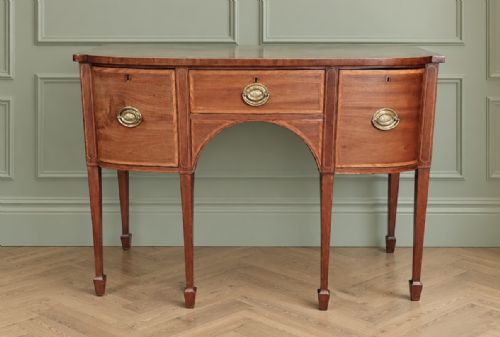
A brown wood buffet table encompasses formal dining furniture designed for serving and storage, primarily appearing as sideboards, serving tables, and pedestals in the historical record. These pieces emerge from the Georgian and nineteenth-century periods, including Grand Regency and George IV styles.
The selections available here showcase distinct formats, ranging from bow front small sideboards to unusual three-tier serving tables. Buyers encounter pieces defined by classical proportions, polished timber surfaces, and functional compartmentalisation tailored for domestic dining.
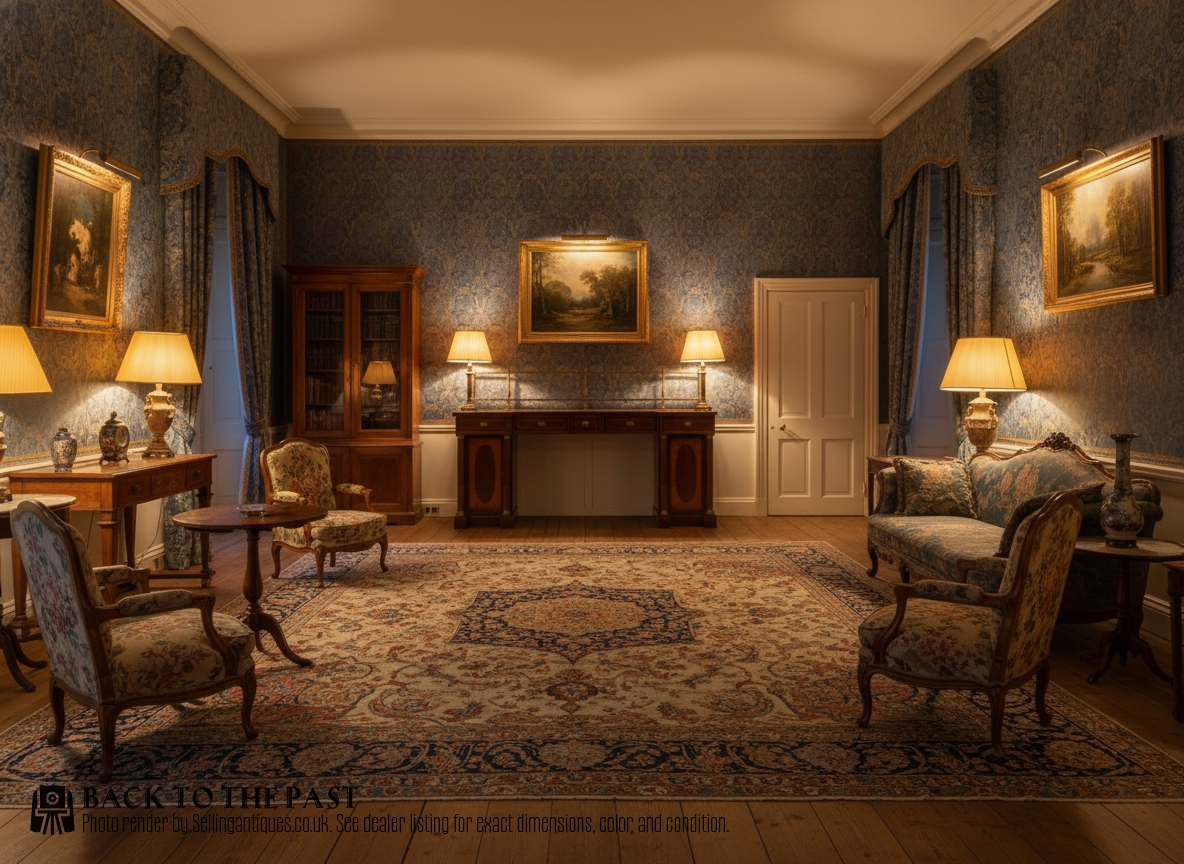
Construction and Materials
Carpenters utilised solid mahogany and satinwood to build these items, selecting dense hardwoods suited to structural longevity and fine cabinetwork. These timbers provide the foundational reddish-brown tones and grain patterns visible across the surfaces.
Detailing often incorporates contrasting inlay work to define borders and panels, alongside cast brass hardware such as galleries fitted to the upper tiers. These metallic and lighter wood accents complement the darker mahogany bodies.
Retail Price Guide 2026
Typical UK retail prices for brown wood buffet table, calculated from the Sellingantiques database of over a million retail prices indexed since 2003. This retail price guide relies exclusively on Sellingantiques data; no external sources or auction records are used, so the figures do not describe the wider market.
Materials recorded in the inventory include mahogany, satinwood, and brass hardware.
Measures of Quality
Distinctions in quality rest upon the refinement of the timber selection and the precision of the cabinetmaker's joinery. Higher grade examples display carefully matched grain patterns across drawer fronts and doors, whereas simpler items rely on plain boards.
The sophistication of the secondary decorative elements also separates standard items from superior works. Finely detailed string inlay, well-cast brass galleries, and uncommon configurations like three-tier formats or pedestal designs elevate the standing of a piece.
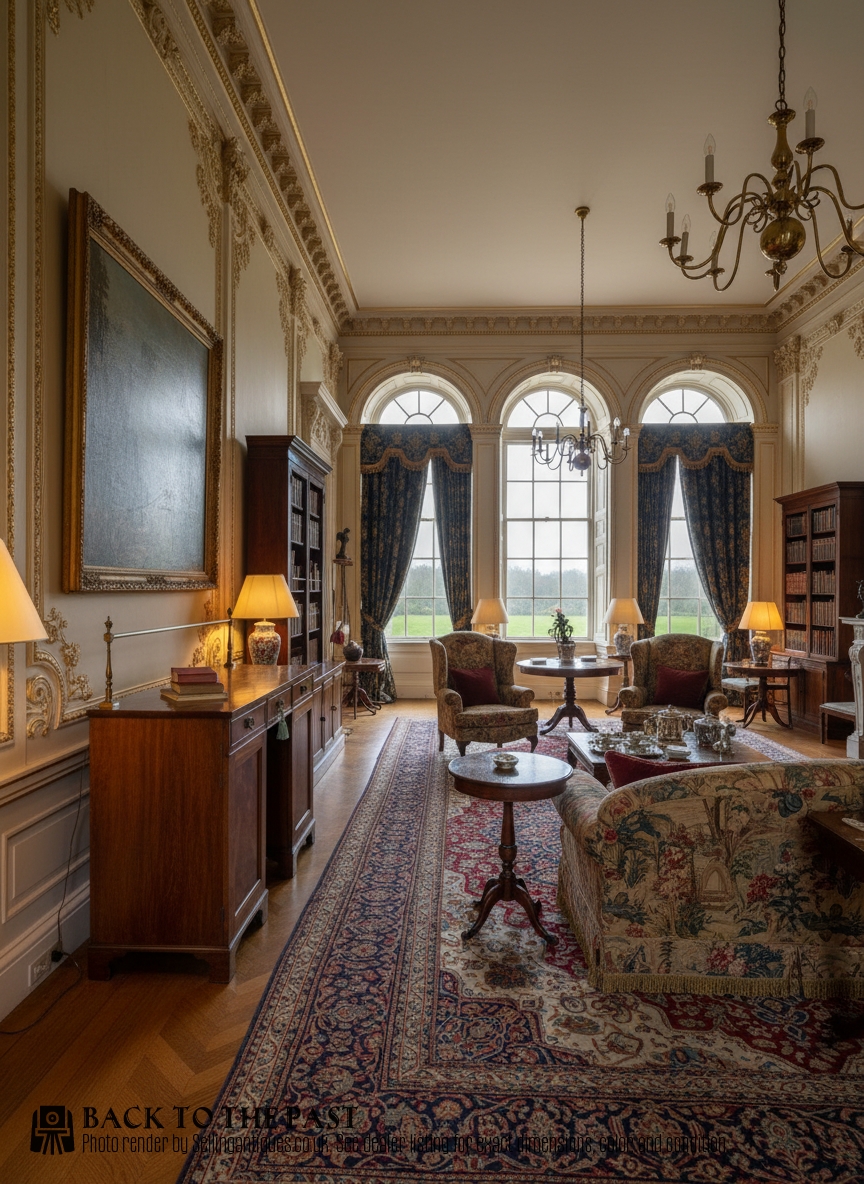
The Brown Wood Buffet Table Glossary
- Bow front
- A convex curved cabinet front that projects outward in the centre, frequently seen on Georgian sideboards to soften rectangular room lines.
- Pedestal sideboard
- A form featuring distinct columnar or pedestal cupboards flanking a central serving space, popular during the nineteenth century.
- Satinwood
- A durable, yellowish timber native to Ceylon and the West Indies, utilised by cabinetmakers for contrasting stringing and decorative inlay.
- Brass gallery
- A metal rail mounted along the top edge of a serving table or sideboard to prevent serving dishes from sliding off.
- Three-tier buffet
- A multi-layered serving structure providing tiered surfaces for food and dining accessories, noted for uncommon formats in early nineteenth-century production.
Frequently Asked Questions
What is a brown wood buffet table used for?
These tables function as practical furniture pieces for serving meals and storing dining room essentials such as linens and cutlery. Their surface area accommodates dishes during gatherings while internal compartments keep tableware organised.
Historically, they served a central role in formal dining rituals, acting as staging areas for food before it reached the main dining table.
How do I date a Georgian buffet table?
Dating relies on identifying characteristic construction methods, hardware types, and stylistic markers associated with the reigns of George III and George IV. Examining the secondary timbers inside drawers and the presence of hand-cut joints offers further clues.
Makers of the Georgian period favoured specific proportions, classical inlays, and specific brass handles that shifted in design as the nineteenth century progressed.
What wood are these buffet tables made from?
The primary timber utilised across these examples is mahogany, prized for its strength, deep colour, and stability. Craftsmen frequently combined it with lighter woods like satinwood for decorative contrast.
Brass elements also appear as functional hardware, including galleries and drawer pulls, enhancing both utility and visual appeal.
How do I care for antique mahogany furniture?
Maintaining antique mahogany involves keeping the timber away from direct sunlight and sudden temperature shifts to prevent wood splitting. Regular dusting with a soft, dry cloth preserves the polished finish.
Applying appropriate wax occasionally helps nourish the grain and protects the surface without building up heavy chemical residues.