
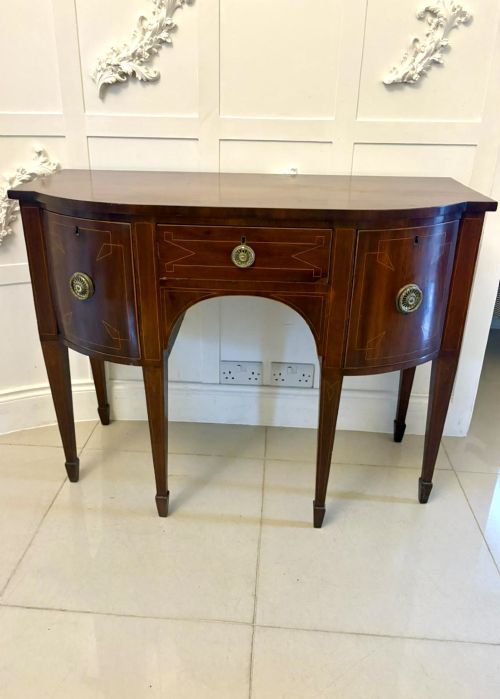
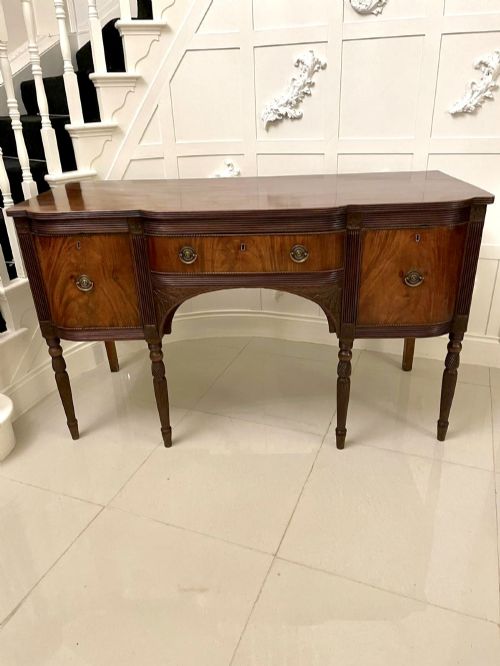
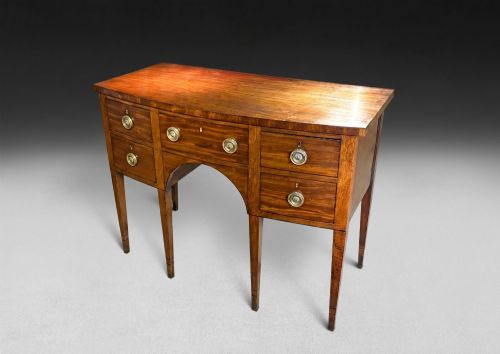
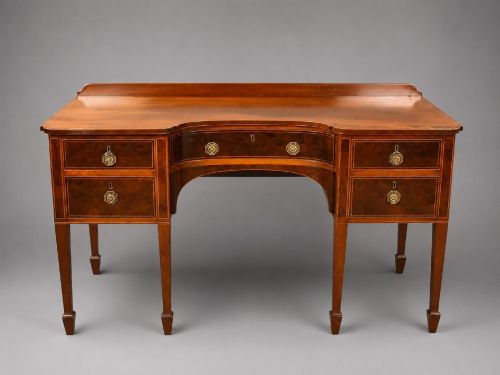
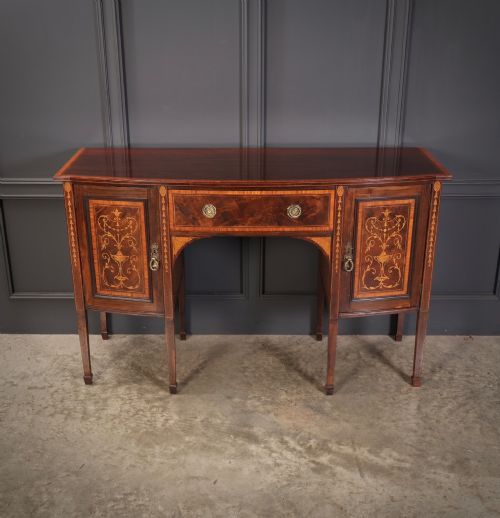
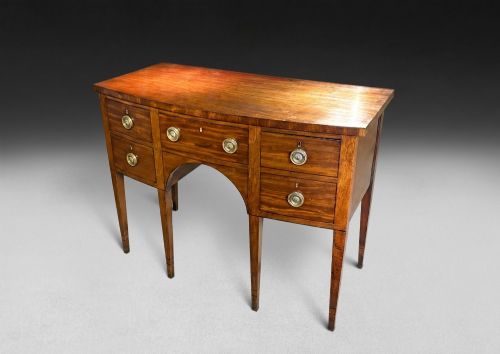
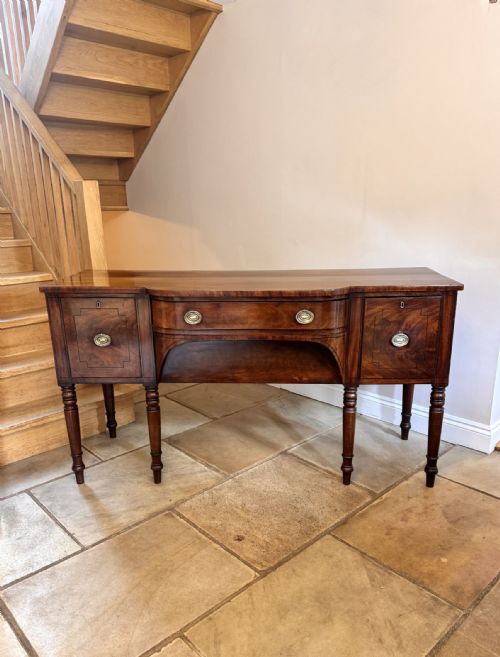
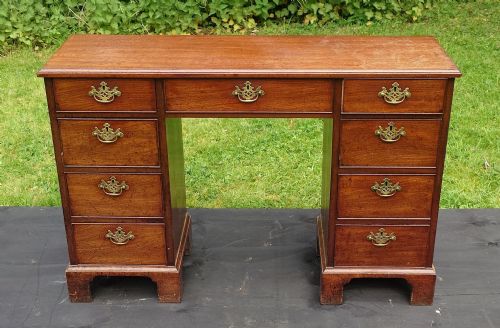
George III Mahogany Sideboard
A george iii mahogany sideboard brings architectural proportion and rich timber grain to a dining room.
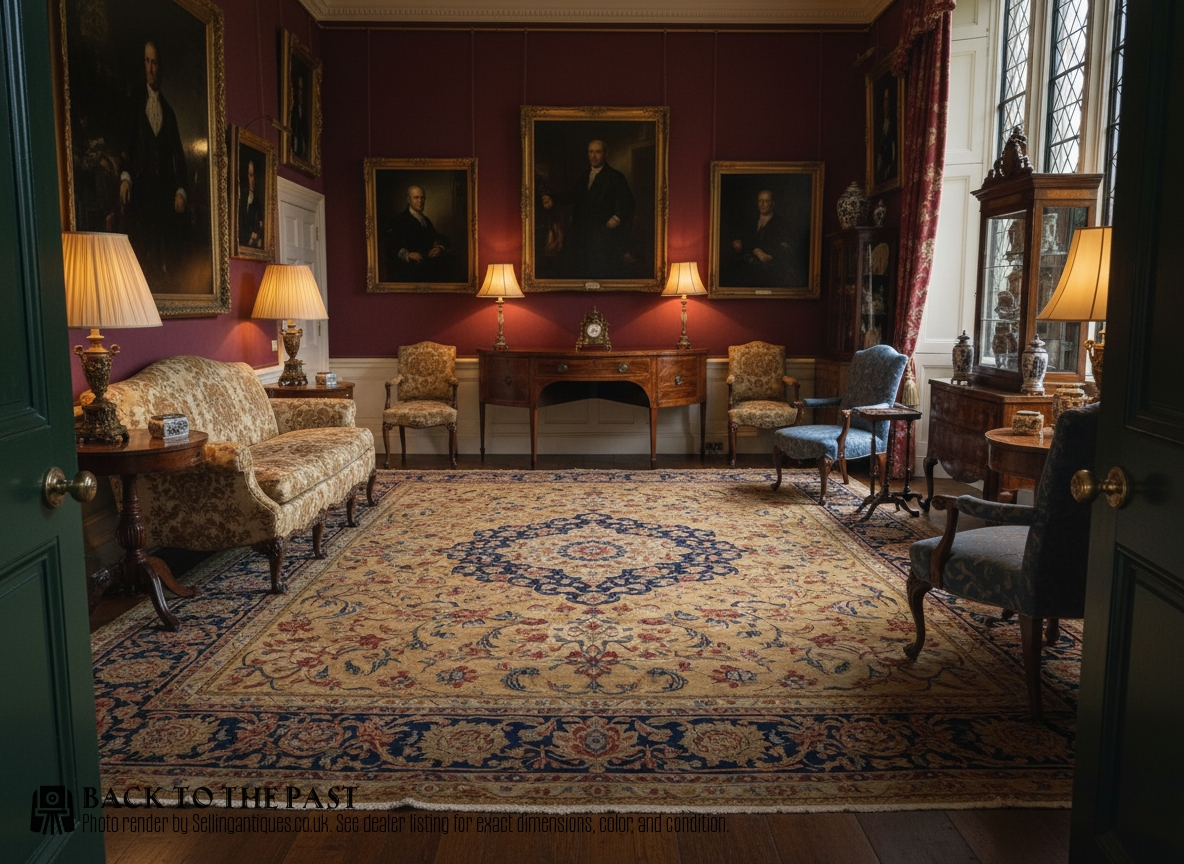
George III mahogany sideboards
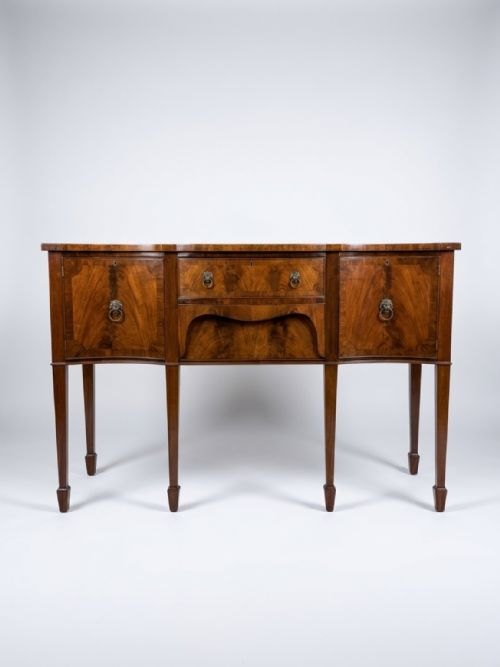
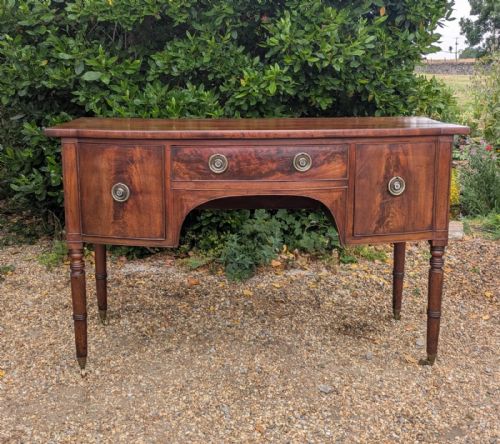
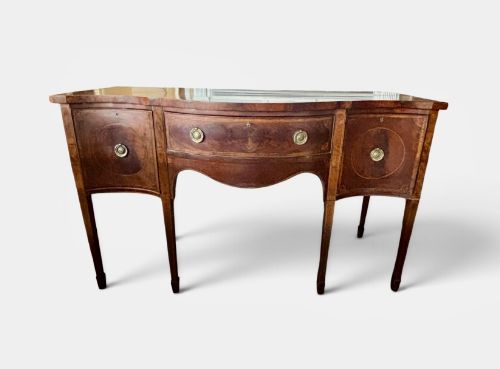
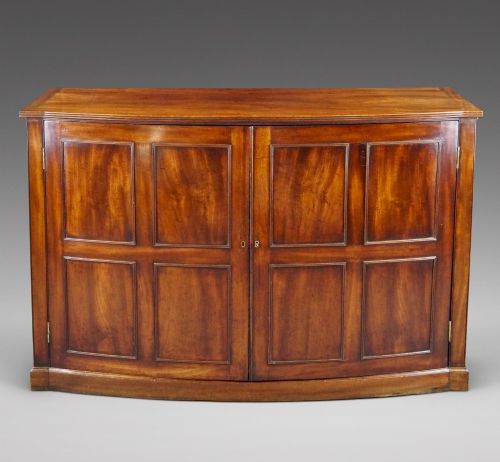
A george iii mahogany sideboard serves as a substantial serving piece and storage unit, typically encountered in serpentine, bow-front, breakfront or demi-lune shapes.
The selections span the Georgian period, the Regency era, and later Sheraton Revival interpretations, alongside related commodes and chests of drawers.
Makers utilised native and exotic timbers to build functional dining furniture that defined elite British interiors.
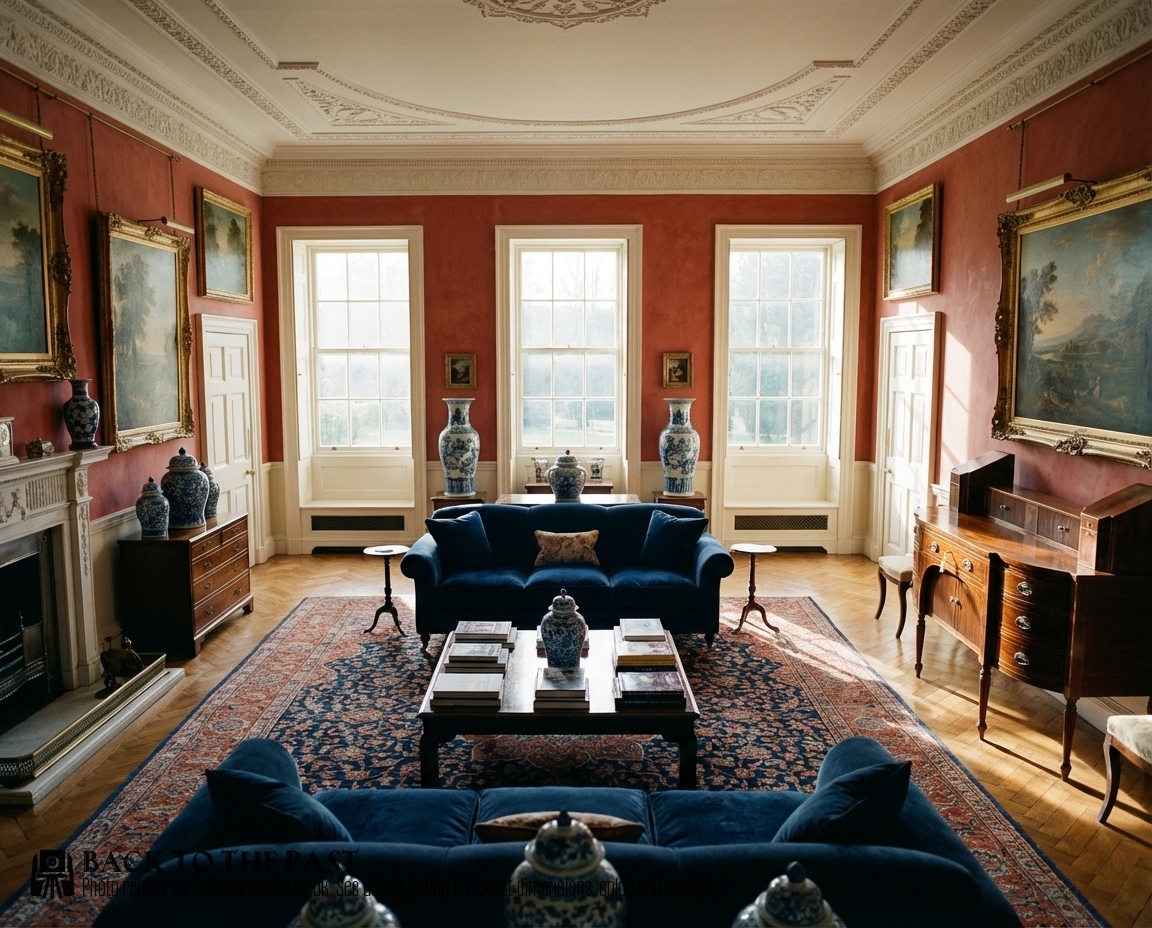
Materials and construction
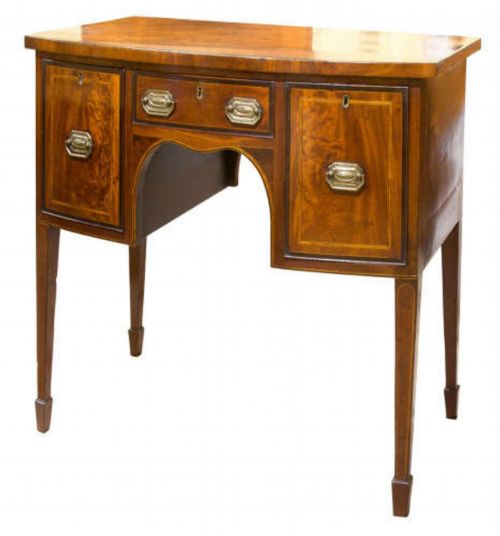
Cabinets rely primarily on solid mahogany and flame mahogany veneer, often enhanced by contrasting stringing and banding in boxwood and satinwood.
Details such as brass handles and hardware complement the timber surfaces, while marquetry inlay decorates select panels and drawer fronts.
Retail Price Guide 2026
Typical UK retail prices for george iii mahogany sideboard, calculated from the Sellingantiques database of over a million retail prices indexed since 2003. This retail price guide relies exclusively on Sellingantiques data; no external sources or auction records are used, so the figures do not describe the wider market.
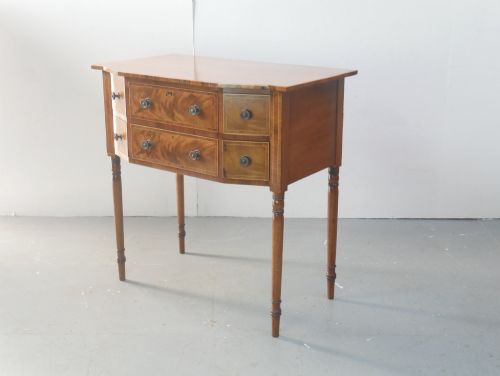
Some remarkably compact variations prove that eighteenth-century dining spaces required ingenious storage solutions just as much as grand country houses did.
Judgements of quality
The distinction between tiers rests upon timber selection, evident in the choice of richly figured flame mahogany rather than plain stock.
Sophistication of outline, such as a tightly curved serpentine or breakfront silhouette paired with delicate marquetry inlay, elevates an example above standard forms.
The George III Mahogany Sideboard Glossary
- Serpentine
- A front outline curving inward centrally and outward at the ends, creating a undulating profile. This shape requires advanced cabinet-making skill.
- Bow-front
- A convex, outwardly curved front facade typical of smaller dining room case furniture. It softens the linear geometry of a room.
- Breakfront
- A cabinet construction where the central section projects forward from the flanking wings. This architectural arrangement creates depth and visual weight.
- Demi-lune
- A half-moon or semicircular shape utilised for smaller sideboards and commodes. These pieces fit snugly against flat walls while conserving floor space.
- Flame mahogany
- Timber veneer cut from the fork of a mahogany tree to produce a flickering, fiery grain pattern. It provides high visual movement on drawer fronts.
Frequently Asked Questions
What is a george iii mahogany sideboard?
A george iii mahogany sideboard is a formal dining room serving cabinet produced during the Georgian period and subsequent revival eras.
These pieces provide surface space for serving food and deep drawers or cupboards for storing dining silver and linen.
Where does flame mahogany come from?
Flame mahogany is a decorative wood veneer harvested from specific junction points in the tree where branches meet the trunk.
Cabinet-makers prized this cut for its dramatic, undulating grain patterns that resemble flickering fire.
How do I style a sideboard at home?
A george iii mahogany sideboard anchors a dining room when placed against a primary wall beneath a large mirror or painting.
Its deep timber tones pair naturally with traditional dining tables and polished floors.
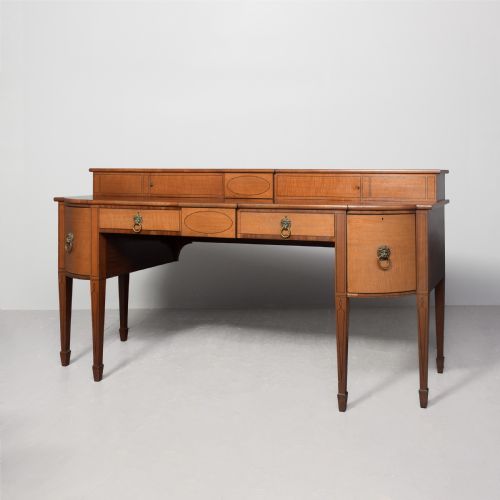
What is a stage-back sideboard?
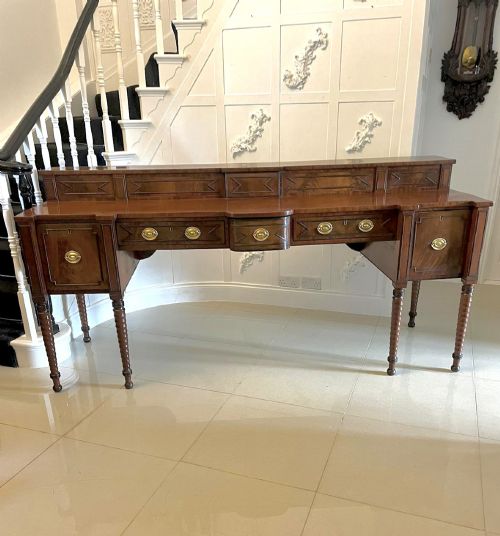
A stage-back sideboard includes an elevated tier or shelf integrated into the rear surface of the top board.
This superstructure provides additional display space for standing platters and serving vessels.