


Eighteenth Century Sideboard
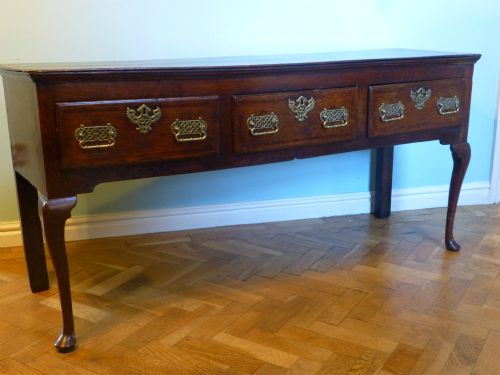
An eighteenth century sideboard brings a commanding presence to a dining room, offering deep drawers and cupboards configured for hosting.
What an eighteenth century sideboard is
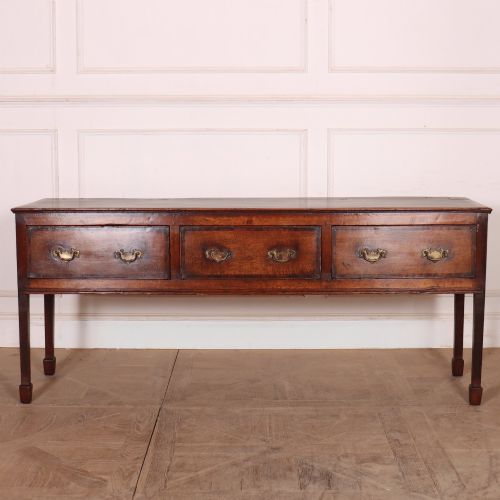
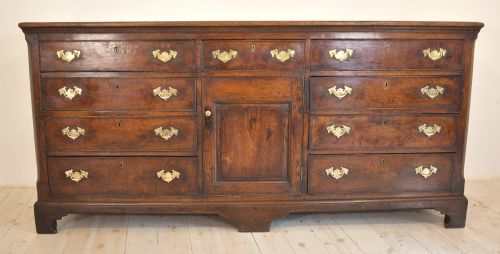
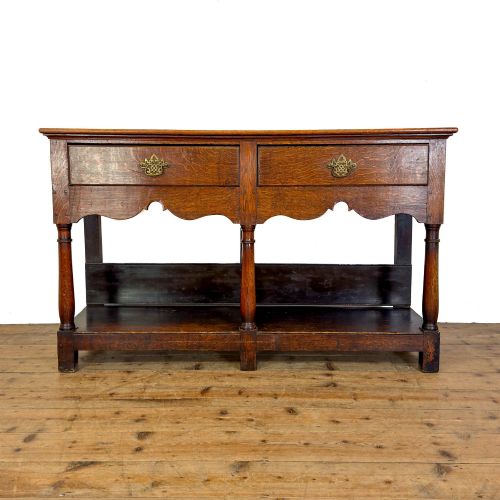
An eighteenth century sideboard takes several forms across the Georgian period, appearing as a sturdy oak dresser base or a refined mahogany serving table fitted with drawers. These pieces provide functional storage for dining rooms while anchoring the space with traditional craftsmanship.
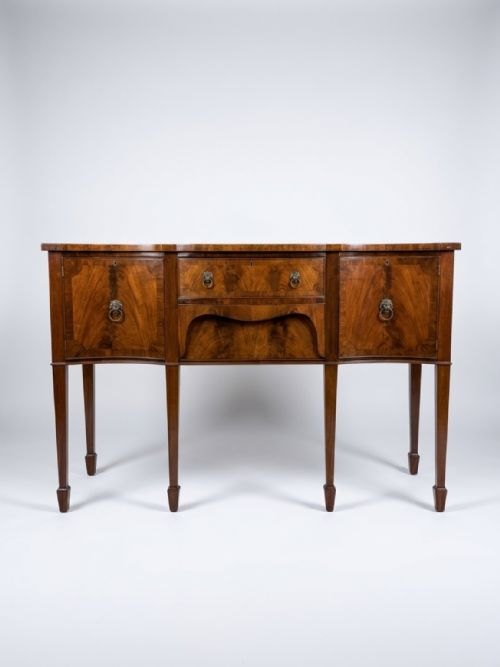
The versions met on this page include Georgian serpentine and bowfront mahogany sideboards, alongside pieces featuring satinwood and boxwood inlay. Buyers also encounter later interpretations from nineteen hundred built in the Georgian style.
Makers shaped these sideboards from mahogany, oak, and flame mahogany veneer, incorporating brass hardware to finish the designs. Each object type balances utility with formal dining room presentation.
How they were made
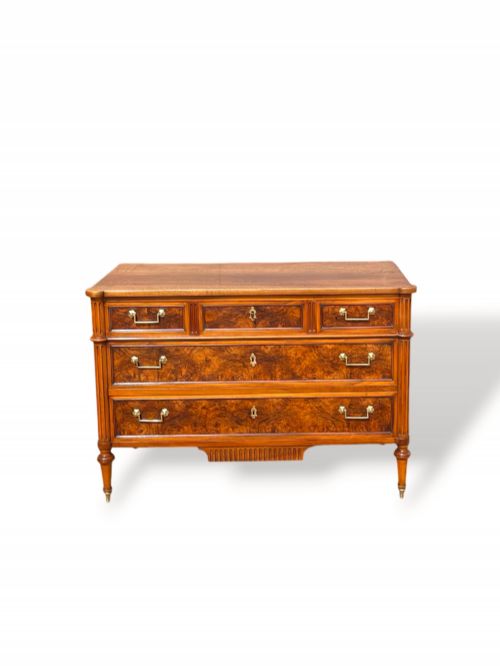
Cabinetmakers constructed these sideboards using solid oak and rich mahogany timbers, often applying flame mahogany veneer across the primary surfaces to create figured grain patterns. These wooden structures provide the heavy, durable foundations expected of period dining furniture.
Detailing involved meticulous inlay work using contrasting light timbers such as boxwood and satinwood to form delicate borders and decorative motifs. Brass hardware, including drop handles and key escutcheons, was fitted to the drawers to complete the construction.
Retail Price Guide 2026
Typical UK retail prices for eighteenth century sideboard, calculated from the Sellingantiques database of over a million retail prices indexed since 2003. This retail price guide relies exclusively on Sellingantiques data; no external sources or auction records are used, so the figures do not describe the wider market.
Listings feature Georgian periods alongside nineteen hundred styles, using mahogany, oak, and flame mahogany veneer.
What varies in quality
Quality in these pieces rests upon the selection of timber and the precision of the cabinetwork, particularly where flame mahogany veneer meets solid framing. Superior examples display carefully matched grain across the drawer fronts and smooth integration of decorative satinwood and boxwood inlay.
The refinement of the silhouette distinguishes finer pieces, such as the fluid curves of a serpentine front or the crisp lines of a bowfront design. Hardware selection and the subtlety of the brass mounts also separate standard workshop output from exceptional dining room furniture.
The Eighteenth Century Sideboard Glossary
- Serpentine
- A front contour that curves outward at the centre and gently inward toward the ends. This undulating shape requires advanced woodworking skill to execute properly on a sideboard.
- Bowfront
- A convex front profile that curves outward in a continuous arc across the width of the piece. It softens the geometric lines of a dining room.
- Inlay
- A decorative technique where contrasting woods are fitted into recessed spaces within a solid surface. Satinwood and boxwood are common choices for creating pale linear borders.
- Flame mahogany veneer
- A thin slice of wood cut from a fork in the mahogany tree to produce a flickering, flame-like grain pattern. Cabinetmakers laid this over a stable secondary wood.
- Dresser base
- A low cabinet featuring multiple drawers and cupboards designed for storage and serving. These pieces form a primary category of early dining room furniture.
Frequently Asked Questions
How do I date an eighteenth century sideboard?
Dating relies on examining the timber species, construction methods, and hardware styles characteristic of the Georgian period. Oak foundations often point toward earlier domestic production, while refined mahogany and veneer work indicate later eighteenth century output.
Secondary woods and the presence of hand-cut dovetails inside the drawers offer further clues regarding age. Comparing the specific silhouette, such as a bowfront or serpentine shape, helps narrow down the production era.
Where did people use these sideboards?
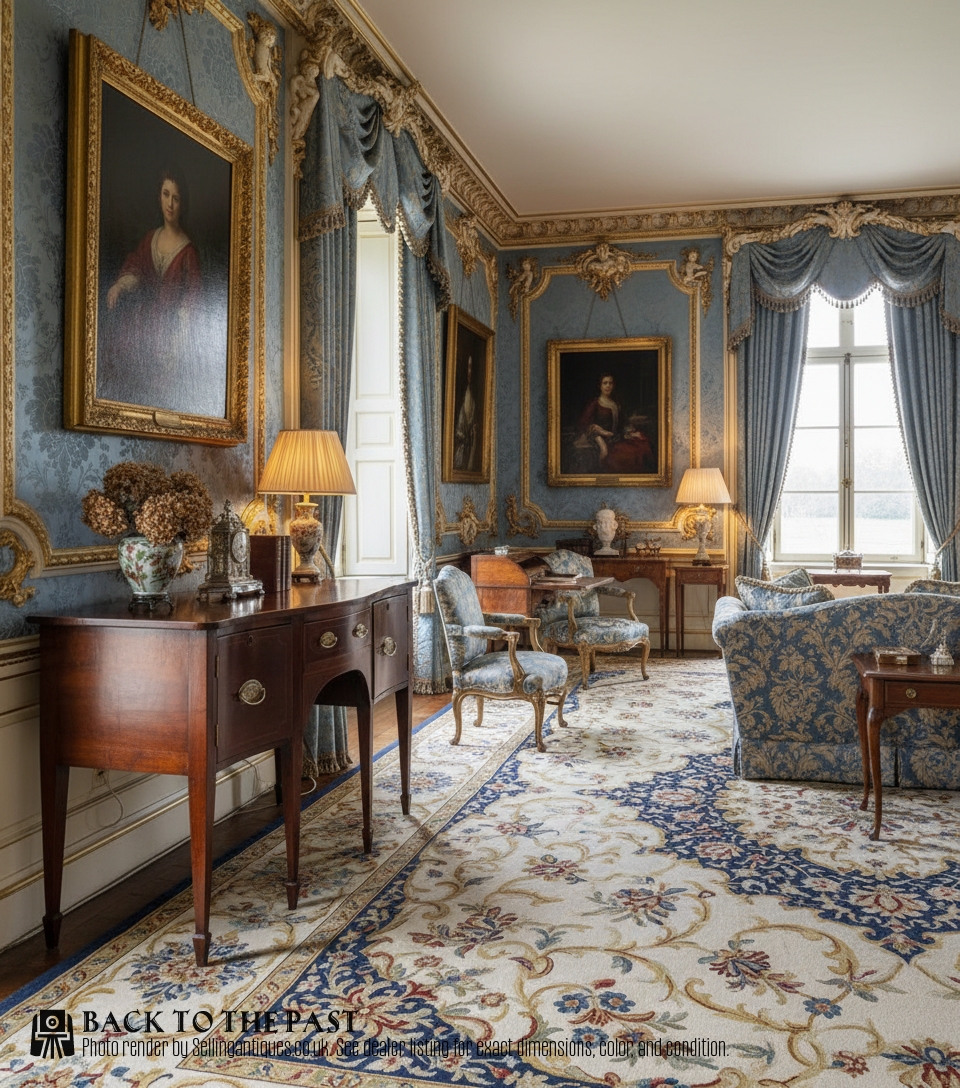
These pieces belonged primarily in formal dining rooms, where they served as functional surfaces for displaying silver and preparing meals. The deep drawers and cupboards held linens, cutlery, and serving dishes close at hand during banquets.
Their substantial presence meant they anchored the room, functioning both as utilitarian storage and as a display of household status. Today, they serve a similar role in domestic interiors.
How do I care for mahogany veneer?
Mahogany veneer requires stable indoor humidity levels to prevent the thin wooden layer from lifting or cracking over time. Keeping the surface away from direct heat sources and strong sunlight preserves the rich colour and grain.
Applying traditional wax polish occasionally feeds the wood and maintains a gentle sheen without building up heavy residues. Dusting with a soft, dry cloth protects the delicate satinwood and boxwood inlay.