
Georgian Bowfront Sideboard
A georgian bowfront sideboard brings sculptural curve and deep timber grain to a dining room, offering substantial storage with distinct period elegance.
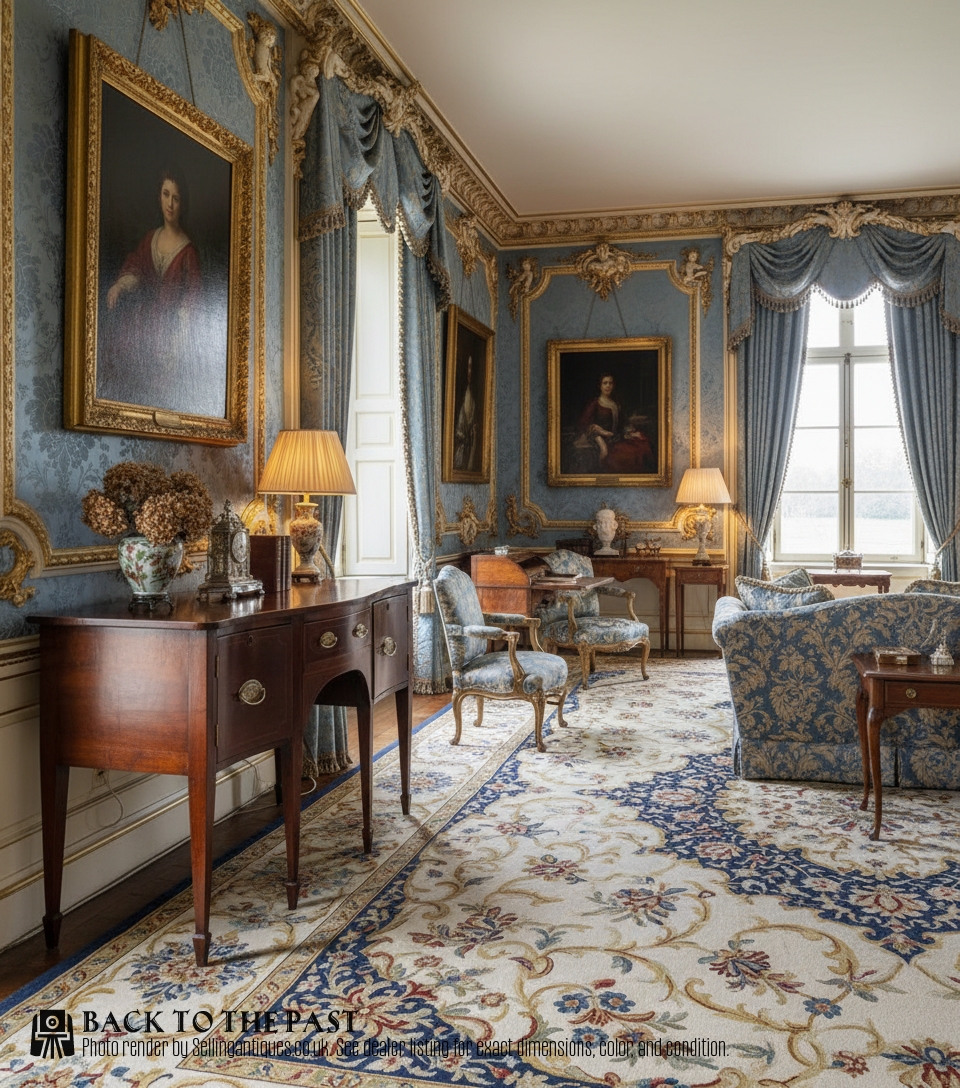
Georgian Bowfront Sideboard
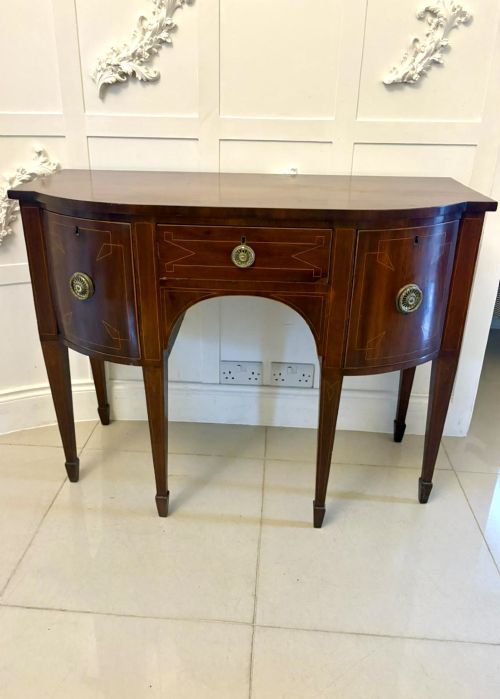
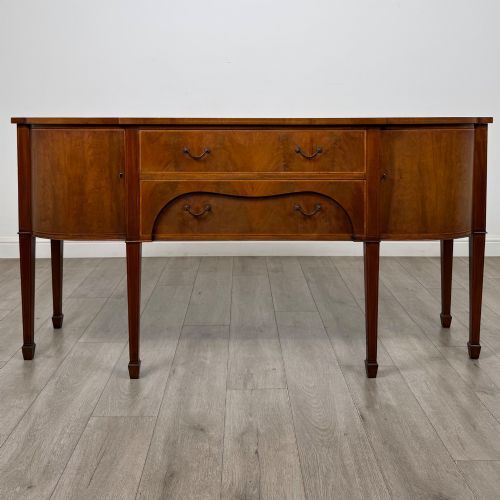
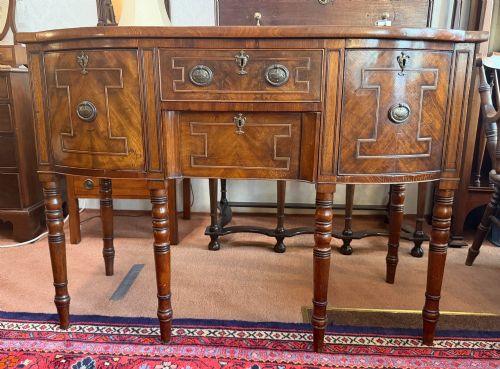
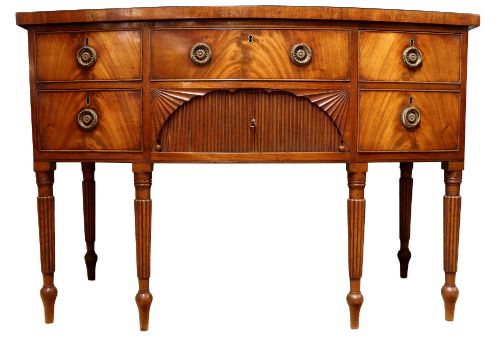
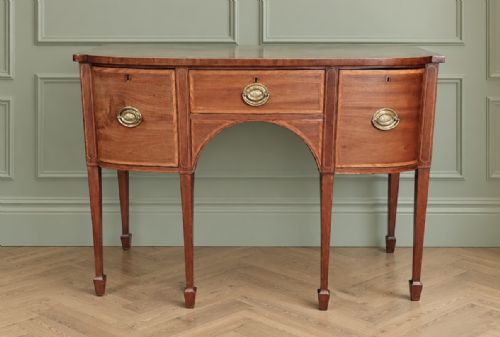
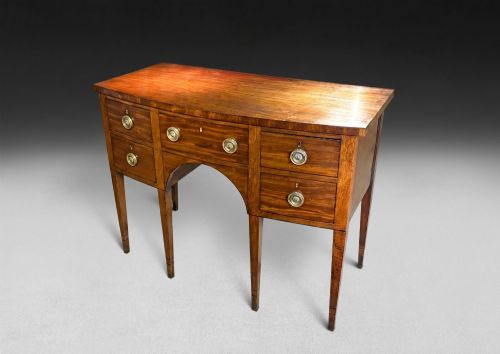
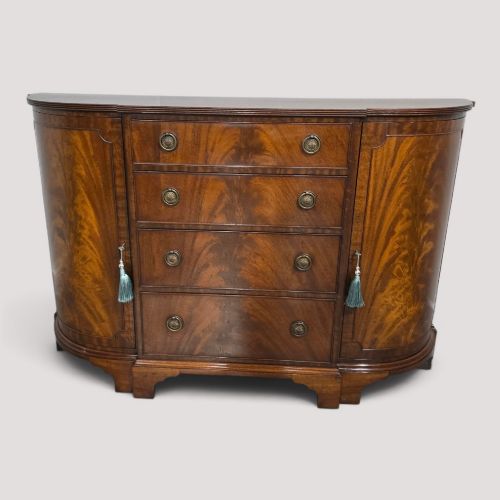
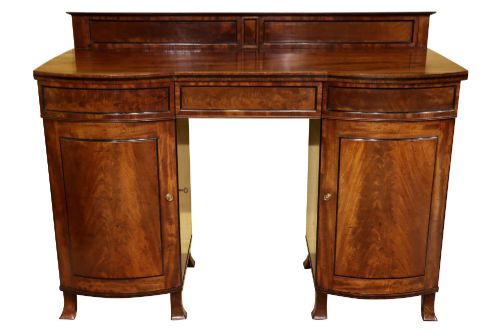
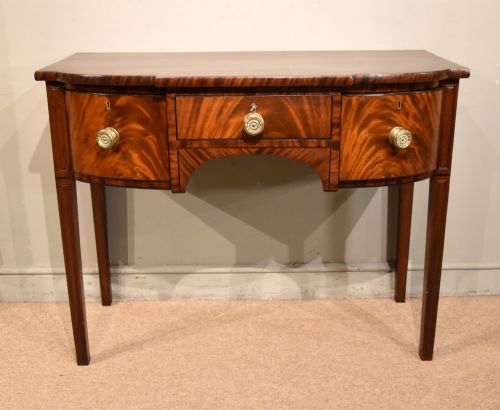
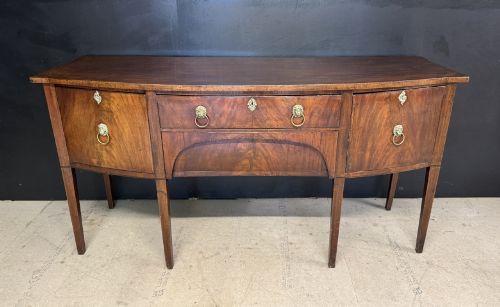
A georgian bowfront sideboard stands as a formal dining room server designed with a convex curving front to soften the room's geometry. The pieces gathered here span the eighteenth century, the regency period, and later revival eras including Edwardian and Sheraton revival interpretations.
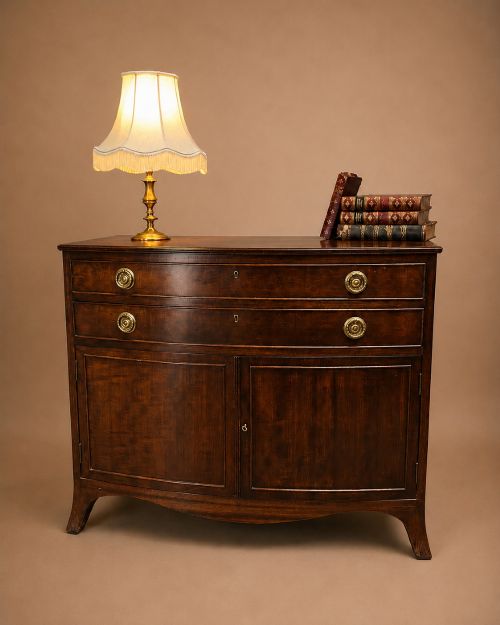
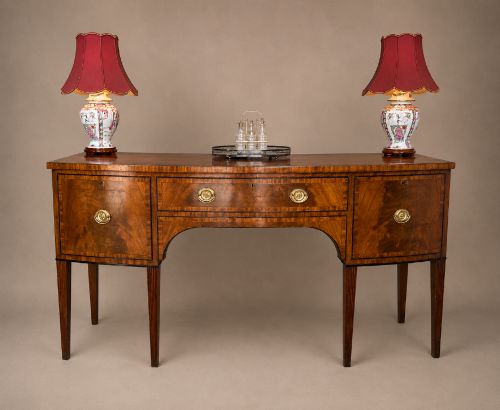
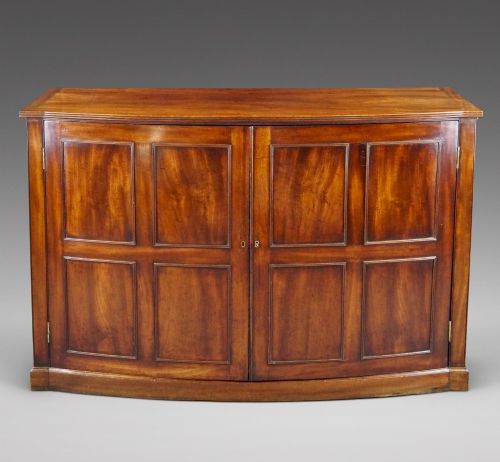
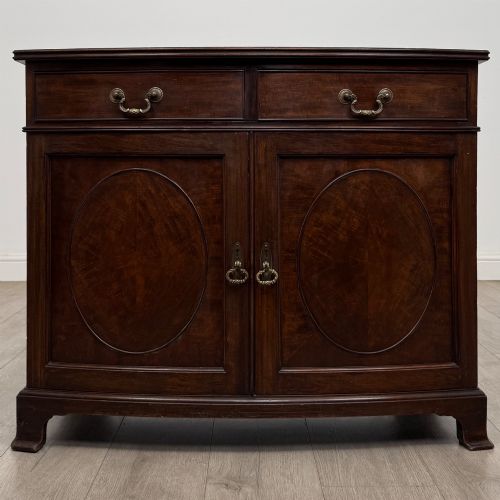
Most examples found on this page rely on solid mahogany or flame mahogany veneer, often taking the form of low cabinets, cupboards, or servers with multiple drawers. The proportions range from compact small sideboards to large six-leg formats built for extended dining spaces.
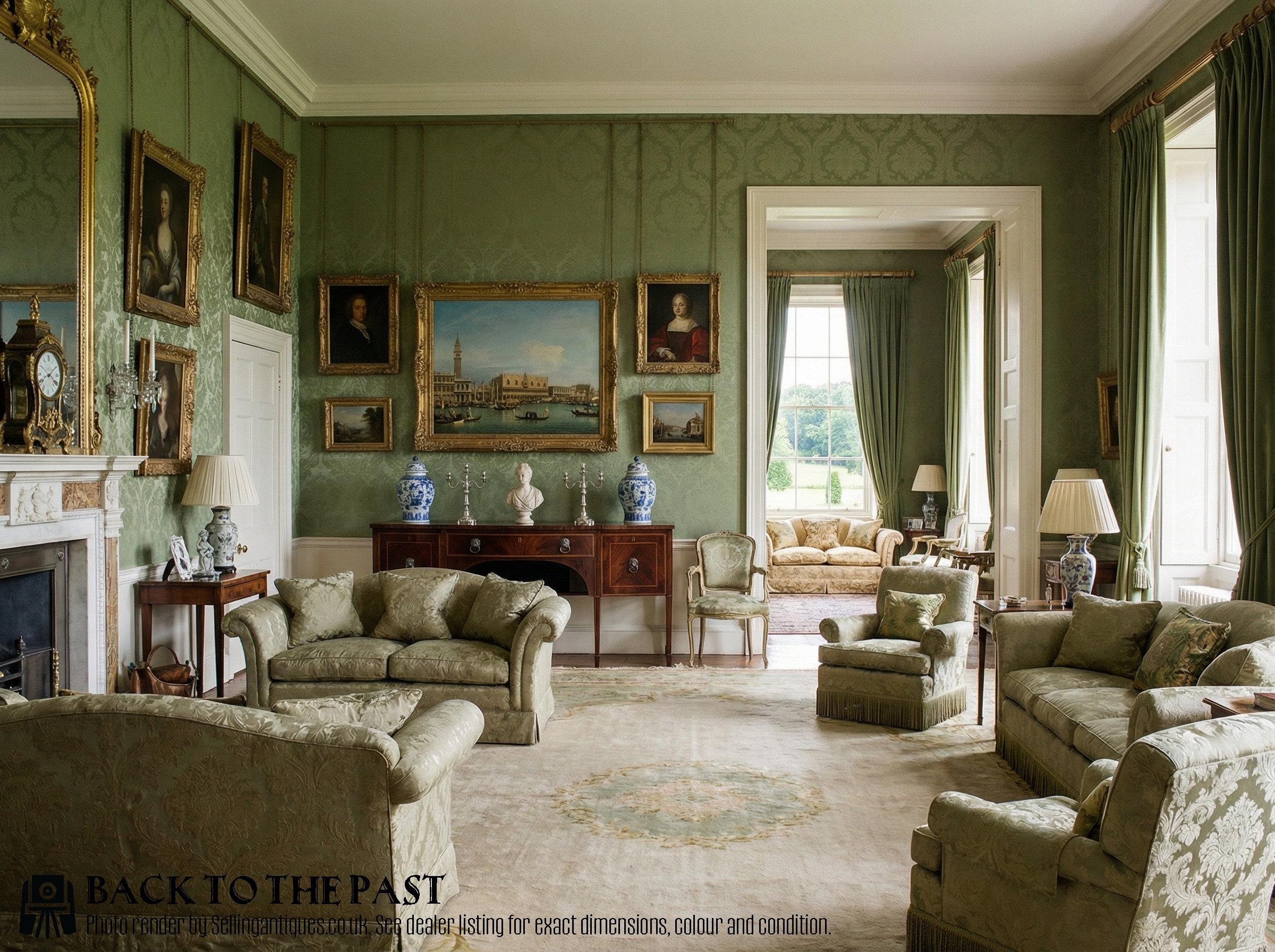
Materials and Construction
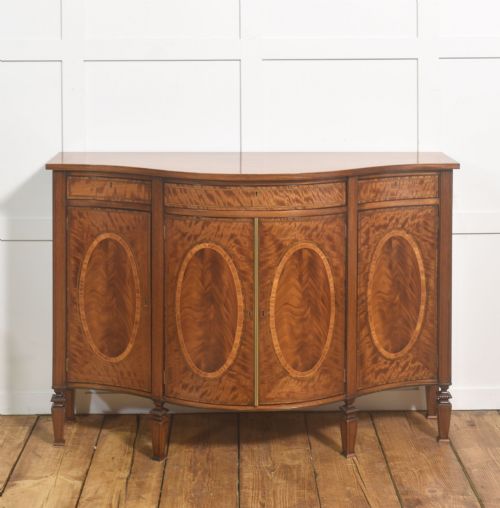
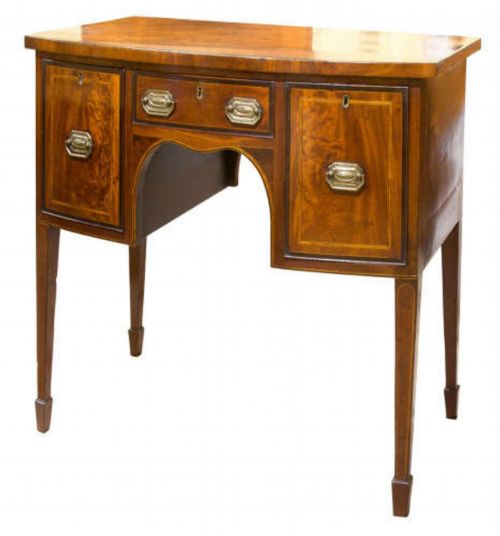
Cabinet makers constructed these pieces primarily using mahogany timber, frequently selecting flame mahogany veneer for the drawer fronts to create rippling grain patterns. Workshops enhanced the curved surfaces with contrasting boxwood inlay, wood inlay, and purpleheart banding.
Structural details incorporated secondary timbers like oak alongside solid brass drawer pulls and handles. Joinery focused on stable carcass construction to support the outward bow of the front frame.
Georgian Bowfront Sideboard Retail Price Guide 2026
Typical asking prices for georgian bowfront sideboard among the pieces listed under this phrase on Sellingantiques today, from the lower quarter to the upper quarter. They describe what is for sale here now, not the wider market.
Listings on this page include mahogany, satinwood, and oak alongside decorative boxwood inlay and flame mahogany veneer.
Craftsmanship and Proportion
The standard of a georgian bowfront sideboard rests upon the crispness of its inlay work and the symmetry of its mahogany veneer selection. Superior examples display tightly matched grain across multiple drawers and precise, hand-cut boxwood lines that follow the tight radius of the bow.
Proportion and leg placement also separate utilitarian builds from finer formal pieces. Tapered legs, well-wrought brass hardware, and careful attention to the curve of the side cabinet carcase define the upper tier of the range.
George Hepplewhite·George Oakley
The Georgian Bowfront Sideboard Glossary
- Bowfront
- A convex curved cabinet front that swells outward in the centre. This shape defines the primary profile of these sideboards.
- Flame mahogany
- A veneer cut from the fork of a mahogany tree where the branch meets the trunk. It creates a distinctive flame-like pattern across the wood.
- Inlay
- A technique where pieces of contrasting wood, such as boxwood, are inserted into recessed cavities in the primary surface to form decorative patterns.
- Pedestal sideboard
- A distinct format featuring end cupboards or pedestals flanking the central serving section. These typically date from the Regency era.
- Serpentine
- A curved shape featuring a convex centre flanked by concave ends, differing from the simpler outward arc of a bowfront.
Georgian Bowfront Sideboard: Frequently Asked Questions
What rooms suit a georgian bowfront sideboard?
These sideboards serve well in traditional dining rooms, hallways, and living spaces where generous surface area and concealed storage are required.
The curved front allows the furniture to project less into a busy walkway than a rectangular cabinet of equivalent capacity.
How do I tell an 18th-century piece from a revival piece?
Eighteenth-century and early nineteenth-century pieces display hand-cut joinery, period secondary timbers such as oak, and timber patination developed over generations.
Revival versions from the Edwardian era or the twentieth century often utilise machine-cut elements and distinct modern lacquers or polishes.
Were these sideboards used for dining service?
Dining rooms of the period utilised these servers to hold heavy porcelain, cutlery, and serving dishes before and after meals.
The deep drawers and cupboards accommodated large linen stocks and bottles away from the main dining table.
What is the difference between a sideboard and a server?
Sideboards generally incorporate a combination of deep drawers and enclosed cupboards for comprehensive dining room storage.
Servers often present a lighter, more open frame with fewer cupboards, functioning primarily as a surface for holding food and drink.