
Antique Bowfront Buffet
An antique bowfront buffet brings curving 18th and 19th-century elegance to a dining room while offering deep storage.
Antique Bowfront Buffet
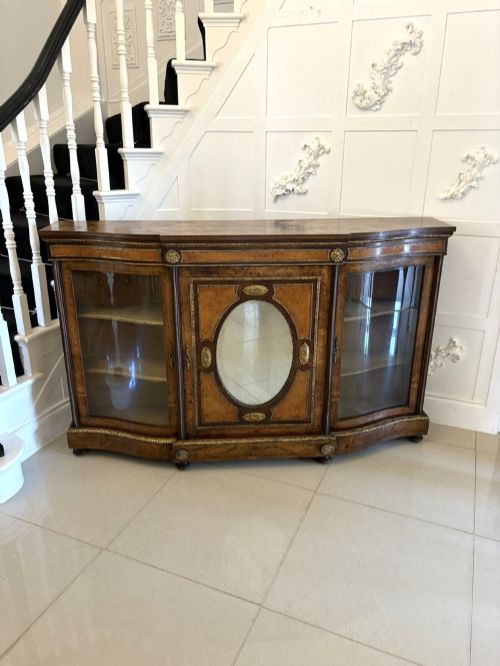
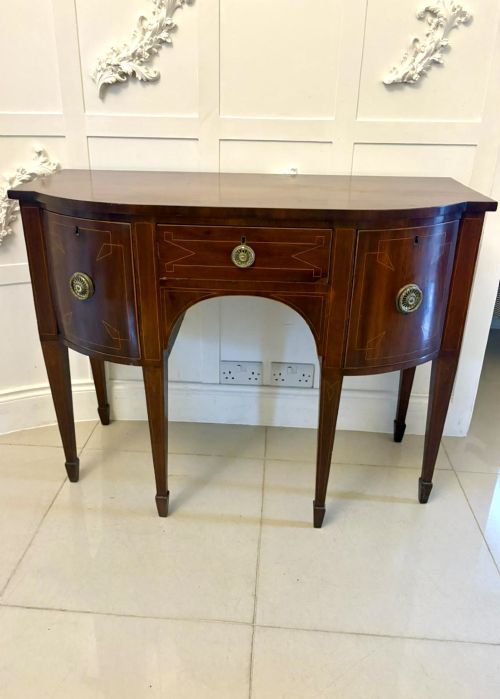
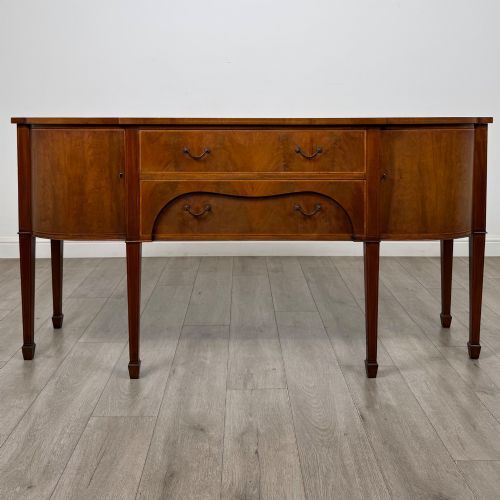
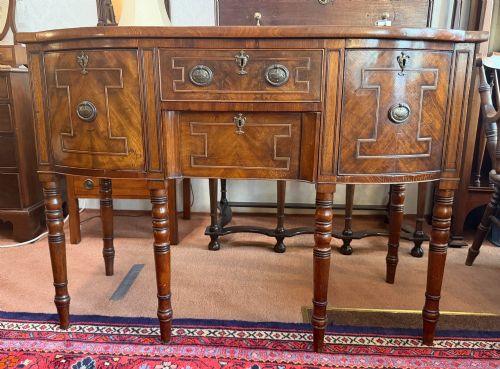
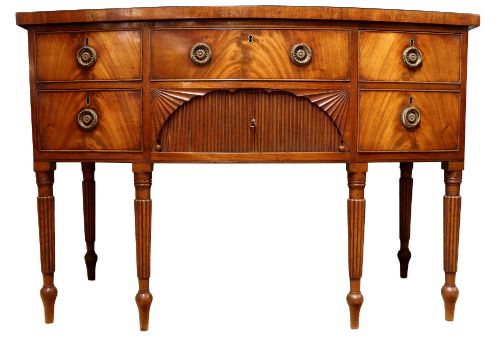
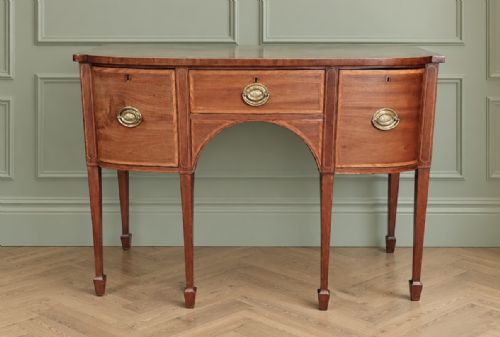
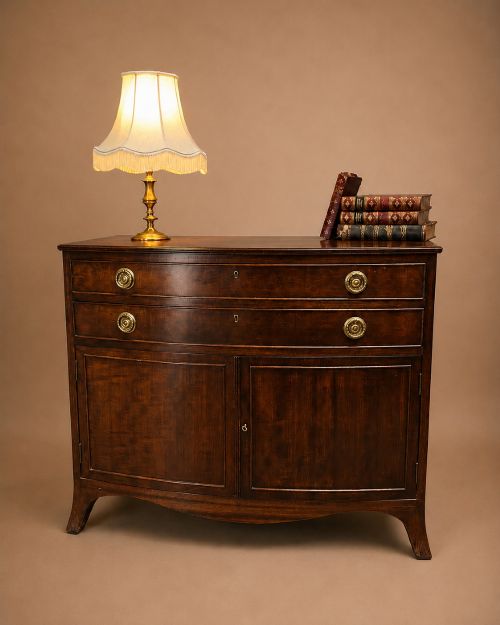
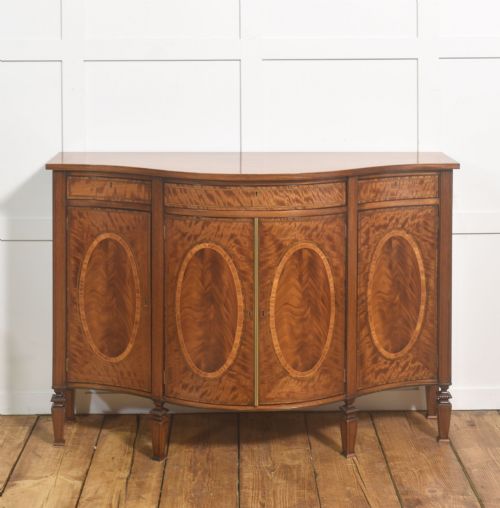
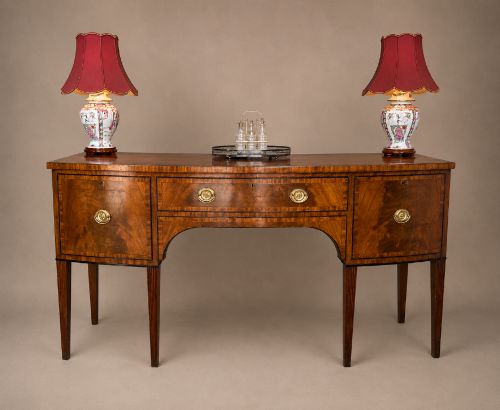
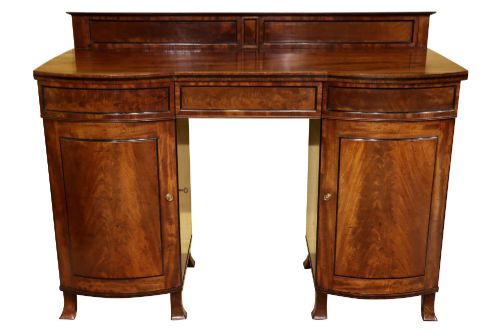
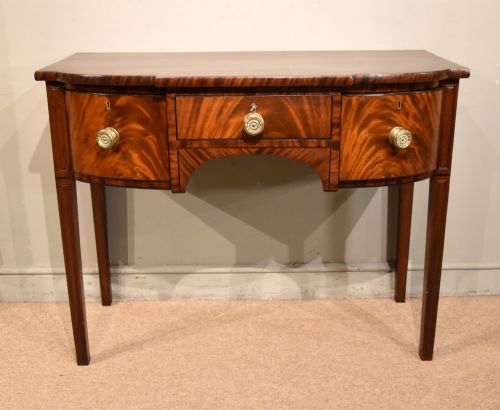
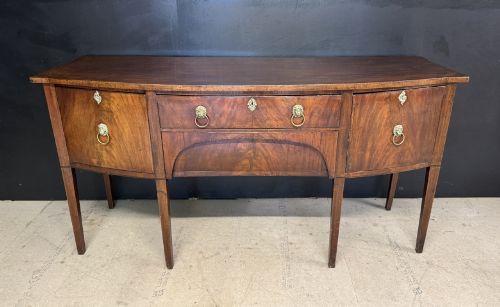
An antique bowfront buffet is a substantial dining room server, most frequently encountered in mahogany from the Georgian, Regency, and Edwardian eras. These pieces present a gently curved front profile designed to soften the geometry of a traditional dining space while providing internal cupboards and drawers.
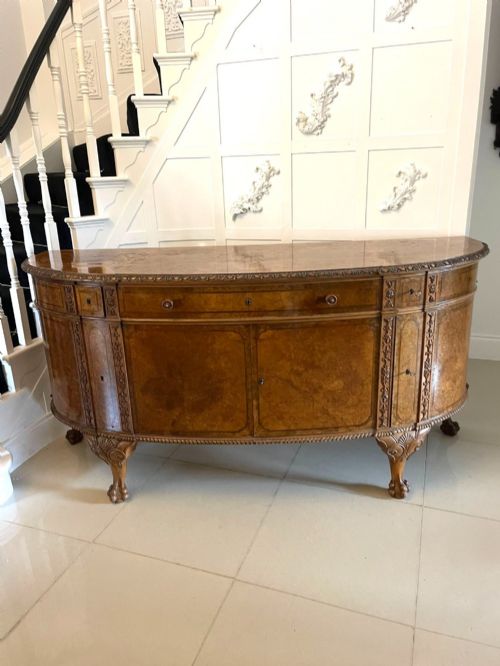
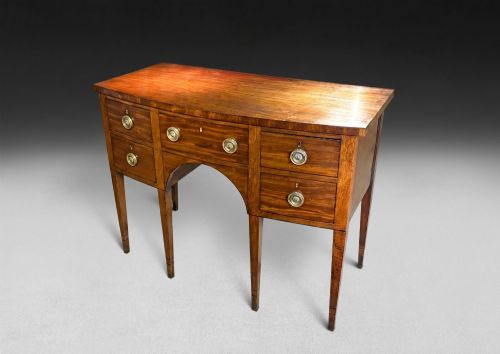
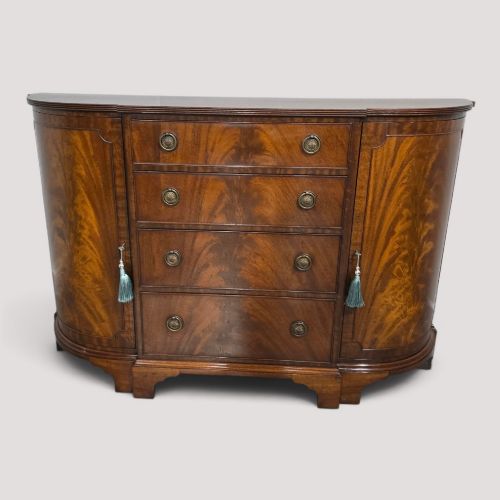
The selection spans formal George III periods through to Sheraton Revival interpretations, alongside robust Victorian and Edwardian examples. Makers utilised varied scales, from small compact sideboards suitable for modest rooms up to large breakfront cabinets.
Categorised across listings as sideboards, credenzas, and servers, these items function as practical serving surfaces that double as decorative focal points. The core inventory relies heavily on British cabinet-making traditions from the 18th and 19th centuries.
Materials and Technique
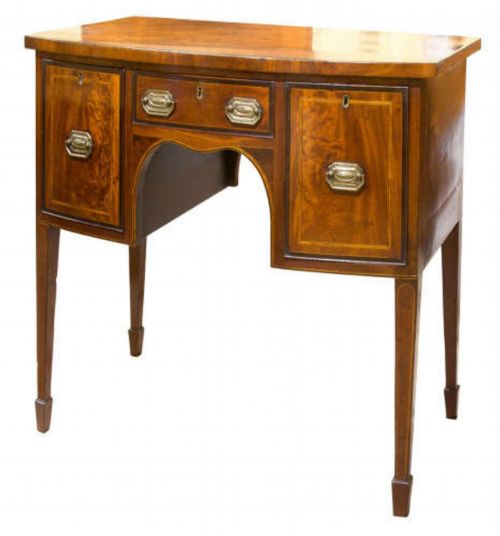
Construction centres on solid mahogany and flame mahogany veneer, chosen for rich grain patterns and durability. Workshops applied contrasting stringing and banding in satinwood, boxwood, and purpleheart to define the curved outlines of the bow front.
Hardware typically includes cast brass pulls and mounts, while refined Edwardian and Victorian pieces occasionally incorporate ormolu details or intricate marquetry. Skilled joiners shaped the curved front rails by steaming and laminating timber before applying fine veneers.
Surface finishes rely on traditional hand-polished wax or shellac which highlights the depth of the figured wood. Carved details on legs and splashbacks demonstrate the manual labour involved in shaping each individual piece.
Listings feature mahogany as the dominant timber, accompanied by satinwood, burr walnut, and brass details across Georgian to Edwardian periods.
Judging Quality
Quality rests upon the selection of timber veneers and the precision of the inlay work. Pieces featuring book-matched flame mahogany or intricate satinwood crossbanding sit at the higher end of the range, showing careful planning by the cabinet maker.
Structural integrity of the curved bow front dictates longevity, as inferior timber warps over time whereas superior joinery maintains smooth drawer operation. The crispness of hand-carving and the quality of original brass fixtures further distinguish workshop standards.
The Antique Bowfront Buffet Glossary
- Bowfront
- A convex curved front profile that projects outward in the centre, characteristic of many Georgian and Regency sideboards. This shape softens the room and allows for deeper central drawers.
- Crossbanding
- A border of veneer laid perpendicular to the surrounding grain, often in contrasting light wood like satinwood or boxwood. It frames the main panels of drawers and tabletops.
- Flame mahogany
- Timber cut from the fork of the mahogany tree where branches meet the trunk, creating a fiery, undulating grain pattern. It was favoured for high-status cabinet fronts.
- Ormolu
- Gilded bronze mounts applied for decorative effect, more commonly seen on Victorian credenzas and cabinets. It adds metallic contrast to dark timber surfaces.
- Sheraton Revival
- A late 19th and early 20th-century style copying the lighter, neoclassical designs of Thomas Sheraton. These pieces often feature delicate marquetry and satinwood.
Antique Bowfront Buffet: Frequently Asked Questions
What is an antique bowfront buffet used for?
These items serve as dining room storage for tableware, linens, and silver while providing a top surface for serving food. They combine practical cabinetry with formal decorative presence.
Historically placed against dining room walls, they remain useful for modern entertaining and display.
How do I date a bowfront sideboard?
Dating relies on timber choice, construction methods, and stylistic details like leg shapes and inlay motifs. Georgian examples show hand-cut dovetails and solid secondary woods.
Later Edwardian and revival pieces often display machine-sawn timber and brighter satinwood contrasts.
Will a bowfront cabinet fit a small room?
Many period pieces were made in compact widths specifically for smaller dining spaces or hallways. Measuring the available floor space against the curved projection ensures proper clearance.
The curved front reduces sharp corners in tight layouts.
Are these pieces made of solid mahogany?
Most bowfront cabinets use a combination of solid timber frames and applied mahogany veneers over secondary hardwoods. Veneering allowed makers to display figured flame mahogany on the curved drawer fronts.
Solid wood was reserved for legs, frames, and structural supports.