

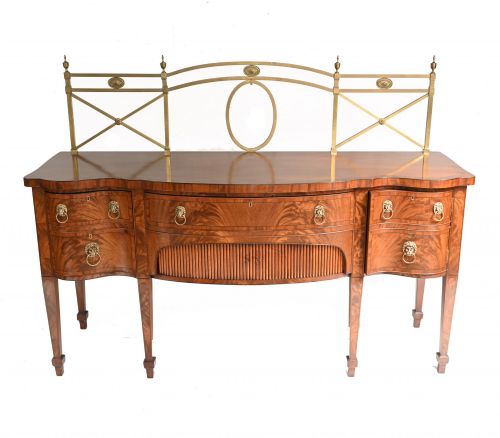
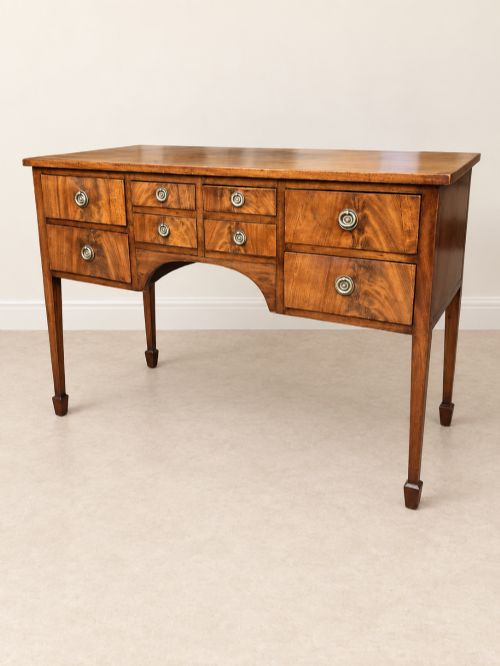
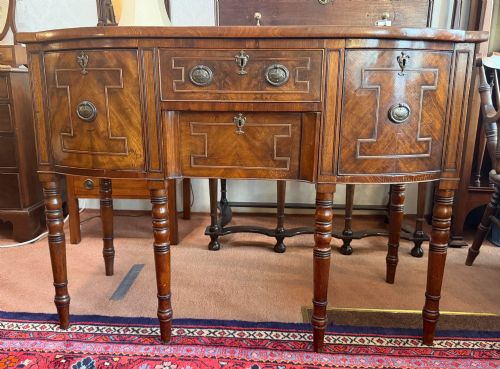
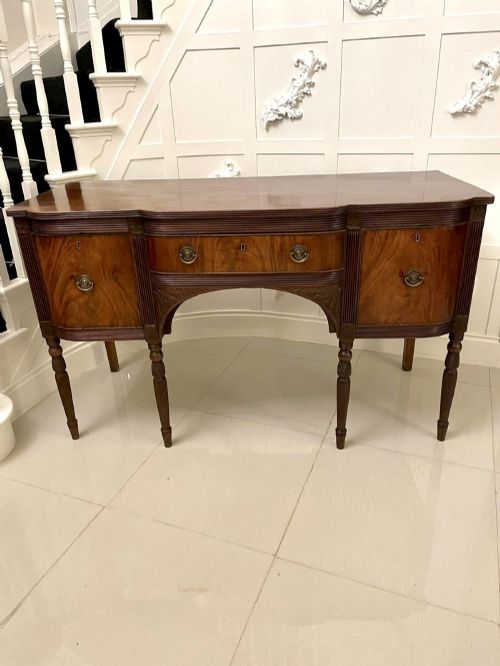
Georgian Buffet Table
A georgian buffet table brings centuries of dining heritage into a room, offering practical storage and striking timber grain.
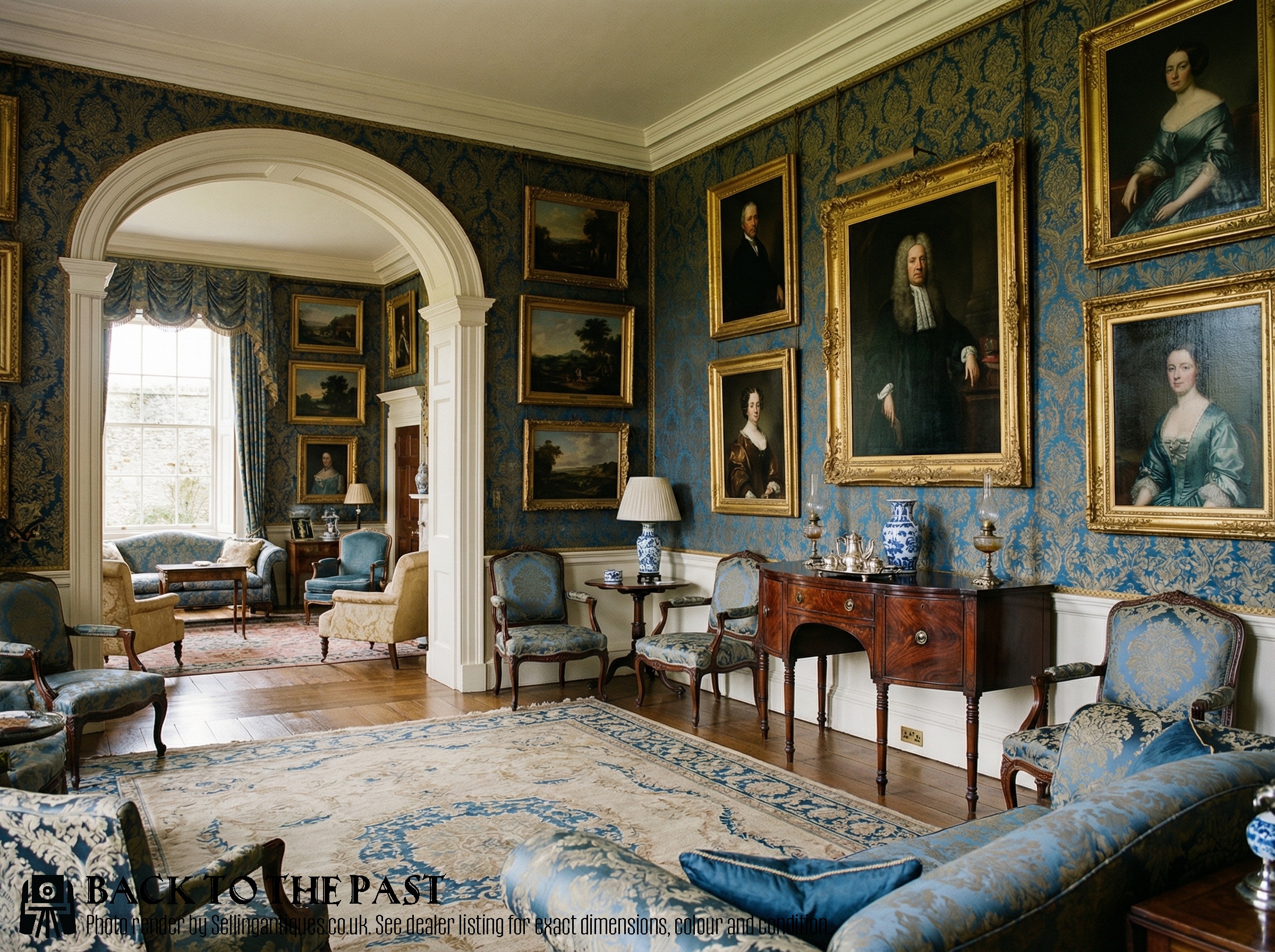
Georgian Buffet Table
When you search for a georgian buffet table, you encounter sideboards, dresser bases, and serving tables dating from the eighteenth and nineteenth centuries. These pieces served dining rooms by holding silver, linen, and dishes during large meals.
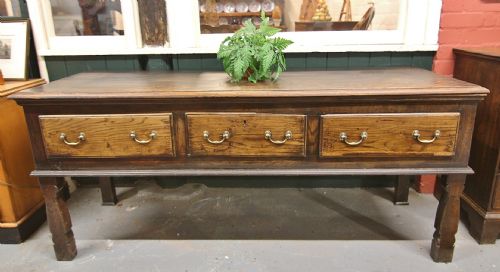
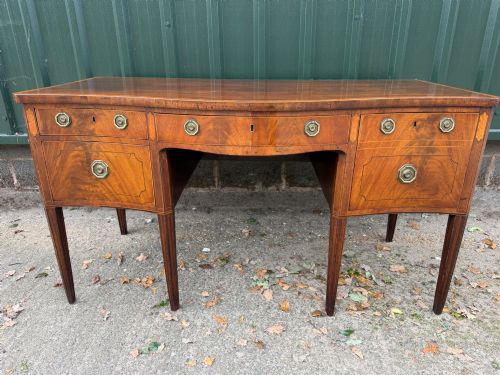
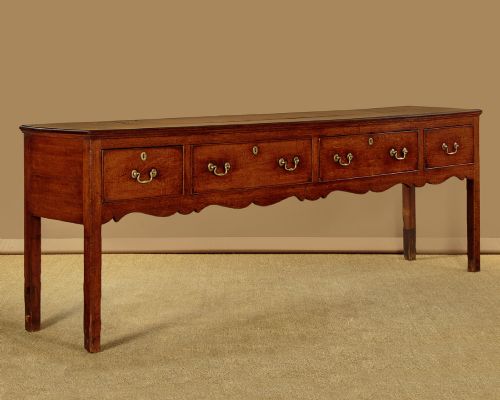
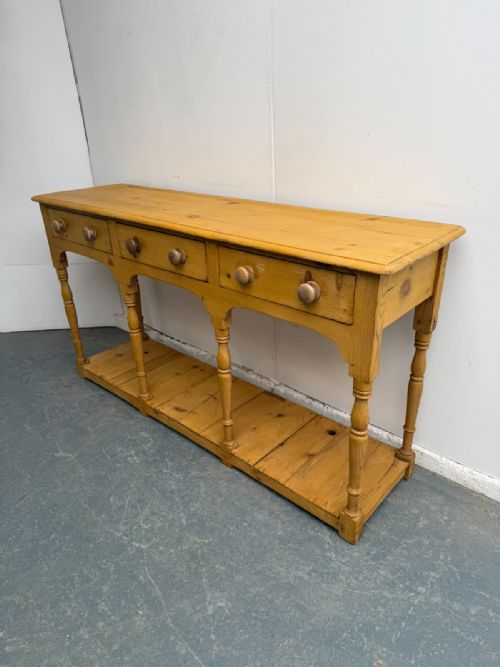
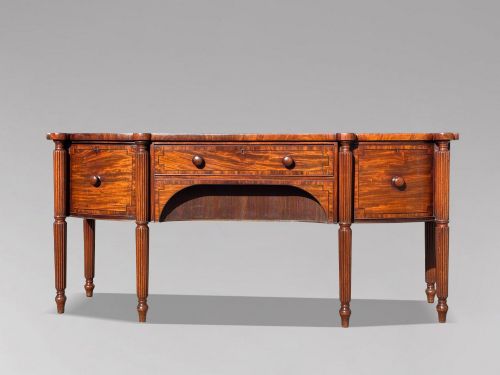
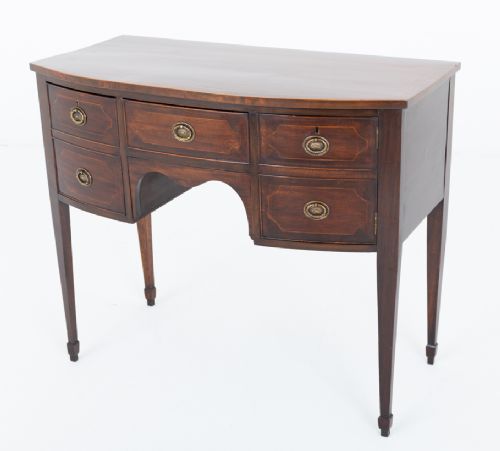
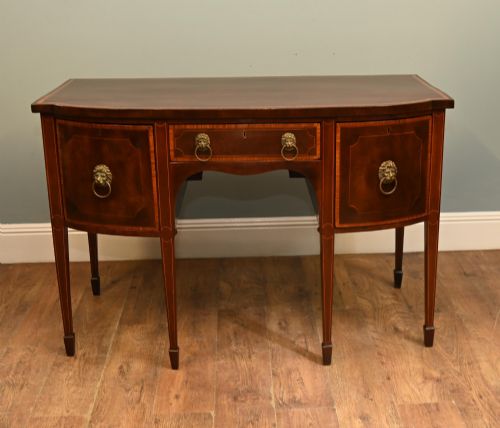
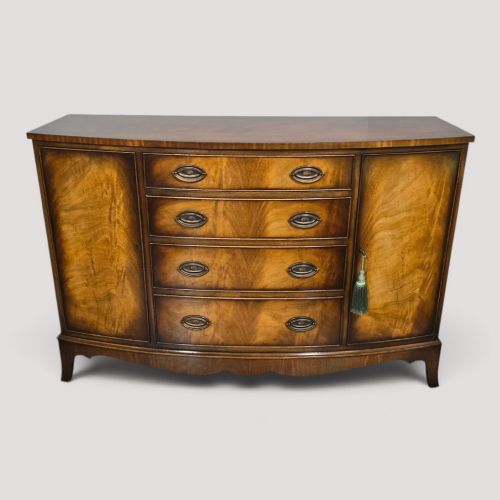
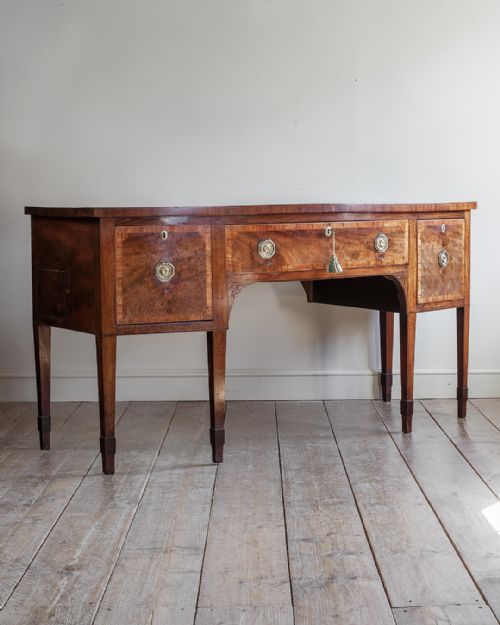
The versions most common on this page feature mahogany or oak timber, often shaped with bow fronts or serpentine curves. Makers built them in forms such as breakfronts, potboard dresser bases, and tiered serving furniture.
Originating during the Georgian, Regency, and early Victorian periods, these items reflect the craftsmanship of English cabinet makers. They range from simple country oak pieces to finely inlaid Sheraton designs.
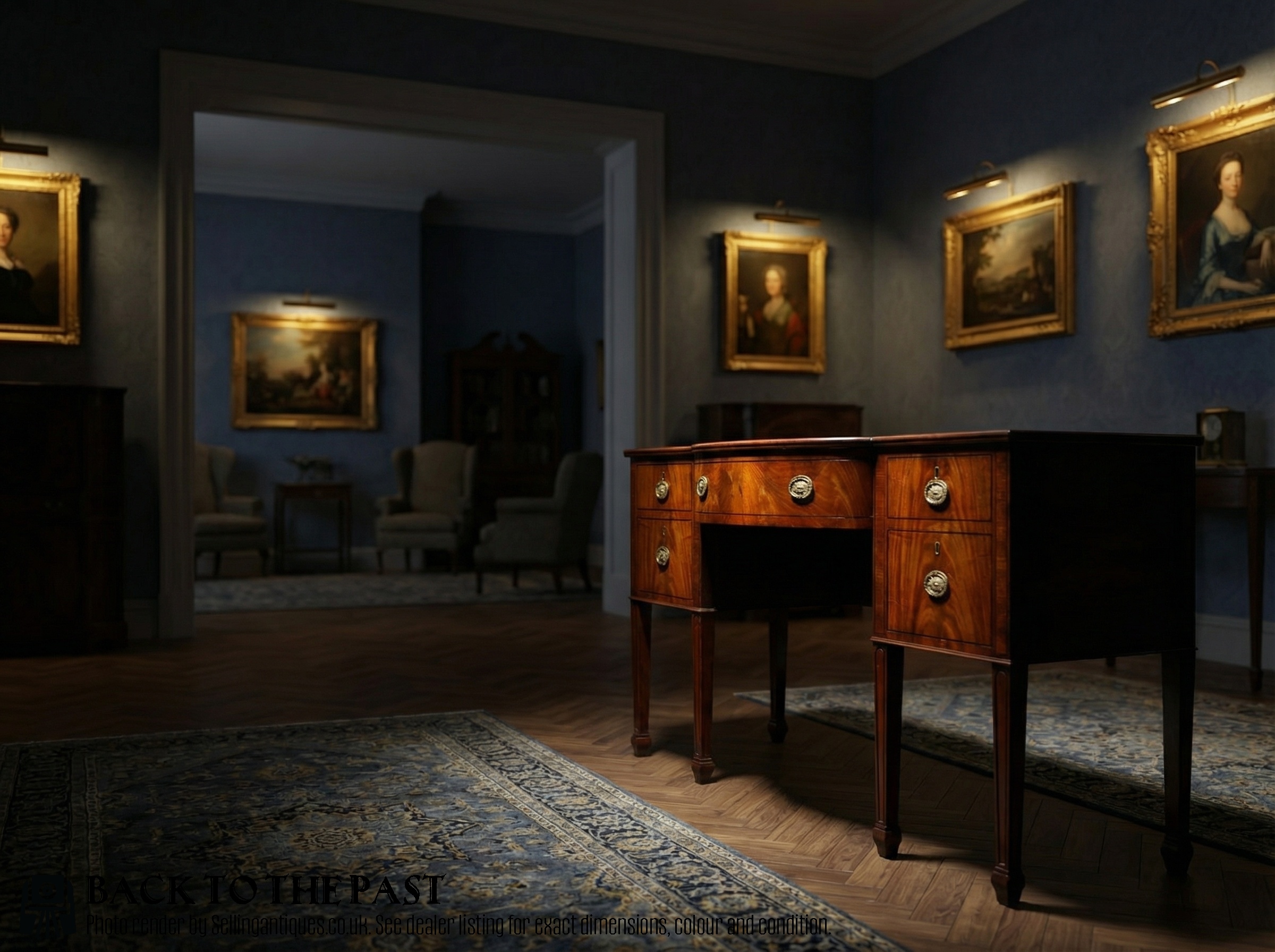
How they were made
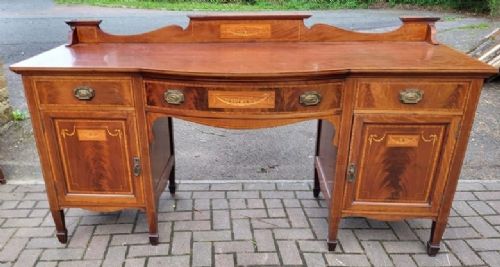
Cabinet makers utilised solid timbers such as mahogany and oak, frequently applying flame mahogany veneer to large surfaces. Workshops enhanced these woods with delicate boxwood and satinwood inlay.
Structural elements incorporated secondary woods like pine, while brass hardware served for handles and castors. Construction relied on traditional joinery methods suited to heavy daily use.
Georgian Buffet Table Retail Price Guide 2026
Typical asking prices for georgian buffet table among the pieces listed under this phrase on Sellingantiques today, from the lower quarter to the upper quarter. They describe what is for sale here now, not the wider market.
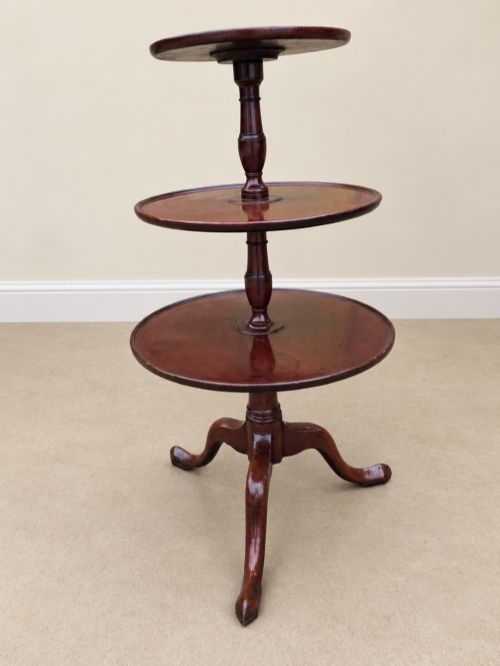
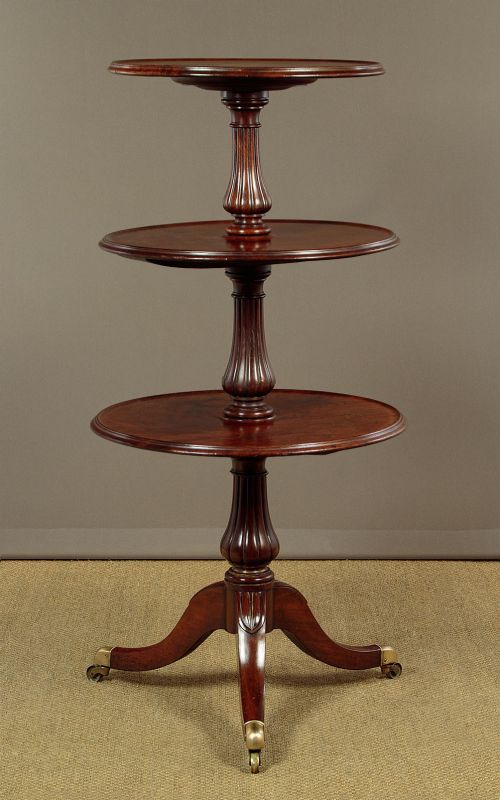
Multi-tiered dumb waiters let Georgian diners pass the port without servants listening in.
What varies in quality
The selection of timber grain largely dictates the visual appeal, with figured mahogany and sharp inlay distinguishing finer pieces from plain constructions. Well-matched veneers and crisp carving on legs and friezes indicate superior workshop output.
Proportion and line separate standard examples from exceptional ones, particularly in curved serpentine and bow-front designs where symmetry is critical. Original brasses and unaltered drawer linings preserve historical integrity.

M D Miller And Sons
The Georgian Buffet Table Glossary
- Serpentine front
- A curved furniture front featuring a convex centre flanked by concave ends. This shape requires advanced woodworking skill to execute cleanly.
- Breakfront
- A cabinet or sideboard whose central section projects forward from the side sections. It adds architectural depth to dining furniture.
- Potboard
- An open lower shelf on a dresser base traditionally used for storing pots and heavy kitchenware. It provides structural stability to the base.
- Dumb waiter
- A tiered piece of freestanding furniture with circular revolving trays used for serving food without servants present. They date widely across the eighteenth and nineteenth centuries.
- Boxwood inlay
- Contrasting light wood inserted into recesses within a darker timber surface to create geometric or floral patterns. Sheraton designs frequently employ this technique.
Georgian Buffet Table: Frequently Asked Questions
How do I use a sideboard today?
These pieces function well in modern dining rooms or hallways for storing tableware, linens, and books. Their flat top surfaces also provide an ideal area for lamps and decorative objects.
Ensure the dimensions suit your room layout, as breakfront and serpentine models require adequate clearance to open drawers and doors fully.
What is a dresser base?
A dresser base is a heavy low cabinet with drawers and cupboards, originally used in kitchens or dining rooms for food preparation and storage. Unlike complete dressers, they lack the upper plate rack.
Examples often feature sturdy oak construction and occasionally include open potboards beneath the main cabinet structure.
How do I distinguish George III from Regency pieces?
George III furniture typically displays classical proportions with bracket feet, straight lines, and understated mahogany or oak surfaces. Inlay work during this era often relies on simple geometric stringing.
Regency pieces tend to introduce bolder architectural references, brass inlay, and sabre or turned legs reflecting nineteenth-century taste.
Are dumb waiters dining tables?
Dumb waiters are tiered serving stands rather than tables for eating at, featuring stacked circular revolving trays supported by a central column. Diners used them to reach wine and side dishes independently.
They appear frequently alongside sideboards in dining room listings from the eighteenth century onwards.