
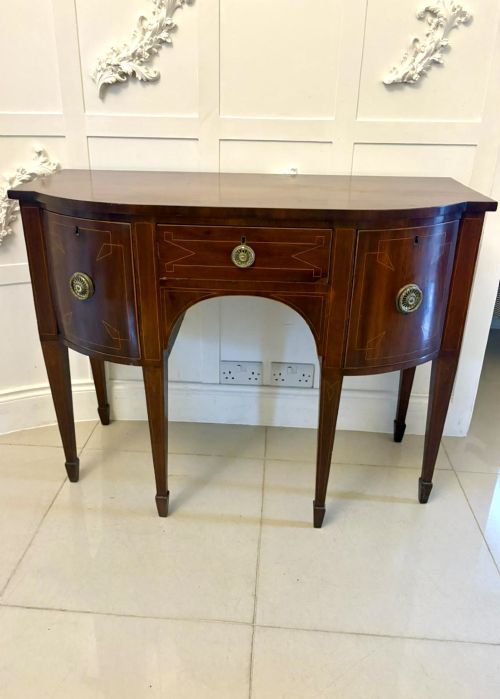
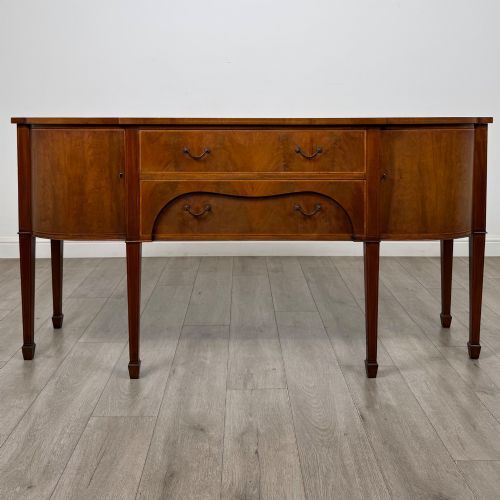
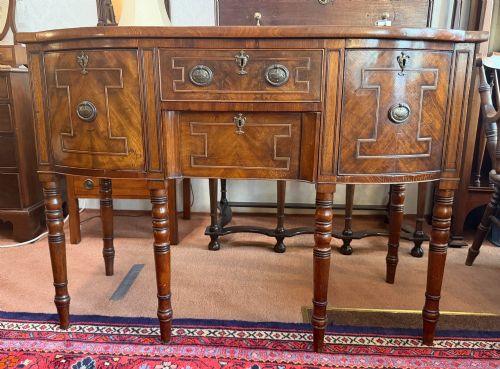
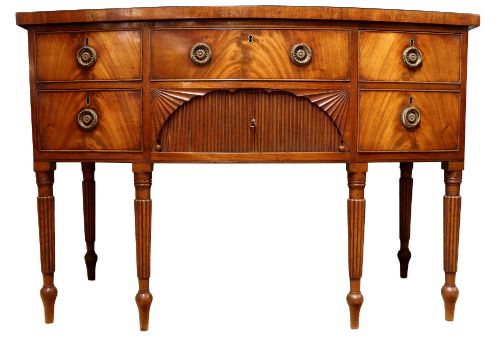
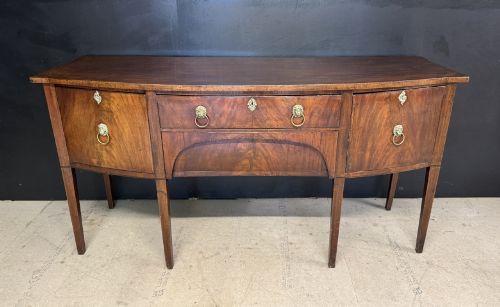
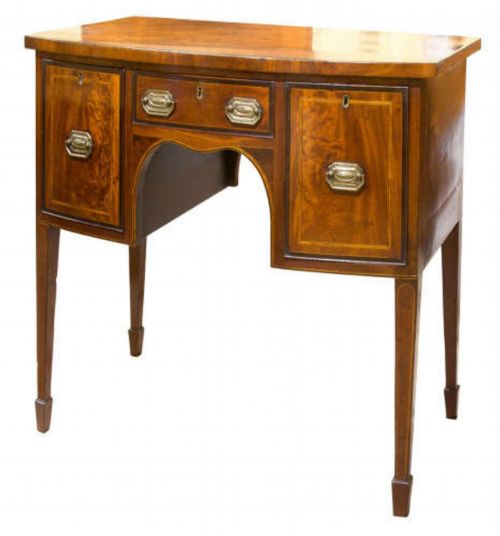
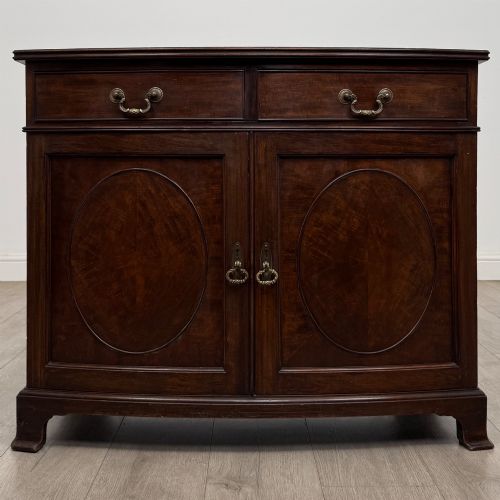
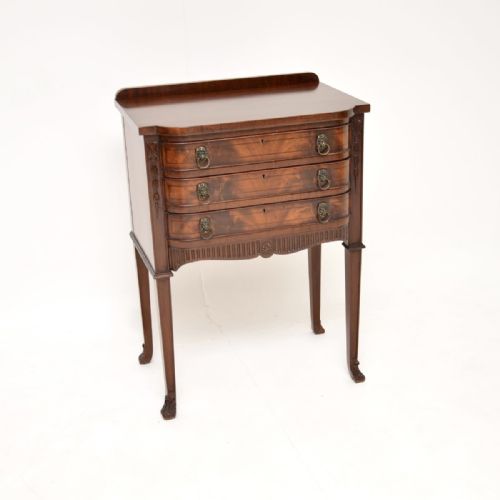
Georgian Bowfront Server
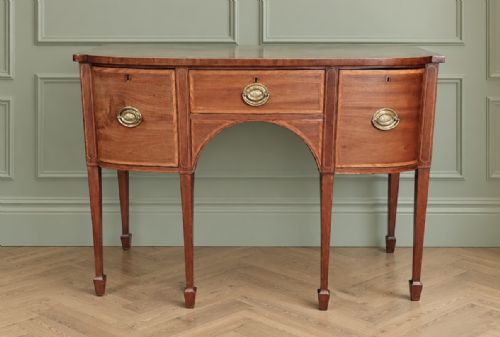
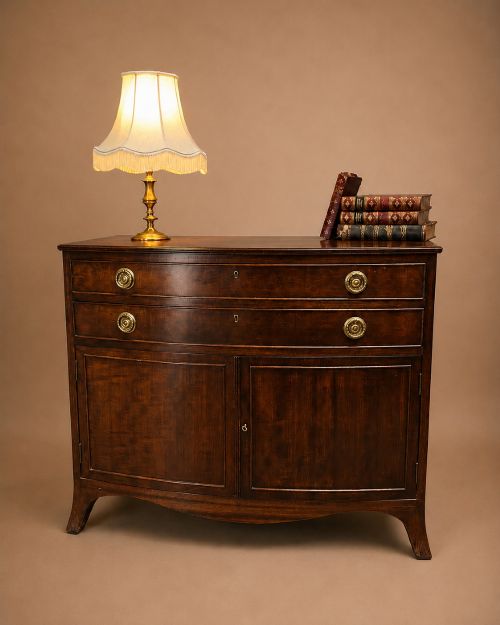
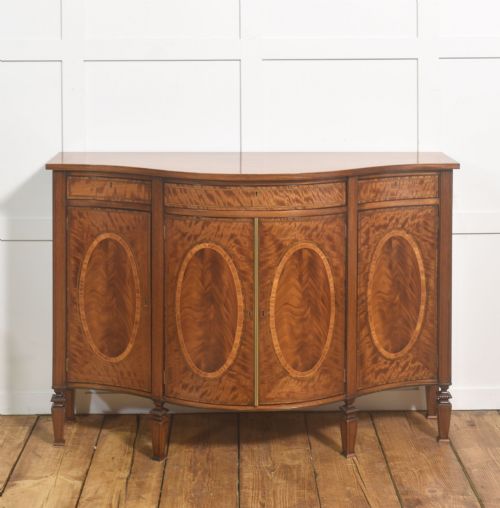
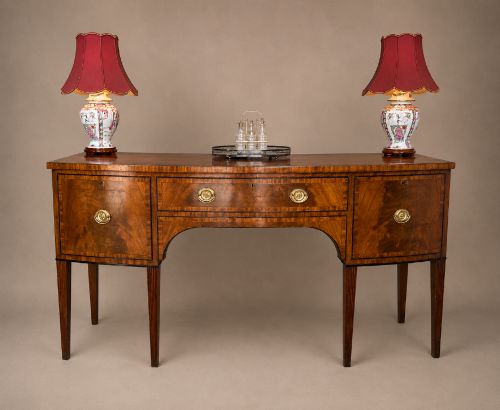
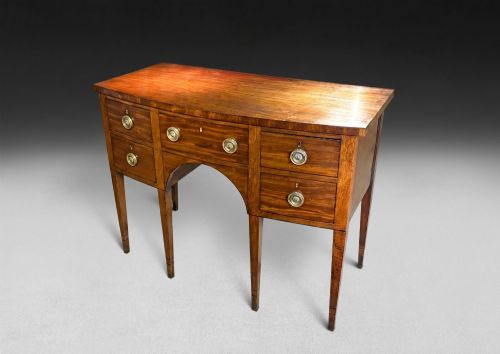
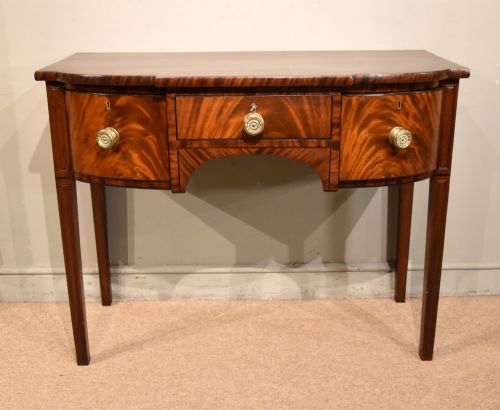
A georgian bowfront server offers generous dining room storage with a curved silhouette that softens a room.
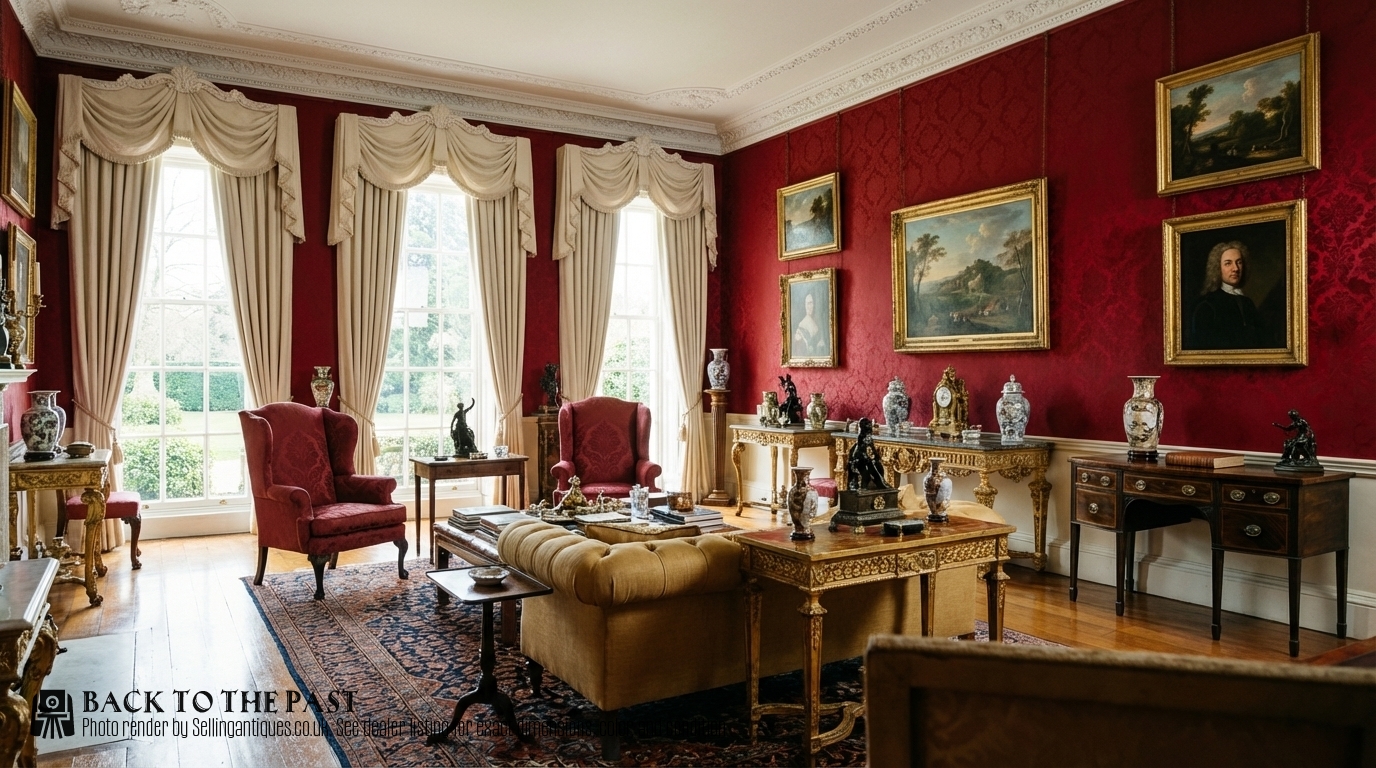
Georgian Bowfront Server
A georgian bowfront server brings a curved facade and practical surface space to a dining room or hallway. Buyers look for these pieces to provide concealed storage while introducing period character through polished wood.
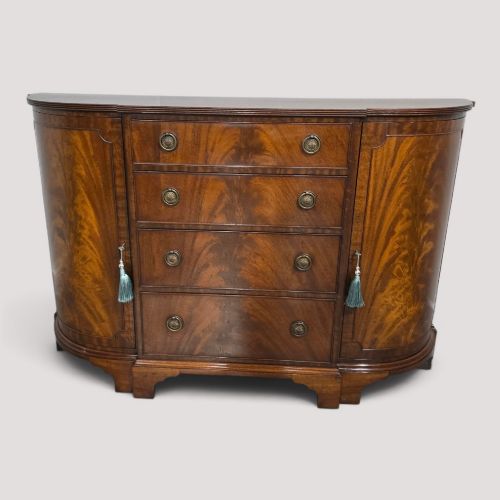
The versions met most often on this page date from the eighteenth and nineteenth centuries, alongside later revival pieces. They appear primarily as sideboards, side tables and side cabinets shaped with a graceful outward curve.
Origins span classic Georgian and Regency periods, stretching through Sheraton revivals into the early twentieth century. Makers of these eras utilised mahogany as a primary carcase material, often enhanced with contrasting stringing.
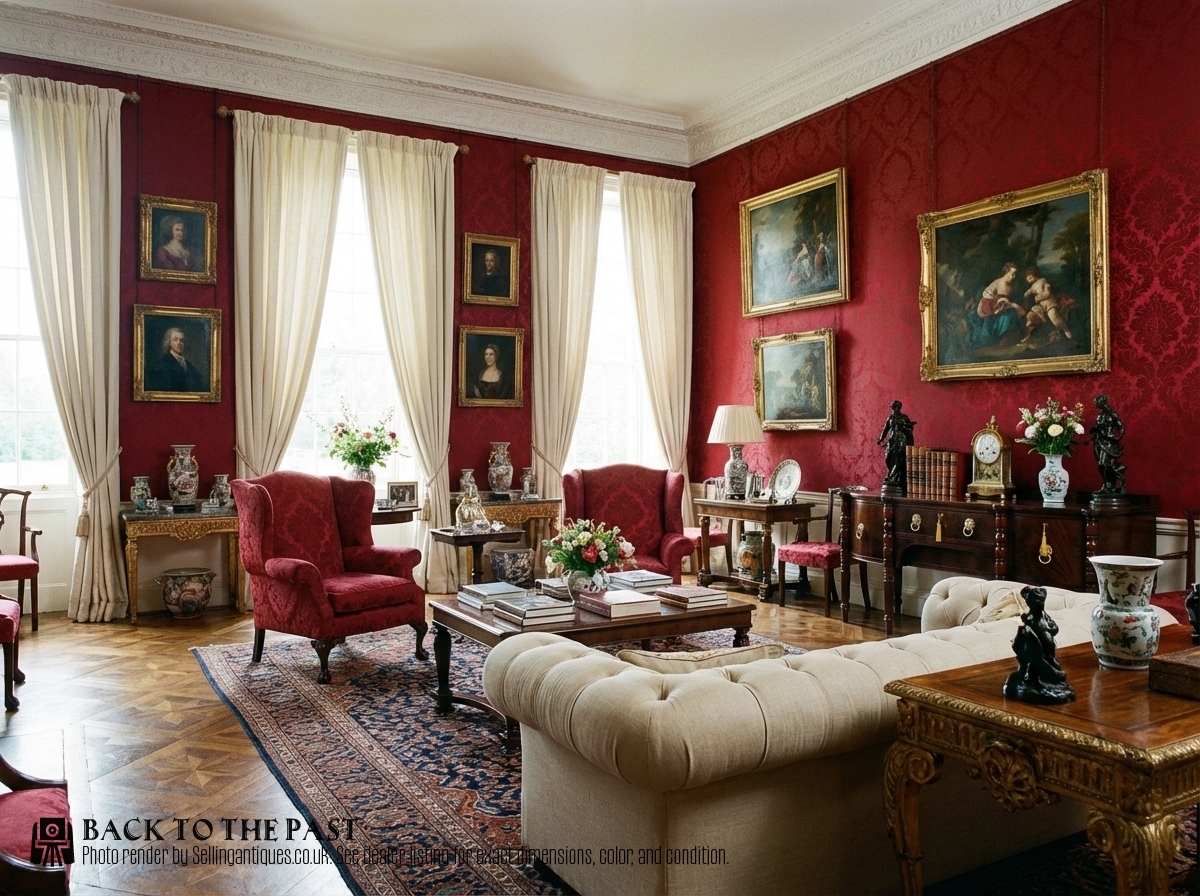
How they were made
Cabinet makers built these pieces using solid mahogany and flame mahogany veneer laid over secondary timbers such as oak. The curved bowfront shape required careful timber selection and precise bending or shaping techniques to maintain structural integrity.
Decoration relied on skilled woodworking methods including boxwood inlay, marquetry and wood banding using purpleheart or satinwood. Brass hardware, handles and drawer pulls completed the construction, fastened securely to house dining utensils and linens.
Georgian Bowfront Server Retail Price Guide 2026
Typical asking prices for georgian bowfront server among the pieces listed under this phrase on Sellingantiques today, from the lower quarter to the upper quarter. They describe what is for sale here now, not the wider market.
Listings feature mahogany, satinwood, oak and brass across periods spanning the eighteenth century to the Edwardian era.
What varies in quality
Quality rests upon the selection of timber figures and the precision of the inlaid details across the curved drawer fronts. Finer examples display carefully matched flame mahogany veneers and crisp boxwood stringing that follow the sweep of the bow.
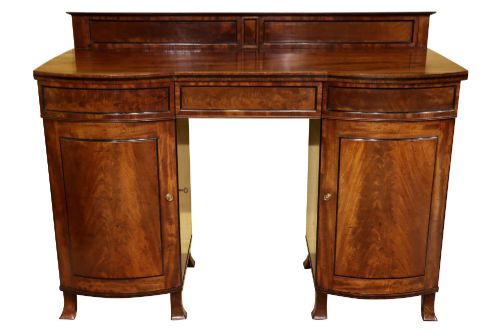
Proportion and scale distinguish the work, as smaller servers and pedestal configurations demand exceptional joinery to achieve balance. The integration of original brass fittings and the crispness of edge banding separate standard workshop production from superior cabinet making.
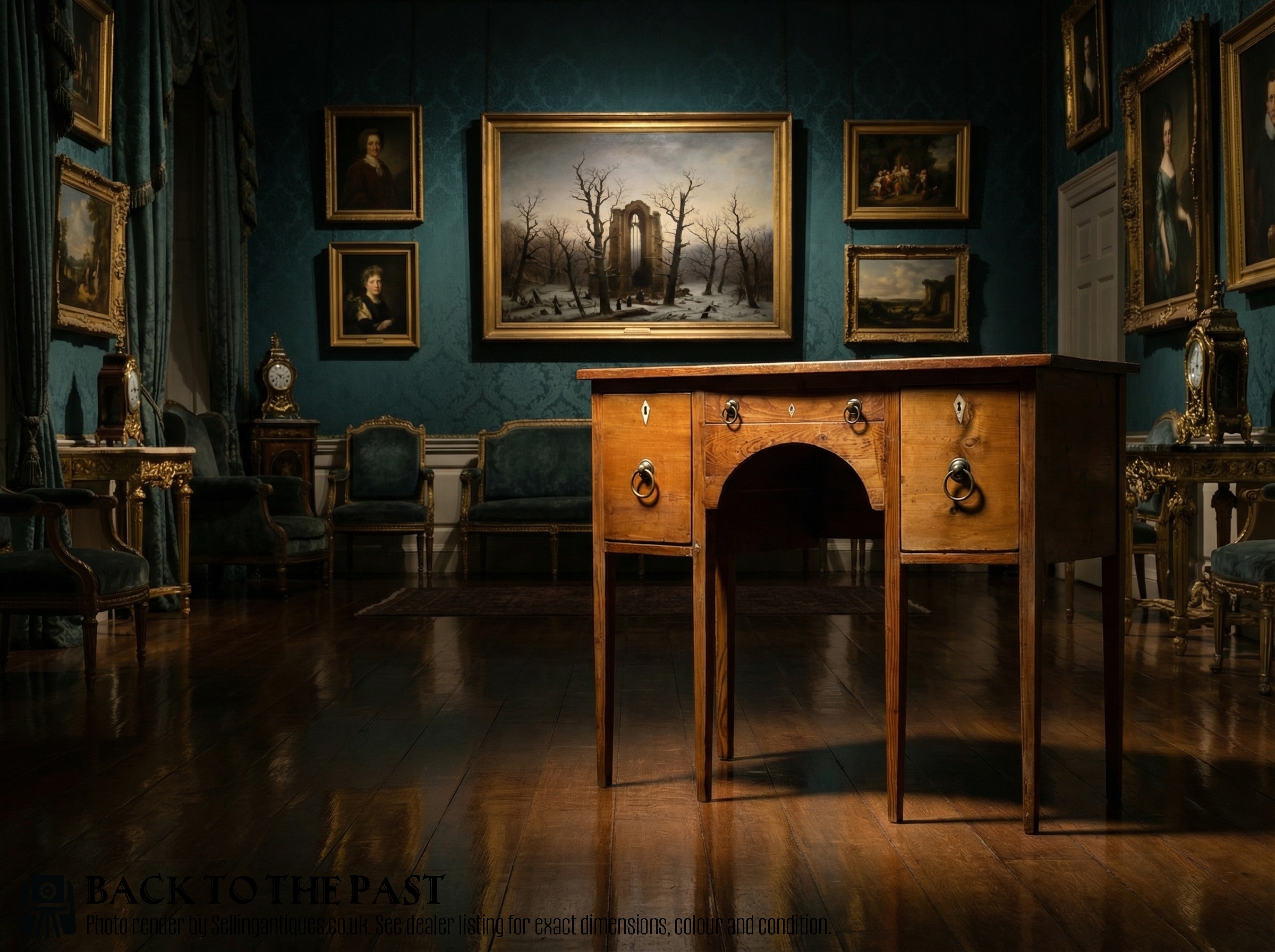
The Georgian Bowfront Server Glossary
- Bowfront
- A convex curved cabinet front that swells outward from the corners. This shape became popular during the late eighteenth century to soften rectilinear dining room furniture.
- Stringing
- Narrow inlaid lines of contrasting wood set flush into the surface of a panel or drawer front. Boxwood is frequently utilised for this bright linear decoration.
- Flame mahogany
- A wood veneer cut from the fork of a mahogany tree where the branch meets the trunk. It produces a distinctive flickering flame pattern highly prized in period furniture.
- Pedestal sideboard
- A form featuring distinct pedestal cupboards or drawers flanking a central section. These pieces often date to the Regency period and offer substantial interior storage.
Georgian Bowfront Server: Frequently Asked Questions
Where should I place a georgian bowfront server?
These servers fit naturally against a dining room wall to hold serving dishes and tableware.
They also work well in wide hallways or living rooms where a shallow curved profile preserves floor space.
How do I care for mahogany surfaces?
Dust the wood regularly with a dry, soft cloth to prevent particulate build-up on the polished finish.
Apply natural beeswax periodically to nourish the timber and maintain a soft, protective lustre without synthetic silicones.
What is the difference between George III and Sheraton styles?
George III pieces often display robust proportions with substantial timber framing and restrained decorative carving.
Sheraton designs incorporate lighter proportions, delicate satinwood veneers and geometric stringing influenced by neoclassical taste.
Can I use a server as a drinks cabinet?
The deep drawers and cupboards provide ample storage for bottles, glassware and bar accessories.
Interior compartments accommodate standard decanters while the top surface serves mixing drinks during gatherings.