
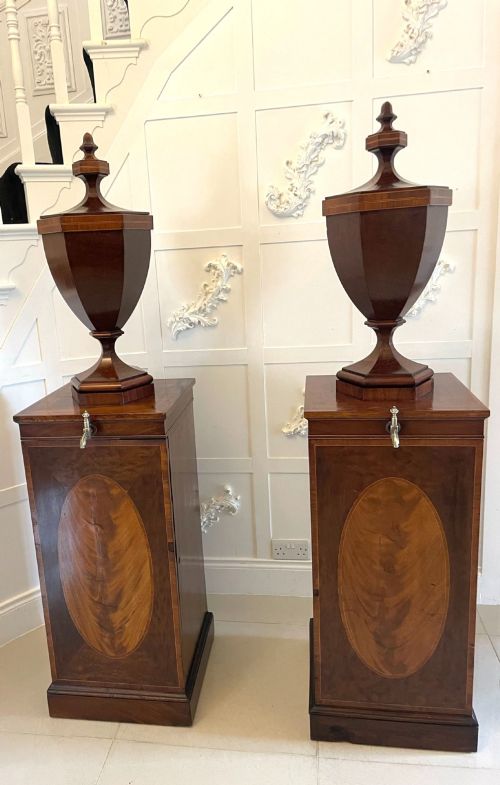
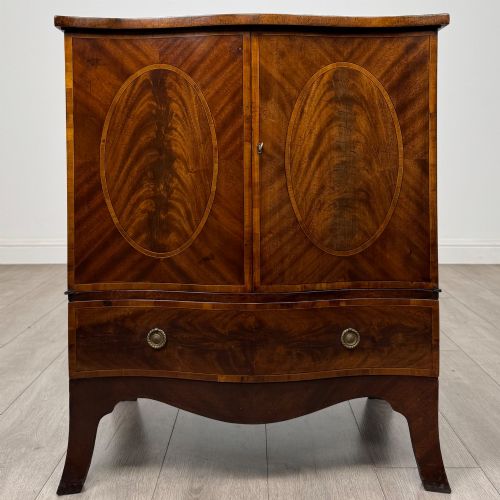
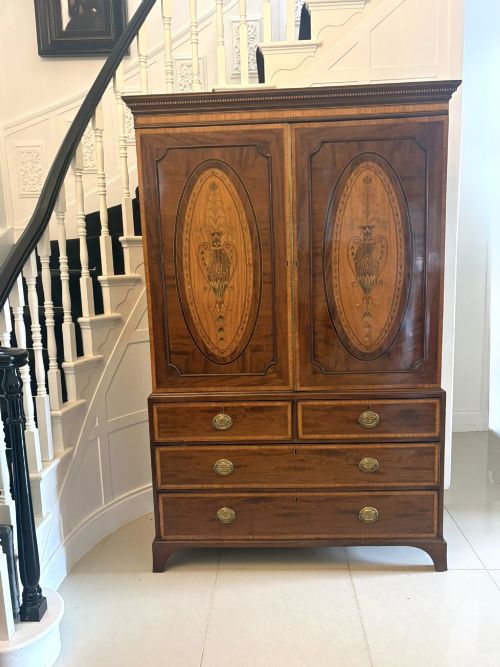
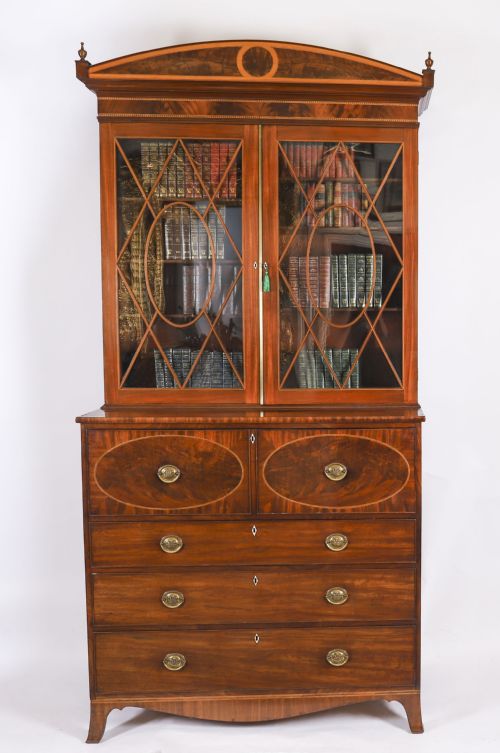

Georgian Inlaid Cabinet
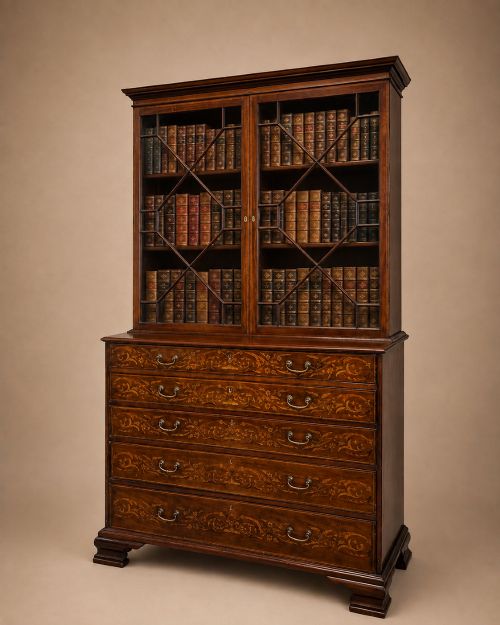
A georgian inlaid cabinet brings eighteenth-century timberwork and contrasting stringing into a room with understated authority.
Forms and Origins
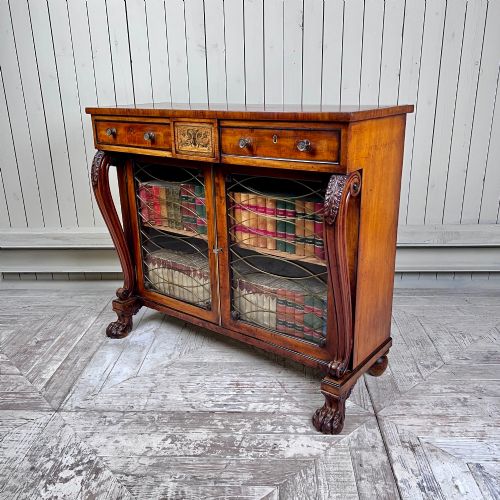
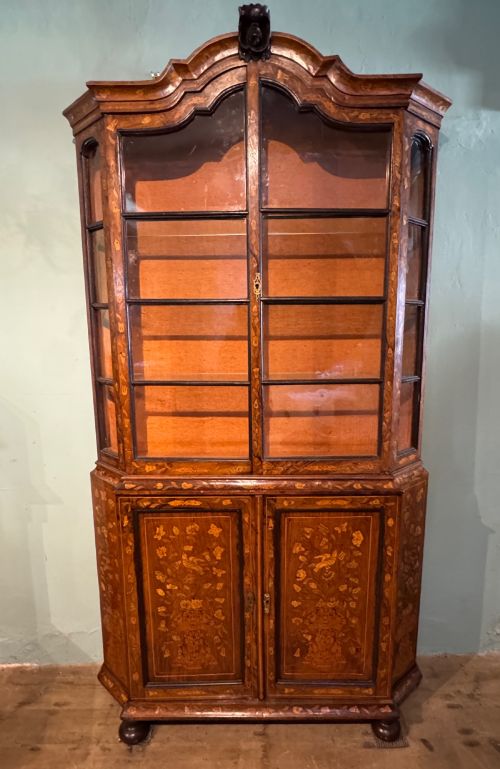
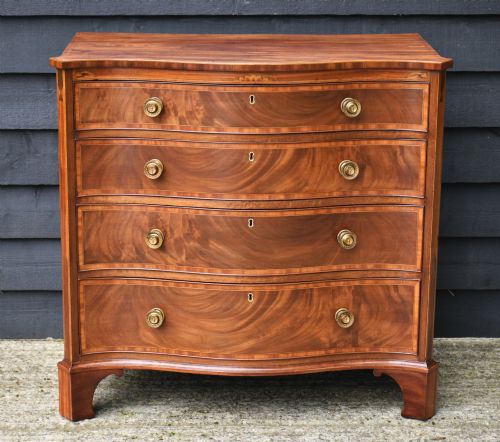
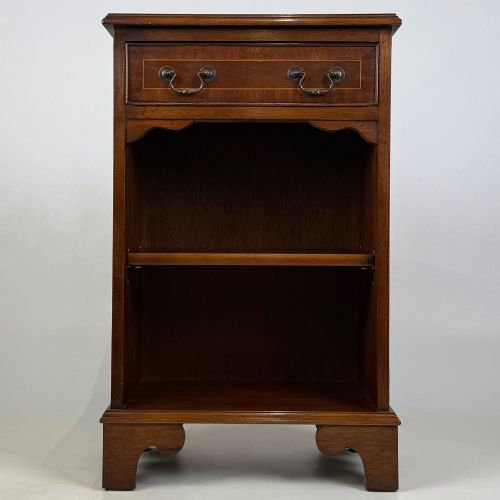
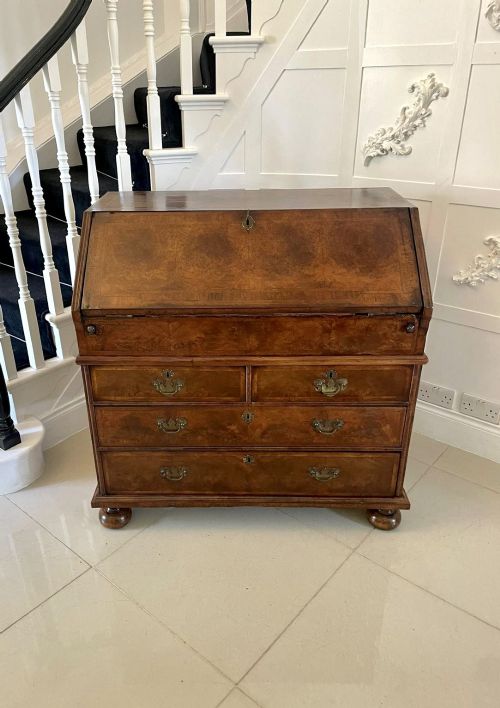
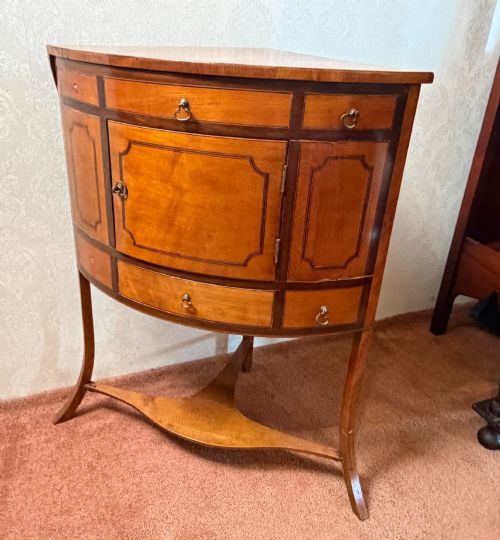
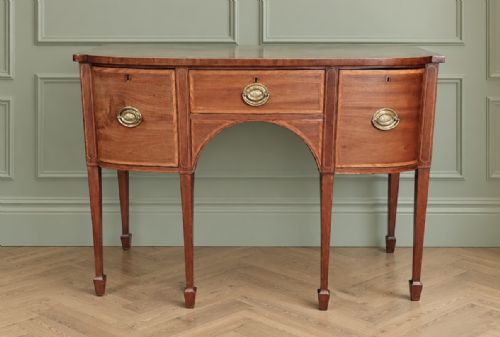
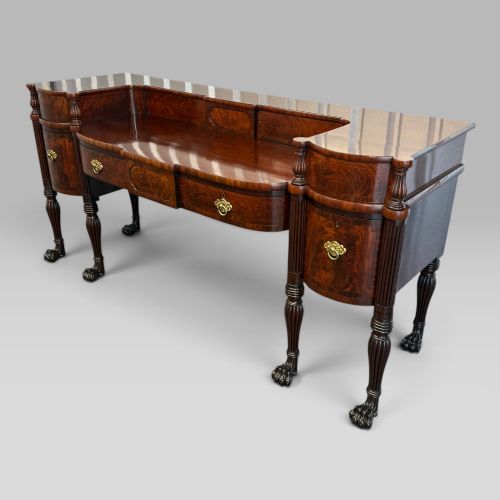
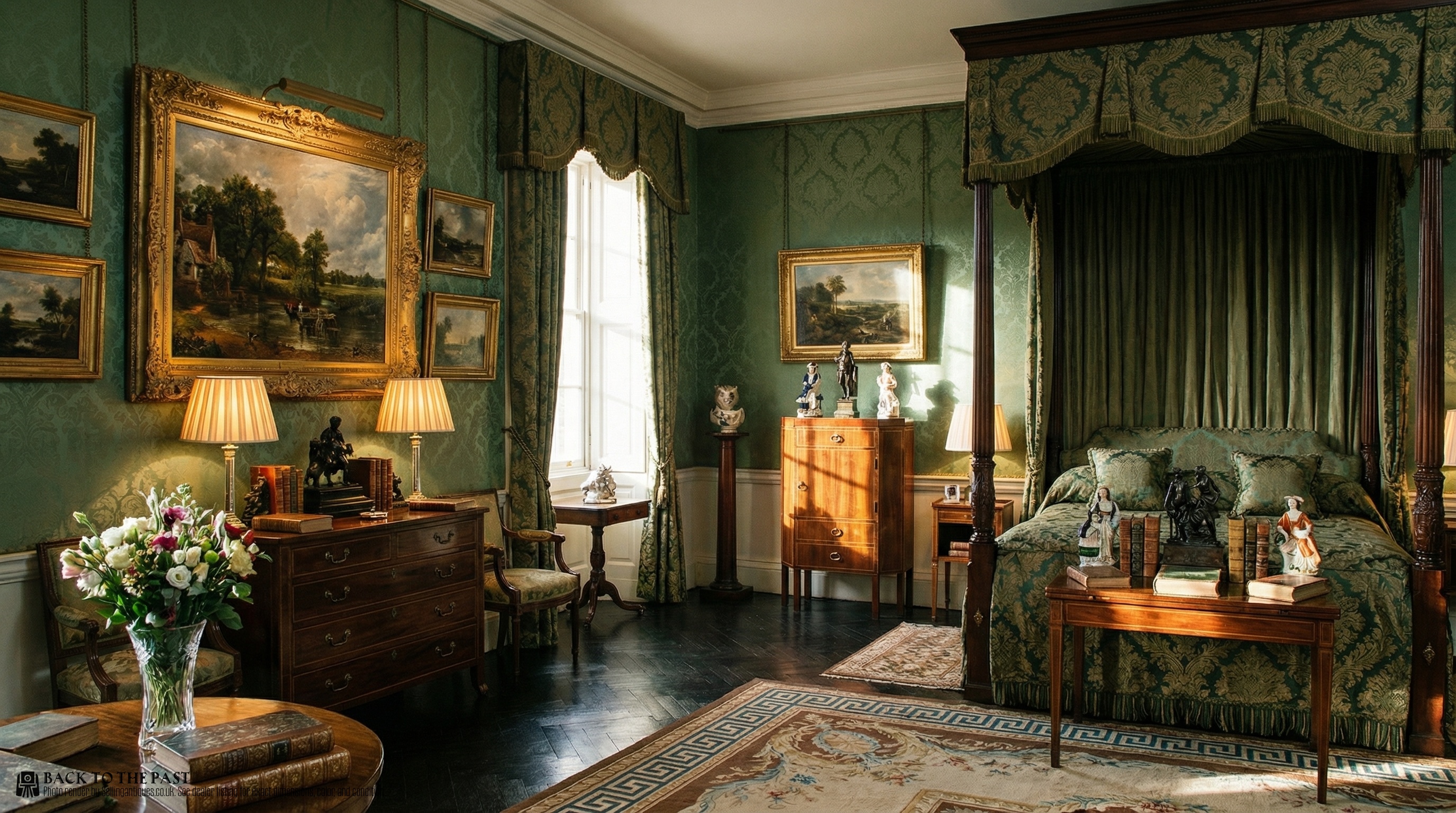
A georgian inlaid cabinet covers a remarkably broad domestic footprint, ranging from towering two-part display pieces and sideboards down to compact table chests and bedside cupboards. The most frequent iteration encountered by a modern buyer is the wall-hanging or floor-standing corner cabinet, designed to utilise awkward angles in period rooms.
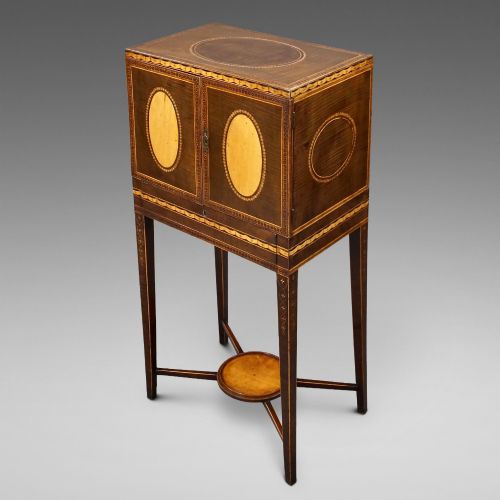
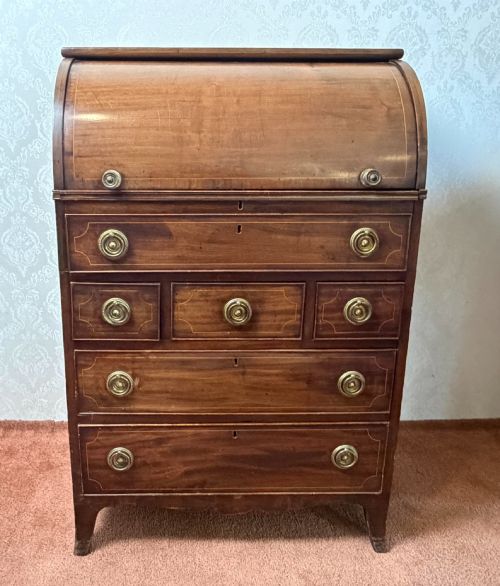
Makers of the eighteenth and early nineteenth centuries also produced specialist forms such as collectors cabinets with internal drawers, washstands with folding tops, and tall barrel-front cupboards in oak or mahogany. These objects originate primarily from the Georgian and George III periods, reflecting the domestic requirements of country houses and town residences alike.
While many survivors are strictly functional pieces intended for storage or washing, others serve as display furniture with glazed doors and satinwood veneers. The construction aligns closely with standard eighteenth-century workshop practices, yielding sturdy carcases designed to withstand centuries of daily use.
Materials and Technique
Workshops relied heavily on solid mahogany and oak as primary structural timbers, complemented by decorative veneers of satinwood and contrasting boxwood stringing. Timber selection depended on the commission, with finer display pieces receiving lighter exotic woods while utility cupboards utilised sturdy native oak.
Inlay techniques involved precise hand-cutting of recesses within the primary wood to receive contrasting slips of lighter or darker material, often secured with animal glue. Brass hardware such as hinges, escutcheons and drop handles were cast and fitted by hand, providing structural reinforcement alongside visual contrast.
Retail Price Guide 2026
Typical UK retail prices for georgian inlaid cabinet, calculated from the Sellingantiques database of over a million retail prices indexed since 2003. This retail price guide relies exclusively on Sellingantiques data; no external sources or auction records are used, so the figures do not describe the wider market.
Listings demonstrate a strong preference for mahogany and oak carcases embellished with satinwood inlay and boxwood stringing across the eighteenth and early nineteenth centuries.
Judging Quality
The division between ordinary and exceptional work rests in the crispness of the timber preparation and the restraint of the decorative scheme. Superior pieces demonstrate meticulous grain matching across door panels and drawer fronts, whereas lesser examples rely on heavy, repetitive banding to create superficial interest.
Structural integrity also separates workshop grades, evident in the thickness of secondary timbers used for drawer linings and backboards. Cabinets retaining original brass fittings, functional locks with keys, and uncompromised bracket feet command greater respect from collectors than those altered by later restorations.
Gillows Lancaster·Edwards and Roberts
The Georgian Inlaid Cabinet Glossary
- Inlay
- The technique of inserting pieces of contrasting material into a prepared recessed surface to form a decorative pattern. This differs from veneer by cutting directly into the solid timber base rather than covering it.
- Satinwood
- A durable, lustrous timber native to Ceylon and the West Indies, prized for its pale yellow colour and chatoyant grain. Cabinetmakers utilised it extensively for contrasting panels and banding during the late eighteenth century.
- Bow Front
- A convex curved cabinet front that projects outward in a smooth arc. This curved form required specialist joinery to shape solid timber or bend laminations.
- Collectors Cabinet
- A specialised small-scale cabinet fitted with multiple shallow internal drawers designed for storing coins, shells, minerals or other cabinet curiosities. These pieces often feature secure locking doors to protect fragile specimens.
- Cross Banded
- A method of applying border veneer where the grain runs perpendicular to the edge of the board. This frames the central panel and provides a neat transition to the outer edge.
Frequently Asked Questions
How do I date a Georgian cabinet?
Dating relies on secondary timber choices, construction methods of the drawer linings, and the style of the brass hardware. Earlier pieces from the mid-eighteenth century often employ oak for internal framing before mahogany gains total dominance.
Changes in inlay motifs also assist chronology, as delicate boxwood stringing gives way to bolder satinwood crossbanding by the turn of the nineteenth century.
Where should I hang a corner cabinet?
Corner cabinets suit transitional spaces in period properties, particularly dining rooms, hallways or sitting rooms where floor space remains at a premium. Wall-hanging variants require secure fixing directly into masonry or substantial wall studs to support the considerable weight of solid mahogany and oak.
Placing them at a comfortable eye level ensures the glazed doors or panel work can be appreciated without dominating the surrounding furniture.
What is the difference between a corner cupboard and a display cabinet?
Corner cupboards usually feature solid panelled doors designed to conceal household stores, drinks or utilitarian items safely out of sight. Display cabinets incorporate glazed upper sections specifically intended to showcase porcelain, glassware or books.
Both forms utilise angled backs to fit snugly into room corners, but their internal shelving arrangements reflect entirely different domestic functions.
Are these cabinets suitable for daily use?
Georgian cabinets remain remarkably robust and function reliably for storage when treated with reasonable care. Maintaining stable indoor humidity prevents timber shrinkage and protects fragile eighteenth-century veneer work.
Working locks and sturdy shelving allow everyday utility, whether storing glassware or modern collections.