


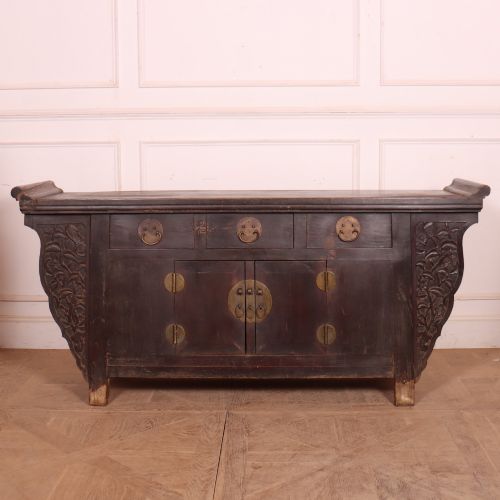
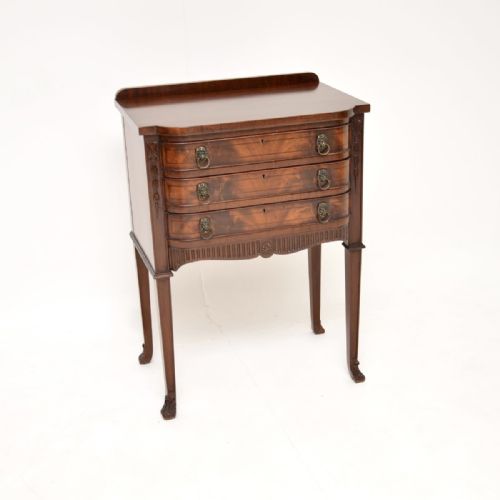
Dark Wood Buffet Table
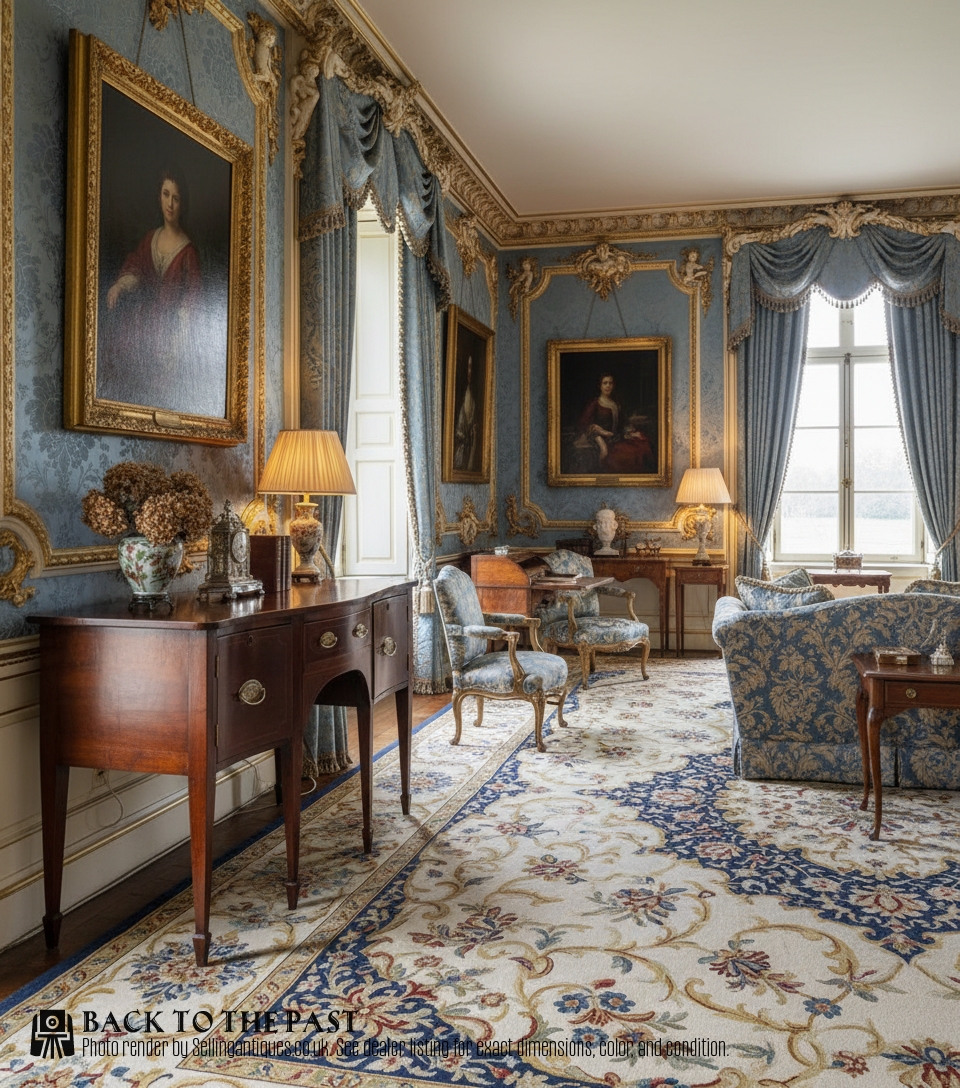
A dark wood buffet table brings profound presence to a room, offering rich grain and formal utility for any dining space.
What these dark wood buffet table pieces are
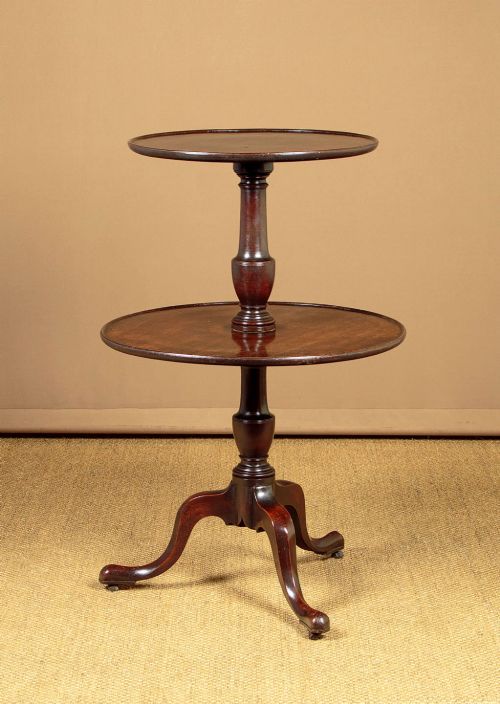
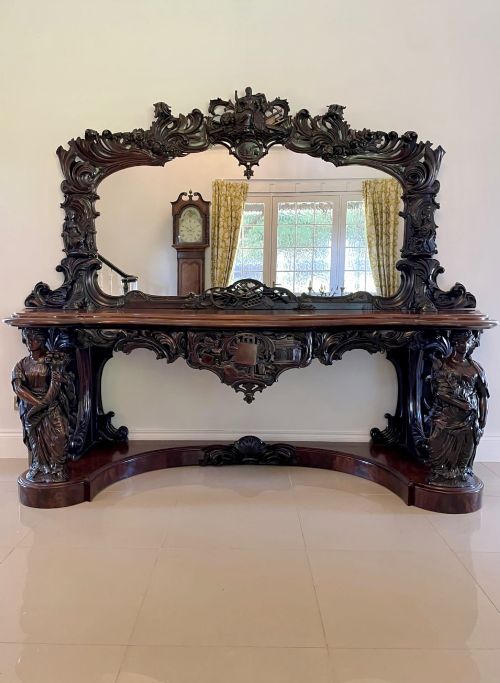
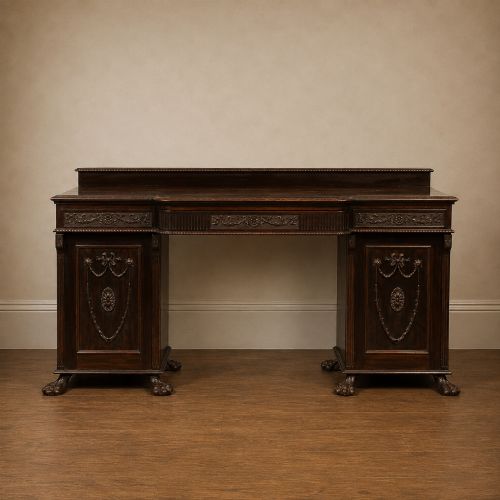
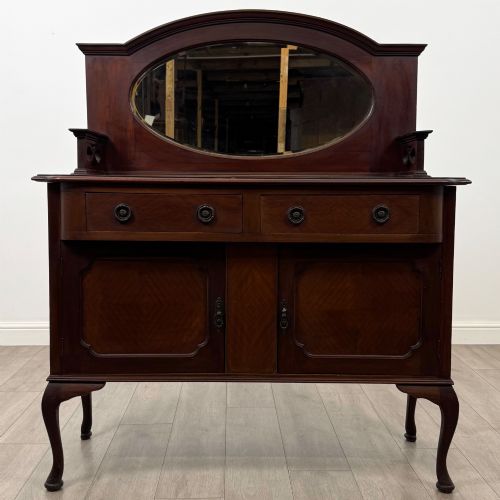
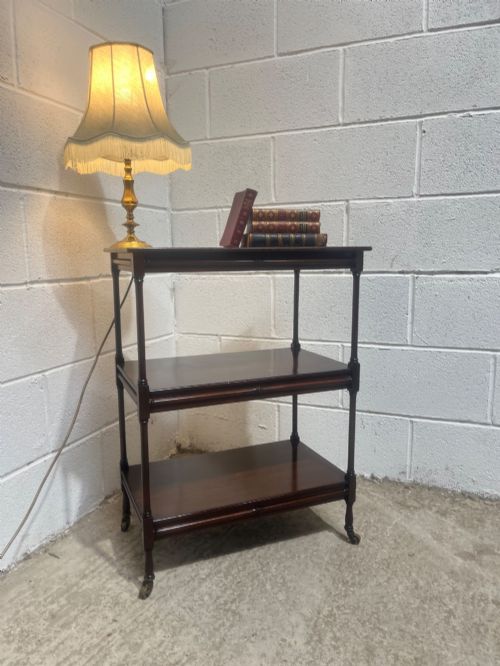
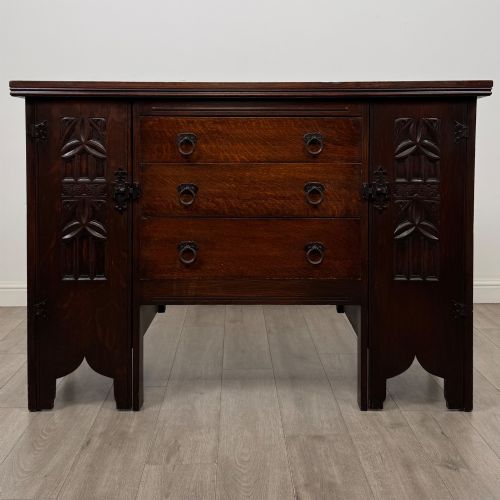
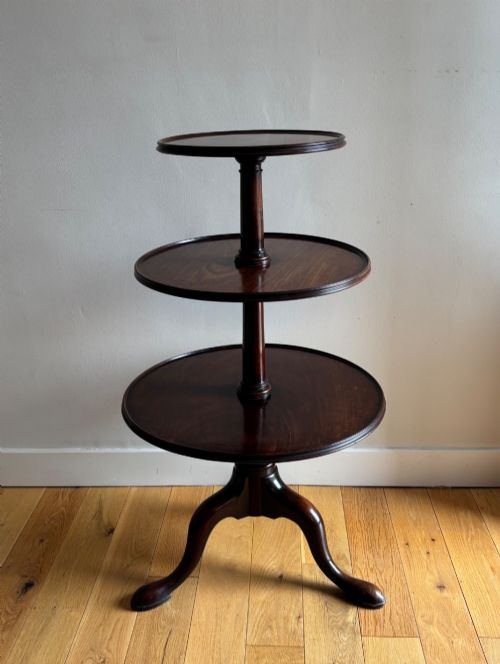
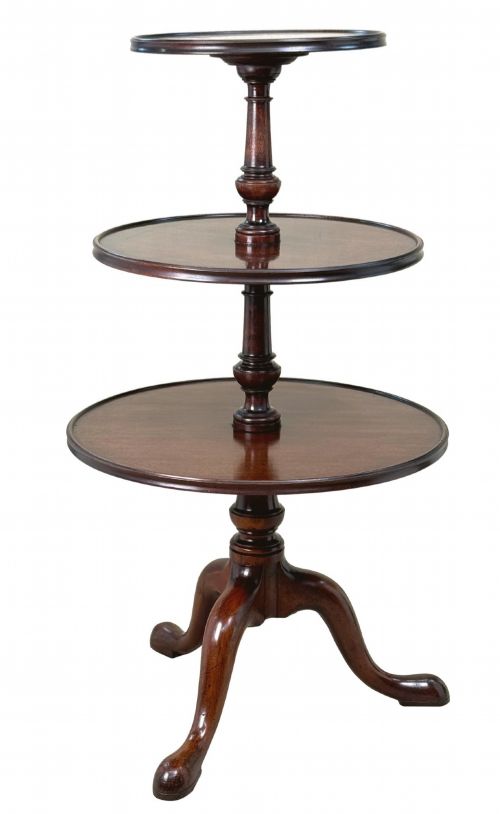
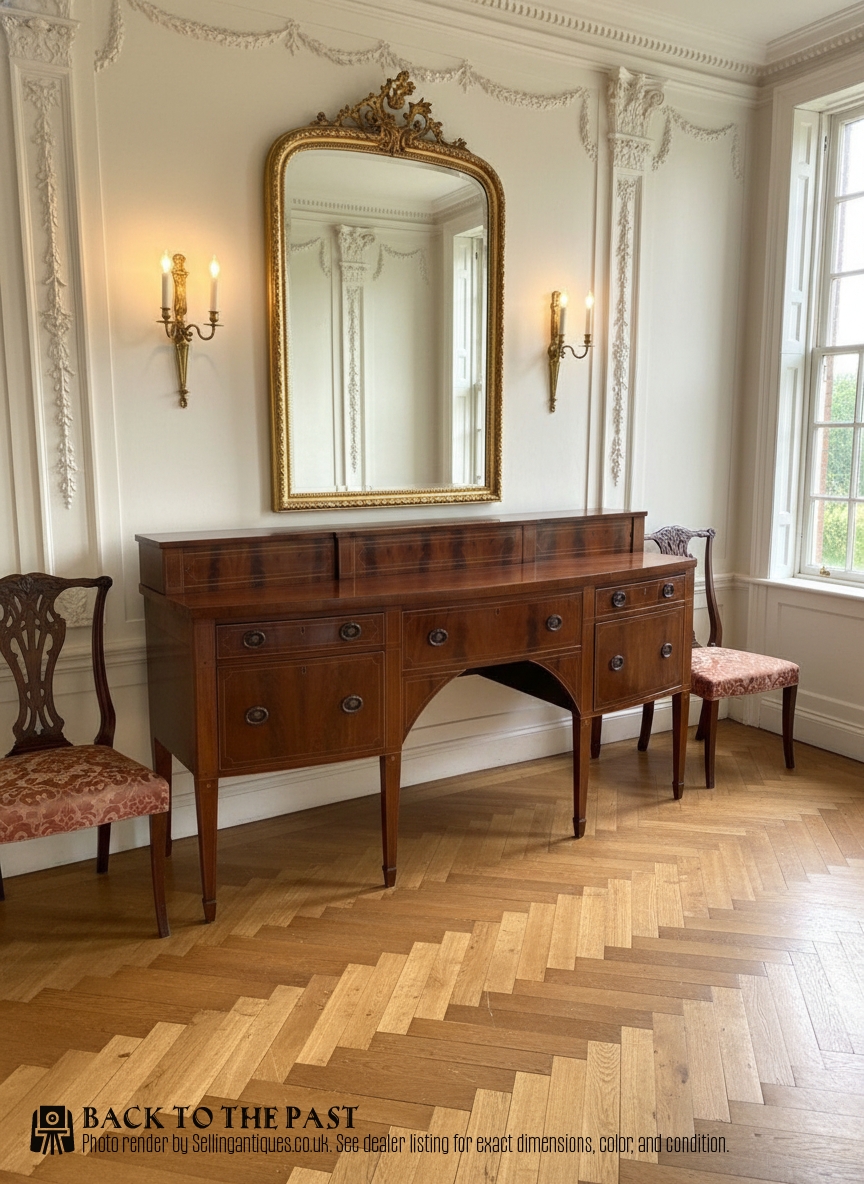
When you search for a dark wood buffet table, you encounter substantial dining furniture designed for serving food and displaying silver. The selection ranges from compact dumb waiters to grand sideboard bases.
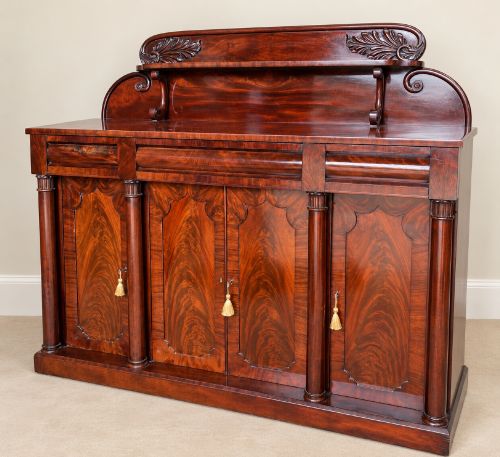
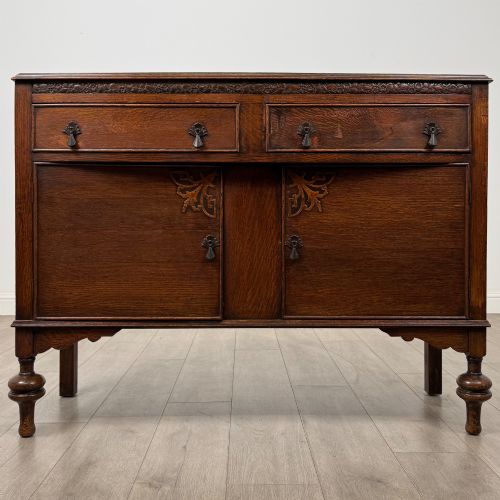
You meet pieces spanning the Georgian, Regency, and Victorian periods, alongside later Jacobean Revival and 1920s interpretations. Mahogany and oak dominate the selection, often enriched with boxwood inlay and brass fittings.
How they were made
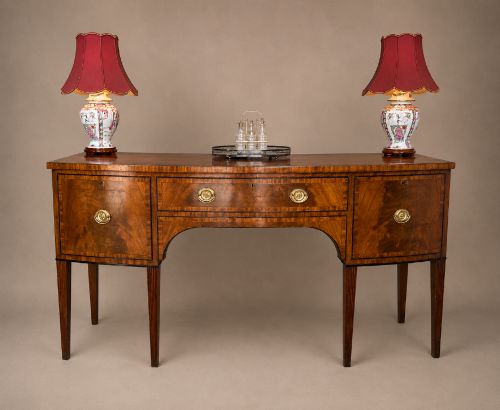
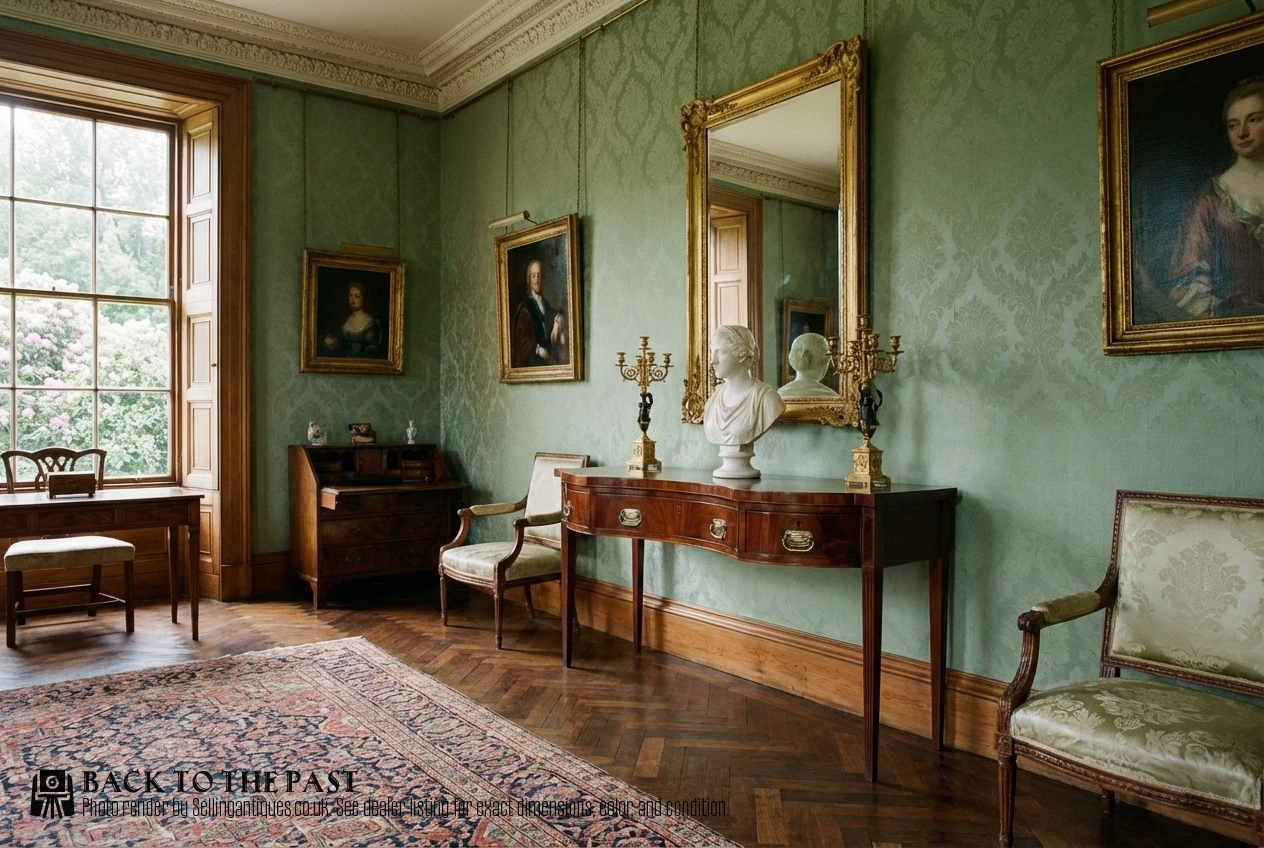
Cabinet makers utilised dense timbers such as Cuban mahogany and oak, building robust frames designed to bear heavy porcelain and silver. Surfaces were shaped into serpentine or bow fronts, requiring considerable skill in bending and joining timber.
Details such as boxwood stringing were delicately inlaid into drawer fronts and borders to create subtle contrast against the dark wood background. Brass handles, castors, and rails were integrated to provide both functional movement and decorative punctuation.
Retail Price Guide 2026
Typical UK retail prices for dark wood buffet table, calculated from the Sellingantiques database of over a million retail prices indexed since 2003. This retail price guide relies exclusively on Sellingantiques data; no external sources or auction records are used, so the figures do not describe the wider market.
The listings here span the Georgian, Regency, and Victorian eras, executed primarily in mahogany and oak with occasional brass and boxwood details.
What varies in quality
Superior examples reveal themselves through the choice of timber, particularly figured Cuban mahogany with deep, active grain patterns rather than flat, plain boards. The precision of the joinery and the sharpness of carved ornamentation dictate the piece's standing.
Makers' marks elevate certain items significantly, distinguishing workshop production from standard commercial output. The integration of mechanical elements, such as those found in metamorphic dumb waiters, demands smooth operation and robust internal engineering.
Gillow·Gillows
The Dark Wood Buffet Table Glossary
- Bow front
- A convex, curved cabinet front that projects outward in a smooth arc. This shape requires advanced woodworking skill to construct accurately in solid timber.
- Serpentine
- A front contour characterised by a convex centre flanked by concave ends. It creates a dynamic shadow play across mahogany surfaces.
- Dumb waiter
- A tiered serving table fitted with multiple shelves or revolving trays. These were designed to hold food and wine near the dining table without requiring servants.
- Boxwood stringing
- Thin inlay lines of pale boxwood inserted into grooves on drawer fronts or table tops. This technique frames the darker mahogany background.
- Metamorphic
- Furniture designed to transform from one form into another, such as a tiered table that collapses or alters height. These pieces utilise clever mechanical hinges.
Frequently Asked Questions
How do I date a sideboard?
Dating relies on observing timber choices, hardware, and stylistic details such as bow fronts or carved oak panels. Georgian and Regency pieces favour fine mahogany, while Victorian and 1920s examples often display heavier carvings or revival styles.
Construction methods inside drawers and the presence of makers' stamps further narrow down the decade of manufacture.
Where were dumb waiters used?
Dumb waiters stood beside dining tables in large formal houses during the eighteenth and nineteenth centuries. They held bottles, glasses, and extra plates.
These tiered serving pieces allowed diners to help themselves during meals without the constant presence of servants.
How do I care for mahogany?
Protect mahogany furniture by keeping it away from direct sunlight and sudden changes in central heating temperature. This prevents the timber and veneer from drying out or splitting.
Apply traditional beeswax occasionally and buff gently with a soft cloth to maintain the natural lustre of the dark wood.