
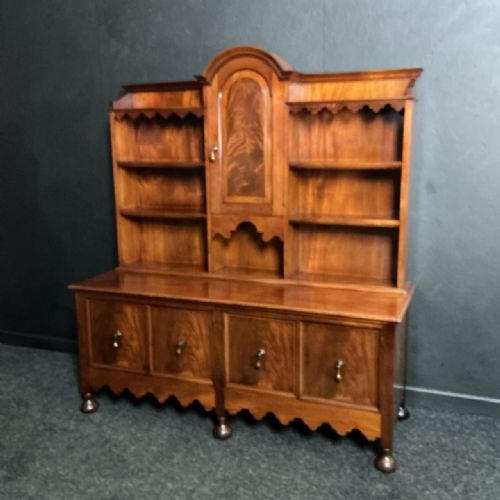
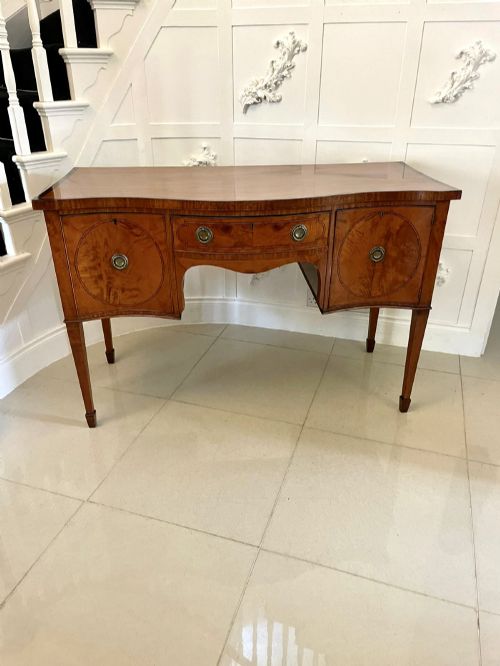
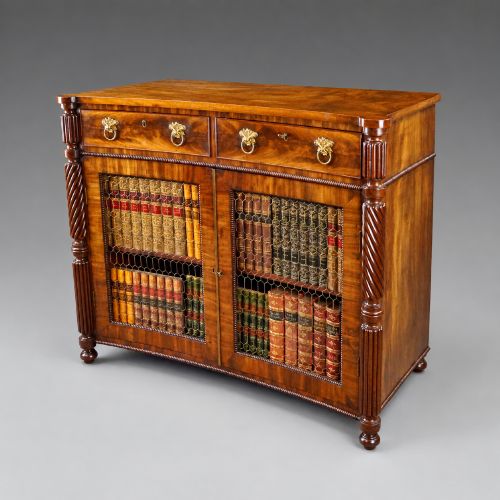
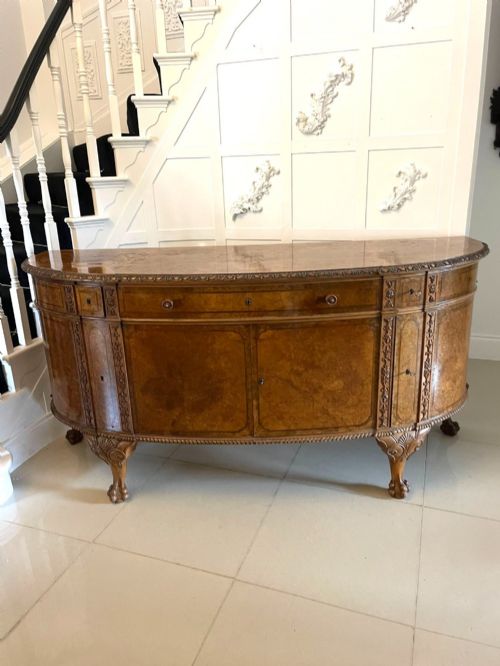
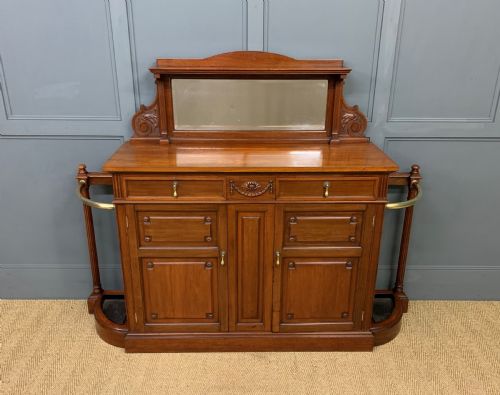
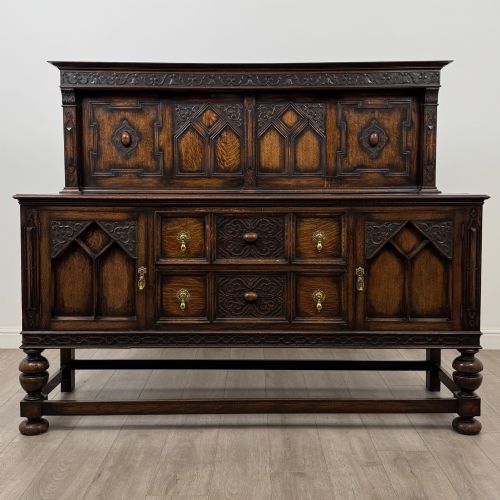
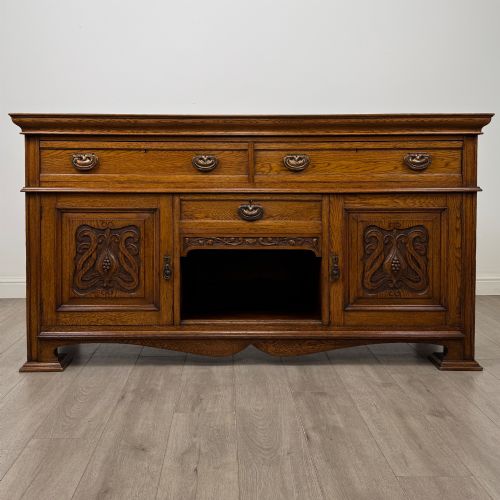
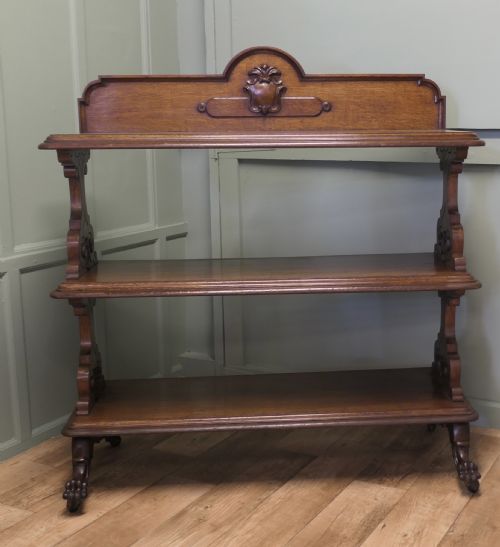
Edwardian Carved Sideboard
An edwardian carved sideboard brings sturdy dining storage and intricate woodwork into the home, uniting functional room organisation with period craftsmanship.

Edwardian Carved Sideboard
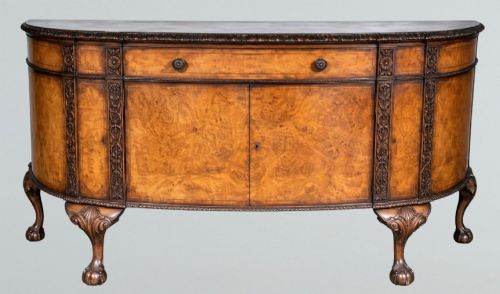
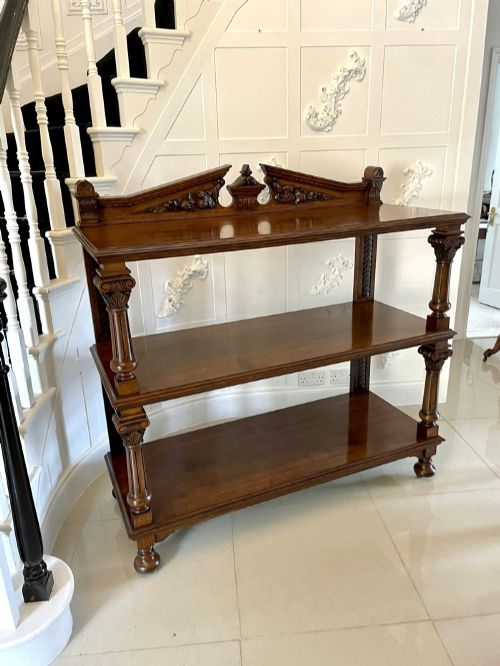
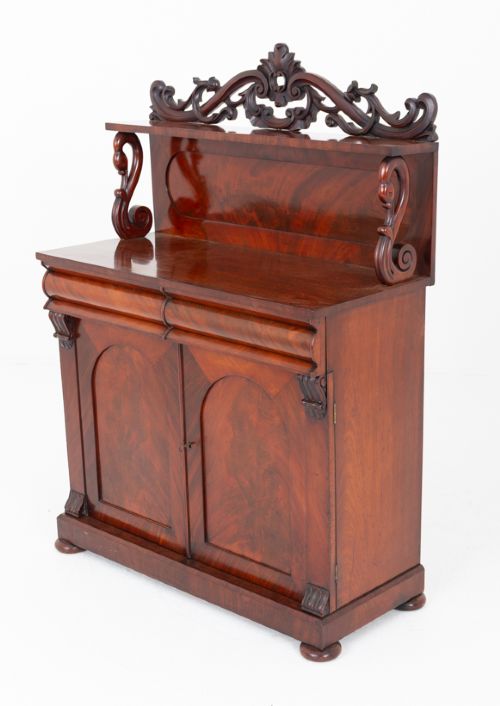
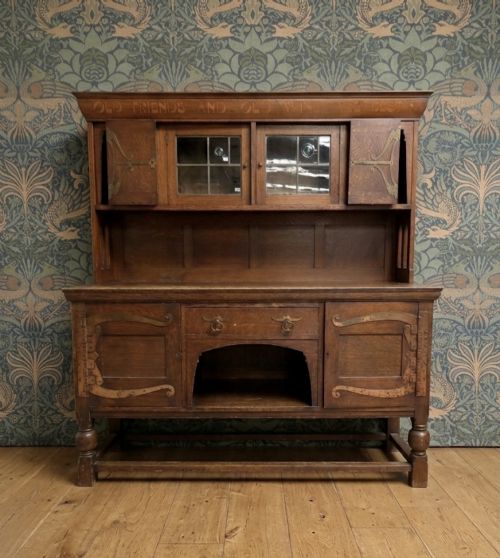
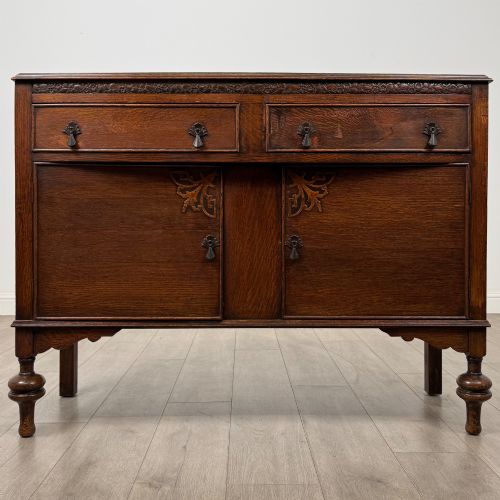
An edwardian carved sideboard typically combines generous cupboard and drawer space with decorative relief carvings, offering a practical anchor for the dining room. These pieces reflect the shift from heavy Victorian designs towards lighter domestic interiors, frequently utilising oak or mahogany.
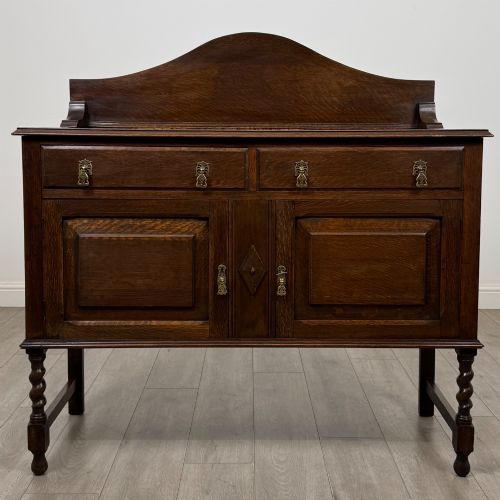
You will often meet light or golden oak examples featuring mirror backs, barley twist legs, or linear Arts and Crafts detailing. The form serves efficiently for holding tableware while displaying decorative ceramics or silver upon the top surface.
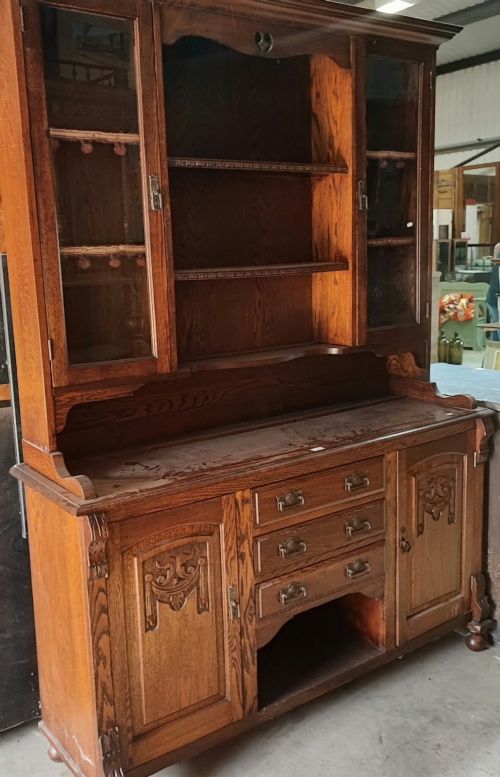
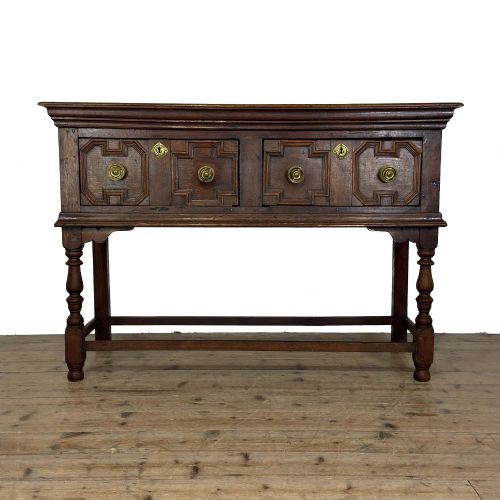
Alongside standard sideboards, related forms include dresser bases, chiffoniers, and smaller cupboard units designed to fit domestic spaces of varying scales. The selection spans straightforward utility models to ambitious carved display pieces.
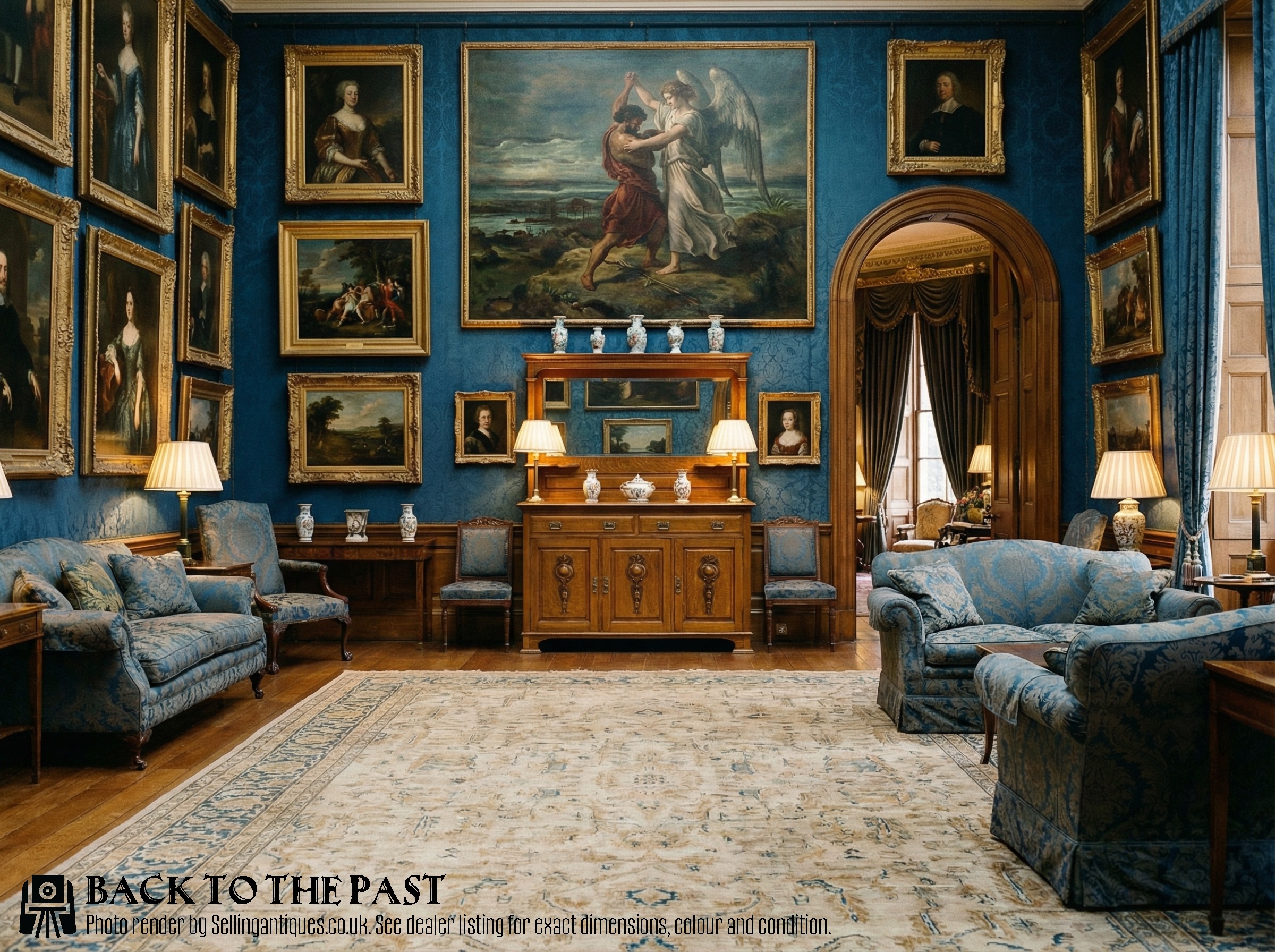
Materials and Construction
Cabinet makers relied primarily on solid oak and mahogany, complemented by walnut and occasional burr walnut veneers for visual depth. Timber selection dictated whether the piece received crisp geometric mouldings or flowing organic carvings.
Brass handles, hinges, and occasional mirrored glass inserts completed the assembly, integrating storage utility with reflective light sources. Traditional joinery methods ensured durability across large breakfront and mirror-backed constructions.
Edwardian Carved Sideboard Retail Price Guide 2026
Typical asking prices for edwardian carved sideboard among the pieces listed under this phrase on Sellingantiques today, from the lower quarter to the upper quarter. They describe what is for sale here now, not the wider market.
One unexpected sideboard arrives with a twelve-piece cutlery set tucked inside its drawers, ready for immediate dining duties.
Evaluating Quality
Distinctions in quality rest upon the crispness of the hand-carving and the selection of timber grain, particularly in figured walnut or quarter-sawn oak. Superior examples display thoughtful proportions, integrated mirror frames, and balanced hardware.
Workshop origin influences value, with documented pieces carrying maker attribution outperforming anonymous workshop production. Construction integrity, such as tight drawer dovetails and solid timber backs, separates standard utility furniture from finer commissions.
Shoolbred and Co·Ambrose Heal·Arthur Simpson of Kendal·Leonard Wyburd·M. D. Miller and Sons·Robson of Newcastle
The Edwardian Carved Sideboard Glossary
- Mirror-back
- A sideboard superstructure incorporating a fitted mirror plate designed to reflect light and display objects.
- Barley twist
- A turned wooden furniture leg or support resembling a spiral rope.
- Breakfront
- A piece of furniture featuring a central section that projects forward from the flanking outer sections.
- Dresser base
- A low sideboard or cabinet featuring drawers and cupboards, traditionally used for food preparation and serving.
- Arts and Crafts
- A design movement prioritising traditional craftsmanship, visible construction, and simple forms over mass-produced ornamentation.
Edwardian Carved Sideboard: Frequently Asked Questions
How do I style an edwardian carved sideboard?
Pair the dark or golden wood tones with simple ceramics or glassware to balance the heavy surface carving. Keeping the surrounding walls neutral allows the carved details and timber grain to stand out.
Position the piece against a main dining room wall where it can function practically for serving food and storing table linen.
What is the difference between a sideboard and a chiffonier?
Sideboards are generally larger dining room units built with multiple cupboards and drawers for storing large quantities of tableware. Chiffoniers are more compact cabinet forms, often featuring a raised back shelf or small cupboard.
Both items emerged to serve dining spaces, but chiffoniers suit smaller rooms where full-scale sideboards overwhelm the floor plan.
How do I identify Edwardian oak from Victorian oak?
Edwardian oak furniture often appears in lighter golden tones with less heavy, brooding ornamentation than mid-Victorian pieces. The carving leans towards simpler Arts and Crafts motifs or lighter Jacobean revival styles.
Victorian pieces typically use darker finishes, heavier mouldings, and more elaborate, dense relief work across the cabinet doors.
Can I use a sideboard in a hallway?
A shallow sideboard or side cabinet functions well in a wide hallway for storing shoes, post, and keys. Low mirror-backed models add light and a sense of space to entrance areas.
Ensure you measure the hallway clearance carefully before introducing a breakfront or deep model.