




Country House Oak Dresser
A country house oak dresser anchors a room with generations of utility, displaying pottery or storing linen in heavy timber.
Country House Oak Dresser
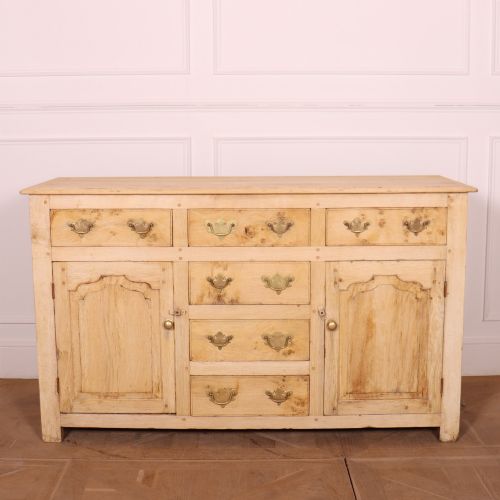
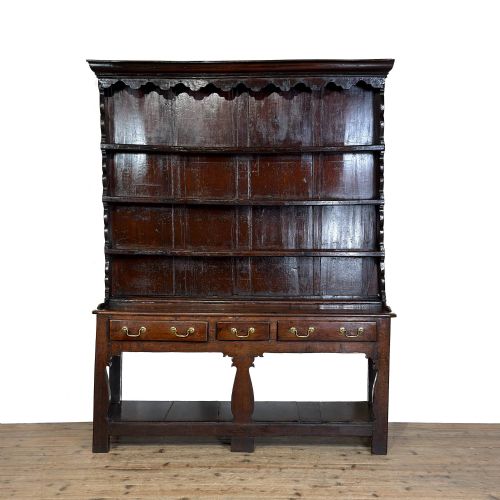
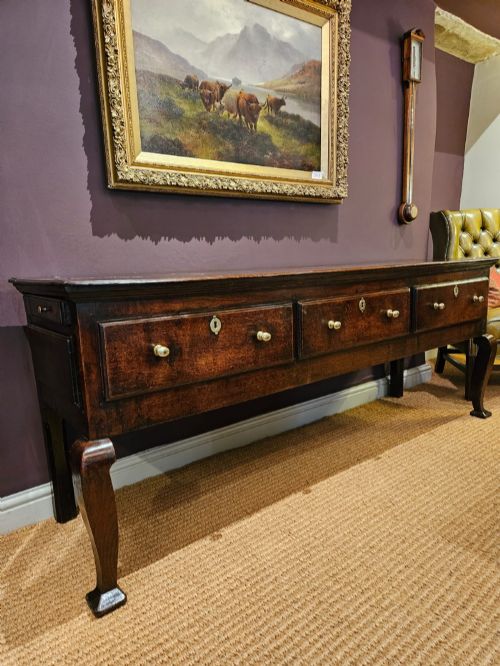
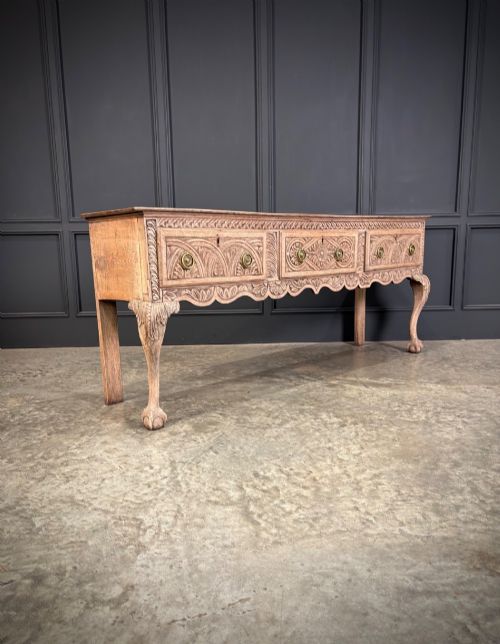
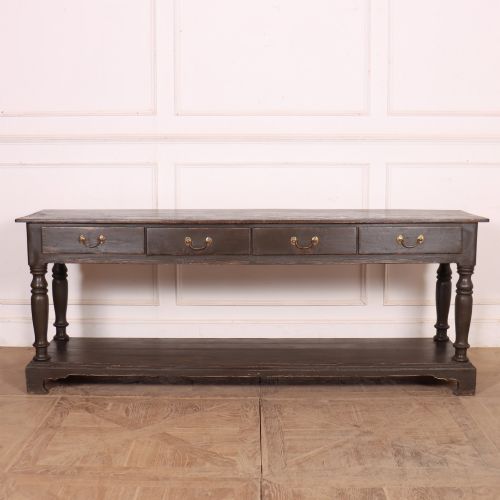
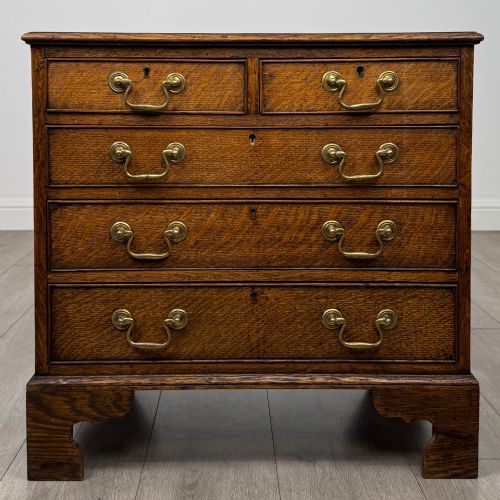
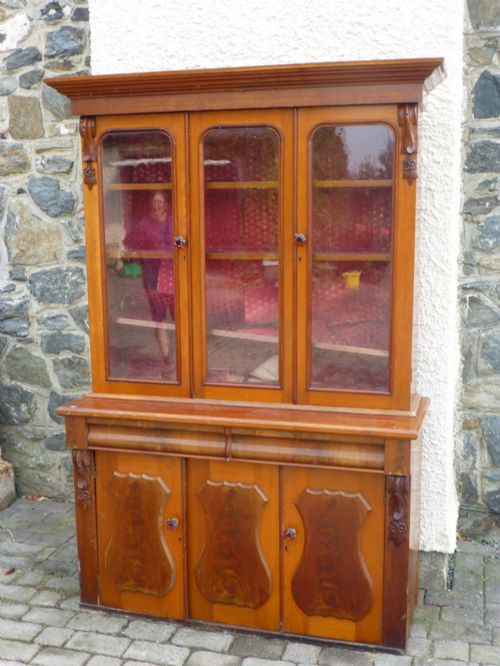
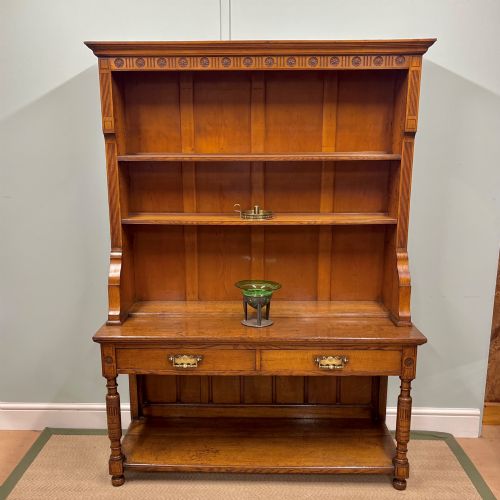
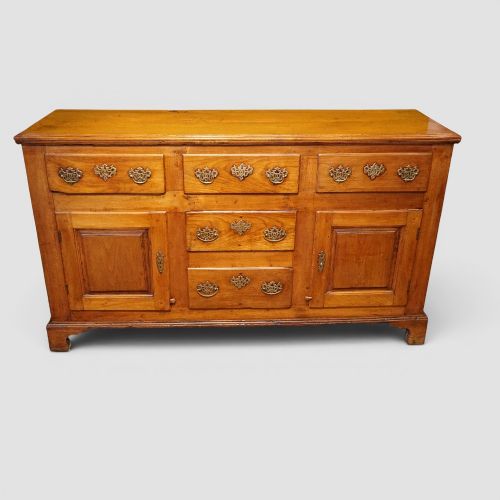
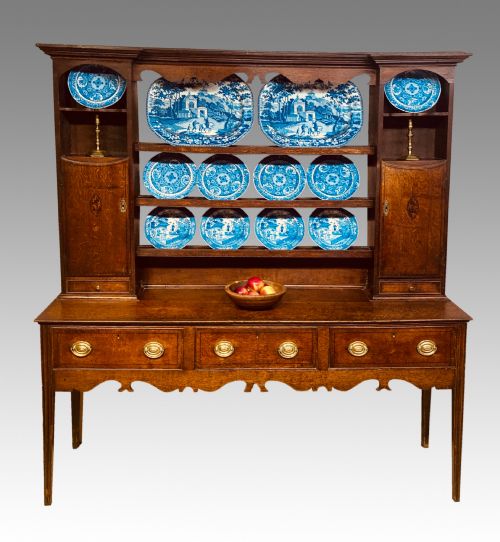
A country house oak dresser brings together utilitarian storage and display, appearing here as enclosed bases, open potboards, or towering multi-tier plate racks. These pieces emerge primarily from regional British traditions, including Welsh vernacular workshops and West Country kitchens, alongside French provincial cabinetmaking.
The buyer meets formats spanning the seventeenth, eighteenth, and nineteenth centuries, ranging from stark early base units to grand George III configurations complete with original upper shelves. Variations encompass breakfront drawer arrangements and companion housekeepers cupboards built for estate service.
Regional traits define the construction, from Shropshire proportions to Welsh potboards designed for drying earthenware. These domestic workhorses combine deep lower cupboards or banks of drawers with upper plate display tiers built to hold family pottery.
Materials and Technique
Cabinetmakers relied on sturdy native timber, framing carcasses in solid oak while incorporating secondary woods like elm, fruitwood, pine, and mahogany for drawer linings and panels. Carpenters shaped these dense materials using hand saws and adzes, joining panels with pegged mortise and tenon joints that allowed the timber to expand and contract through seasonal dampness.
Surfaces received various treatments according to regional custom and date, including liming, paint applications, bleaching, and simple wax polishing over centuries of domestic use. Iron hinges, brass handles, and wrought iron hardware secured the doors and drawers, forged by local blacksmiths to withstand heavy daily handling.
Country House Oak Dresser Retail Price Guide 2026
Typical asking prices for country house oak dresser among the pieces listed under this phrase on Sellingantiques today, from the lower quarter to the upper quarter. They describe what is for sale here now, not the wider market.
Listings feature oak alongside elm, fruitwood, pine, and mahogany, reflecting the mixed timber construction common in regional country furniture.
The Measure of Quality
Quality rests in the integrity of the timber and the retention of original structural components like potboards, feet, and plate racks. Pieces that retain their initial surface patination without aggressive modern stripping stand apart from heavily restored examples.
Proportion and regional character dictate desirability, where crisp moulding profiles, well-figured grain, and untouched hardware elevate an ordinary utility item into a masterwork of vernacular joinery.
The Country House Oak Dresser Glossary
- Potboard
- An open lower shelf beneath a dresser base traditionally used for storing pots and earthenware. It sits just above the floor on plain feet or stile extensions.
- Plate Rack
- The upper shelving unit attached to or hung above a dresser base, featuring grooves to hold plates upright. These often include small spice cupboards or side hooks.
- Dresser Base
- The lower sideboard portion of a dresser, featuring drawers and cupboards without the upper display shelves. Many survive independently after plate racks were separated.
- Enfilade
- A long sideboard or cabinet with a sequence of doors, more common in French provincial dining rooms. These pieces offer low, continuous storage surfaces.
- Vernacular
- Furniture made by local regional craftsmen following traditional domestic forms rather than academic architectural designs. These objects reflect local material availability and specific household needs.
Country House Oak Dresser: Frequently Asked Questions
How do I clean an oak dresser?
Dust the timber regularly with a dry lint-free cloth to prevent grit accumulation in the grain. Apply a traditional beeswax sparingly once or twice a year to nourish the dry wood.
Avoid modern silicone sprays or wet cloths, which damage old beeswax finishes and darken the historic patina. Maintain stable room humidity to prevent the oak panels from splitting.
Are plate racks original to the base?
Examine the timber species, wear patterns, and fixing methods where the rack meets the base. Original pairings share identical weathering, fixing indents, and matching oak or fruitwood tones accumulated over centuries.
Many upper racks were lost or separated during past centuries, leading to later marriages between unrelated bases and top shelves. Look for plugged screw holes or mismatched wood grain that indicate a replacement top.
Where should I place my dresser?
Position the piece against a stable interior wall away from direct sunlight, heating vents, and radiators. Oak responds poorly to extreme temperature fluctuations, which cause boards to warp and split.
Ensure adequate floor clearance and anchor tall upper racks securely to the wall studwork to prevent tipping. Kitchens, dining rooms, and generous hallways provide traditional contexts for daily use.
How do I date an antique dresser?
Inspect the drawer construction methods, tool marks on hidden panels, and hardware fixings. Hand-cut dovetails, pit-sawn board backs, and pegged joinery point toward eighteenth-century or earlier vernacular production.
Later Victorian and revival pieces show mechanical circular saw marks, standardised brassware screws, and machine-cut joints. Compare the overall proportions and moulding profiles against known regional styles.