

Warm Brown Oak Dresser
A warm brown oak dresser brings substantial utility and rich grain to a room, offering both surface display and deep storage.
Warm Brown Oak Dresser
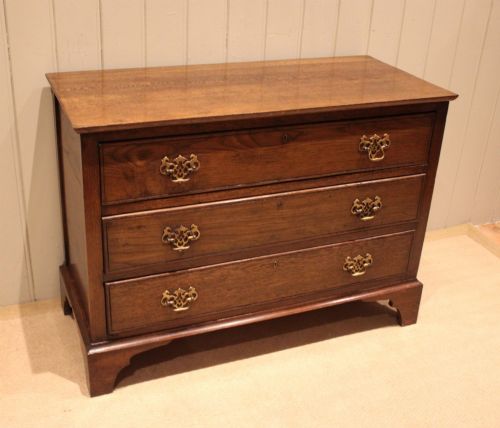
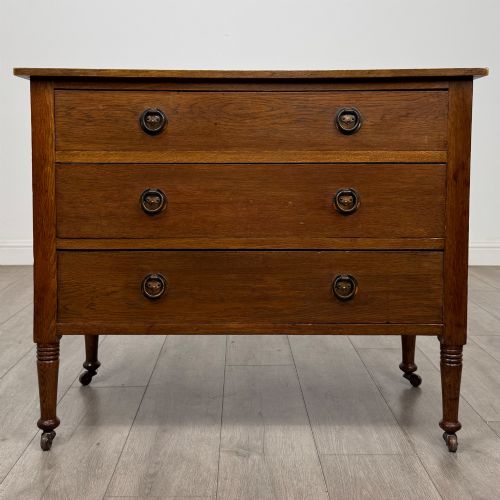
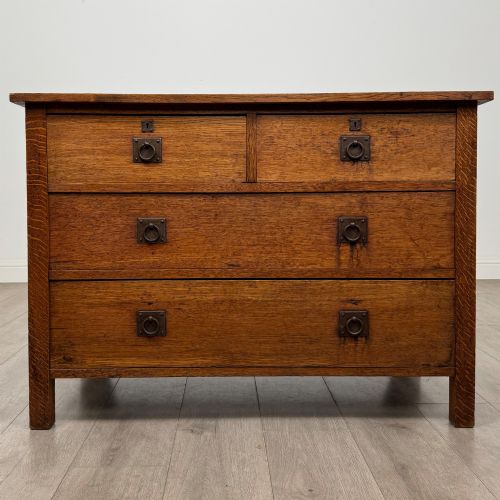
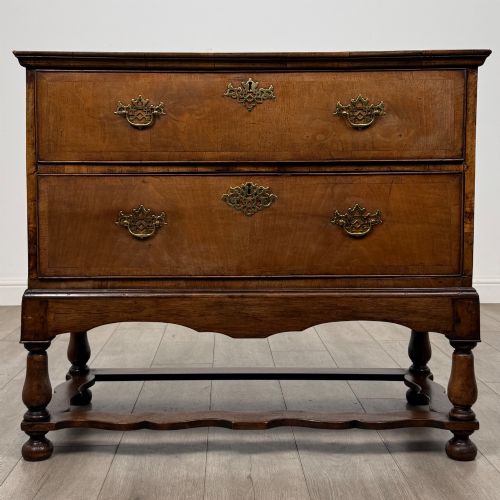
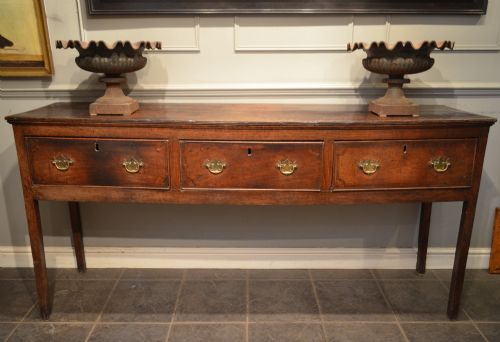
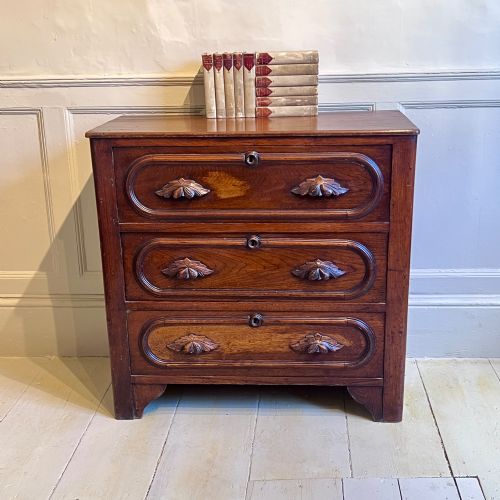
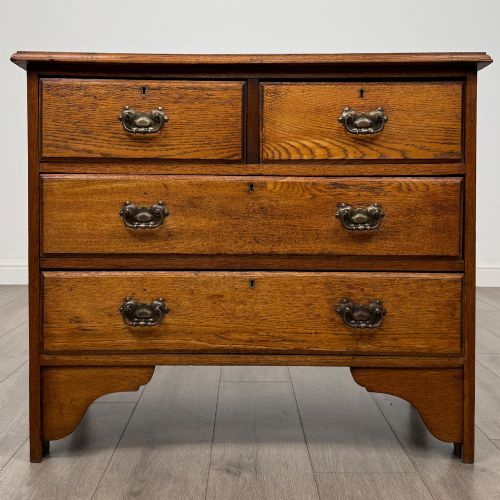
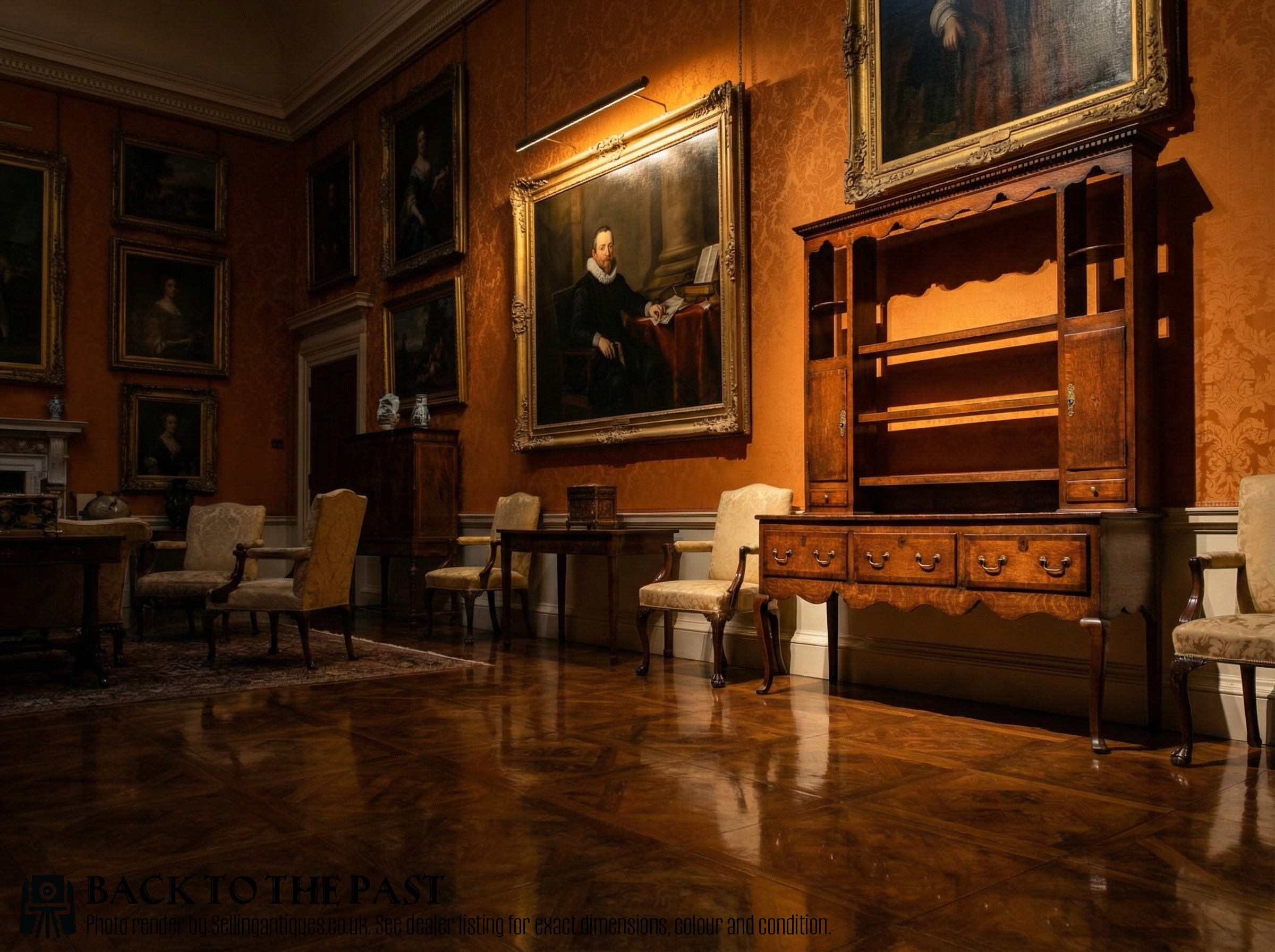
When you search for a warm brown oak dresser, you encounter heavy kitchen furniture, serving tables, and dresser bases designed for domestic storage and display. These pieces range from early provincial examples to later Edwardian interpretations, each carrying the marks of daily use.
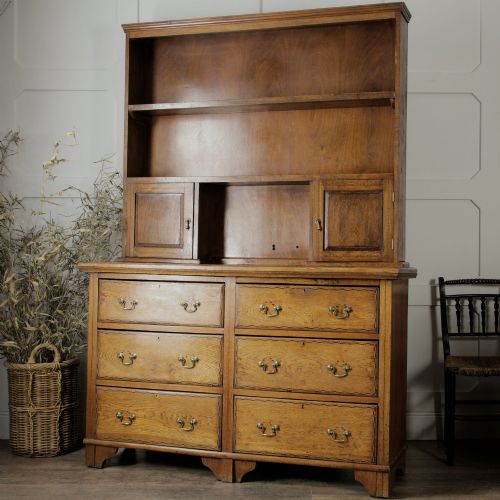
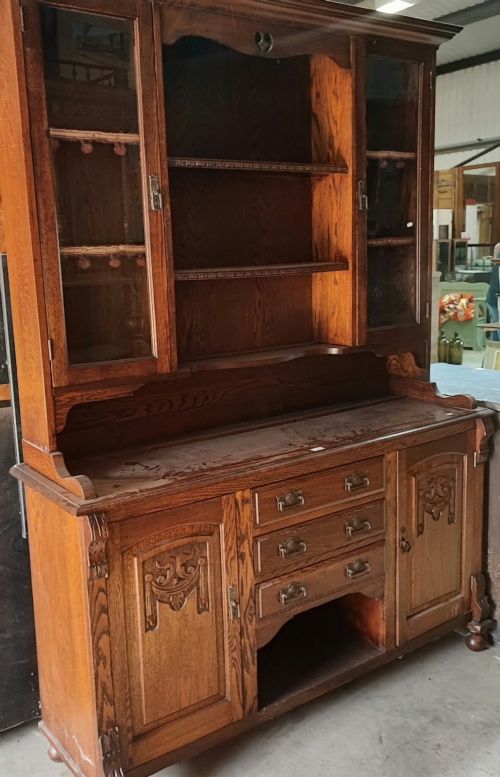
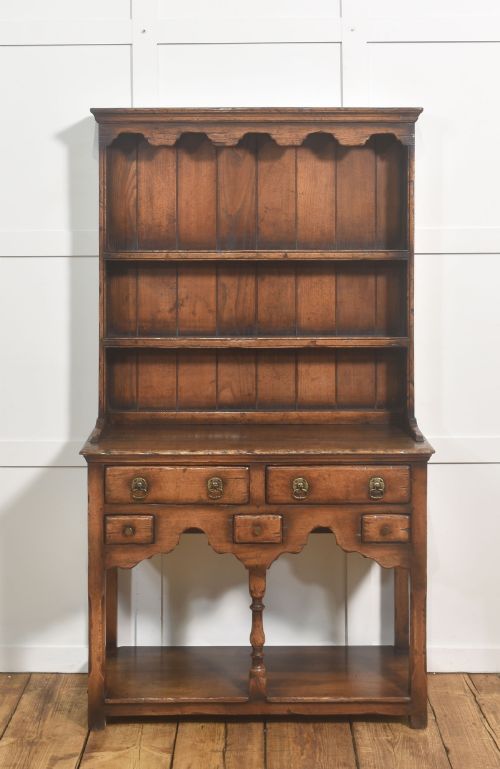
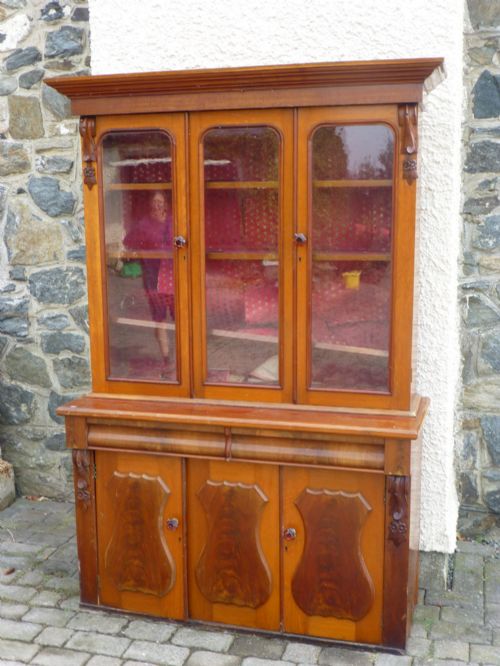
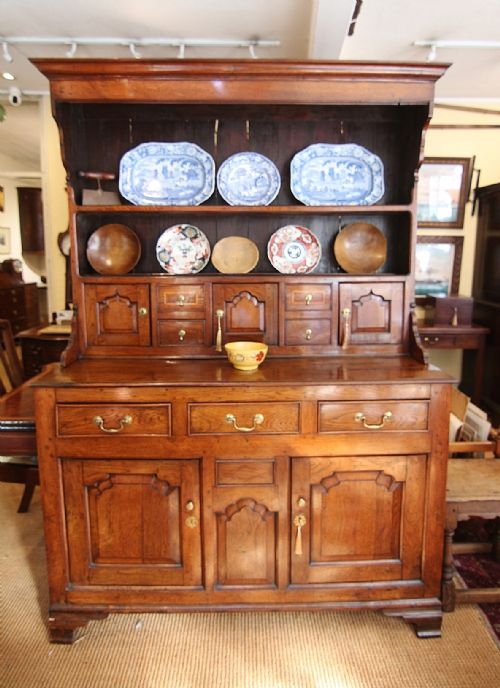
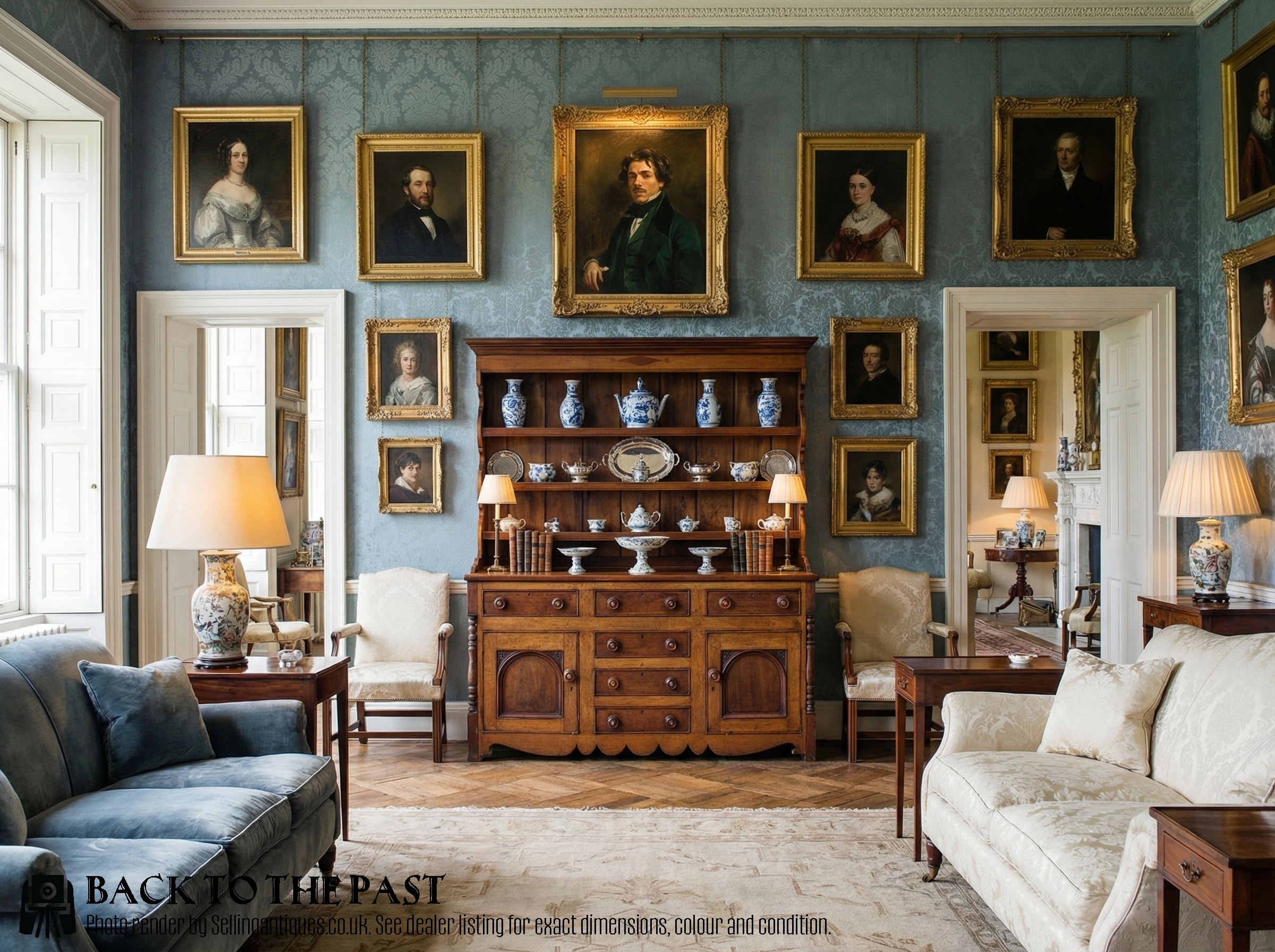
You are most likely to meet styles spanning the eighteenth and nineteenth centuries, including Georgian and Edwardian designs alongside Welsh formats fitted with plate racks. Many pieces incorporate upper shelving or glazed cupboards above lower drawer configurations.
The materials centre on solid timber, frequently displaying the dense figuring and warm tones characteristic of mature heartwood. Structural variations include open pot boards, enclosed cupboards, and three-drawer arrangements suited to traditional dining rooms.
How they were made
Joiners built these cupboards and bases using solid timber planks joined with traditional framing and panel techniques. Drawer construction relies on hand-cut joints that provide stability through centuries of daily opening and closing.
Secondary timbers such as fruitwood, mahogany, or elm occasionally appear alongside the primary oak, particularly in crossbanding or internal partitions. Iron and brass hardware secure the doors and provide handles for the drawers.
Warm Brown Oak Dresser Retail Price Guide 2026
Typical asking prices for warm brown oak dresser among the pieces listed under this phrase on Sellingantiques today, from the lower quarter to the upper quarter. They describe what is for sale here now, not the wider market.
Some nineteenth-century Welsh dressers carry local provenance straight from Snowdonia cafes, proving utility furniture absorbs a mountain of local history.
What varies in quality
The depth of colour and the prominence of the natural grain structure distinguish standard utility pieces from finer examples. Superior specimens display well-figured timber that has aged gracefully into deep honey and brown tones.
Proportion and the restraint of decorative detail dictate visual success in country furniture. Pieces featuring balanced drawer arrangements and clean geometric lines command greater appreciation than heavier, unrefined constructions.
The Warm Brown Oak Dresser Glossary
- Pot board
- An open lower shelf built into a dresser base, historically used for storing heavy pots and earthenware. This lower tier provides structural rigidity to the legs.
- Plate rack
- The upper wooden framework featuring shelves and vertical grooves, designed to display ceramic plates upright against the wall. It mounts directly onto the dresser base or stands independently.
- Crossbanding
- A decorative border technique where thin strips of veneer are laid across the grain of the primary wood. This surrounds drawer fronts or table edges with a contrasting stripe of timber such as mahogany.
- Enfilade
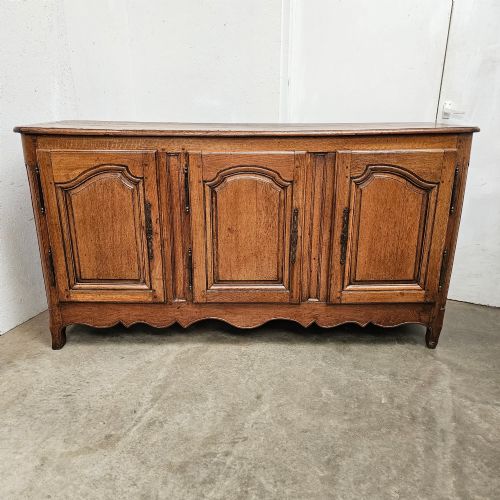
- A long sideboard or low cabinet featuring a sequence of doors, typically three, used for serving and storage. The format originates in French domestic architecture and furniture.
- Dresser base
- The lower section of a kitchen dresser, functioning as a sideboard or serving table with drawers and cupboards beneath a flat top. Many survive without their original upper plate racks.
Warm Brown Oak Dresser: Frequently Asked Questions
What is the difference between a dresser and a chest of drawers?
A dresser typically combines surface workspace, lower drawers, and often an upper plate rack for display. They originate primarily from kitchen and dining environments where tableware required organised storage.
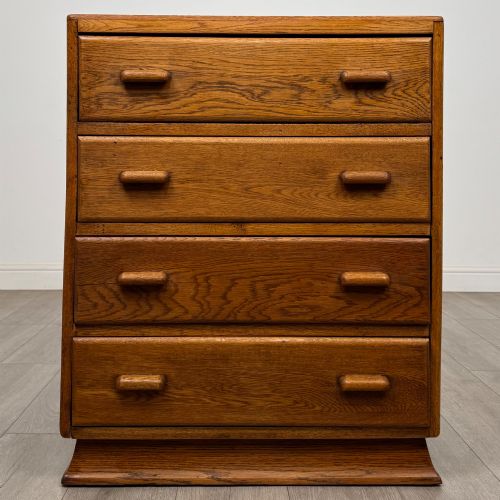
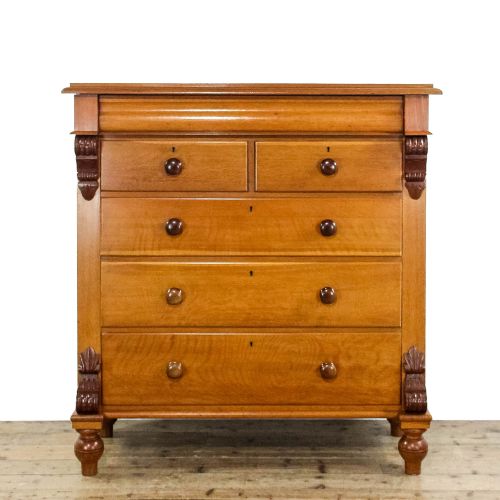
In contrast, a chest of drawers focuses entirely on stacked storage compartments enclosed within a vertical frame. These pieces find their traditional place in bedrooms rather than dining rooms.
How do I date an antique oak dresser?
Dating relies upon construction methods, hardware types, and stylistic shifts visible in the timber framing. Eighteenth-century pieces often display pegged joints and hand-planed surfaces that reveal early hand tool work.
Later Victorian and Edwardian examples incorporate machine-sawn elements and standardised fixings while retaining traditional forms. The evolution of the handles and the integration of secondary woods also provide chronological markers.
How do I care for antique oak furniture?
Maintain the timber by keeping it away from direct heat sources and rapid temperature fluctuations. This prevents the solid oak from drying out and splitting along the grain.
Apply natural beeswax periodically to nourish the surface and preserve the warm brown tone. Avoid synthetic silicones or heavy polishes that build up sticky residues over time.
Where were Welsh dressers traditionally used?
Welsh dressers served as the central storage and display units in rural farmhouse kitchens. Families used the upper racks to display everyday pewter and ceramic plates within easy reach.
Lower cupboards and drawers held dry goods, linens, and cooking utensils. The open pot boards accommodated heavy pots and pans at floor level.