




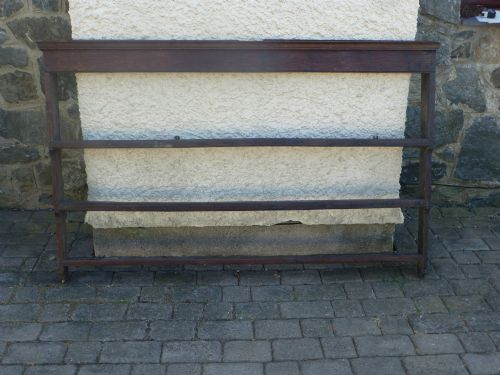
Georgian Oak Plate Rack
A georgian oak plate rack brings practical domestic history to a kitchen wall, offering sturdy open shelving designed for displaying earthenware and platters.

Georgian Oak Plate Rack
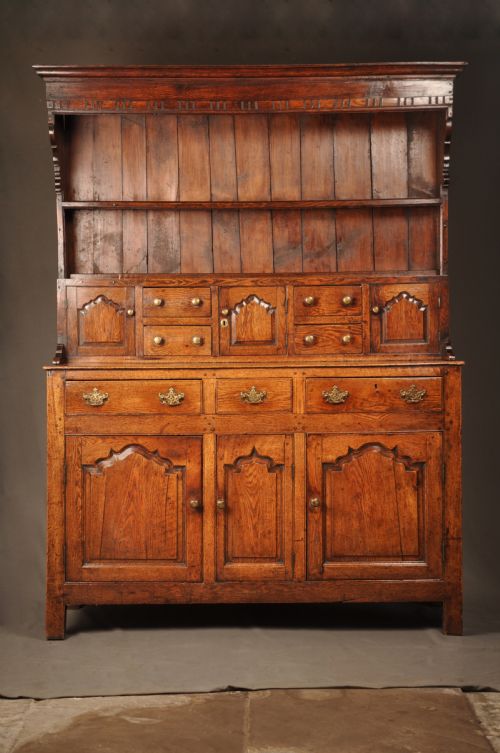
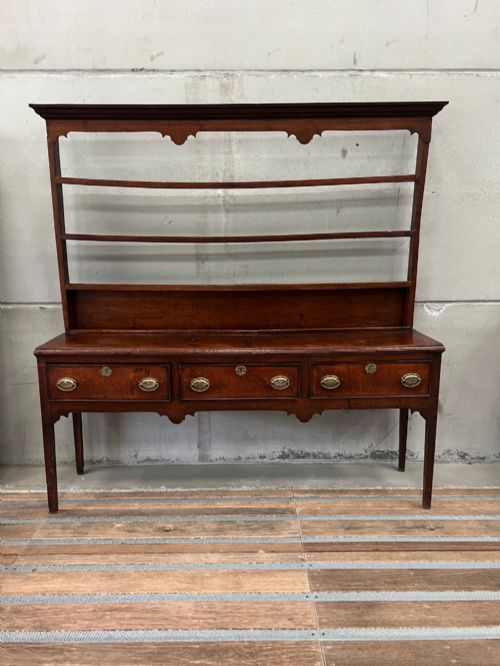
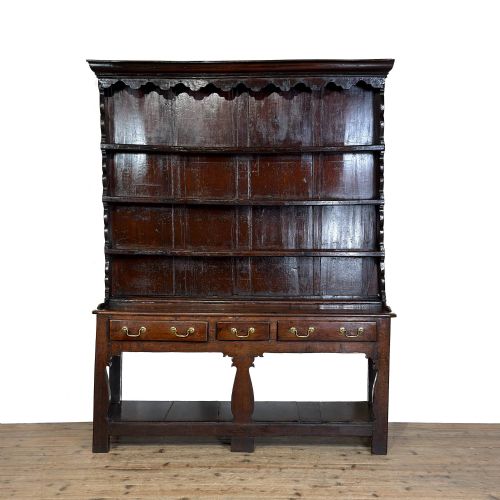
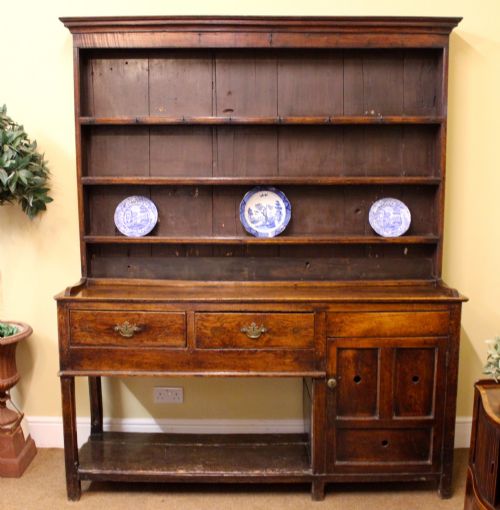
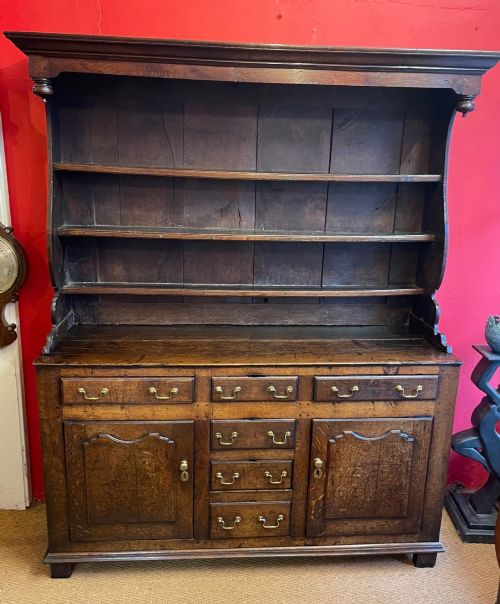
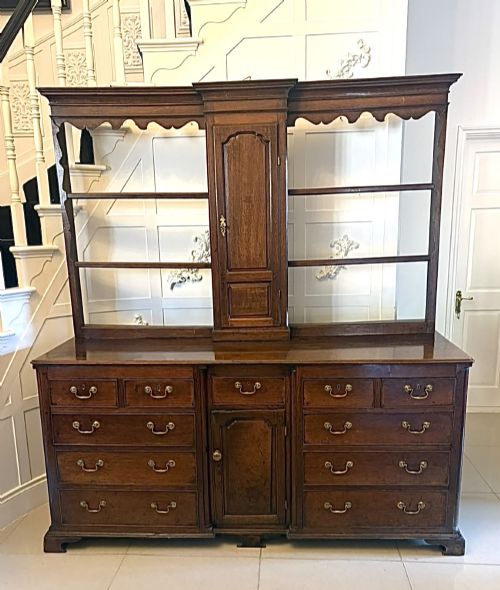
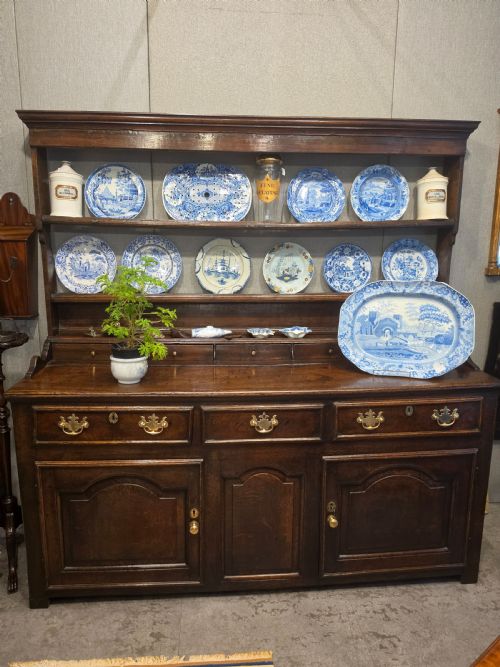
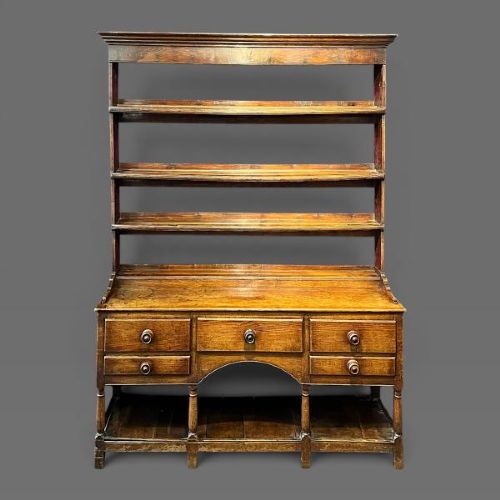
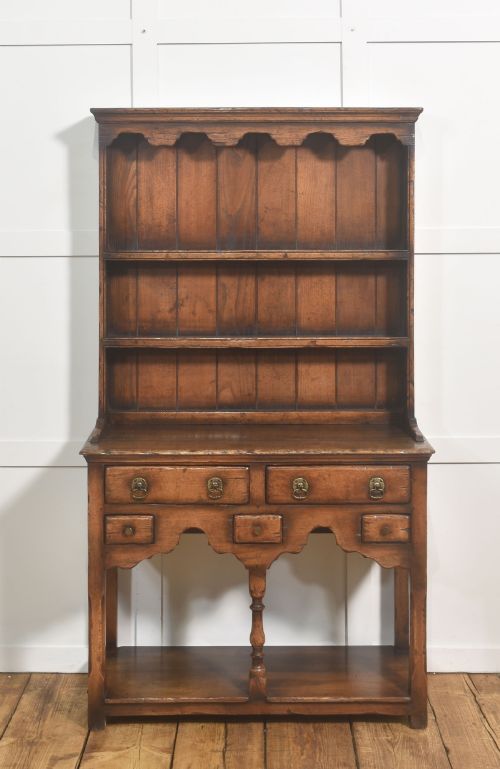
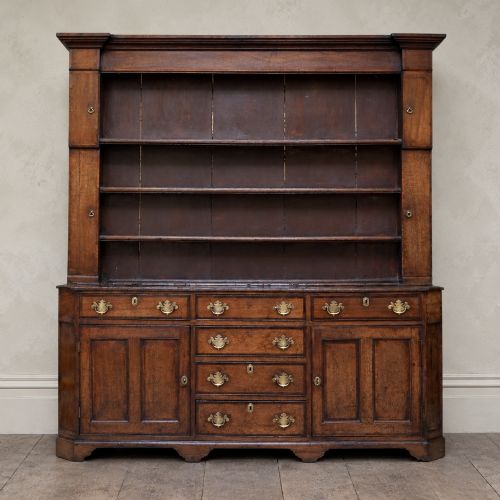
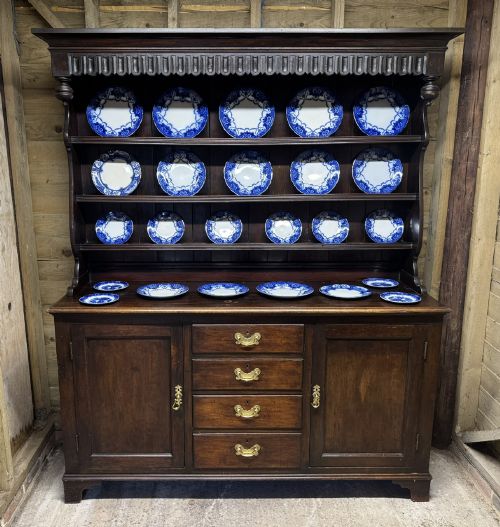
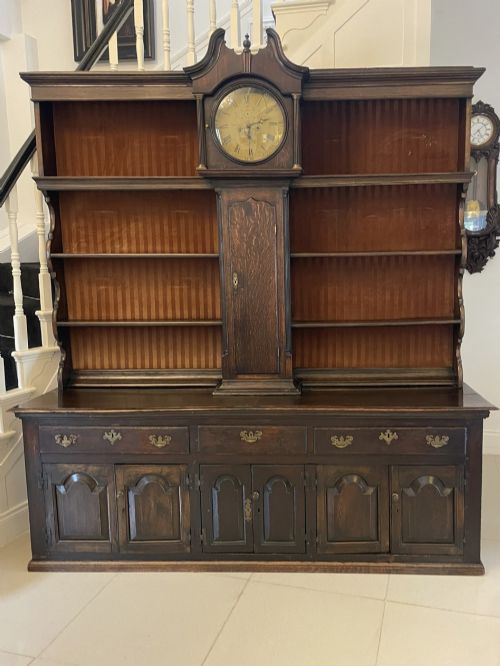
A georgian oak plate rack appears either as a standalone wall-mounted display or as the upper tier attached to a large country dresser. These items emerge primarily from eighteenth-century and nineteenth-century domestic workshops, reflecting regional vernacular traditions across Wales, Shropshire, and the West Country.
Most examples found in daily trade combine open shelving with narrow plate grooves and sometimes small spice cupboards or hooks. Buyers frequently encounter these racks paired with potboard dresser bases or as isolated hanging units intended for kitchen display.
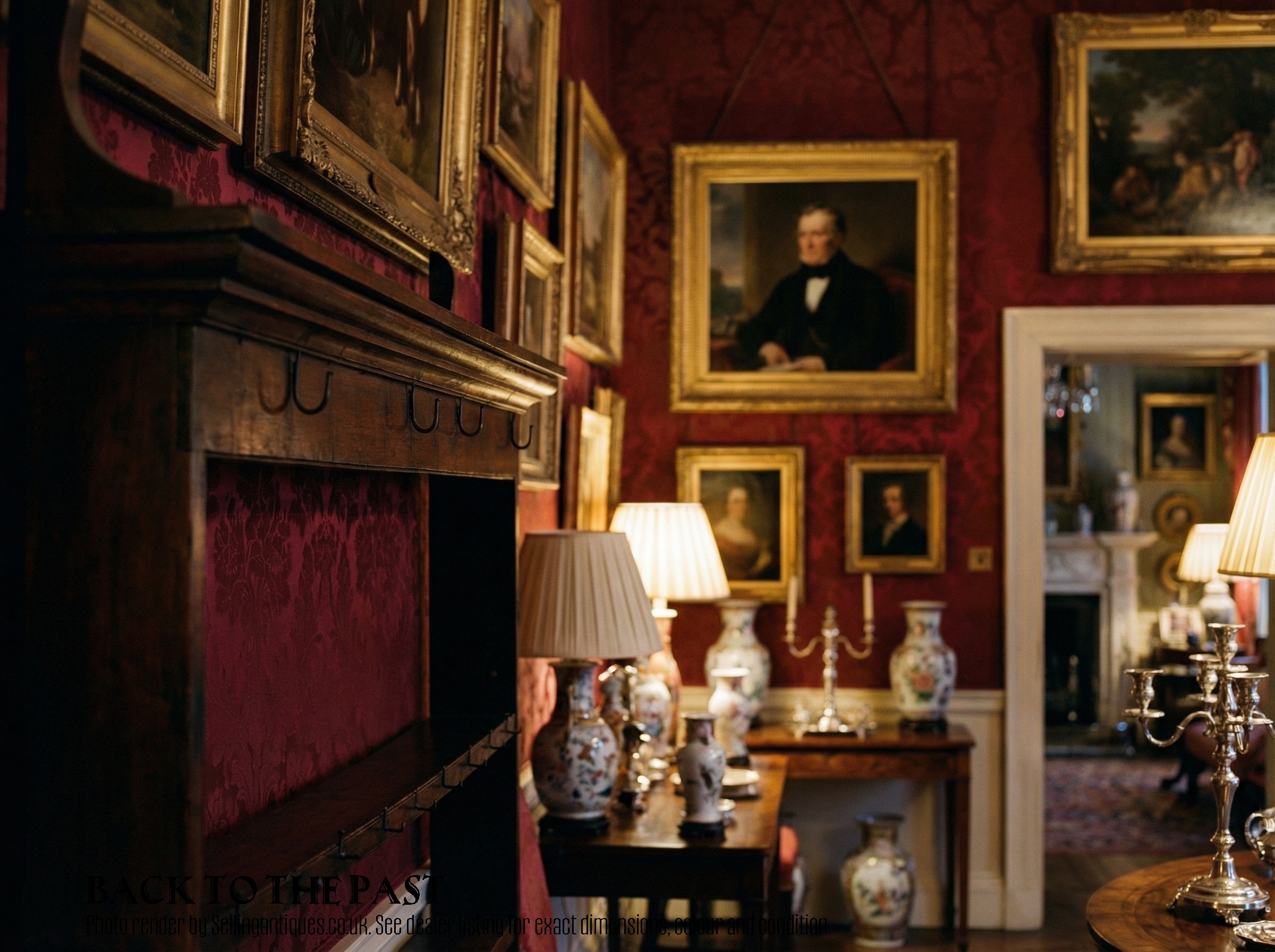
Materials and Construction
Makers built these racks predominantly from solid local oak, occasionally incorporating secondary timbers like pine and mahogany for internal partitions or backing boards. Hardware fittings typically relied on hand-forged iron hinges and brass hooks.
Carpenters utilised pegged mortise and tenon joints to secure the uprights and shelves, ensuring the framework could support the substantial weight of heavy ceramic plates and delftware.
Georgian Oak Plate Rack Retail Price Guide 2026
Typical asking prices for georgian oak plate rack among the pieces listed under this phrase on Sellingantiques today, from the lower quarter to the upper quarter. They describe what is for sale here now, not the wider market.
Several racks include tiny spice drawers hidden beneath the lower shelf, perfect for tucking away secret stubs of chalk or stray buttons.
Assessing Quality
The distinction between ordinary utility pieces and finer examples rests on proportion, regional decorative flourishes, and the survival of original surfaces. Better workshops integrated carved friezes, fielded panelling, or subtle inlay work into the crest rails.
Structural integrity and surface patination dictate overall desirability. Pieces retaining rich, unbleached oak colour alongside undisturbed pegging outlast those altered by modern restorations or aggressive stripping.
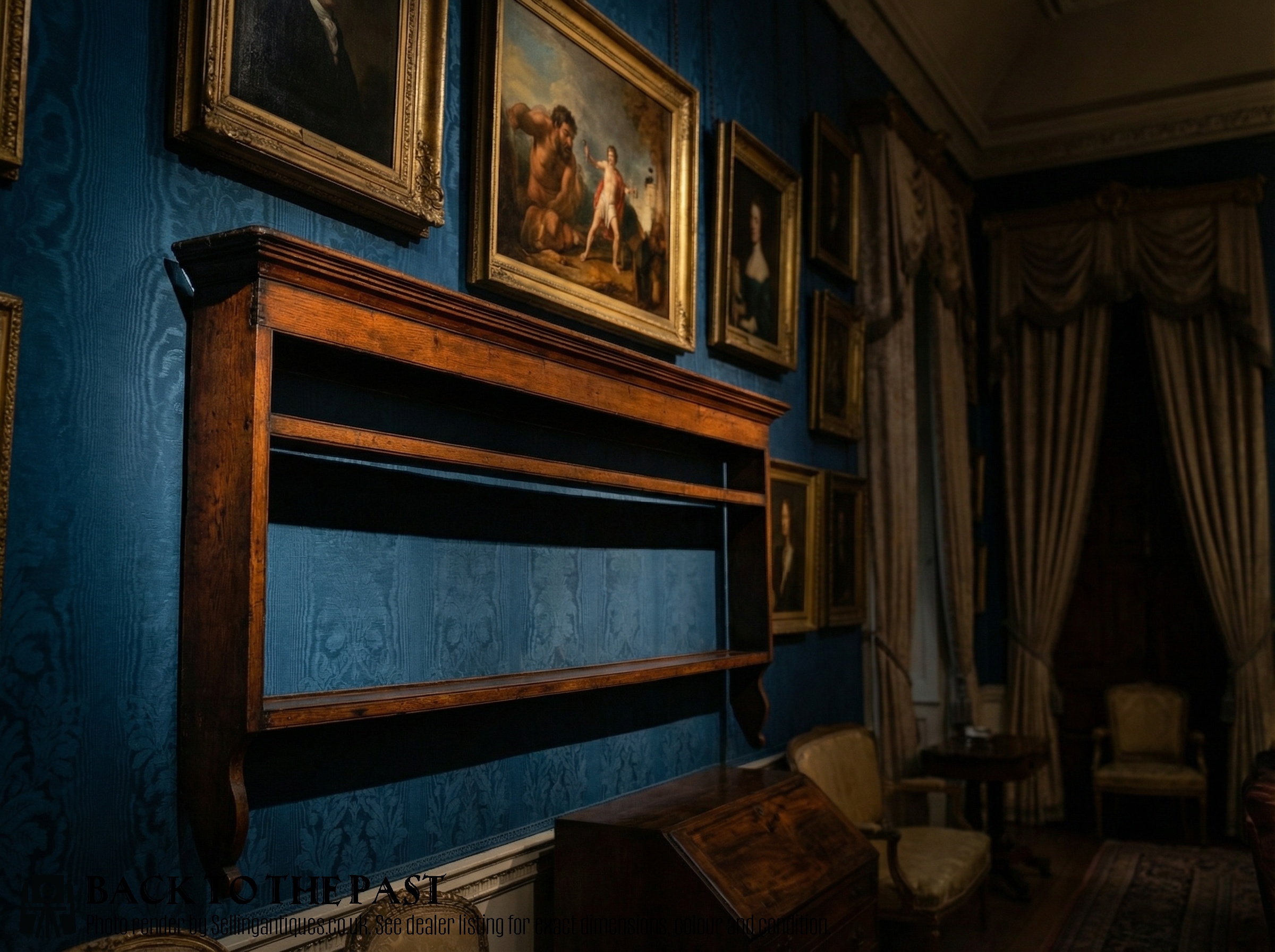
The Georgian Oak Plate Rack Glossary
- Delft rack
- An open wooden shelving unit designed specifically to display tin-glazed earthenware plates and bowls upright against a wall. These shelves incorporate a narrow groove at the base to prevent plates from slipping forward.
- Potboard dresser
- A traditional vernacular dresser featuring a lower open shelf or board positioned near the floor for storing heavy pots and pans. The plate rack mounts directly to the top of this substantial base.
- George III
- A design period spanning the mid-to-late eighteenth century characterised by sturdy proportions and provincial interpretations of classical furniture styles. Provincial cabinetmakers adapted these metropolitan trends for rural homes.
- Vernacular furniture
- Domestic pieces made by local regional craftsmen using readily available native timbers rather than following strict London guild fashions. These items prioritise utilitarian function and local construction habits.
Georgian Oak Plate Rack: Frequently Asked Questions
How are these plate racks mounted?
Most hanging racks feature integrated suspension points or sturdy internal battens screwed directly into the timber frame. Installers must anchor these units securely into solid masonry or wall studs to support the considerable weight of heavy ceramic collections.
Because the timber responds to modern central heating, positioning them away from direct heat sources prevents the dry oak from warping or splitting over time.
Can these racks hang without a dresser base?
Many surviving examples were constructed specifically as wall-hanging units rather than permanent attachments to a dresser base. These standalone racks function effectively in contemporary kitchens for displaying everyday crockery.
Examining the underside of the bottom rail reveals whether the piece originally sat upon a dresser top or hung independently from wall brackets.
What is a potboard base?
A potboard base is the heavy lower section of a country dresser featuring a flat shelf positioned just above the floor. This sturdy lower stage provided practical storage for large kitchen utensils and heavy metal cookware.
While some racks remain attached to these bases, many survive independently because houses changed over centuries of domestic use.
How do you clean antique oak?
Maintenance requires only a soft cloth and occasional applications of traditional beeswax to nourish the dry timber. Avoid modern liquid polishes containing silicones, which build up on the surface and dull the historic finish.
Keeping the oak away from excessive moisture preserves the natural patination built up through generations of domestic service.