
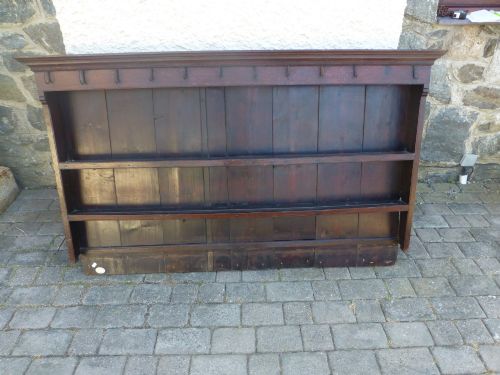
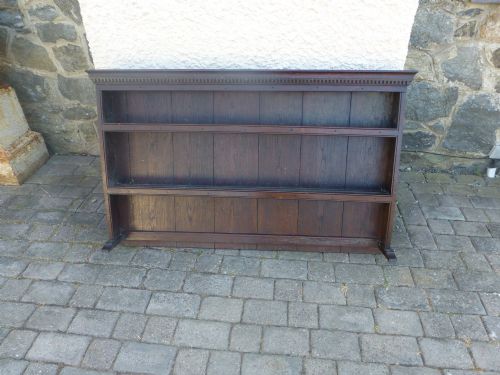
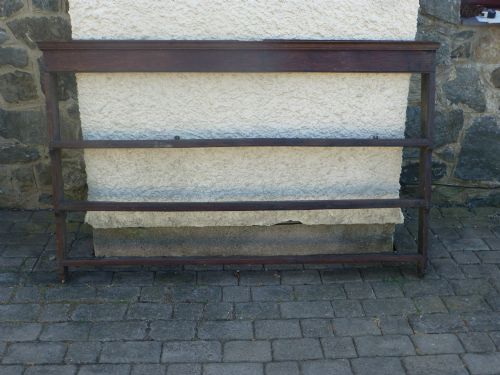
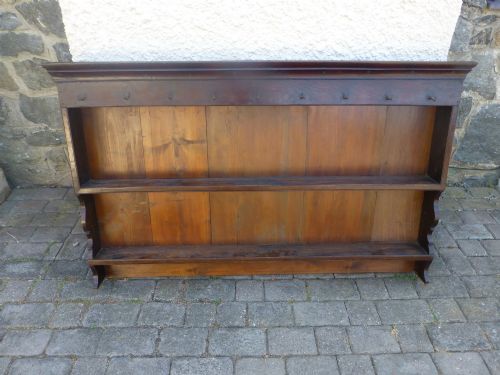
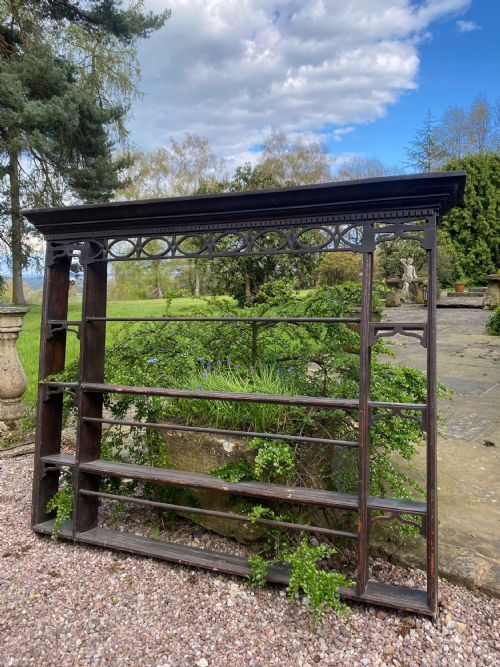
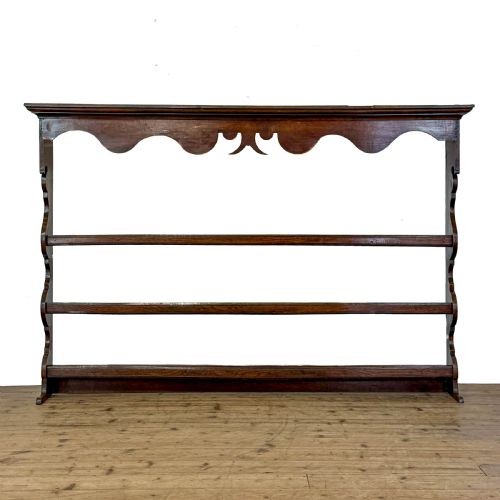


Dark Oak Delft Rack
A dark oak delft rack brings practical English country storage and warm timber grain to any kitchen wall.
Dark Oak Delft Rack
A dark oak delft rack provides open shelving designed to display plates and ceramic wares upright against a wall. When you search for a dark oak delft rack, you encounter wall-mounted plate racks, dresser racks, and complete wall shelves intended for functional daily use.
The examples seen here date predominantly from the eighteenth century and the Georgian period, alongside English country and provincial interpretations. Pieces range from simple boarded constructions to items incorporating architectural columns.
Makers utilised sturdy timbers such as oak, often supplemented by pine for internal or backing boards, creating a robust structure built to hold heavy earthenware dishes.
Materials and construction
Carpenters built these racks using solid oak boards for the main frame and shelving, frequently integrating iron or brass hanging brackets and fixings. Secondary woods like pine appear in backing boards and less visible structural areas.
Joinery methods relied on traditional pegging and housing joints to support the weight of stacked ceramics without sagging over decades of use.
Several racks survived centuries of kitchen steam by absorbing layers of historic grease that now contribute to a rich, dark shine.
Assessing quality and character
Quality rests in the depth of patina accumulated on the timber and the crispness of any carved enrichment, such as Corinthian columns or moulded cornices. Superior examples retain their original backboards and timber thickness rather than suffering from later alterations or heavy surface stripping.
Proportion and timber selection dictate the visual strength of a piece, with straight-grained oak and balanced shelf heights distinguishing finer Georgian work from simpler vernacular items.
The Dark Oak Delft Rack Glossary
- Delft rack
- An open wooden shelving unit made specifically to display plates and shallow dishes upright. These racks hang on walls or sit atop base dressers.
- George III
- The period spanning from 1760 to 1820, characterised by refined proportions and classical architectural details in English furniture. Pieces from this era often feature neat mouldings and balanced arrangements.
- Provincial oak
- Furniture made outside major urban centres using local timber and traditional regional designs. This style prioritises sturdy utility over high-fashion ornamentation.
- Corinthian column
- A classical architectural column type featuring ornate capitals decorated with acanthus leaves. Some eighteenth-century racks incorporate these elements for decorative presence.
Dark Oak Delft Rack: Frequently Asked Questions
What is the difference between an 18th century and a Georgian rack?
The terms often overlap because the Georgian era encompasses much of the eighteenth century. Eighteenth-century pieces can range from vernacular country styles to more formal urban designs.
Georgian items specifically align with the stylistic reigns of the Hanoverian kings, sometimes showing refined classical details.
Can these racks support modern heavy dinner plates?
Most antique racks were built to hold earthenware and delftware, which can be surprisingly heavy. The structural depth of the shelf grooves determines plate stability.
Check the depth of the retaining ledge before placing thick stoneware or large modern plates on display.
How do I clean dark oak wood?
Dust the timber gently with a dry, soft cloth to remove everyday particles without disturbing the aged surface finish. Avoid modern silicone polishes that can build up and attract grime over time.
Apply a traditional beeswax sparingly if the wood appears dry, buffing it gently to maintain the natural sheen.