
Antique Oak Display Shelves
These antique oak display shelves span centuries of vernacular joinery, offering sturdy timber frameworks designed to showcase treasured ceramics and volumes.
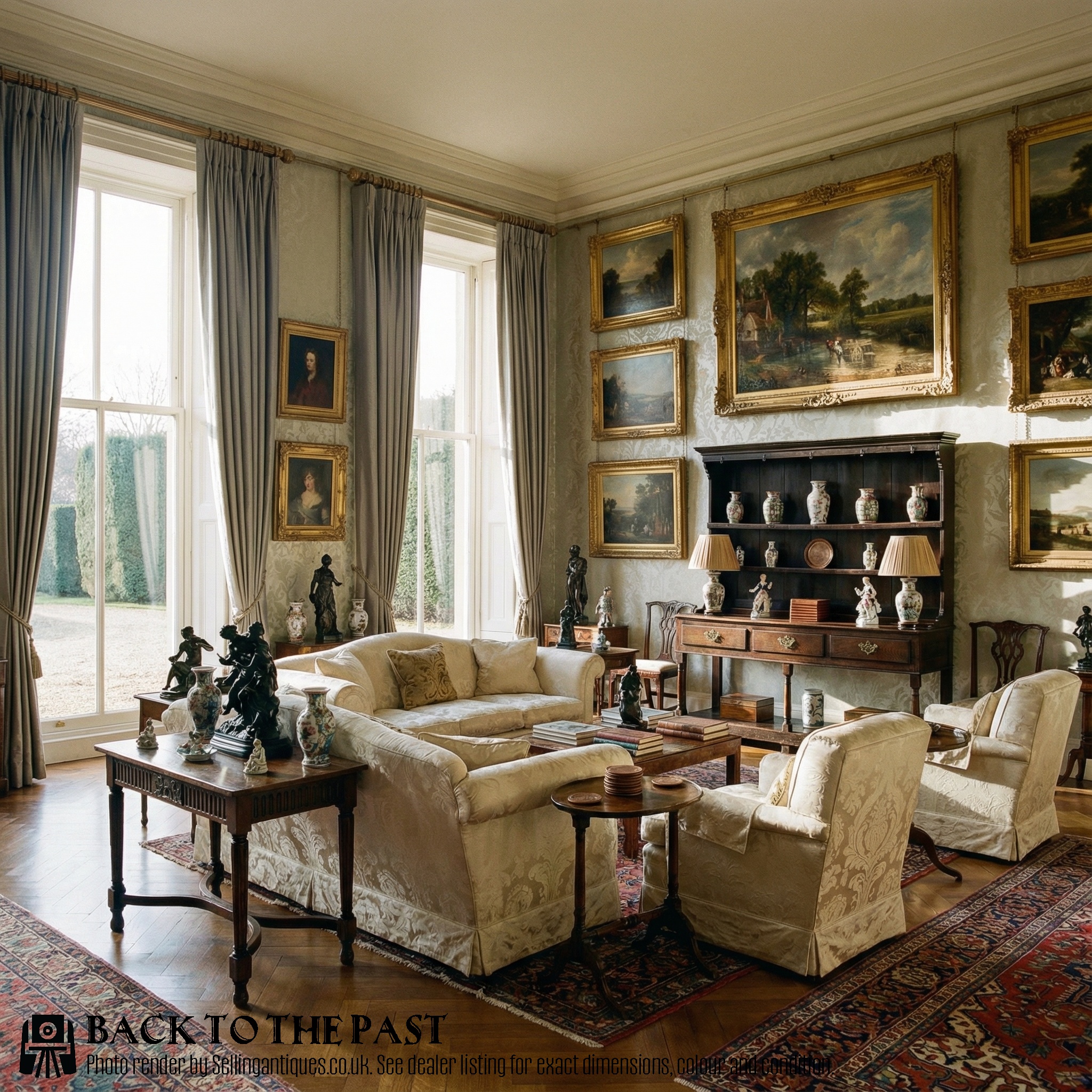
Defining the Category
When searching for antique oak display shelves, buyers encounter a robust category encompassing open bookcases, wall-mounted plate racks, and towering Welsh dressers. These pieces originate across the eighteenth, nineteenth, and early twentieth centuries, reflecting the domestic storage needs of those eras.
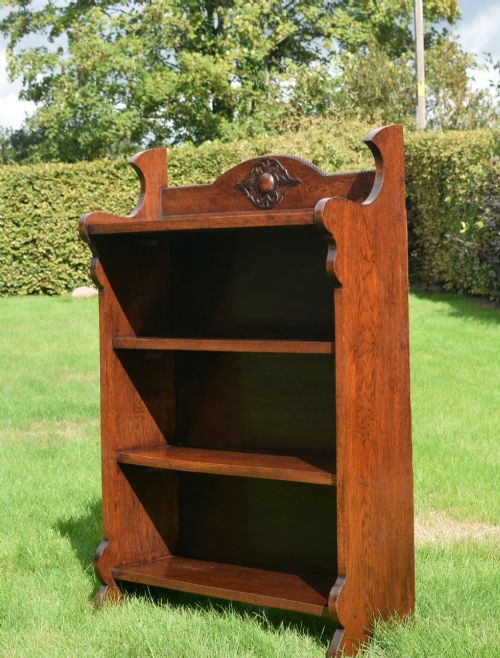
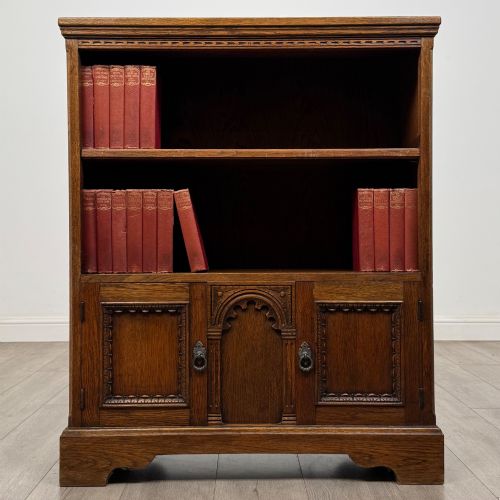
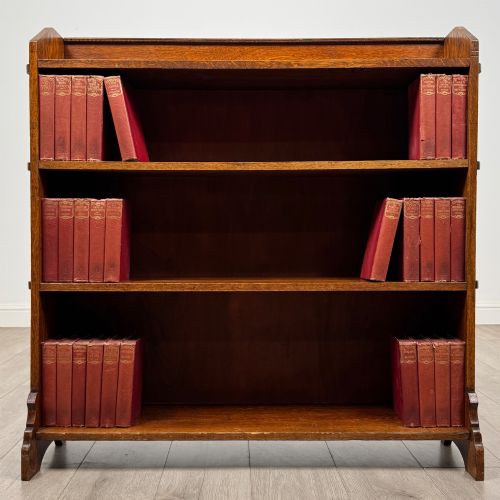
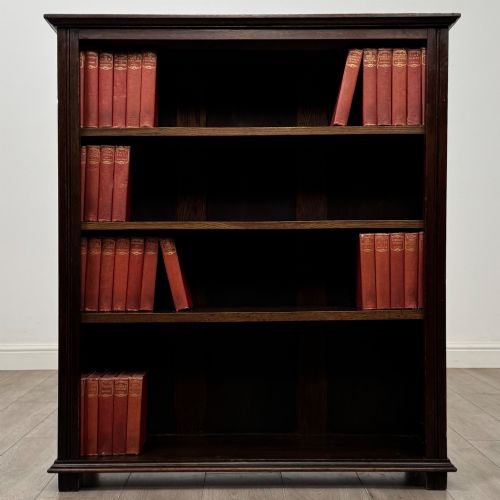
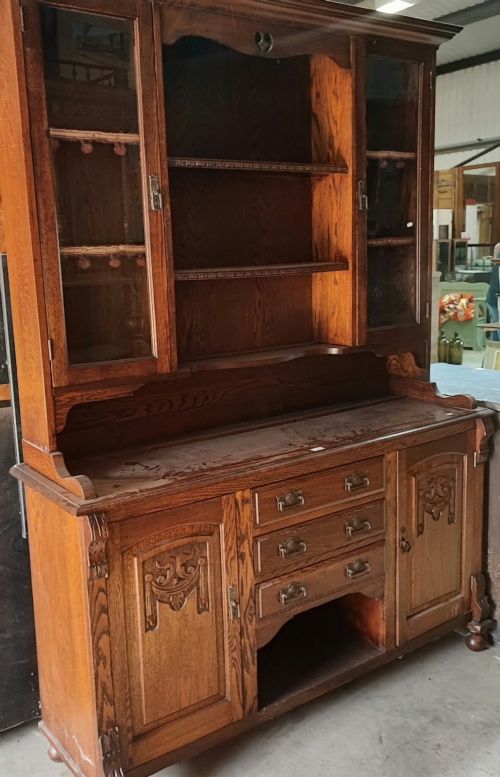
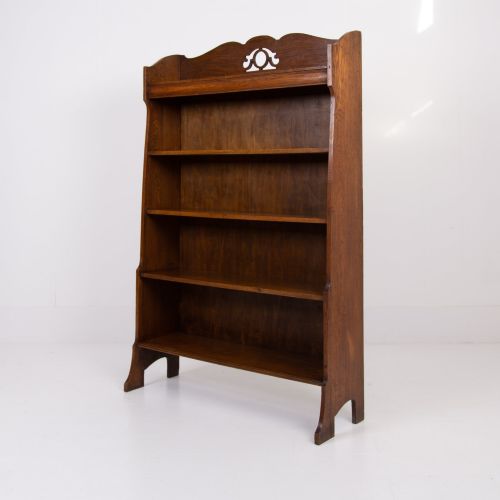
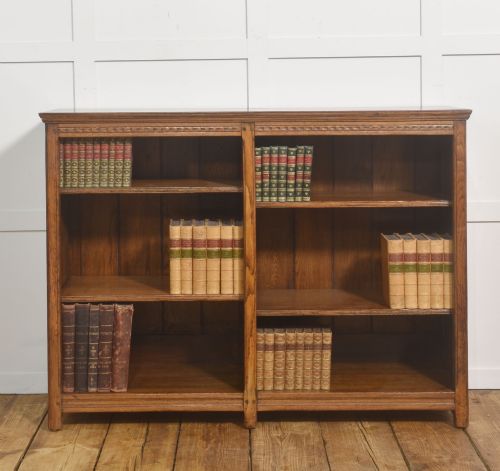
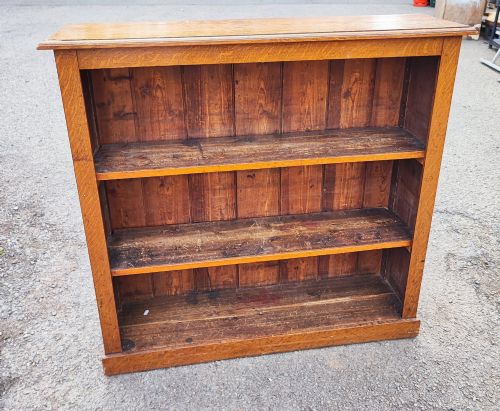
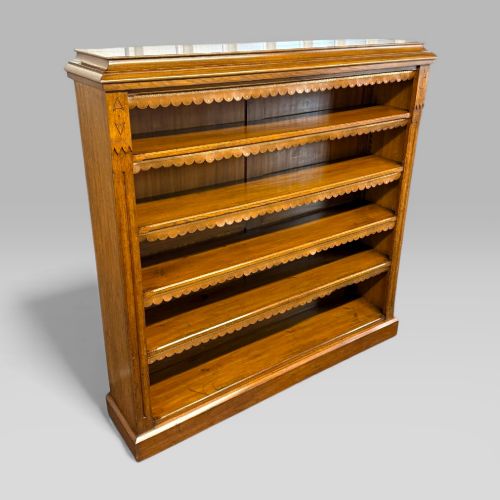
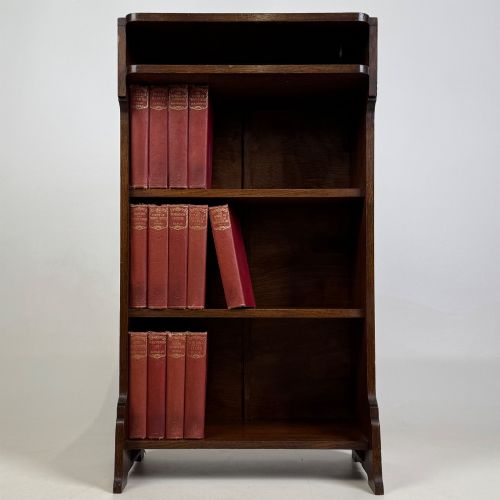
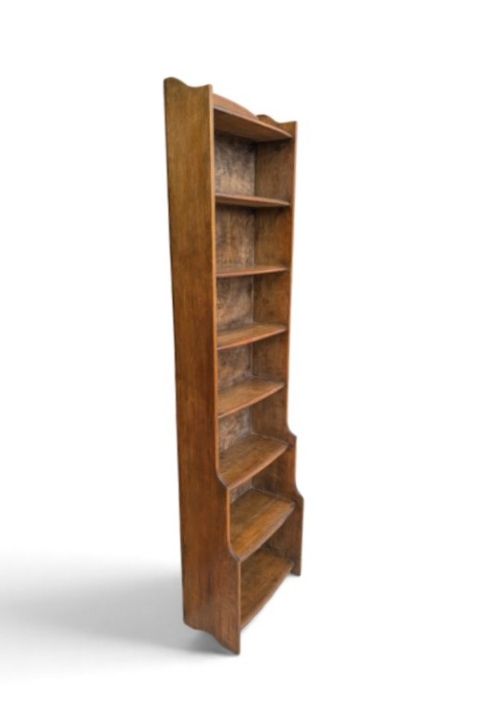
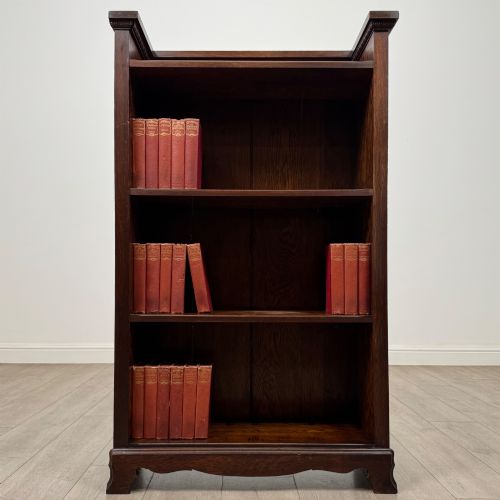
The most frequent examples met on this page include open oak bookcases from the Victorian and Edwardian periods alongside traditional Welsh dressers featuring integrated display racks. Such forms combine lower storage cabinetry or drawer space with upper stepped tiers intended for visual presentation.
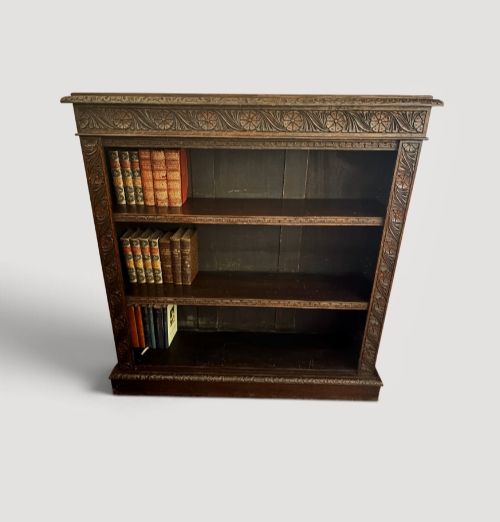
Regional variations span Georgian country aesthetics to Jacobean Revival detailing, demonstrating how local cabinetmakers adapted the native hardwood to prevailing domestic fashions. Solid oak remains the constant structural medium across these diverse formats.
Materials and Construction
Construction relies upon solid oak timbers, chosen for durability and grain character, often complemented by secondary fixtures of brass and iron. Joinery methods observed in the inventory include traditional pegged joints, dovetail drawer construction, and structural iron brackets.
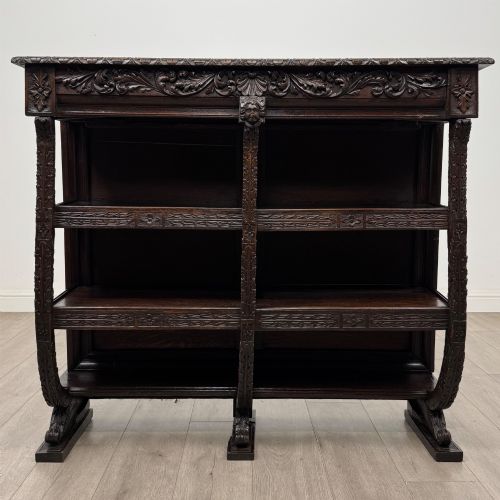
Surface finishing ranges from the simple waxed patination of eighteenth-century country pieces to the carved decorations seen on Victorian and Jacobean Revival examples. Regional workshops utilised hand-planed boards and exposed tenons, prioritising structural integrity alongside decorative presence.
Retail Price Guide 2026
Typical UK retail prices for oak display shelves, calculated from the Sellingantiques database of over a million retail prices indexed since 2003. This retail price guide relies exclusively on Sellingantiques data; no external sources or auction records are used, so the figures do not describe the wider market.
Listings feature items from the 18th, 19th, and 20th centuries, constructed predominantly in solid oak with brass and iron hardware.
Judging Quality
The distinction between standard vernacular items and finer examples rests upon the harmony of proportions, the selection of figured oak timber, and the restraint of decorative carving. Superior pieces exhibit balanced shelving heights and clean architectural lines that respect the natural grain of the wood.
Integrity of construction defines the upper tier of the range, where original backboards, unaltered tier heights, and authentic brass or iron hardware remain intact. Lesser examples often show intrusive alterations or replacement elements that disrupt the historical cohesion of the piece.
The Antique Oak Display Shelves Glossary
- Welsh Dresser
- A traditional kitchen or dining furniture form combining a lower base of drawers and cupboards with an upper plate rack for display. These pieces were central to rural domestic interiors.
- Delft Rack
- An open wall-mounted shelving unit designed specifically to display ceramic plates and platters upright. The shelves typically feature a narrow groove to prevent crockery from slipping.
- Open Bookcase
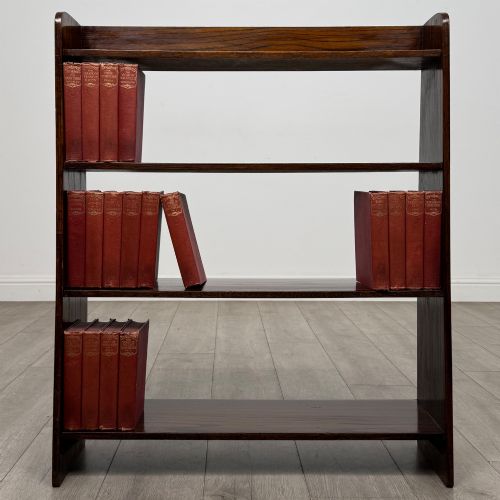
- A freestanding storage unit featuring horizontal shelves without glass or wooden doors. These variants allow immediate access to books and decorative objects.
- Whatnot
- A multi-tiered piece of freestanding or wall-mounted furniture used for displaying small ornaments and curiosities. They became particularly popular during the Victorian and Edwardian eras.
- Jacobean Revival
- A nineteenth-century stylistic movement that imitated seventeenth-century English design. Pieces in this style frequently feature heavy geometric mouldings and deep carved panels.
Frequently Asked Questions
What is a Welsh dresser?
A Welsh dresser is a traditional utility item featuring a base of cupboards or drawers surmounted by open plate racks. It served as both working storage and a showcase for domestic ceramics.
These combination pieces originate primarily from regional British workshops, utilising native oak timbers to build robust furniture intended for daily family life.
How do I care for oak shelves?
Oak furniture requires stable indoor humidity levels and regular application of traditional beeswax to nourish the timber. Avoid placing pieces near direct heat sources to prevent timber splitting.
Gentle dusting with a soft, dry cloth preserves the historic patination accumulated across centuries of domestic use.
Where were these pieces made?
The inventory originates largely from British domestic workshops, encompassing regional country practices in Wales and England. Cabinetmakers utilised locally sourced hardwood for daily use.
Urban workshops in the Victorian and Edwardian periods also produced these items, adapting traditional forms for contemporary urban homes.
How do I date an oak bookcase?
Dating relies on examining construction techniques such as hand-cut dovetails, saw marks, and the type of fixings employed. Georgian and 18th-century pieces often show irregular hand-planed surfaces.
Later Victorian and Edwardian examples incorporate machine-sawn timber and different fastening methods while continuing the use of solid oak.