


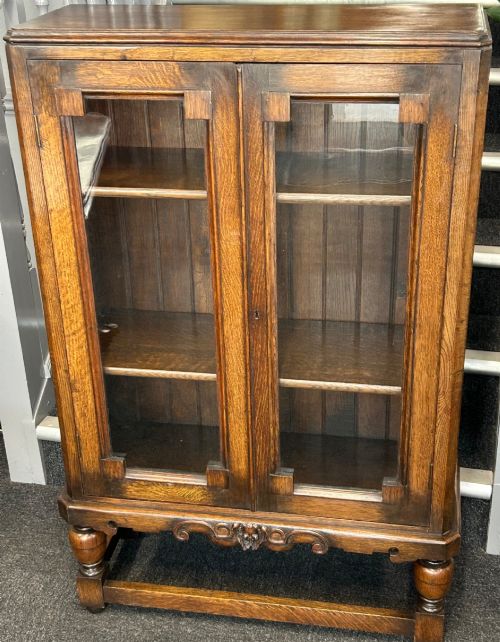


Jacobean Revival Bookcase
A jacobean revival bookcase brings sturdy oak and historic character into a room, offering practical shelving with carved architectural details.
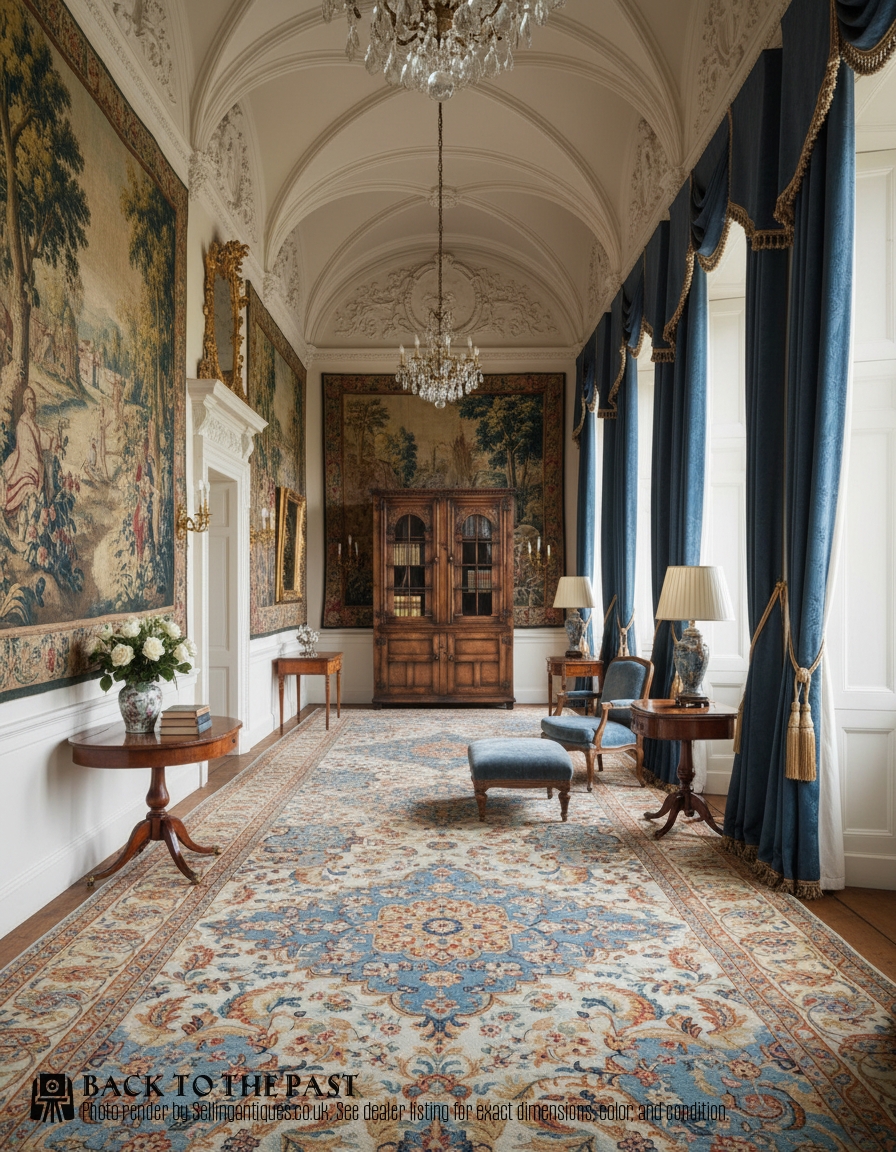
Jacobean Revival Bookcase
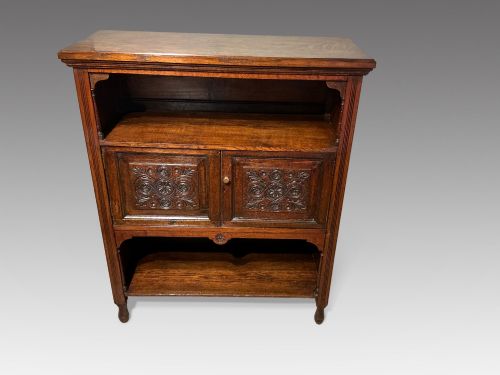
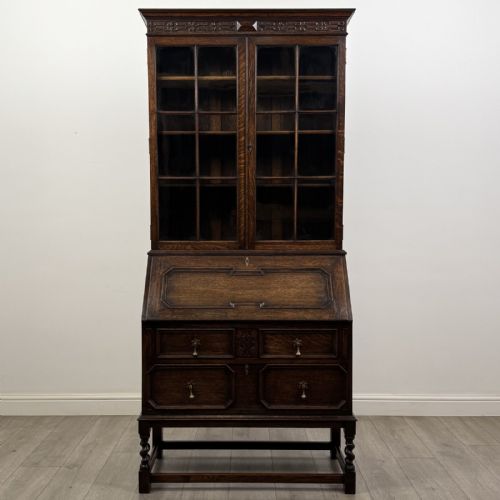
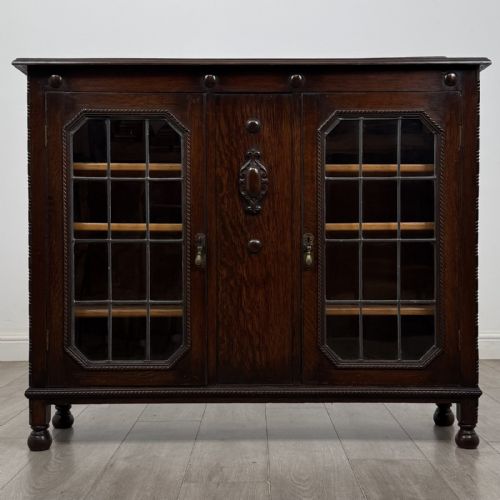
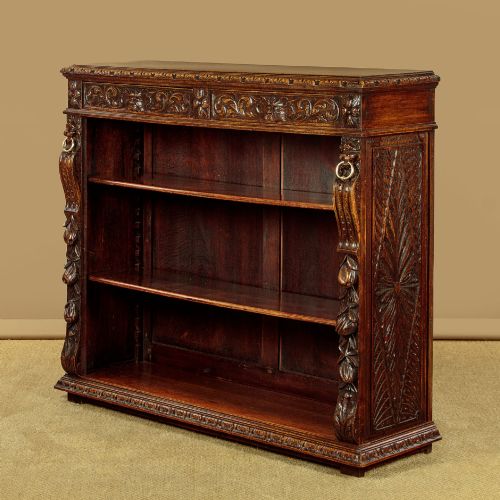
When you search for a jacobean revival bookcase, you encounter solid oak furniture drawing on seventeenth-century motifs, mostly originating from the Victorian era, the Edwardian period, and the nineteen-twenties. These pieces take various forms, including open library shelves, glazed two-door display cabinets, and fitted bureau bookcases with drop fronts.
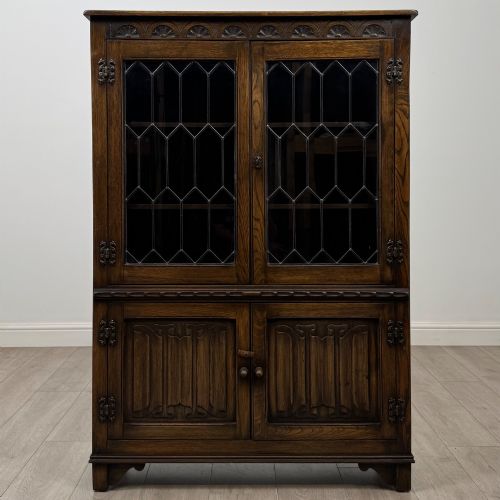
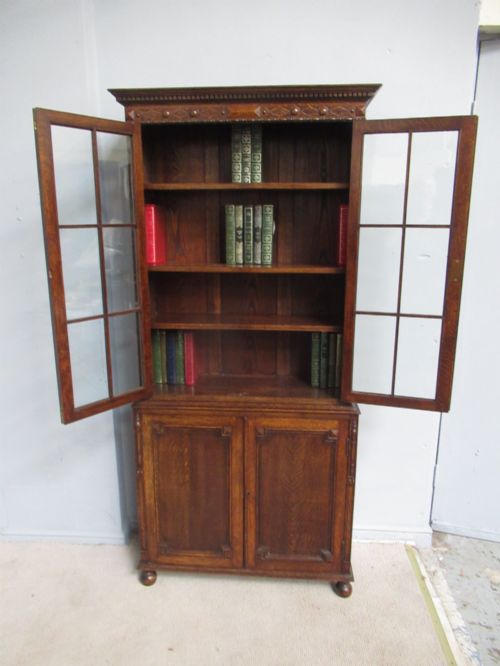
The version you are most likely to meet on this page is an upright cabinet or open shelf unit in dark or light oak, often dated around nineteen-twenty or the Edwardian years. Many examples combine display space with enclosed storage, resting a glazed cabinet or shelving section atop a carved cupboard base.
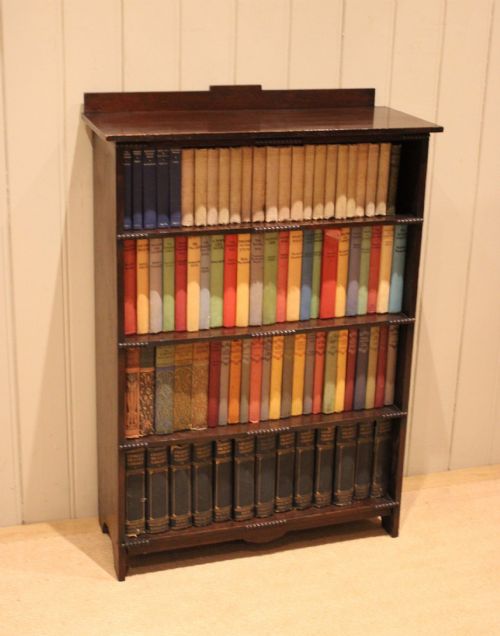
Makers and cabinetmakers of the nineteenth and twentieth centuries adopted these revival styles to satisfy a demand for substantial, traditional furniture. The selection ranges from straightforward open bookcases with beaded edges to elaborate bureau bookcases complete with sloping writing surfaces and carved friezes.
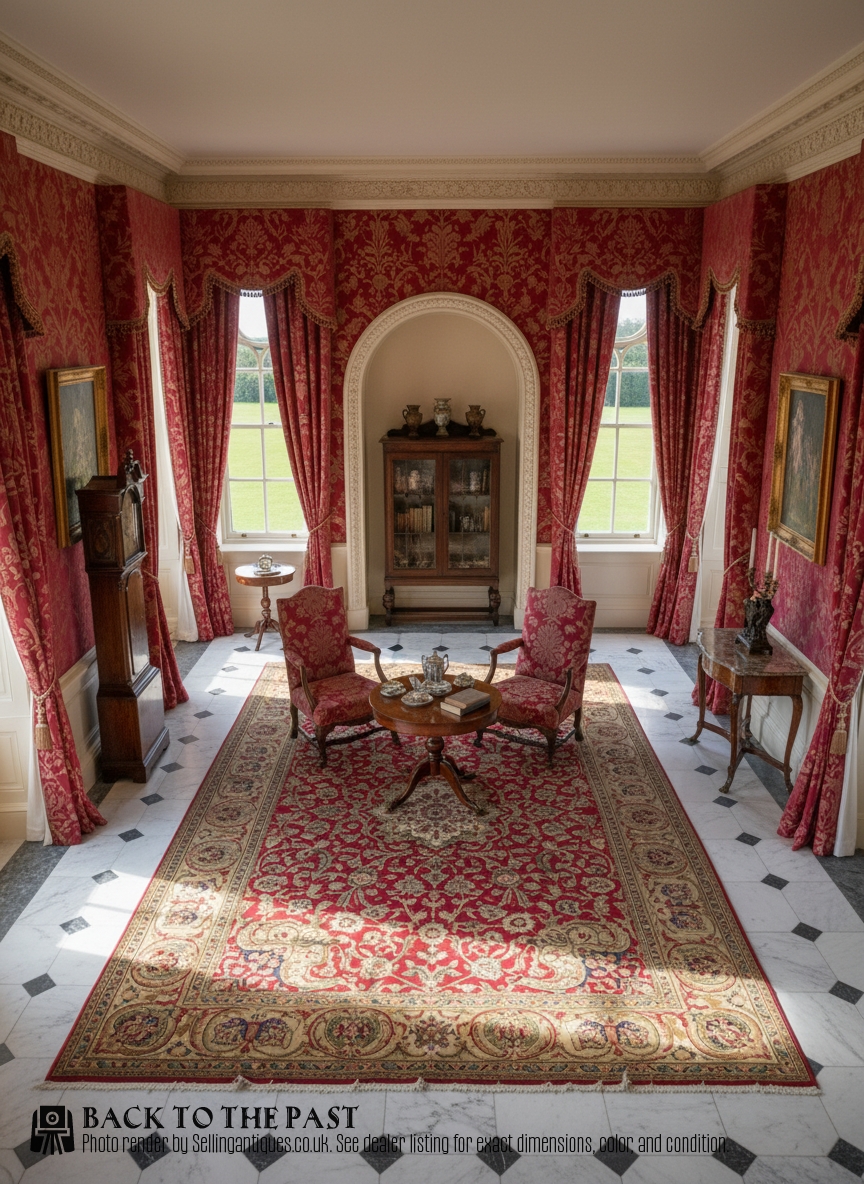
Materials and Construction
The primary material across these pieces is solid oak, supplemented occasionally by walnut, with glass fitted into door panels for display variants. Cabinetmakers utilised brass and iron for hinges, handles, and locks, while lead sometimes secures glass panes in distinct stylistic windows.
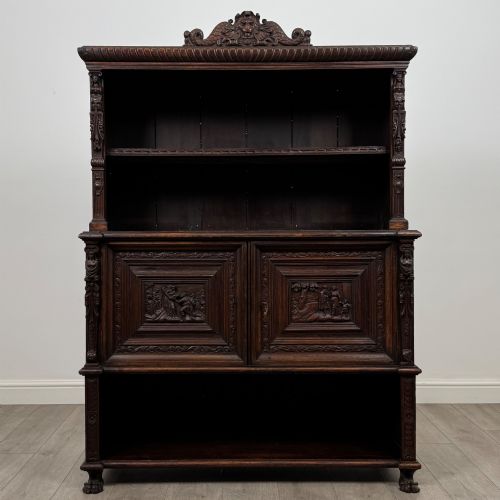
Construction relies heavily on traditional woodworking techniques suited to heavy hardwoods, evident in the sturdy frames of bureau bookcases and large cupboards. Surfaces frequently display carved ornamentation, linenfold panels, and applied mouldings rather than simple flat planes.
Jacobean Revival Bookcase Retail Price Guide 2026
Typical asking prices for jacobean revival bookcase among the pieces listed under this phrase on Sellingantiques today, from the lower quarter to the upper quarter. They describe what is for sale here now, not the wider market.
Some bureau bookcases hide tiny pigeonholes behind their drop fronts, perfect for losing fountain pens.
Standards of Execution
The distinction between standard examples and superior pieces rests on the depth and crispness of the carving, the selection of the oak timber, and the architectural proportion of the overall form. Bureau bookcases with well-executed fitted interiors and balanced lower cupboard bases represent a higher tier of production.
Subtleties in finish and hardware also separate the output of different workshops, where heavier mouldings, selected dark oak tones, and integrated details like barley twist columns elevate a piece beyond basic utility.
The Jacobean Revival Bookcase Glossary
- Jacobean Revival
- A nineteenth and twentieth century style that imitates the heavy, dark furniture and architectural carving of the early seventeenth century. It frequently employs oak and deep relief ornament.
- Bureau Bookcase
- A dual-purpose piece of furniture combining a desk with a sloping writing flap and a bookcase upper section with shelves or glass doors.
- Linenfold
- A style of wood carving that mimics folded linen cloth, commonly seen on panelled cabinet doors from revival periods.
- Barley Twist
- A turned column or spindle resembling a twisted rope, often found supporting shelves or framing cabinet doors in Victorian and later revival pieces.
Jacobean Revival Bookcase: Frequently Asked Questions
How do I date a jacobean revival bookcase?
Dating relies on timber characteristics, construction methods, and stylistic markers recorded across Victorian, Edwardian, and nineteen-twenties pieces. Deeper patination and hand-finished joints often indicate nineteenth-century origins.
Later interwar pieces frequently show standardised internal fittings and machine-cut elements while retaining the characteristic dark oak finish and carved motifs of the revival style.
What is the difference between an open bookcase and a bureau bookcase?
An open bookcase provides accessible shelving for daily book storage without doors. These range from simple beaded edge designs to larger library units.
A bureau bookcase incorporates a fold-down writing desk section combined with enclosed shelving above, offering both a compact workspace and concealed storage.
Are these bookcases made of solid oak?
The majority of pieces recorded in this category utilise solid oak as the principal structural and visible timber. Certain variations introduce dark oak treatments and occasional walnut elements in decorative mouldings.
Glass, brass, and iron appear as secondary materials for glazing and hardware, supporting the functional requirements of display cabinets and cupboards.
How do I care for a dark oak bookcase?
Maintaining solid oak furniture involves avoiding direct sunlight and excessive temperature fluctuations that can dry out the timber. Regular dusting with a dry cloth keeps the surface clean without moisture damage.
Occasional application of appropriate wax feeds the wood and preserves the characteristic sheen of antique and vintage dark oak finishes.