


Tall Glazed Bookcase
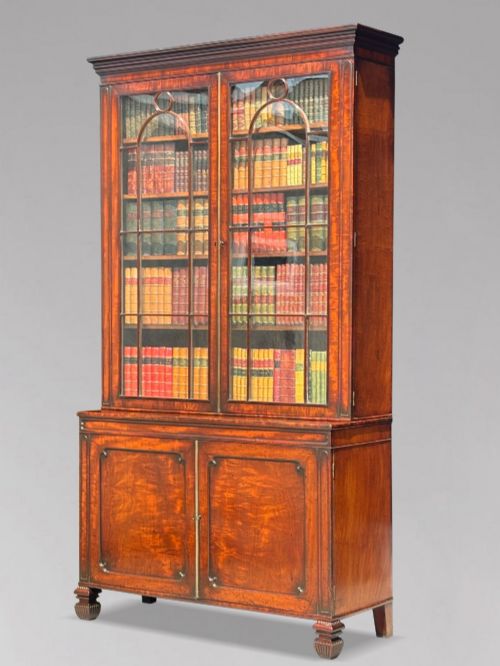
A tall glazed bookcase organises heavy volumes behind glass doors while adding architectural presence to a room.
Forms and periods
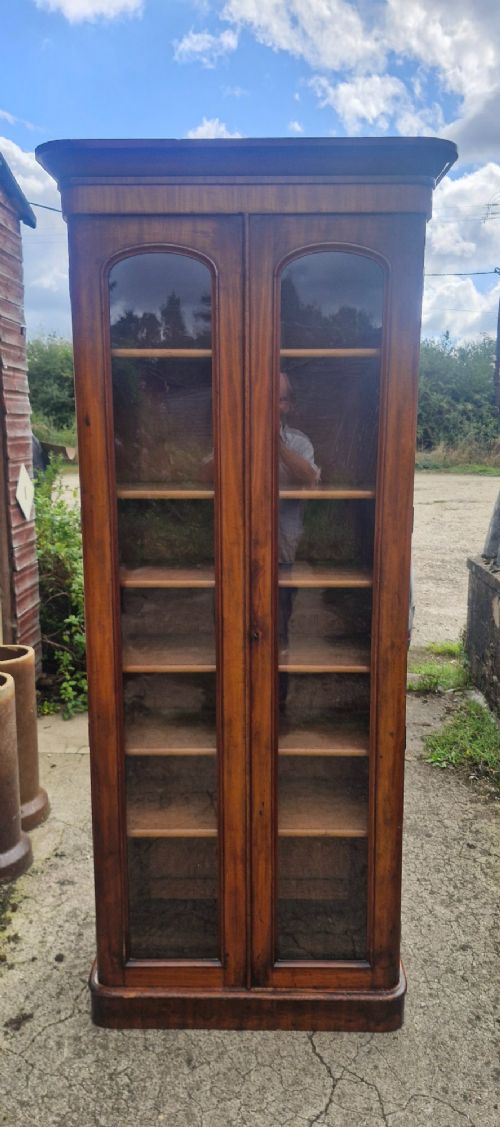
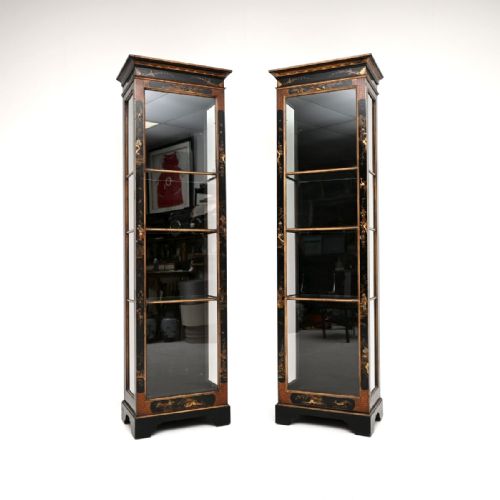
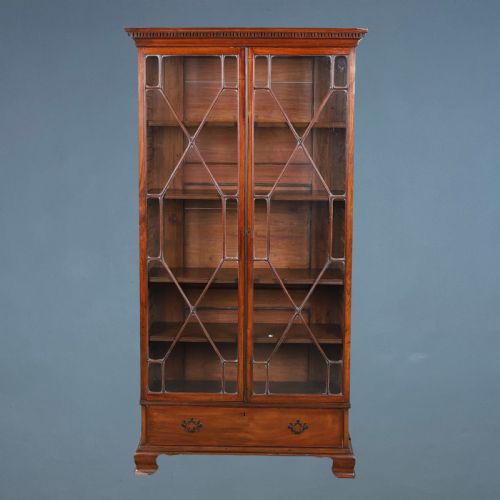
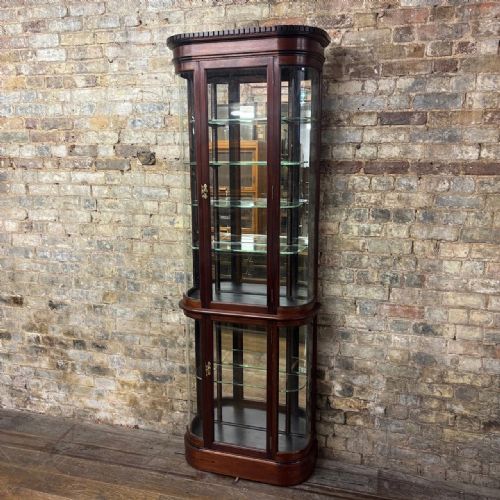
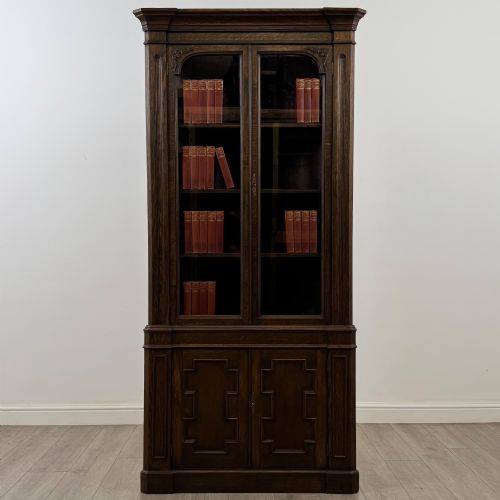
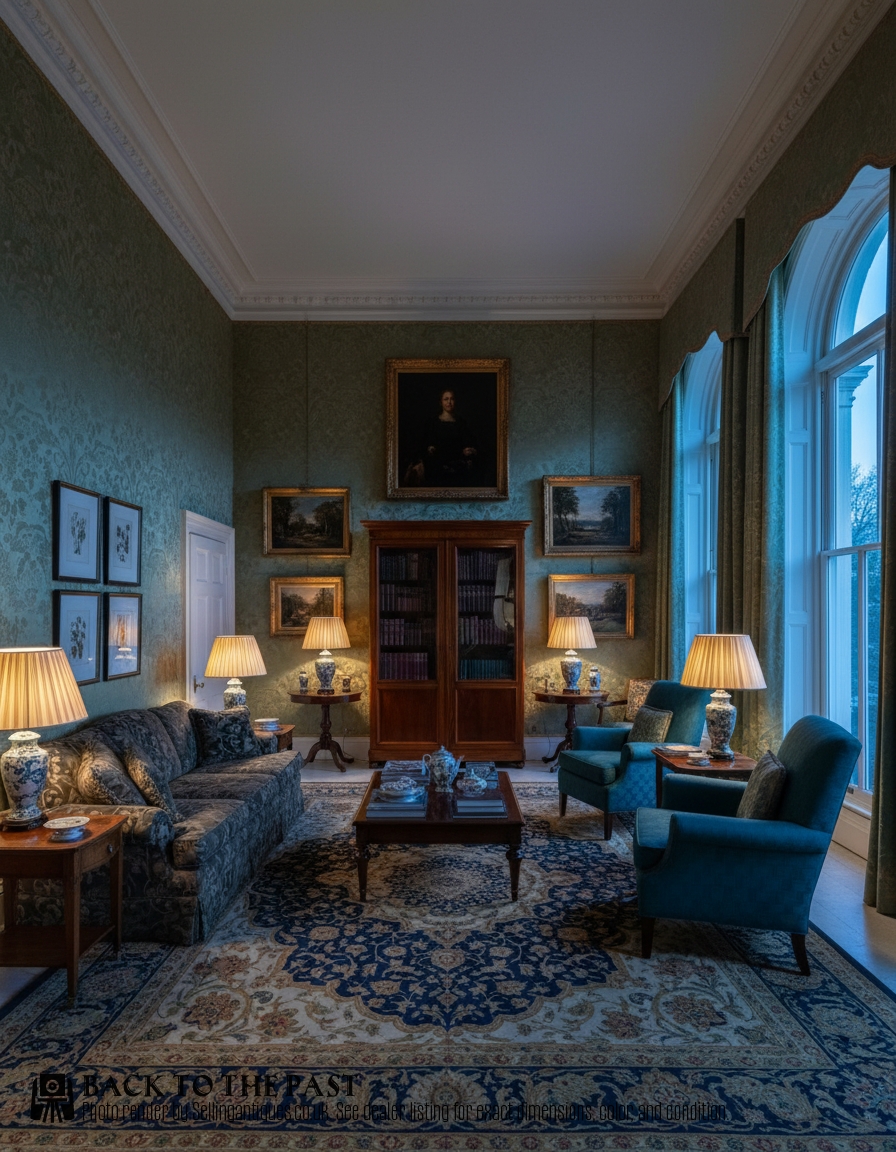
A tall glazed bookcase stands upright to maximise vertical storage while keeping books visible and protected behind transparent panels. These pieces span multiple eras, appearing in Georgian, Regency, Victorian, Edwardian, and Art Deco designs.
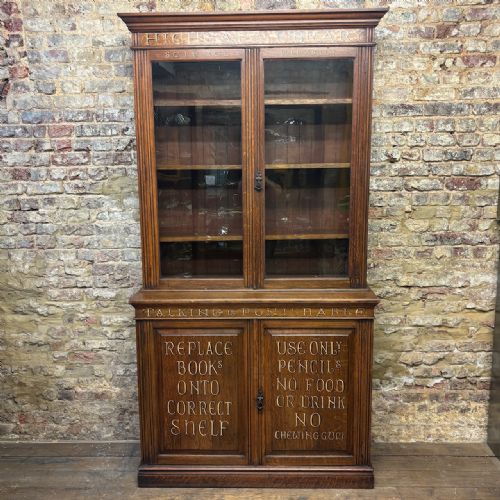
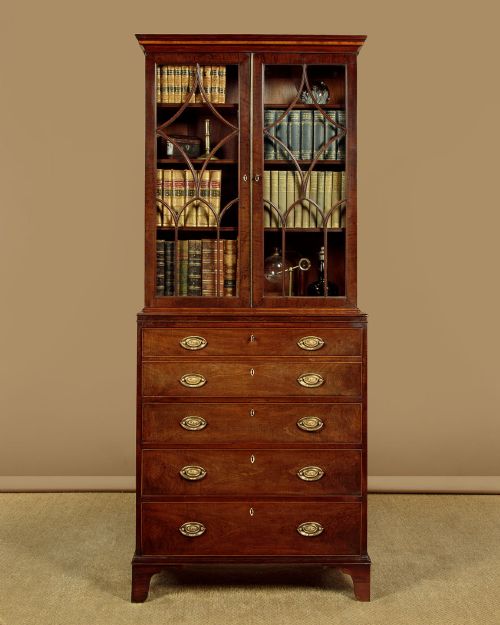
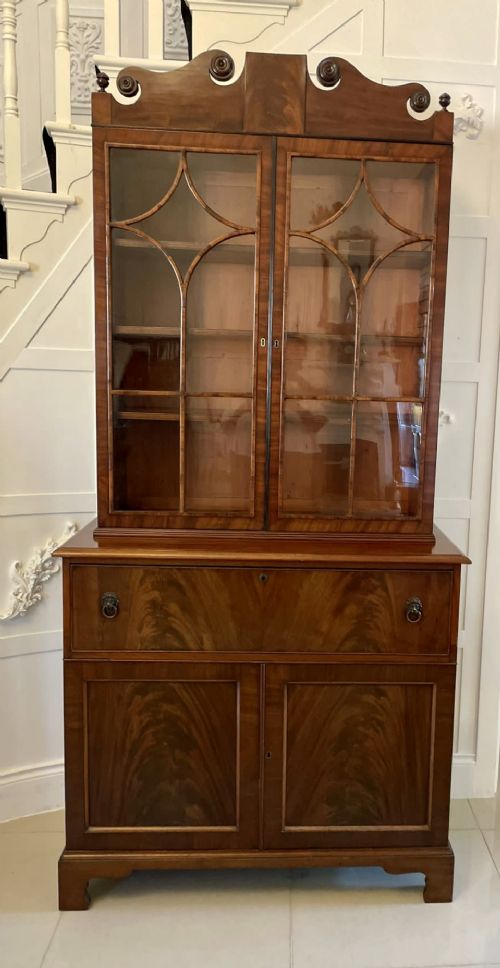
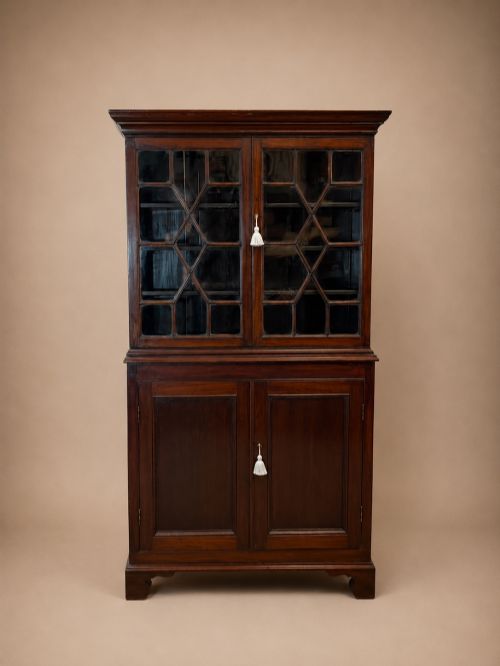
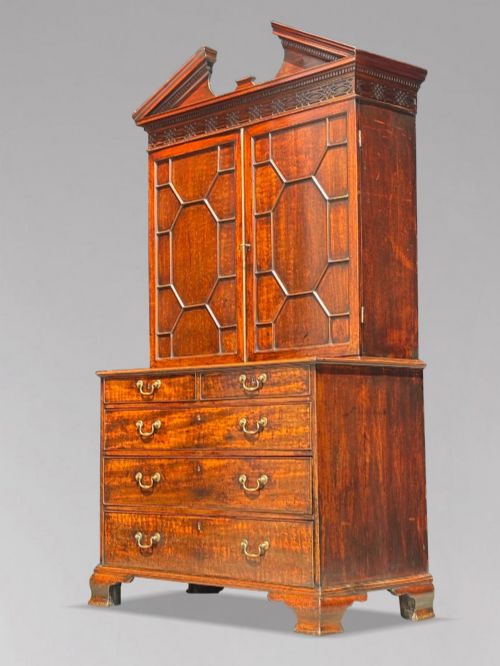
Mahogany and oak dominate the surviving examples, often built as single tall units or configured with a glazed upper section resting upon a wooden cupboard base. Narrow and slim proportions recur frequently, alongside grander architectural forms featuring astragal glazing bars.
Materials and construction
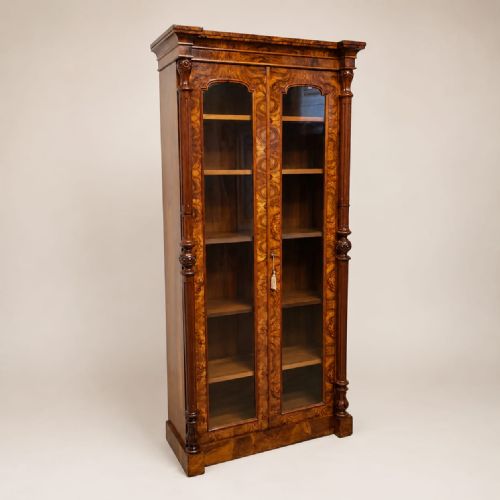
Cabinet makers utilised dense hardwoods such as mahogany, oak, and walnut, frequently selecting figured veneers or adding boxwood stringing for surface contrast. Brass hardware supports adjustable shelving systems and secures the cabinet doors.
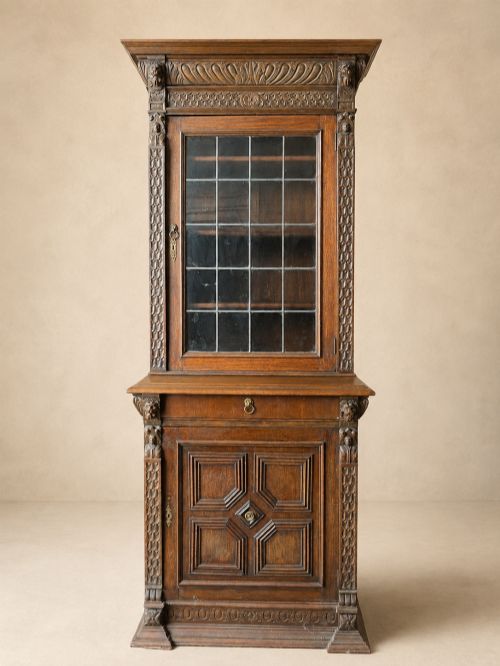
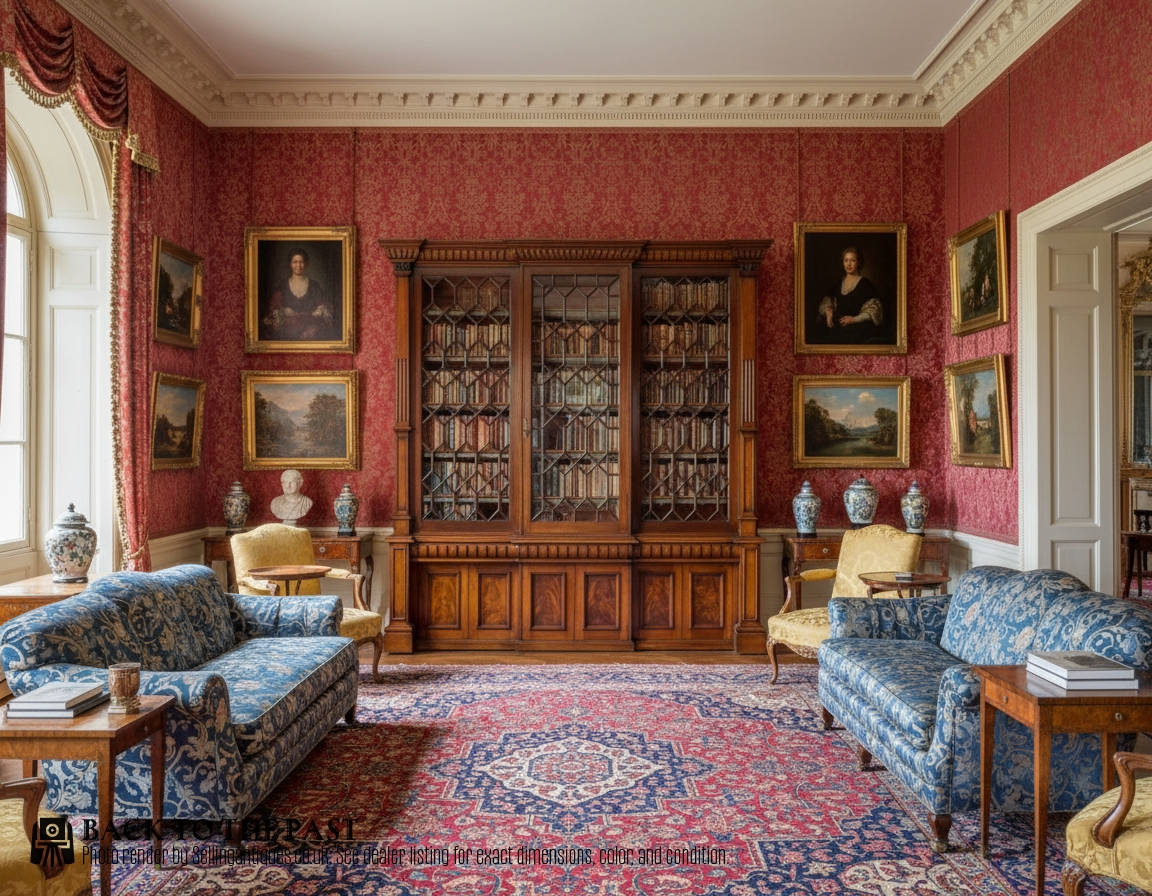
Transparent glass panes are fitted into wooden frames using traditional glazing bars, sometimes shaped in Gothic Revival or astragal patterns. Carved detailing appears on select oak and walnut pieces, reflecting regional styles from English workshops to Continental and French makers.
Retail Price Guide 2026
Typical UK retail prices for tall glazed bookcase, calculated from the Sellingantiques database of over a million retail prices indexed since 2003. This retail price guide relies exclusively on Sellingantiques data; no external sources or auction records are used, so the figures do not describe the wider market.
The recorded pieces span the Victorian, Regency, Edwardian, and Art Deco eras, constructed primarily in mahogany, oak, and walnut with glass and brass.
Proportion and joinery
Superior examples demonstrate careful management of height and width, maintaining slender, balanced proportions that prevent a tall frame from appearing heavy. The refinement of the glazing bars and the choice of figured timber distinguish finer library furniture from utility pieces.
Internal engineering marks the better class of bookcase, particularly the inclusion of functional adjustable shelving mechanisms and sturdy timber backing rather than thin plywood substitutes.
The Tall Glazed Bookcase Glossary
- Astragal glazing
- Timber bars dividing a glass door into smaller panes. These delicate mouldings structure the front elevation of many period bookcases.
- Globe Wernicke
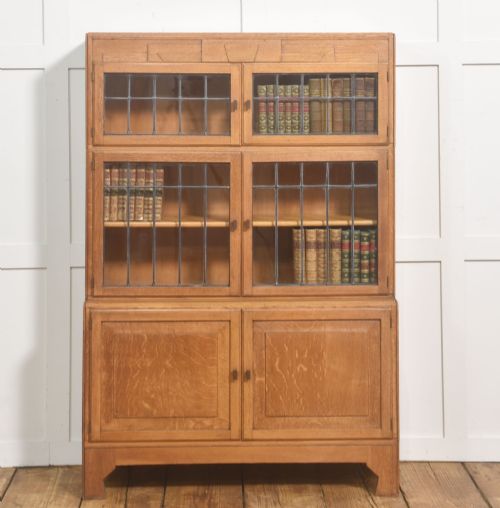
- A sectional bookcase system using stacking glazed units. This American invention allowed libraries to expand vertically one tier at a time.
- Boxwood stringing
- Inlays of pale contrasting wood set flush into dark veneers. Cabinet makers used this technique to outline drawers and cabinet doors.
- Adjustable bookcase
- Shelving supported on movable pegs or ratchets. This innovation allowed owners to alter shelf heights for varying book sizes.
Frequently Asked Questions
How do I date a tall glazed bookcase?
Dating relies upon timber selection, hardware, and stylistic details such as cornice mouldings and foot design. Georgian and Regency pieces tend to show lighter mahogany construction with refined astragal bars, whereas Victorian examples often feature heavier carved oak or walnut.
Secondary woods inside the cabinet provide further clues. Hand-cut dovetails on interior drawers point to earlier manufacture, while machine-cut joints appear on later Edwardian and twentieth-century pieces.
Are these bookcases suitable for low ceilings?
Many surviving examples reach significant heights, sometimes exceeding two metres or incorporating lower cupboard bases. Measuring vertical clearance before purchase is essential.
Narrow and slim variants offer a solution for restricted floor spaces without sacrificing vertical storage capacity.
What is an astragal glazed door?
An astragal door uses narrow wooden strips to hold individual panes of glass within a single frame. This method creates geometric patterns across the front of the cabinet.
Earlier frames often feature intricate Gothic or astragal arrangements, while later utilitarian versions use large single sheets of plate glass.
Can shelves be adjusted for large books?
Many period library cabinets incorporate adjustable shelving mechanisms using wooden ratchets or metal pins. This allows the internal layout to accommodate folios and smaller octavos alike.
Fixed shelving also occurs in simpler regional pieces, requiring careful checking of shelf heights prior to loading volumes.