




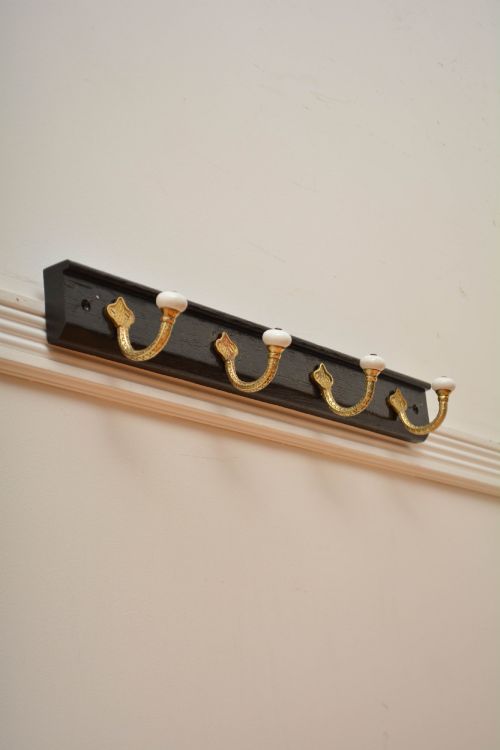
Antique Wall Mounted Rack
An antique wall mounted rack solves hallway clutter with historic utility, bringing oak, mahogany, and brass together in functional storage.
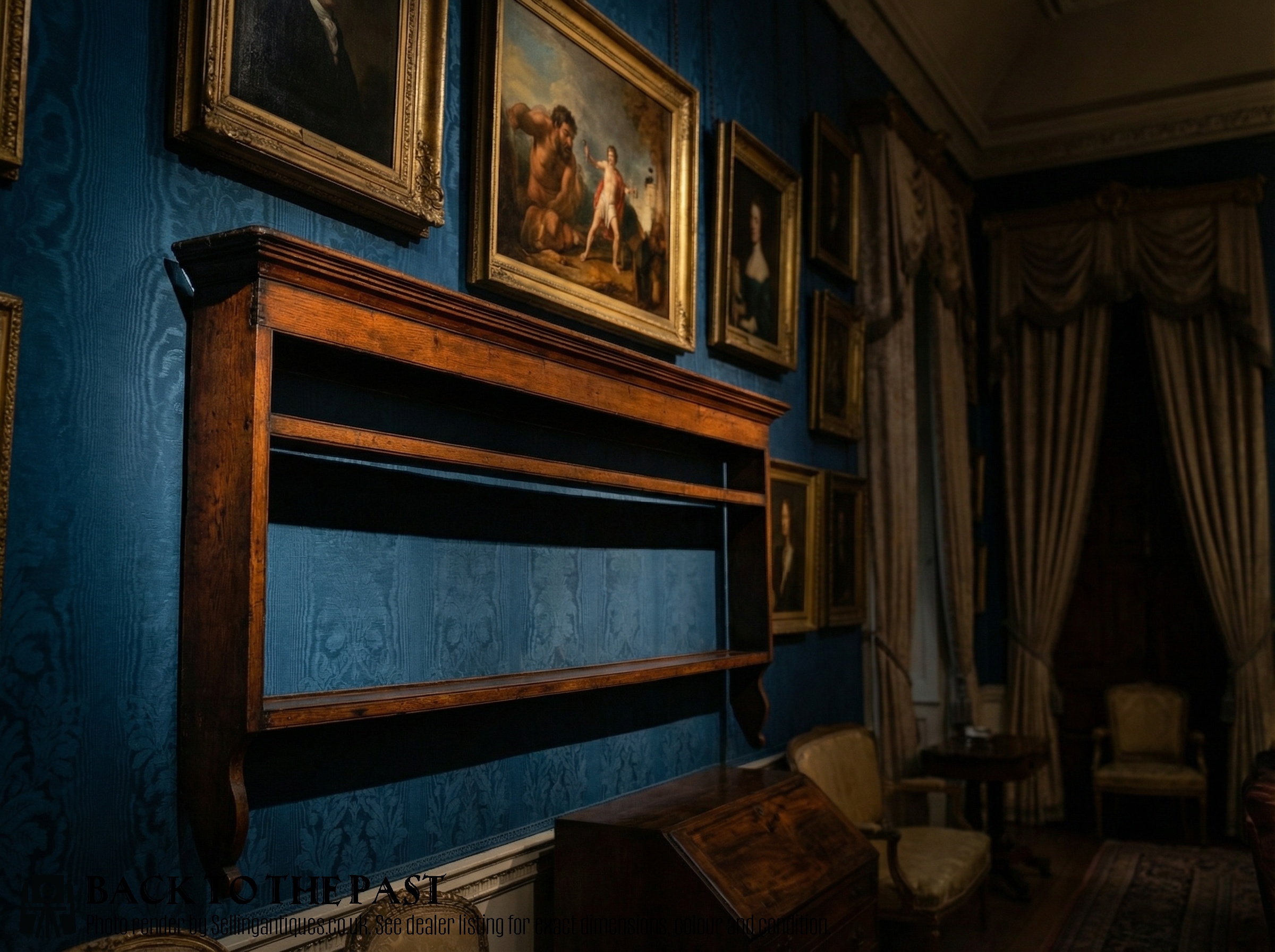
Antique Wall Mounted Rack
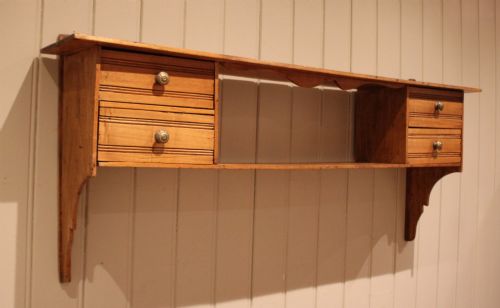
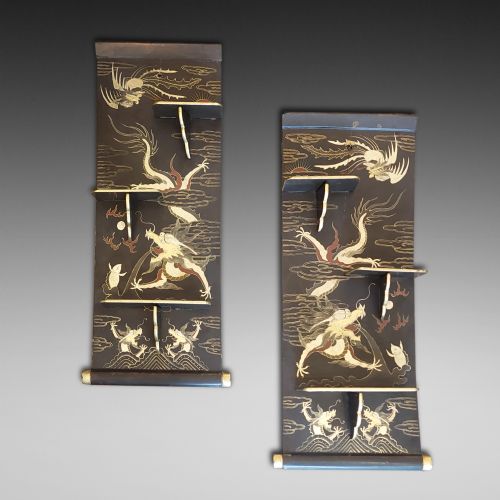
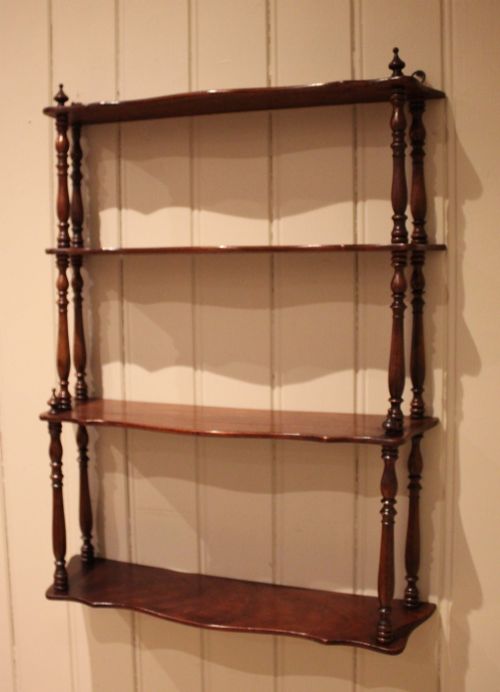
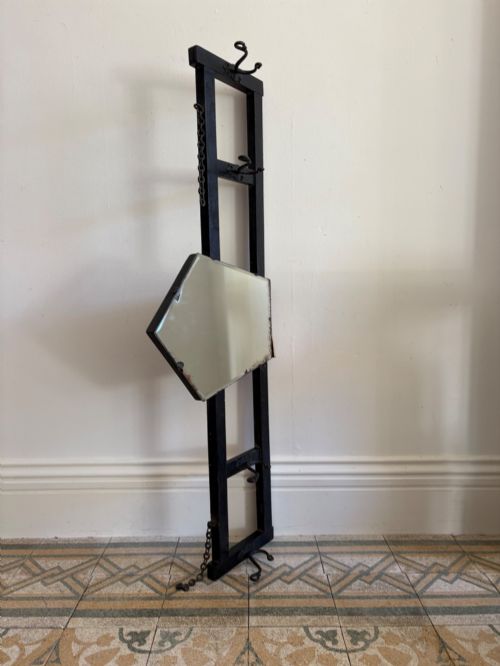
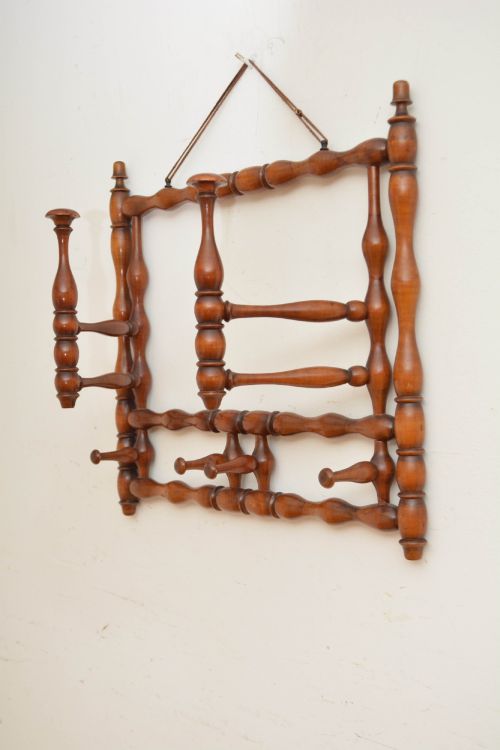
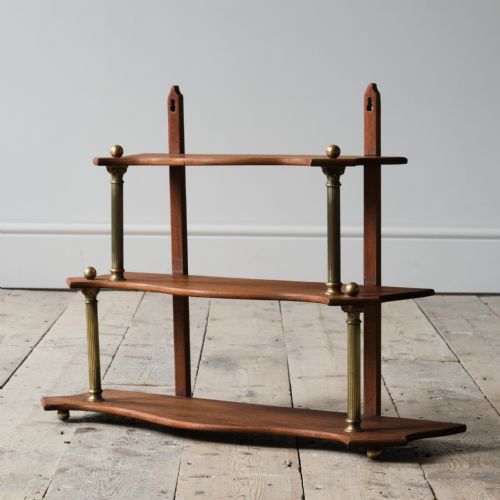
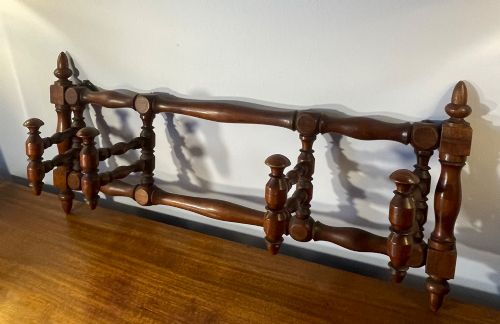
An antique wall mounted rack serves practical storage needs through forms designed to hold garments, books, plates, and domestic items directly upon vertical surfaces. These pieces emerge across periods spanning the eighteenth, nineteenth, and early twentieth centuries, reflecting the domestic habits of Georgian, Victorian, Edwardian, and Art Deco households.
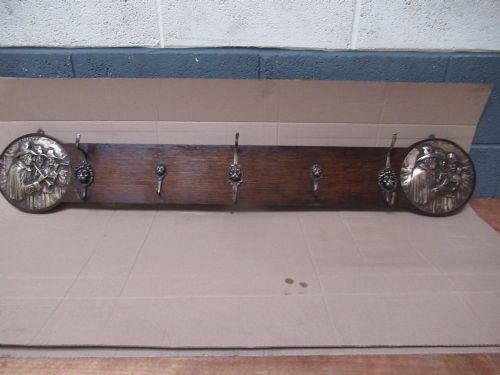
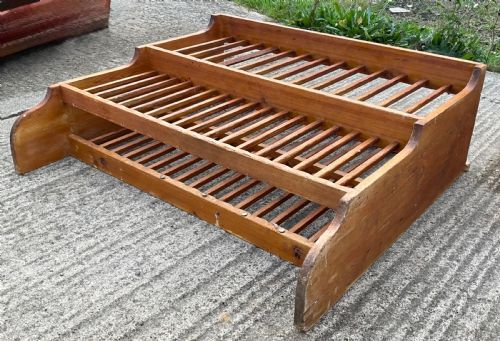
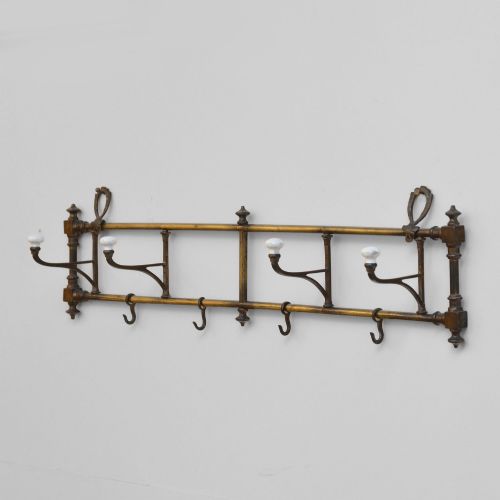
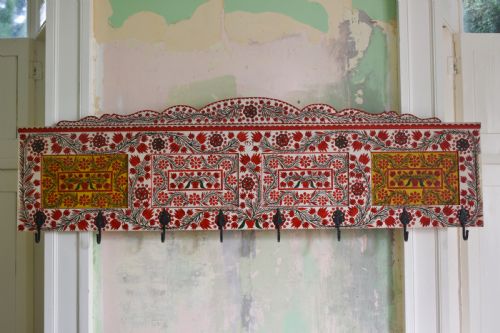
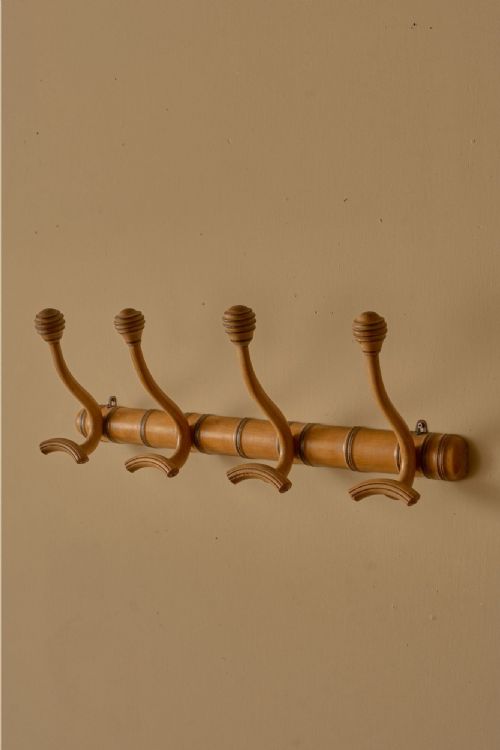
The most common examples on this page are coat and cloakroom racks fitted with brass or ceramic hooks mounted on wooden backboards of oak, pine, or mahogany. Alongside these garment holders, buyers frequently encounter plate racks, wall shelves, and specialised organizational fixtures like pipe racks and game hook strips.

Materials and Construction
Cabinetmakers and rural joiners utilised native and imported timbers, selecting sturdy woods such as oak, mahogany, walnut, and pine to form the structural backboards and shelving components. Solid construction often relies on traditional joinery techniques, mounting boards securely to walls while supporting functional weight.
Metal and ceramic hardware complete these fixtures, incorporating cast brass hooks, iron brackets, forged iron fittings, and inset ceramic numbers or decorative bosses. Ebonised finishes, painted surfaces, and turned wooden elements appear frequently to enhance the visual character of the wall-mounted framework.
Antique Wall Mounted Rack Retail Price Guide 2026
Typical asking prices for wall mounted rack among the pieces listed under this phrase on Sellingantiques today, from the lower quarter to the upper quarter. They describe what is for sale here now, not the wider market.
An eighteenth-century oak spoon rack comes complete with three pewter trefid spoons, keeping cutlery ready on the wall.
Factors of Quality
Quality rests upon the integrity of the timber selection and the originality of the mounted hardware, such as matching cast brass hooks and authentic ceramic inserts. Pieces featuring substantial hardwoods like mahogany or figured oak demonstrate superior durability compared to simpler utility items.
The refinement of the joinery and the presence of decorative detailing, whether through turned wooden pegs, carved brackets, or painted finishes, distinguish standard utilitarian storage from finer domestic furnishings.
The Antique Wall Mounted Rack Glossary
- Delft rack
- A wall-mounted wooden shelving unit designed specifically to display ceramic plates and platters upright in a kitchen or dining setting.
- Ebonised
- Wood treated with a dark stain or finish to imitate the dense appearance of ebony, commonly used on Victorian and Aesthetic Movement frames.
- Trefid
- An early form of spoon handle featuring a notched, lobed outline, found paired with antique spoon racks from the eighteenth century.
- Saddle rack
- A specialised iron or wooden wall-mounted bracket engineered to support riding saddles without damaging the leather panels.
Antique Wall Mounted Rack: Frequently Asked Questions
How are wall mounted racks fixed securely?
Most antique wall mounted racks feature pre-drilled screw holes through the wooden backboard or utilise integrated iron brackets designed to anchor into wall studs.
Ensuring proper wall fixings supports the weight of heavy timbers and hanging items safely.
What rooms suit an antique coat rack?
Hallways, boot rooms, and kitchens provide natural settings where wall mounted storage handles daily garments, hats, and domestic accessories.
Their compact profile keeps floor space clear while adding period character to narrow or high-traffic areas.
How do I identify a Victorian rack?
Victorian examples frequently combine ebonised wood or oak backboards with heavy cast brass hooks and white ceramic buttons.
Stylistic markers range from utilitarian institutional designs to decorative hallstands featuring stag horns or turned spindles.
What is a plate rack used for?
Kitchen plate racks are historic wall-mounted fixtures designed to store ceramic plates vertically between wooden slats or dowels for air drying and display.
Originating in eighteenth-century vernacular homes, they allowed everyday tableware to remain accessible on the wall.