



Brass Coat Hooks
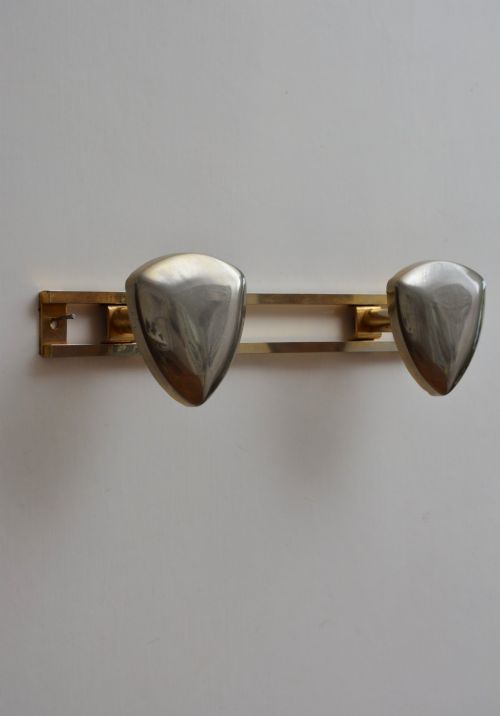
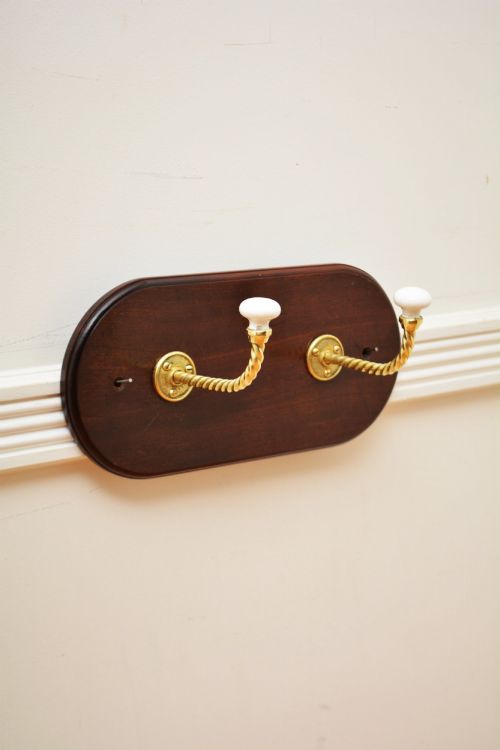
Solid brass coat hooks bring sturdy metalwork and rich period character to hallways, combining practical hanging space with decorative appeal.
Brass Coat Hooks
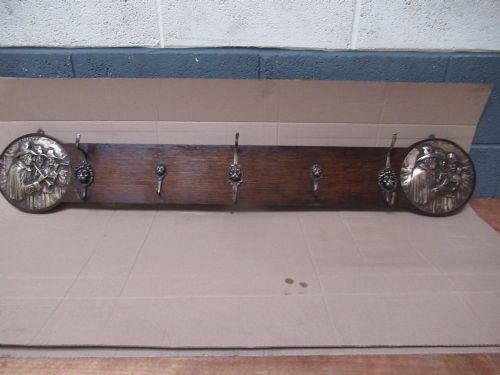
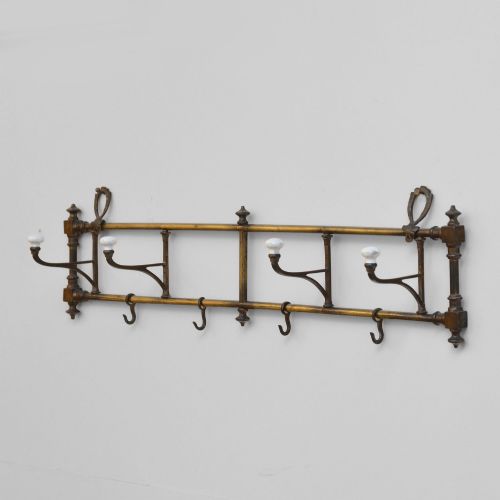
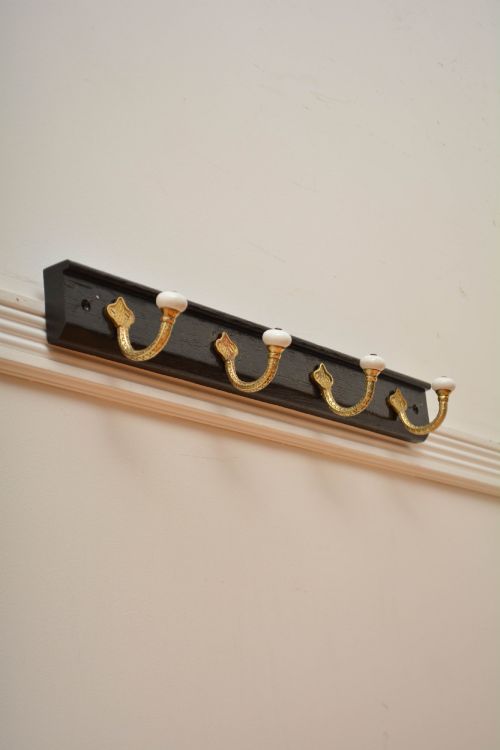
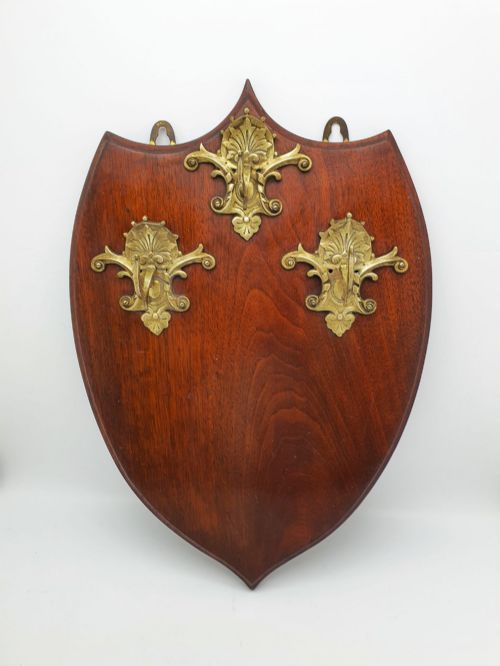
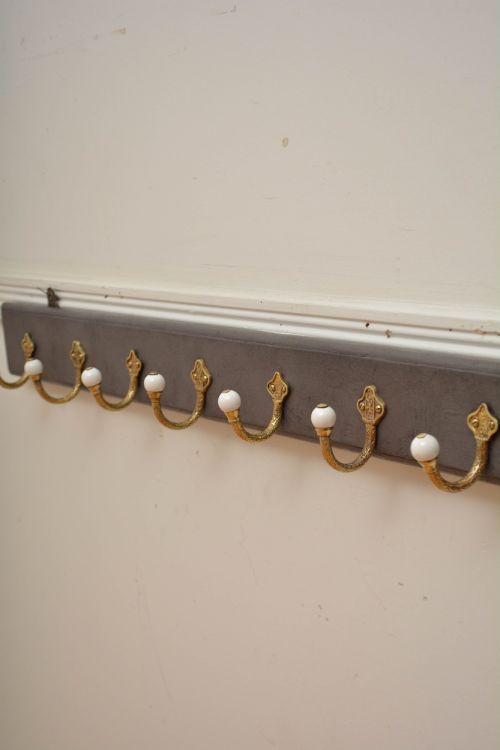
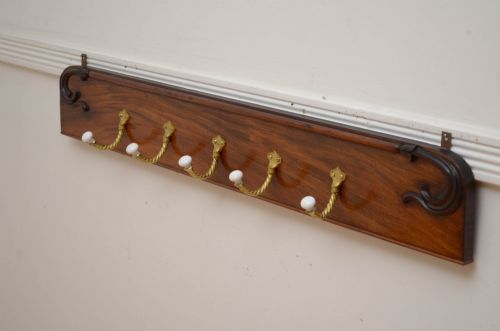
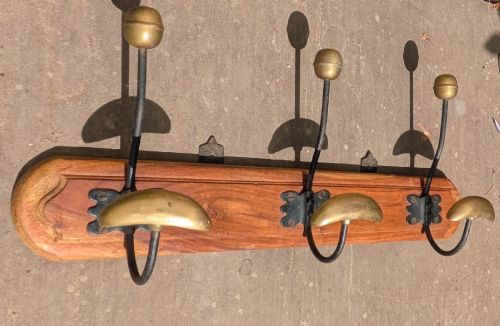
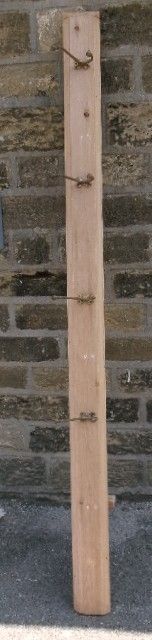
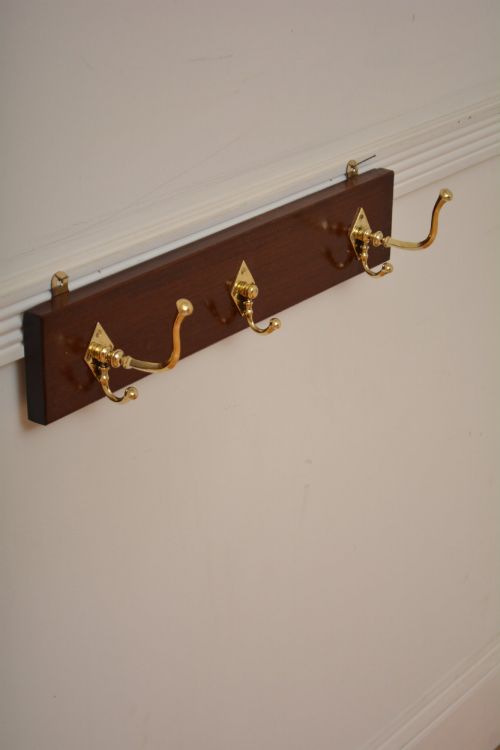
Brass coat hooks appear as individual fixtures or mounted along wooden backboards, designed to hold heavy garments and hats in busy hallways.
The selections span from single nineteenth-century Victorian castings to long Edwardian racks and French portmanteaus fitted with multiple hanging points.
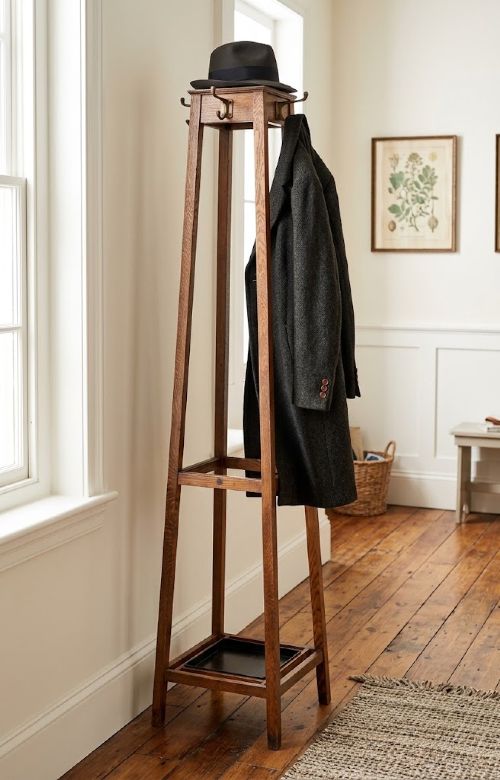
Makers integrated brass with oak, mahogany, walnut, and ceramic elements, producing functional hallway furniture that ranges from compact wall brackets to large hall stands.
Materials and construction
Foundry workers cast brass into robust hooks and mounting plates, sometimes chasing the surface details or incorporating porcelain knobs and ceramic inserts.
Woodworkers mounted these metal fixtures onto backboards and larger furniture pieces made from dense timbers like oak, mahogany, walnut, and ebonised wood.
French and English workshops utilised solid metal brackets alongside folding mechanisms and mirrored frames, combining structural timber with durable bronze and brass hardware.
Brass Coat Hooks Retail Price Guide 2026
Typical asking prices for brass coat hooks among the pieces listed under this phrase on Sellingantiques today, from the lower quarter to the upper quarter. They describe what is for sale here now, not the wider market.
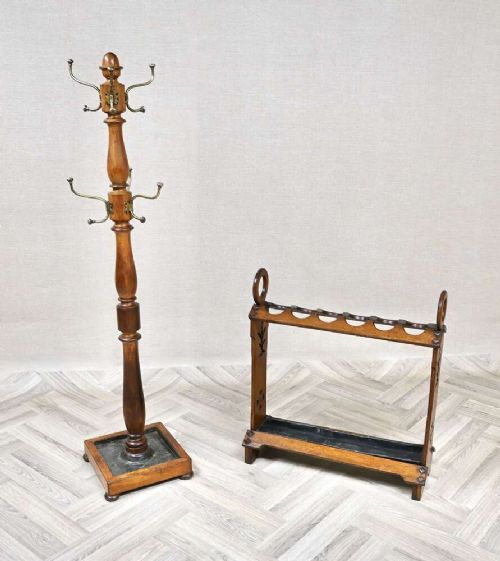
The inventory includes single wall hooks, multi-bracket French portmanteaus, and large freestanding hall stands with integrated mirrors.
Quality and craftsmanship
Substantial weight in the metal casting and deep relief in the chased decoration separate superior examples from lighter, simpler productions.
The connection between the hook and the backboard reveals the standard of assembly, with well-fitted screws and solid timber backplates offering greater durability.
Original matching ceramic or porcelain knobs and intact bevelled mirror plates indicate a higher grade of historical manufacture.
Jas. Shoolbred
The Brass Coat Hooks Glossary
- Portmanteau
- A combined hallway furnishing featuring coat hooks, a hat rack, and frequently a mirror or umbrella stand. These large pieces served as central storage hubs in nineteenth and early twentieth-century entrances.
- Ebonised
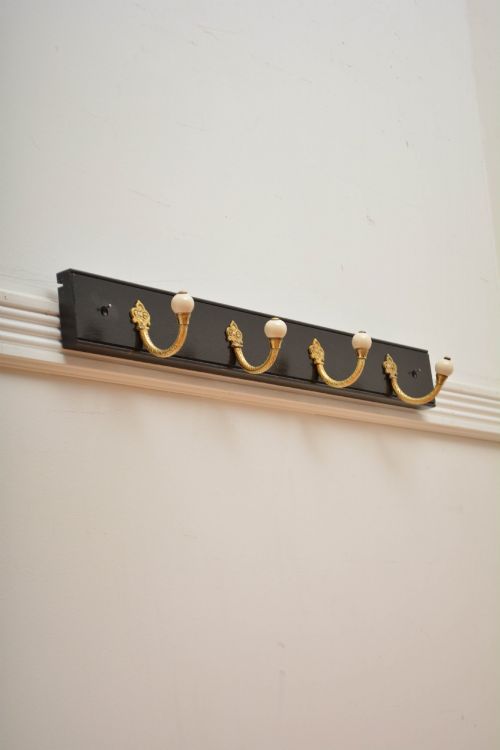
- Wood treated with a dark finish to imitate expensive ebony. This technique provided a high-contrast dark background that made bright brass hooks stand out visually.
- Hall Stand
- A large freestanding piece of hallway furniture incorporating hooks, mirror plates, and umbrella wells. They were manufactured extensively during the Victorian and Edwardian periods.
- Backboard
- The horizontal timber plank or panel to which multiple coat hooks are secured. These boards distributed the weight of heavy garments across the wall fixings.
Brass Coat Hooks: Frequently Asked Questions
How do I mount an old wooden coat rack securely?
Heavy antique racks require solid wall fixing through the original screw holes in the wooden backboard. Using appropriate wall plugs ensures the timber bears the weight safely.
Distributing heavy coats evenly across the brass hooks prevents undue strain on any single fixture and keeps the backboard stable against the wall.
What periods do these brass hooks represent?
The available pieces span the nineteenth and early twentieth centuries, covering Victorian, Edwardian, Arts and Crafts, and Art Deco eras. Each period brought distinct casting styles and companion woods.
Victorian examples often feature heavy brass paired with ebonised wood or oak, while later twentieth-century items incorporate streamlined art deco metalwork and polished mahogany frames.
Can individual brass hooks be mounted without a backboard?
Many brass hooks and sets of hooks are designed for individual wall mounting directly into plaster or wood. This allows flexible arrangements in narrow spaces or small hallways.
Checking the mounting plate on each hook reveals whether it requires screw placement at the top and bottom for stable support.
How should I clean antique brass and wood?
Dusting the timber and metal regularly maintains the surface finish without stripping away historical patina. Harsh chemical cleaners can damage aged brass surfaces and soft wood polishes.
Applying a gentle wax to the wooden backboards preserves the grain, while leaving the brass unpolished retains the deep tone developed over decades of use.