



Victorian Coat Stand
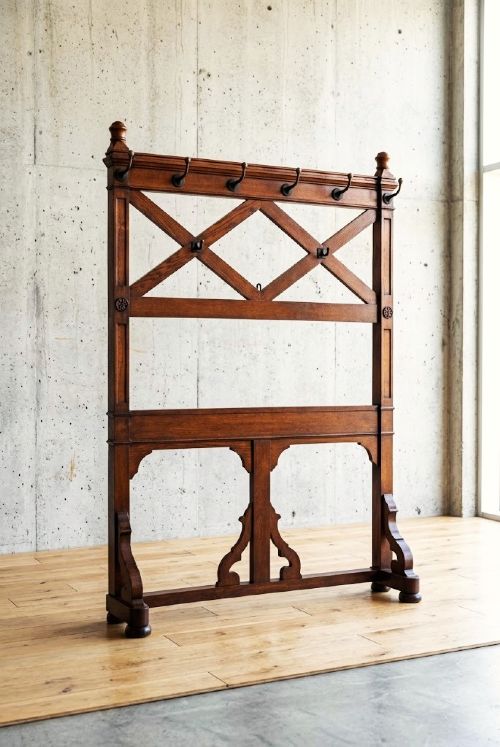
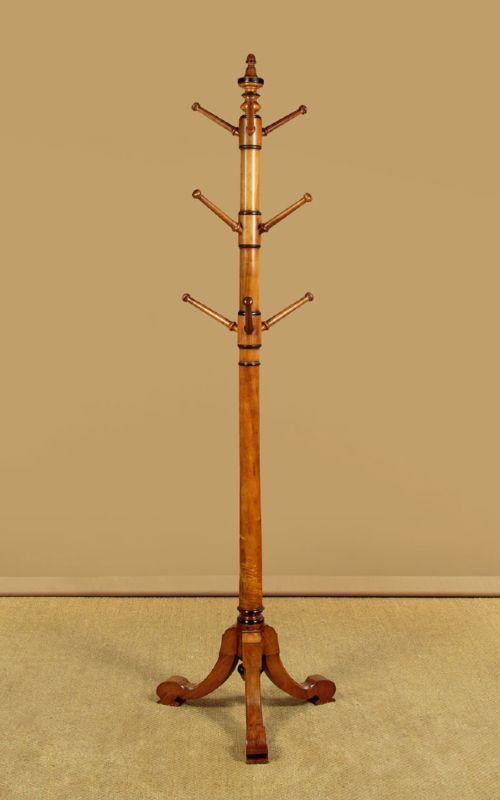
When you need a victorian coat stand, you are looking at functional hallway furniture that combines upright framing with hooks, rails, and often umbrella storage.
Victorian Coat Stand
A victorian coat stand encompasses various practical hall furniture forms designed to organise outerwear and umbrellas in domestic entrances. The pieces on this page span several decades of the nineteenth century and extend into the early twentieth century, showing both standard domestic utility and more decorative hall arrangements.
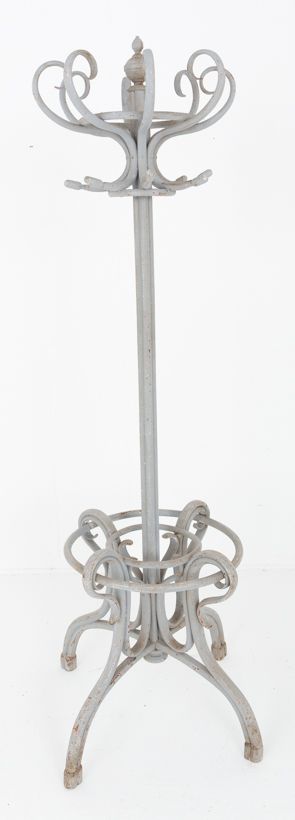
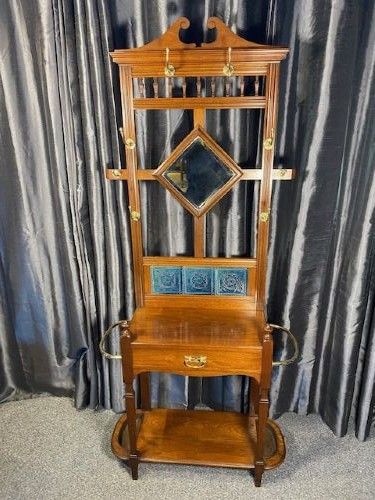
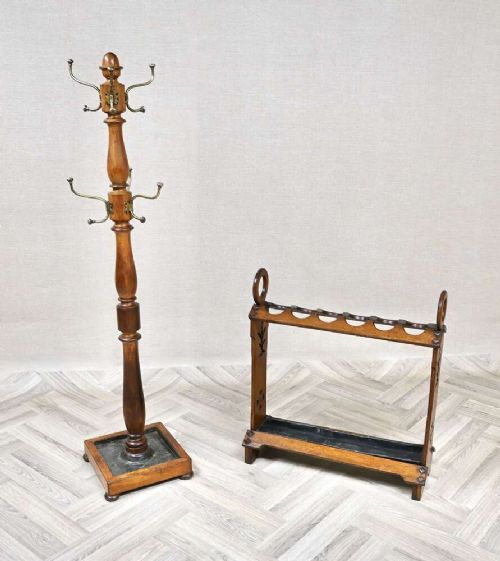
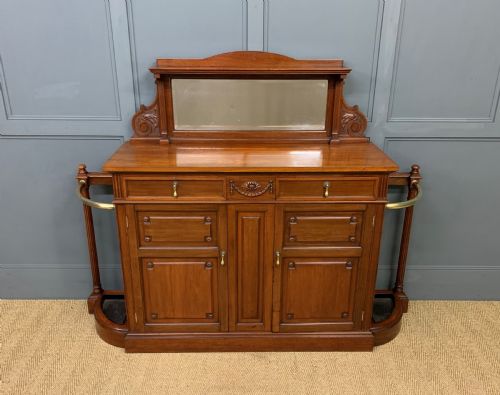
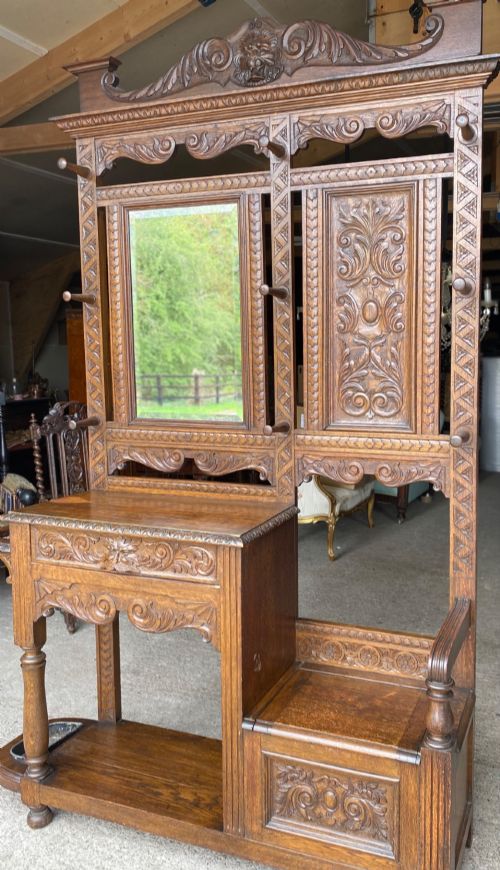
You will frequently encounter upright bentwood designs alongside heavier timber hall stands made from oak and mahogany. Many examples incorporate mirror plates, glove boxes, and metal drip trays, reflecting the practical needs of period hallways.
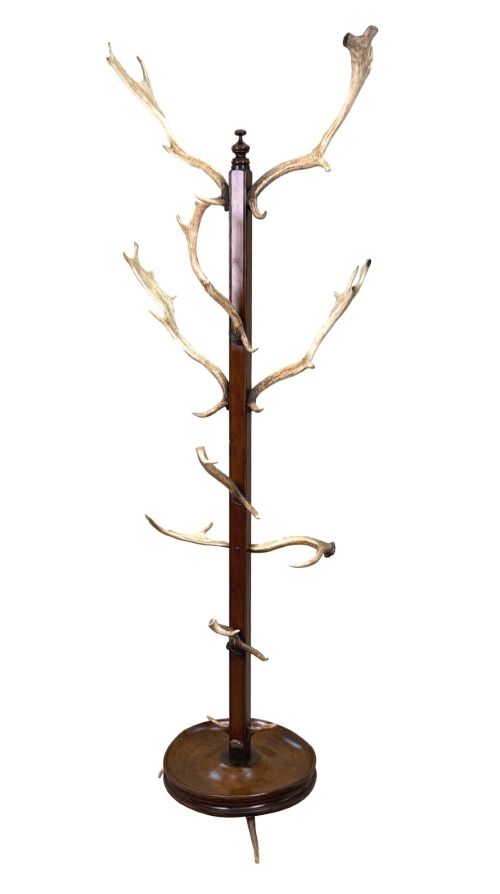
The selection includes specialised regional or stylistic variants, such as Black Forest carved animal forms, rustic antler structures, and cast iron umbrella stands. These objects served as central pieces of hallway furniture in period homes, designed for daily household use.
How they were made
Makers utilised solid hardwoods like oak and mahogany, alongside steam-bent beech for lightweight bentwood frames. Cast iron and brass provided structural rigidity and decorative detail, particularly for umbrella rings and coat hooks.
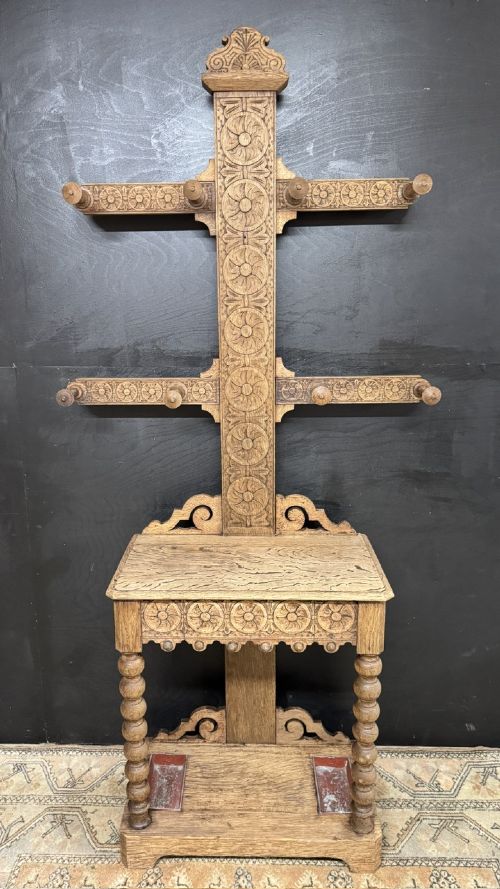
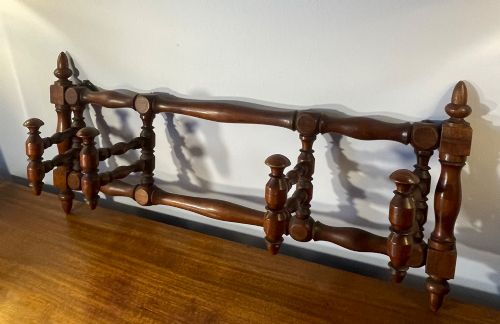
Techniques varied from steam-bent wood shaping seen in Thonet and Fischel pieces to detailed hand carving found in oak and Black Forest bear stands. Joinery methods included mortise and tenon construction for timber frames, while metal components were cast or forged.
Victorian Coat Stand Retail Price Guide 2026
Typical asking prices for victorian coat stand among the pieces listed under this phrase on Sellingantiques today, from the lower quarter to the upper quarter. They describe what is for sale here now, not the wider market.
Several stands feature carved bears offering a card tray to unsuspecting guests.
What varies in quality
The distinction between ordinary and superior pieces rests on the choice of materials and the depth of craftsmanship. Solid, dense hardwoods and finely detailed hand carvings elevate a piece above standard mass-produced variants.
Structural integrity and original hardware, such as cast brass hooks and zinc drip trays, define the standard of survival. Pieces retaining their original mirrors and uncompromised joints represent the finer end of the surviving selection.
Shoolbred & Co.·Jas. Shoolbred·Fischel·J. Parker of Woodstock
The Victorian Coat Stand Glossary
- Bentwood
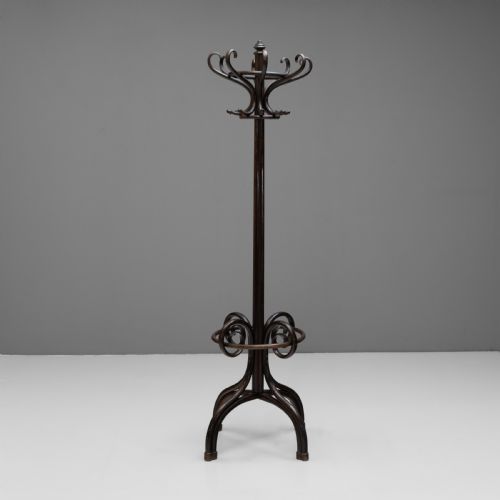
- Wood shaped by steaming and bending it into curved forms. This technique created light, strong frames popular for late nineteenth-century hat and coat stands.
- Hall stand
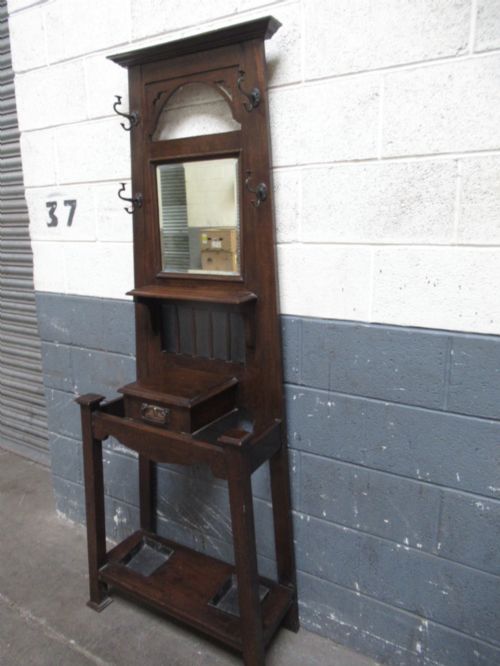
- A piece of hallway furniture combining coat hooks, hat pegs, and umbrella storage. Many versions also incorporate a central mirror and a small compartment for gloves or keys.
- Black Forest
- A style of wood carving originating in Switzerland and Germany, featuring realistic animals and foliage. Bears and stags are common motifs on these hall stands.
- Faux bamboo
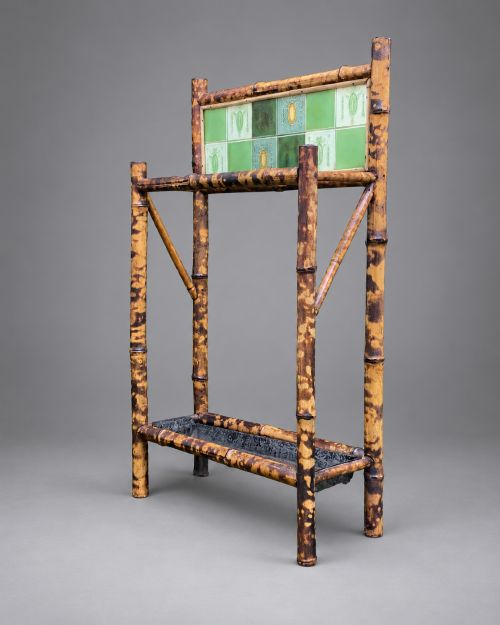
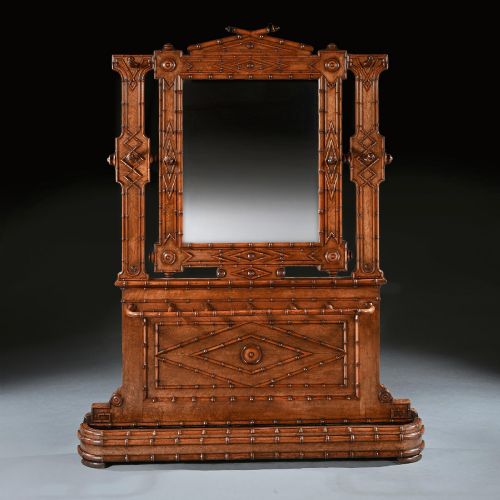
- A decorative treatment where wood or cast iron is carved, turned, or moulded to imitate natural bamboo stalks. It was popular during the aesthetic period.
Victorian Coat Stand: Frequently Asked Questions
What is the difference between a coat stand and a hall stand?
A coat stand generally refers to a simpler upright pole with hooks for hats and coats. A hall stand is a larger, more architectural piece of furniture that often includes umbrella wells, a mirror, and storage compartments.
While both served the entrance hall, hall stands were heavier items designed to anchor the hallway space in larger homes.
How do I identify a bentwood coat stand?
Bentwood stands are recognised by their curved, flowing wooden members formed through steam-bending techniques. They usually feature rounded loops for hanging hats and coats.
These pieces are typically lighter in weight than solid oak or mahogany hall stands and often bear the marks of makers such as Thonet or Fischel.
Were these stands used in small houses?
Compact versions like wall-mounted racks, half-round stands, and simpler bentwood poles suited smaller Victorian hallways. Larger multi-functional hall seats and heavy oak stands required the space found in country houses and substantial town residences.
Buyers selected the scale of the stand to match the proportions of the entrance space.
What metal parts should I expect to find?
Original pieces frequently feature brass or cast iron coat hooks, decorative rails, and metal drip pans at the base for wet umbrellas. Cast iron was also used for entire structural frames, particularly in faux bamboo and umbrella stand designs.
These metal elements were often fixed with slotted screws typical of the nineteenth century.