


Bentwood Coat Tree
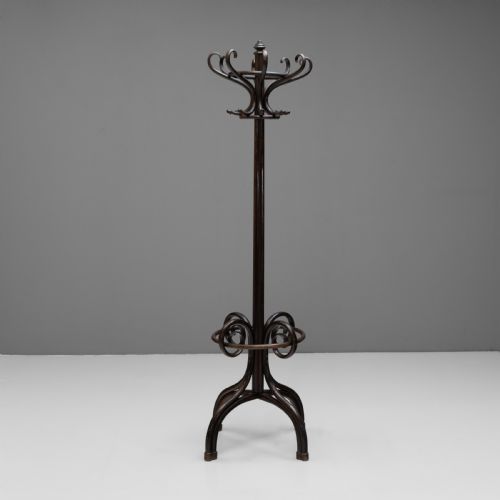
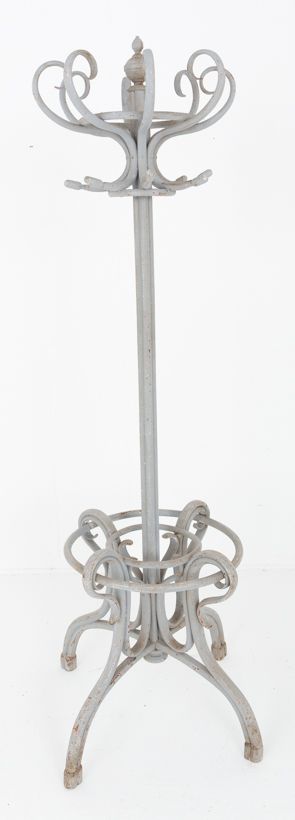
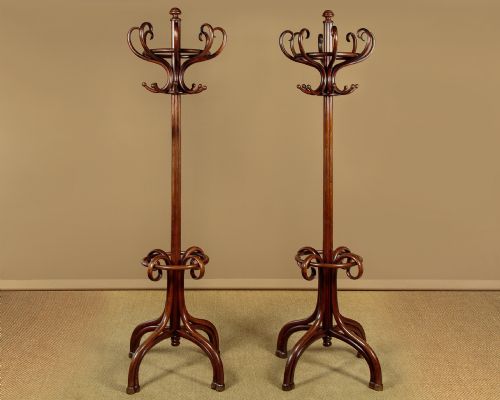
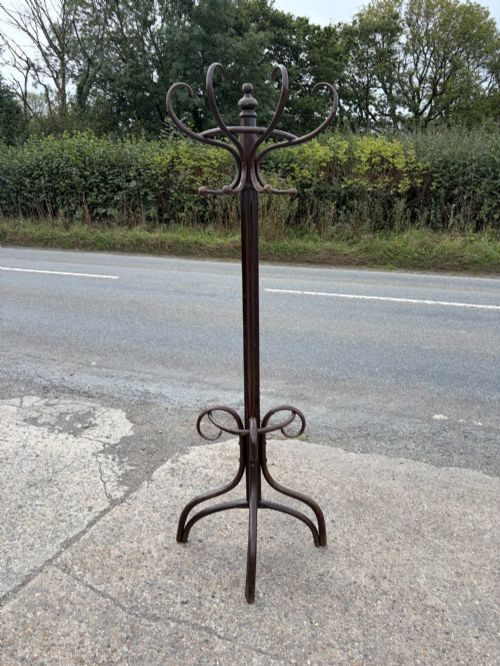
A bentwood coat tree provides a sculptural and practical solution for hallways, bringing organic curves into domestic spaces.
Bentwood Coat Tree
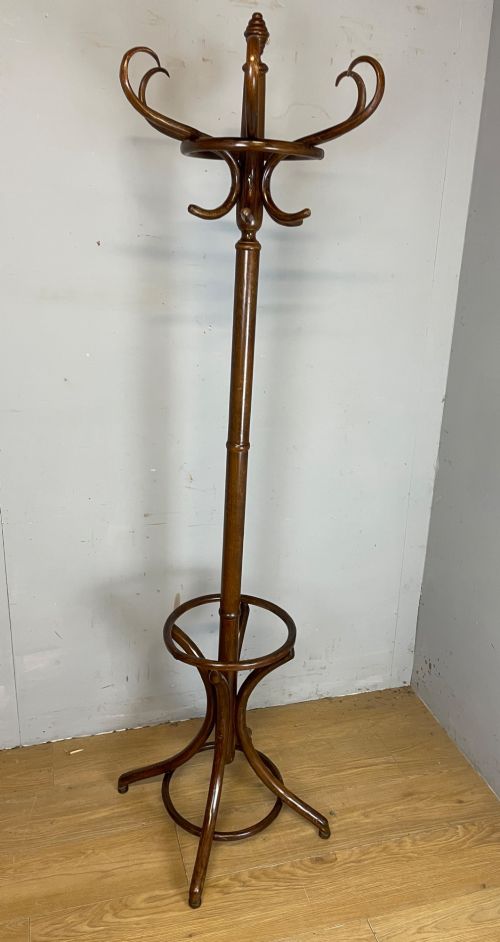
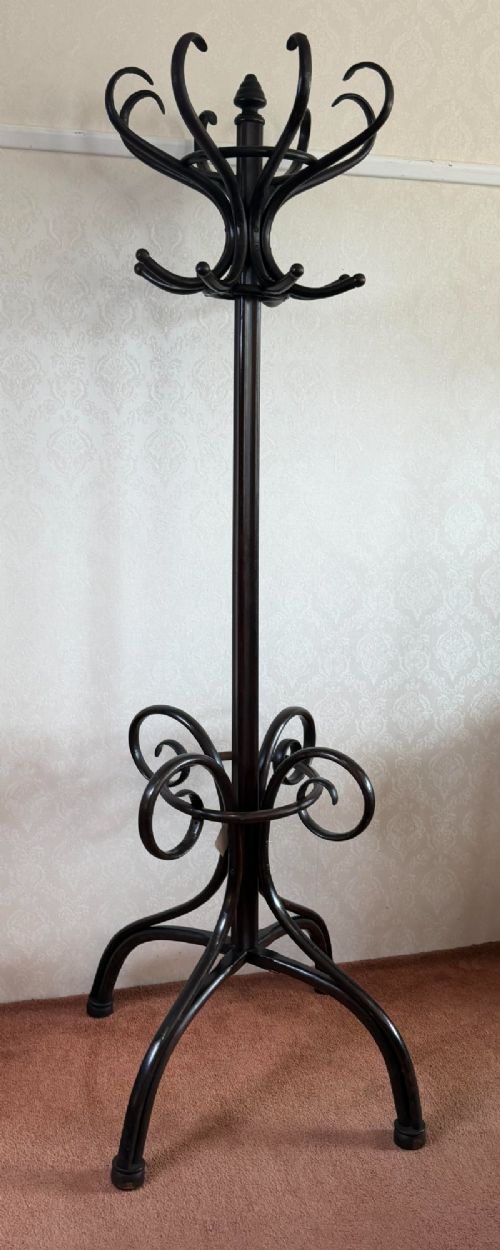
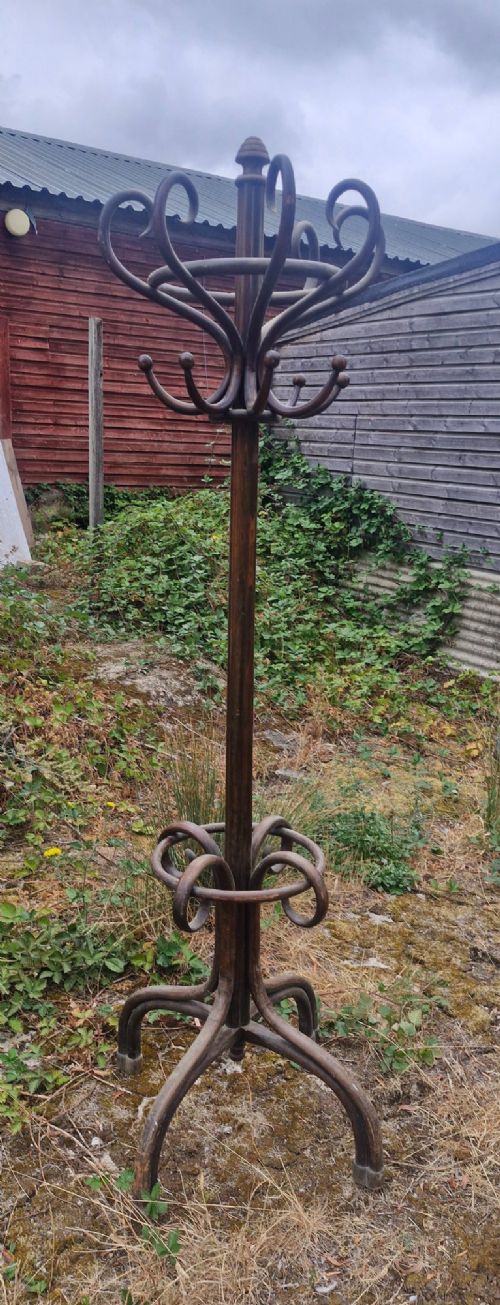
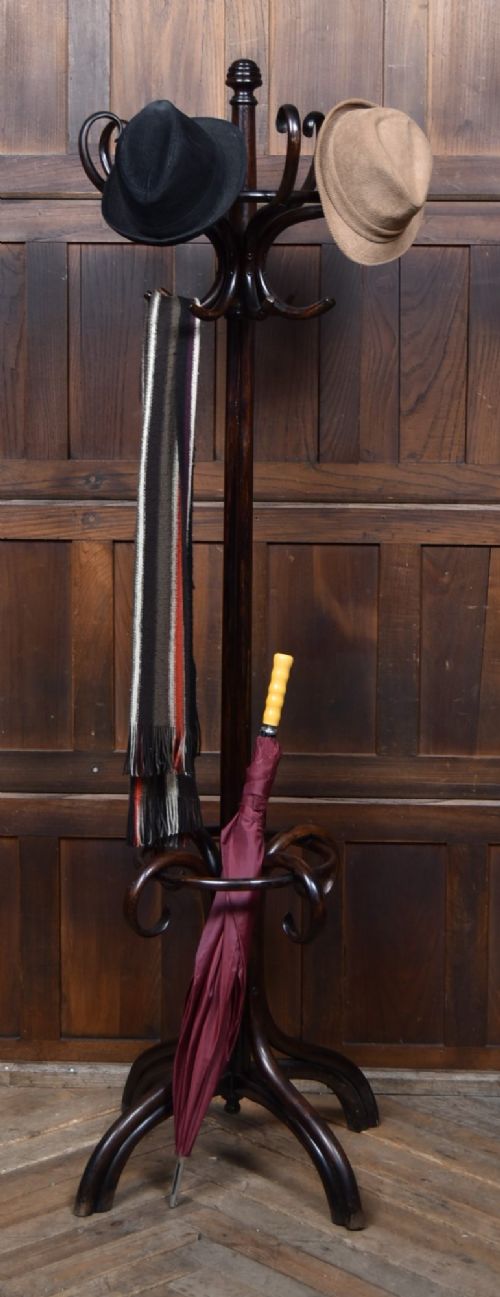
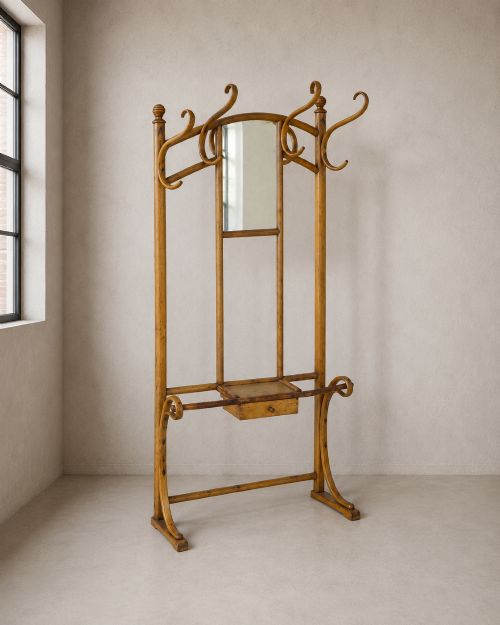
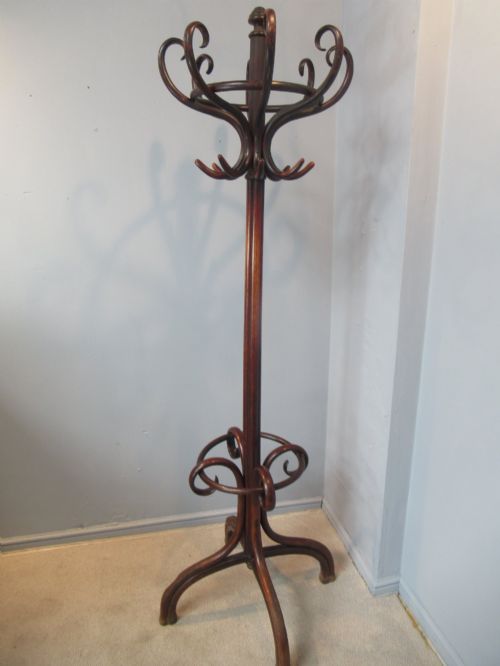
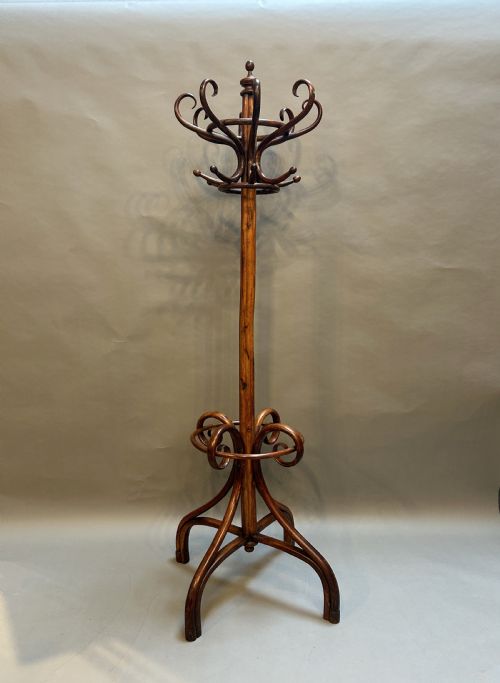
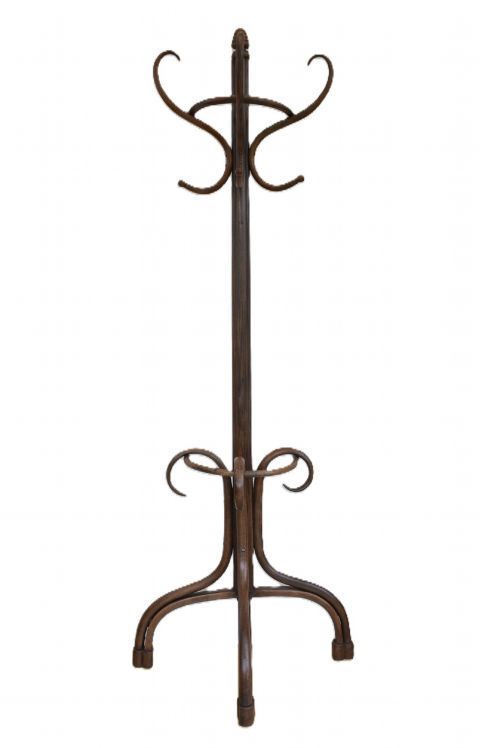
A bentwood coat tree takes the form of a vertical stand designed for hats, coats, and sticks, appearing in configurations such as revolving stands, half-round or demi-lune designs, and wall-standing versions. These pieces originate across the late nineteenth and early twentieth centuries, spanning the Victorian and Edwardian eras through the 1920s and 1930s.
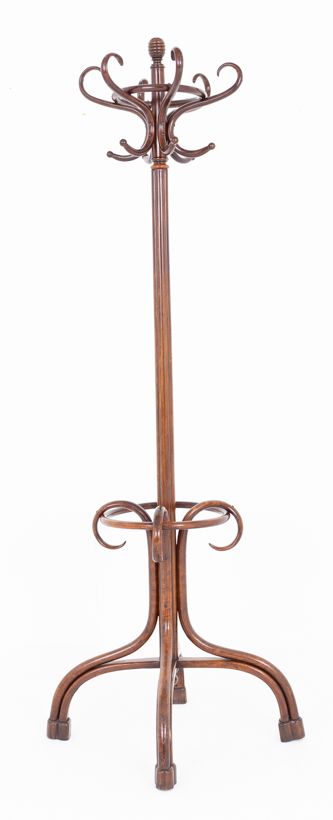
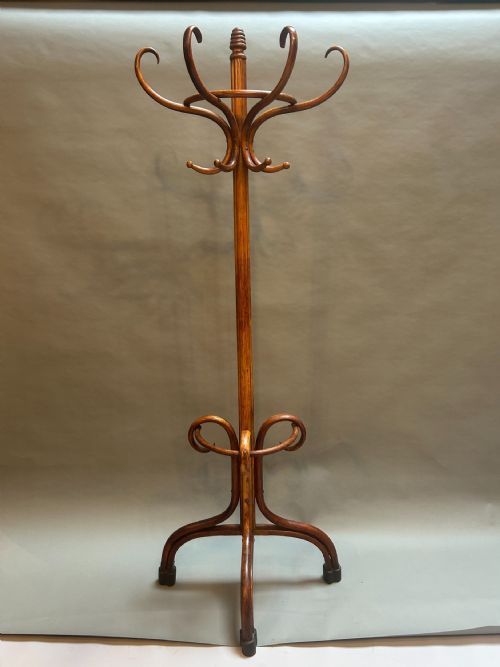
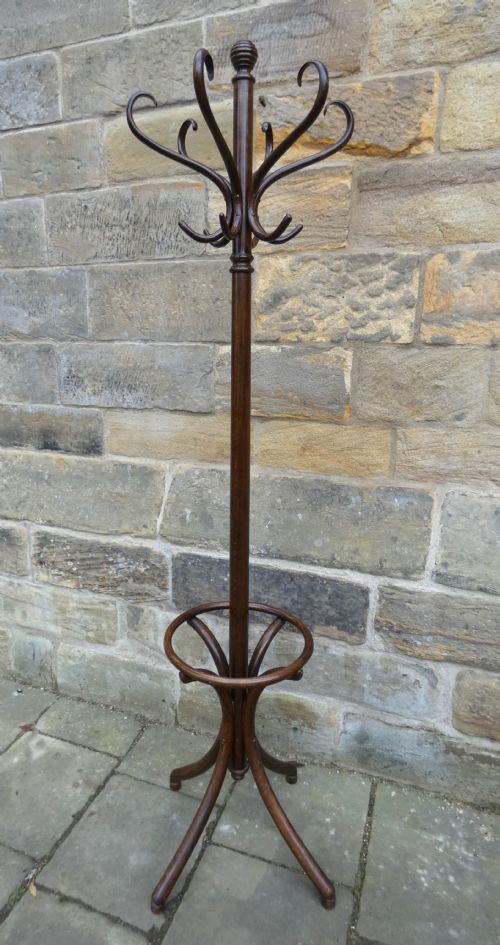
Buyers will encounter various incarnations on this page, including standard upright coat and hat stands alongside specialised hall stands that incorporate glass elements or specific structural layouts. The fundamental design relies on steam-bent members rising from a central pillar to form upper hanging hooks.
Construction and Materials
Makers utilise beech and beechwood as the primary structural medium, applying heat and moisture to render the timber pliable for steam bending into graceful, continuous curves. The resulting components are assembled into rigid frames, often enhanced with wood stain or honey-coloured finishes to highlight the natural grain.
Specialist workshops combine these bent elements with fitted metal hardware and occasional glass details to secure the upright shafts and hanging rings. The technique allows for strong, lightweight frameworks that distribute weight efficiently across the curved hooks.
Bentwood Coat Tree Retail Price Guide 2026
Typical asking prices for bentwood coat tree among the pieces listed under this phrase on Sellingantiques today, from the lower quarter to the upper quarter. They describe what is for sale here now, not the wider market.
The listings span from 1880 through 1930, capturing Victorian, Edwardian, and early twentieth-century production periods.
Assessing Quality
Distinctions in quality often rest upon the fluidity of the steam-bent curves and the robustness of the central column, where heavier construction denotes superior workshop output. Pieces designated as fine quality exhibit precise joinery and well-balanced proportions that maintain stability under heavy garments.
Attribution also plays a part in distinction, as labeled works from prominent makers carry specific maker marks that demonstrate superior craftsmanship and historical pedigree compared to unmarked Thonet-style alternatives.
Thonet·Fischel
The Bentwood Coat Tree Glossary
- Bentwood
- Wood that has been heated with steam to bend it into curved shapes. This technique creates lightweight and durable furniture frames without traditional carved joints.
- Demi Lune
- Half-moon shape. Hall stands utilising this profile sit flush against a wall to save floor space.
- Revolving hall stand
- A standing coat rack featuring a rotating upper section. This allows easy access to hats and coats hung on multiple sides.
- Beech
- A hard, fine-grained timber commonly used for steam-bending. It accepts stains evenly and holds curved forms securely.
Bentwood Coat Tree: Frequently Asked Questions
What is a bentwood coat tree?
A bentwood coat tree is a tall freestanding wooden rack utilised for hanging hats, coats, and walking sticks in hallways and entryways.
These items are constructed from steam-bent timber components arranged around a central pillar with multiple upper branches.
How do I date a bentwood stand?
Dating relies on stylistic markers, construction methods, and maker labels spanning from the late nineteenth century through the 1930s.
Victorian and Edwardian examples often display heavier build qualities, while later pieces from the interwar period adopt simpler lines.
Where should I place a hall stand?
A hall stand belongs in an entrance hall or vestibule where coats and hats are deposited upon entering the home.
Wall-standing or demi-lune versions work particularly well in narrow corridors by maximising vertical storage without blocking walkways.
Are these stands sturdy enough for daily use?
Quality bentwood stands are engineered to support the weight of heavy winter coats and hats through sturdy beech construction.
Balanced base designs and secure upper hooks ensure the structure remains stable during everyday domestic routines.