

Bentwood Hat Rack
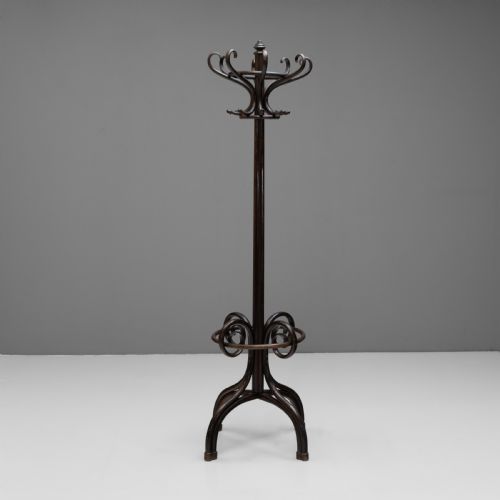
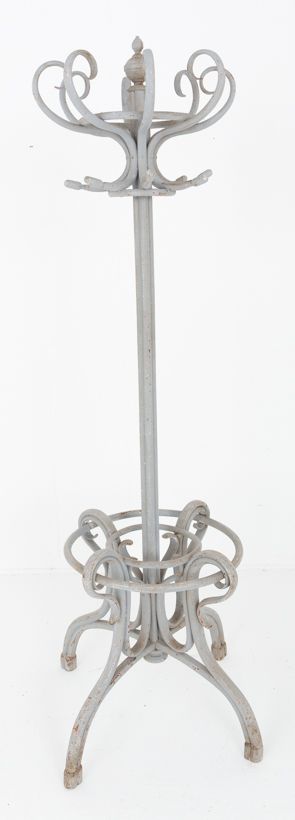
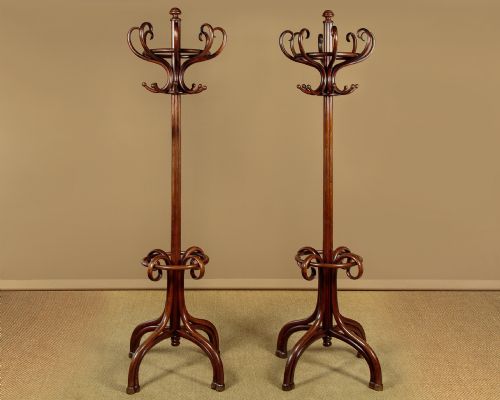
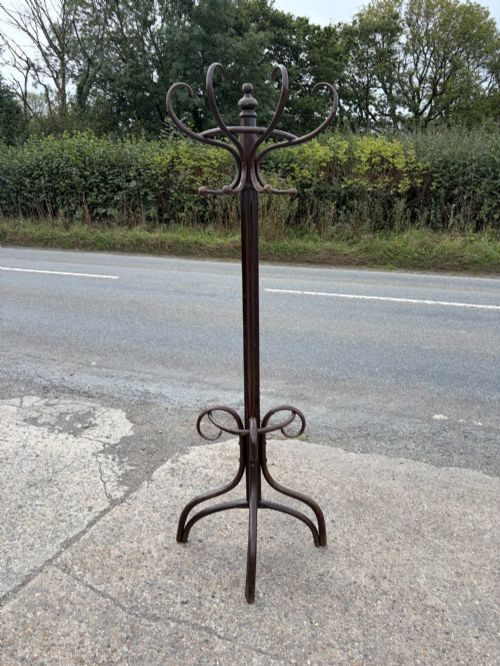
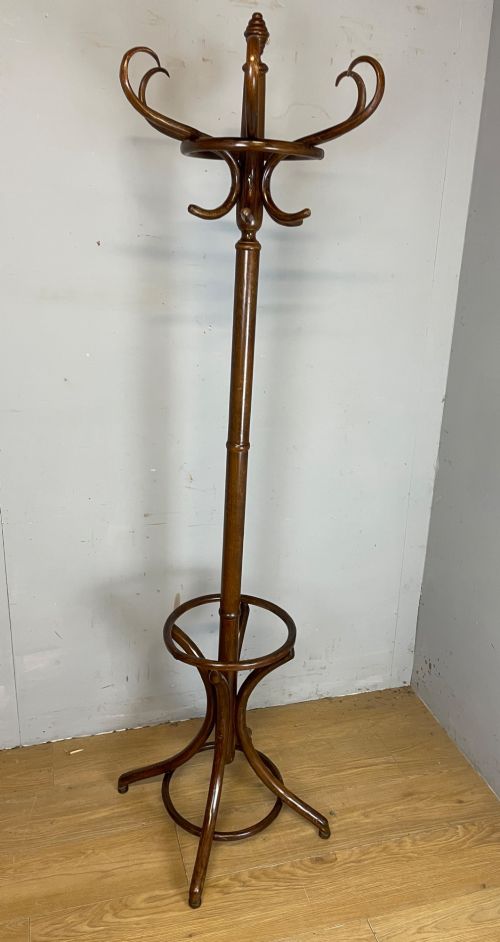
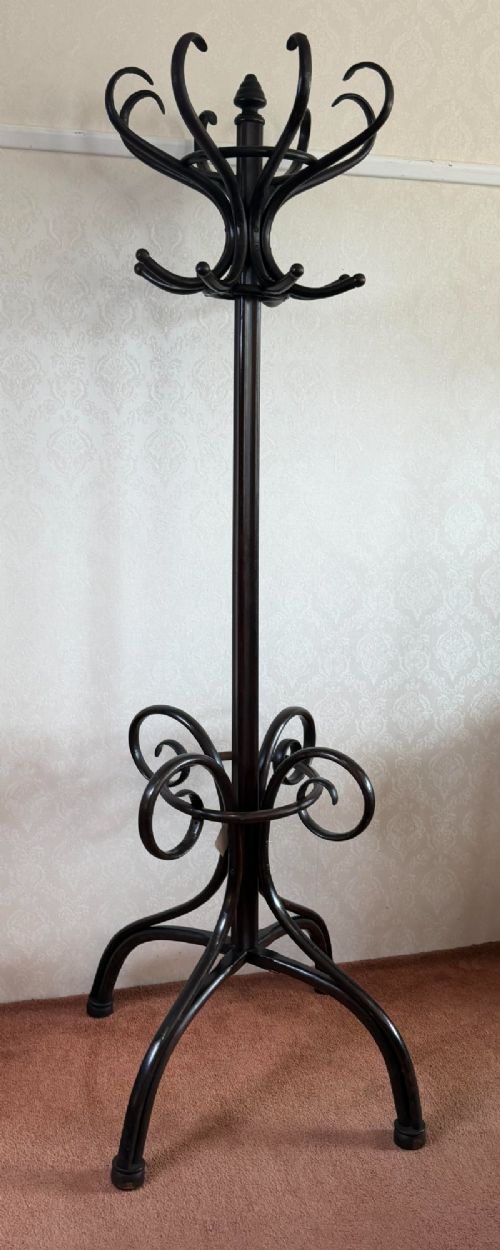
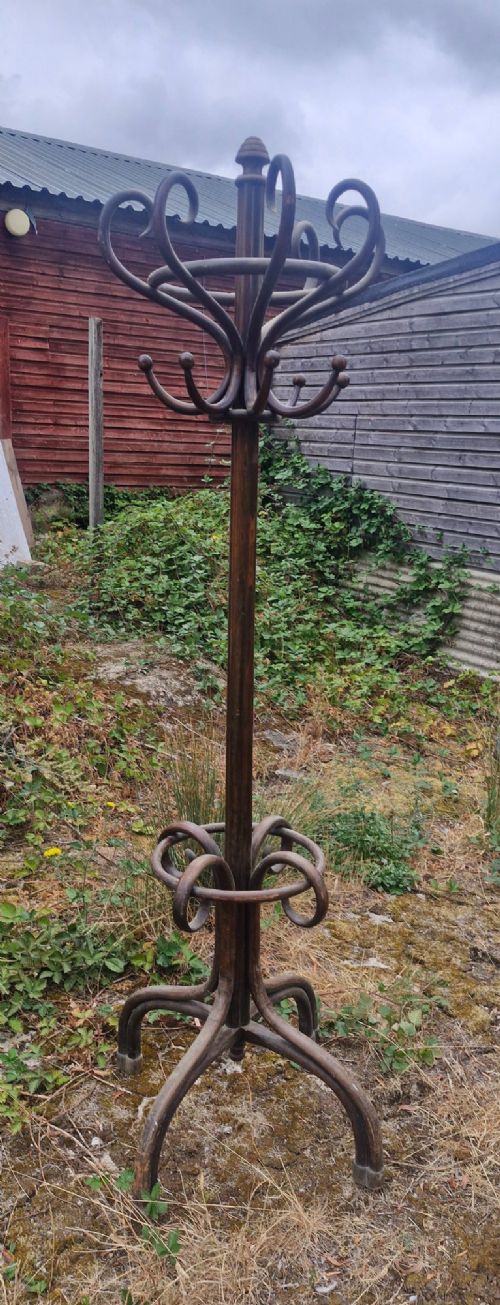
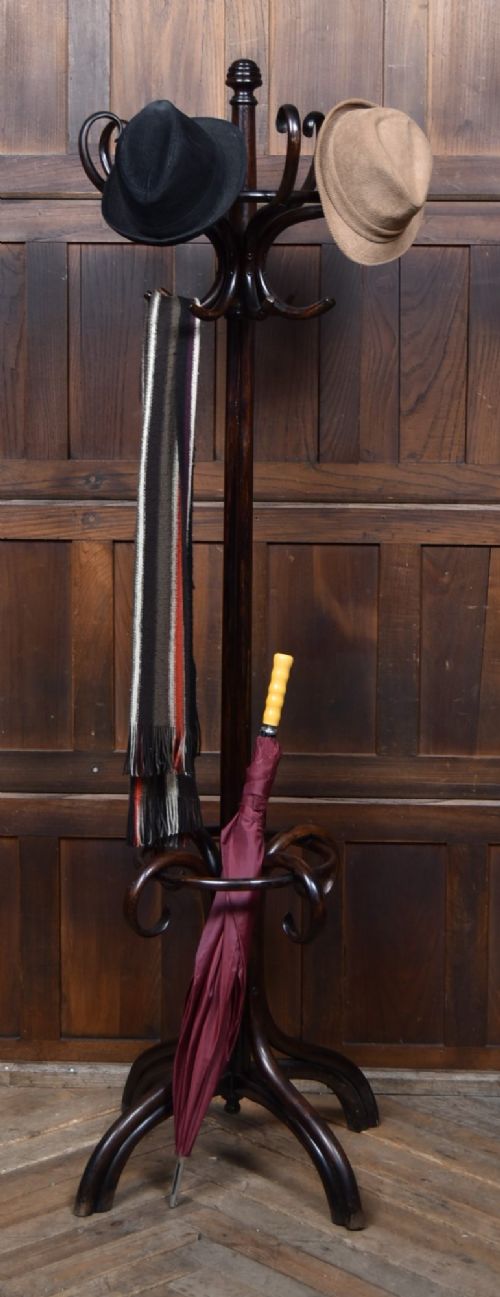
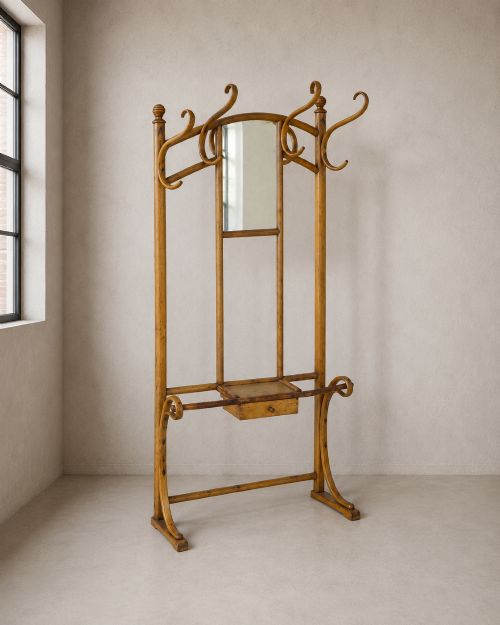
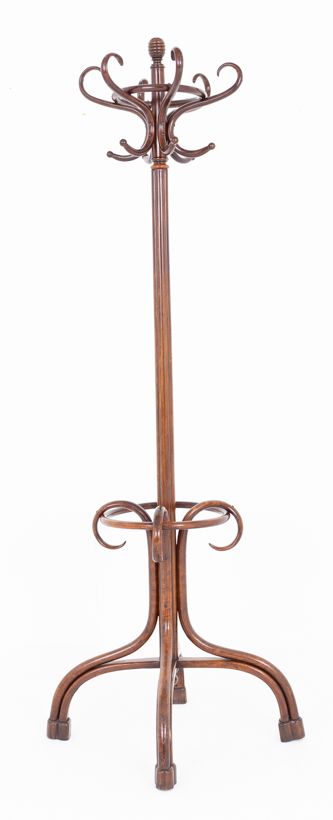
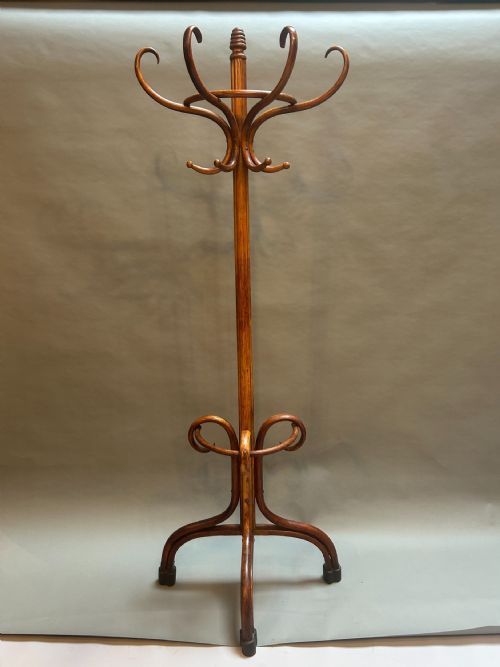
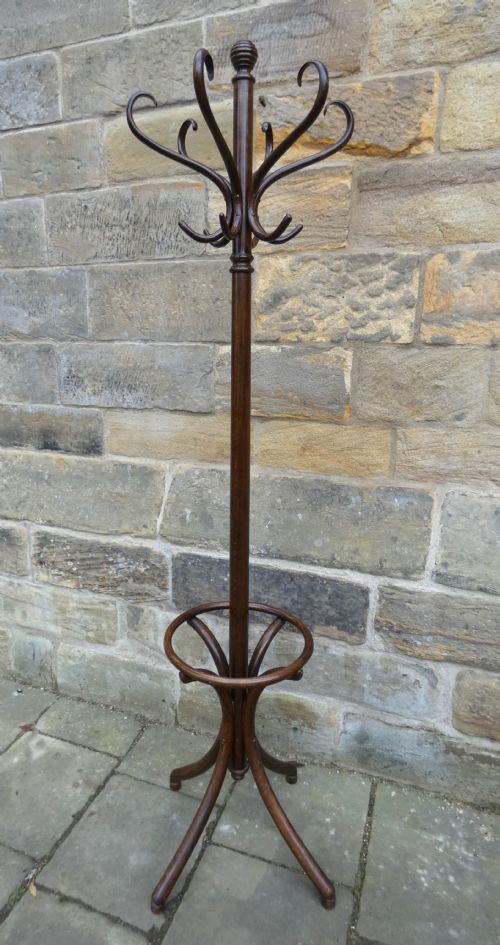
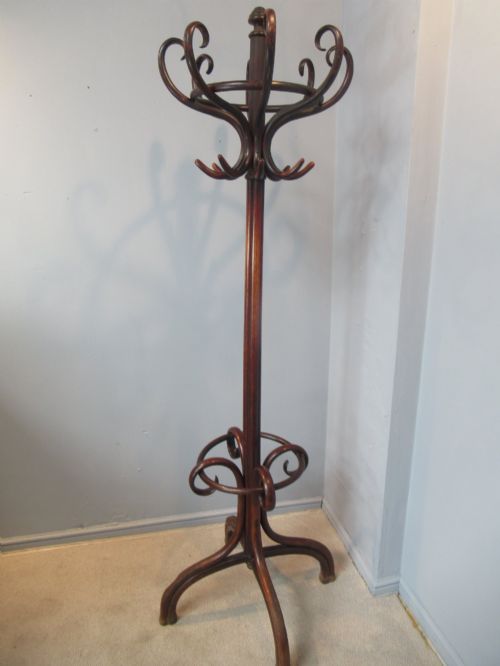
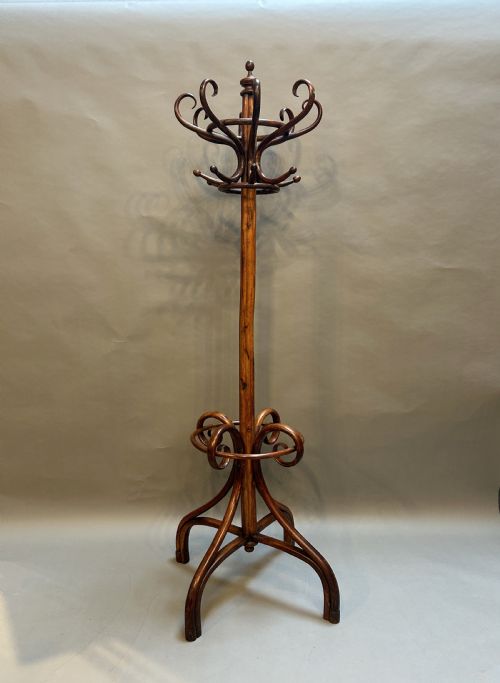
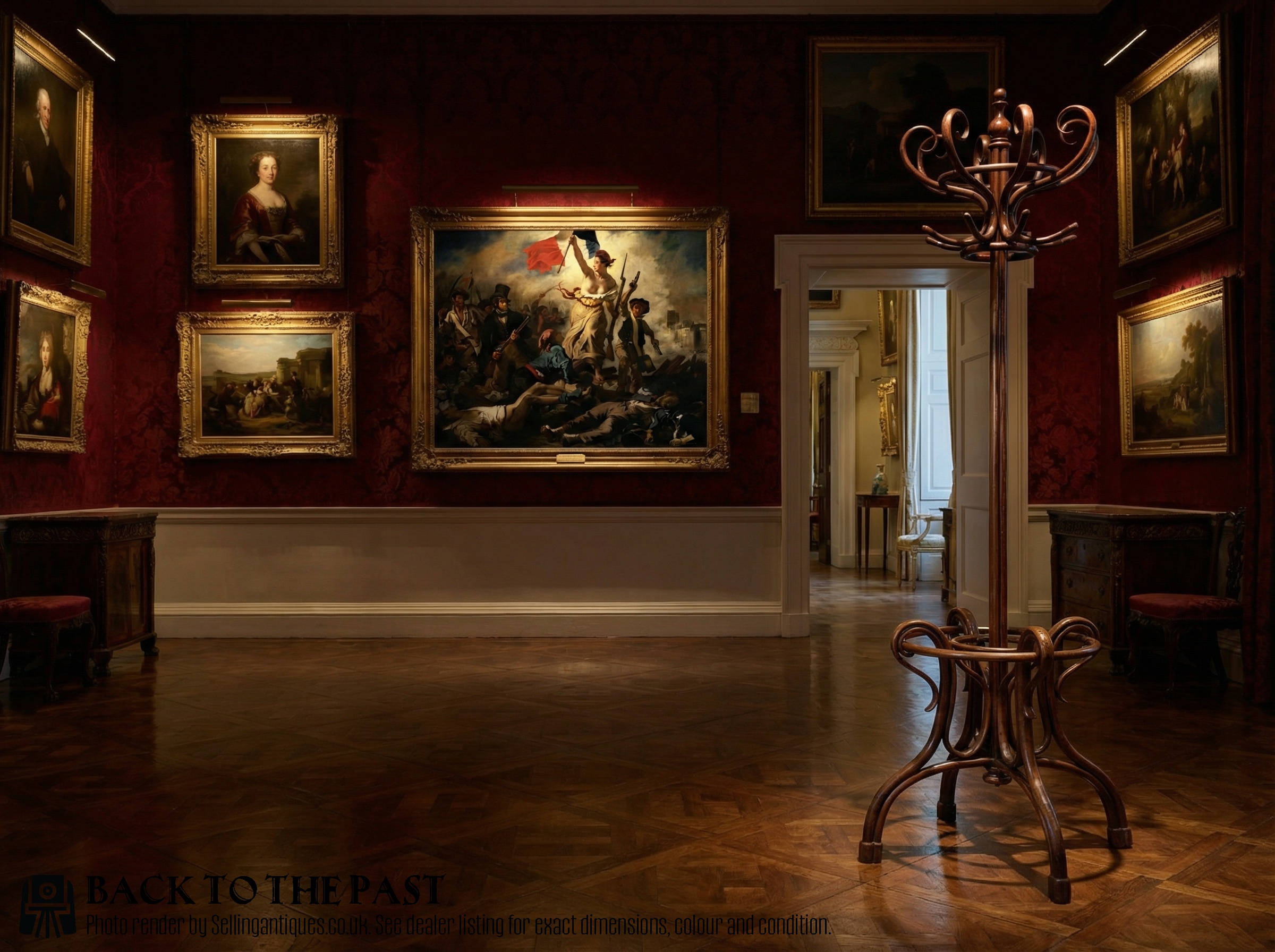
A bentwood hat rack is a fluidly curved item of hall furniture designed to hold headwear and outerwear in domestic spaces.
Bentwood Hat Rack
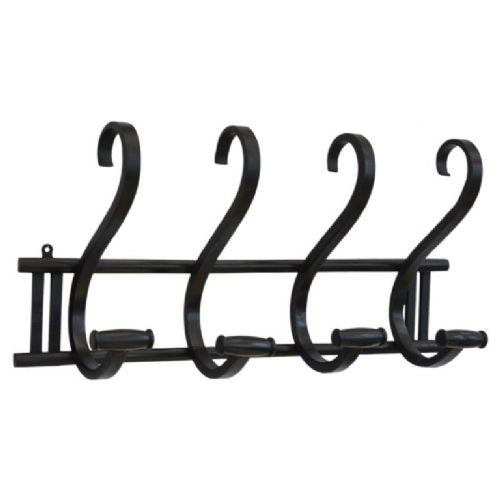
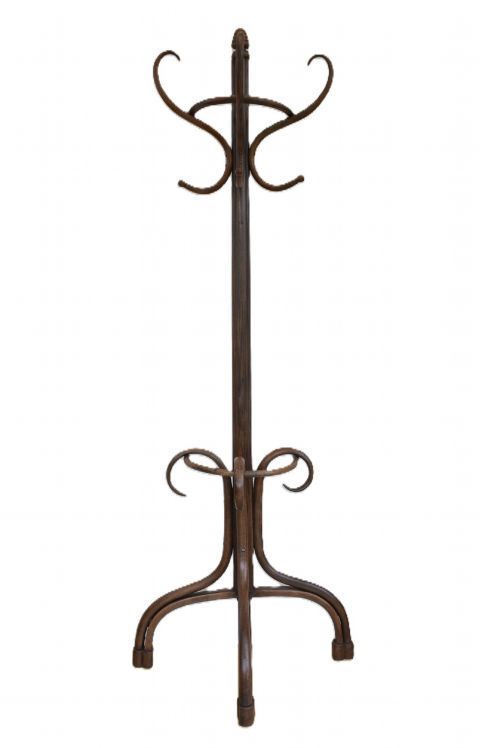
The bentwood hat rack appears in various configurations throughout the 19th and early 20th centuries, including floor-standing hall trees, wall-mounted racks, and half-round designs suited for narrow spaces. These items served busy hallways by accommodating hats, coats, sticks, and umbrellas close to the entrance.
Floor-standing models span the Victorian and Edwardian periods, stretching into the 1920s and 1930s with recurring forms like revolving stands and double tops. Wall-hanging versions offer a compact footprint while maintaining the characteristic curved timber profile.
Austrian and continental workshops produced many of these pieces, which often combine hat hooks with umbrella rings or stick stands. The overarching style follows the aesthetic established by major manufacturers of steam-bent furniture.
Distinctions in construction and finish
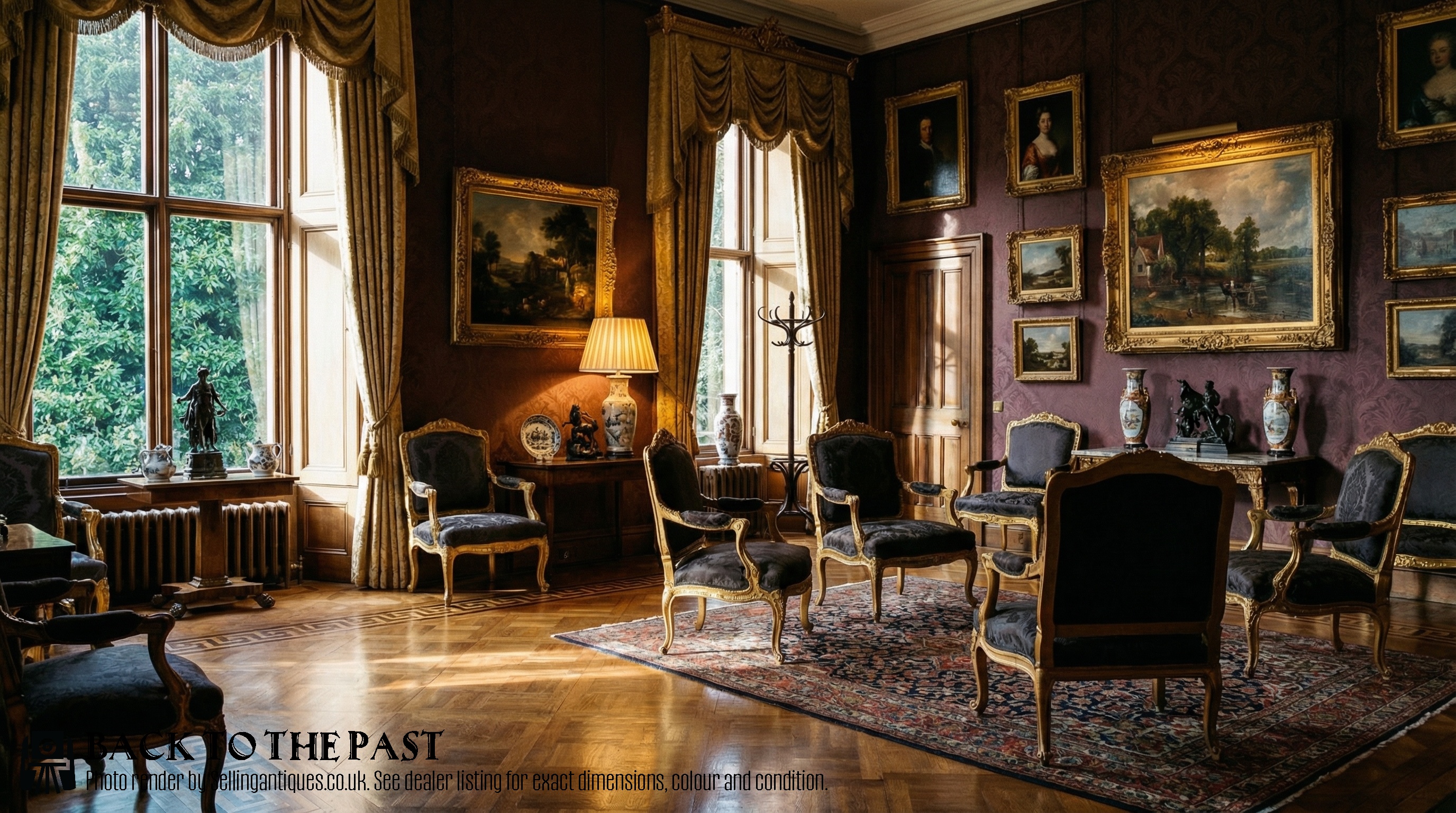
Heavier gauges of timber and robust joinery separate substantial pieces from lighter alternatives, particularly in floor-standing coat trees that must bear significant weight. The complexity of the upper crown, such as double tops or revolving mechanisms, indicates more ambitious workshop production.
Original surface treatments, including honey-coloured stains or ebonised coatings, retain greater character than stripped or heavily refinished wood. Maker labels or stamps contribute to historical interest by identifying specific continental makers.
Bentwood Hat Rack Retail Price Guide 2026
Typical asking prices for bentwood hat rack among the pieces listed under this phrase on Sellingantiques today, from the lower quarter to the upper quarter. They describe what is for sale here now, not the wider market.
A revolving hat stand lets you spin your wardrobe in a circle while looking for yesterday's fedora.
Thonet·Fischel
The Bentwood Hat Rack Glossary
- Bentwood
- Wood that has been shaped by exposure to steam and mechanical pressure. This process creates smooth, unbroken curves without relying on glued joints.
- Hall tree
- A freestanding piece of furniture placed in an entrance hallway. It typically incorporates hooks for hats and coats alongside holders for walking sticks.
- Demi lune
- A half-moon or semicircular shape. In hall furniture, this design allows the piece to sit flush against a wall in confined entryways.
- Ebonised
- Wood finished with a dark stain or polish to resemble ebony. This treatment was common during the Victorian period.
- Revolving
- Designed with a rotating upper section. This feature allows users to access hats and coats suspended from multiple hooks without moving the entire base.
Bentwood Hat Rack: Frequently Asked Questions
How do I date a bentwood hat rack?
Dating relies on stylistic markers, construction methods, and period stamps or paper labels. Pieces from the late 19th century often display Victorian proportions, while those from the Edwardian era through the 1930s show simpler structural lines.
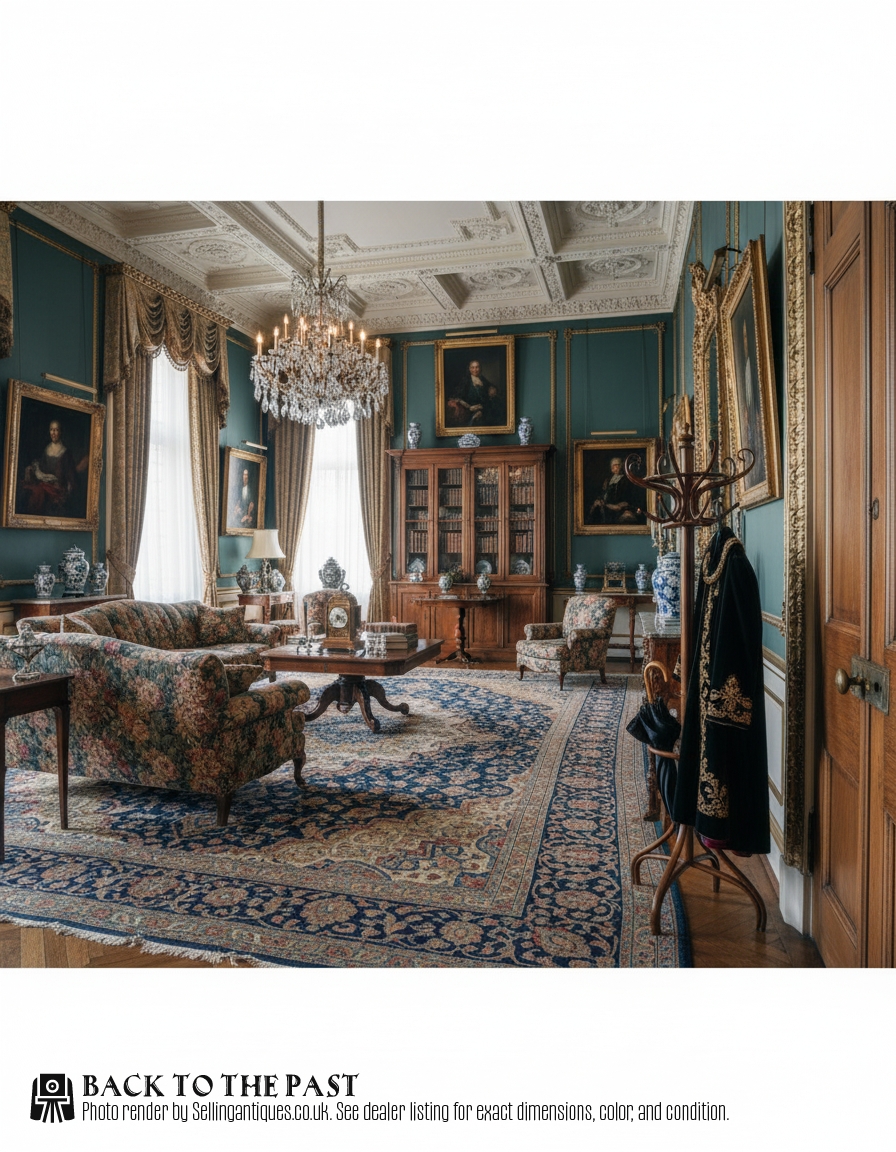
Makers such as Thonet and Fischel sometimes marked their output with brand signatures or stamps on the underside of the base or along the wooden components. Comparing the complexity of the crown and the type of finish helps narrow the decade of production.
Are these items stable enough for heavy coats?
Floor-standing designs feature wide bases or weighted lower rings intended to distribute the load of multiple heavy garments. Large pieces handle winter coats and hats effectively when placed on level flooring.
Wall-mounted versions require secure attachment to wall studs or masonry to support the weight of outerwear. Revolving models balance loads across a central vertical shaft.
Where should I place a hall stand?
These items function best in entrance halls, corridors, or porches where outdoor garments are routinely removed. Freestanding models require sufficient clearance around the base for hats and umbrellas.
Half-round or wall-mounted versions suit narrower passages where floor space is limited. Their vertical orientation makes efficient use of wall area in compact entryways.