

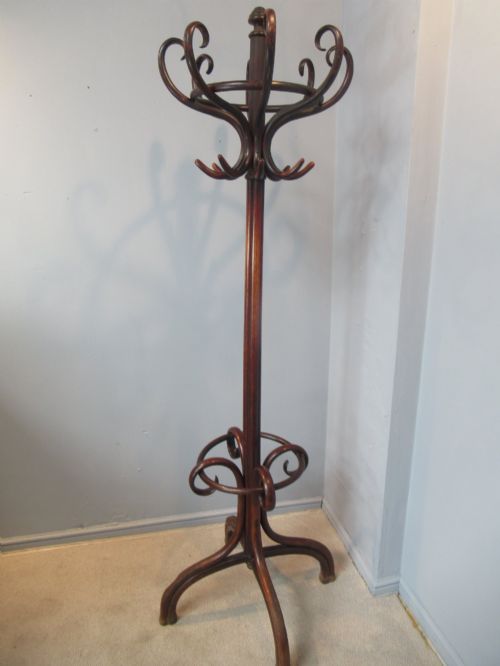
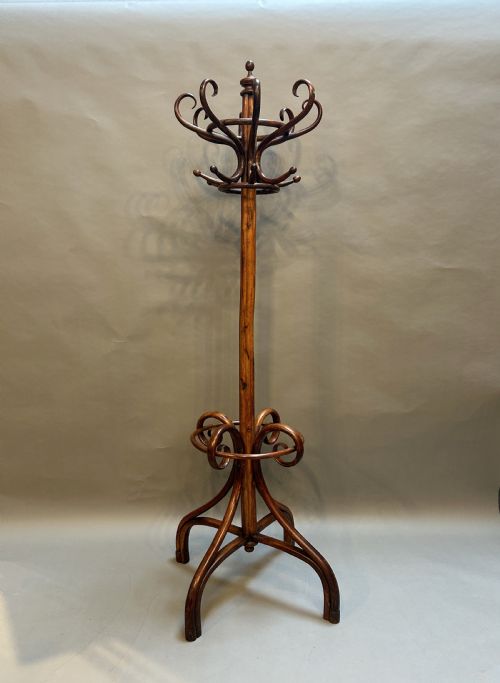
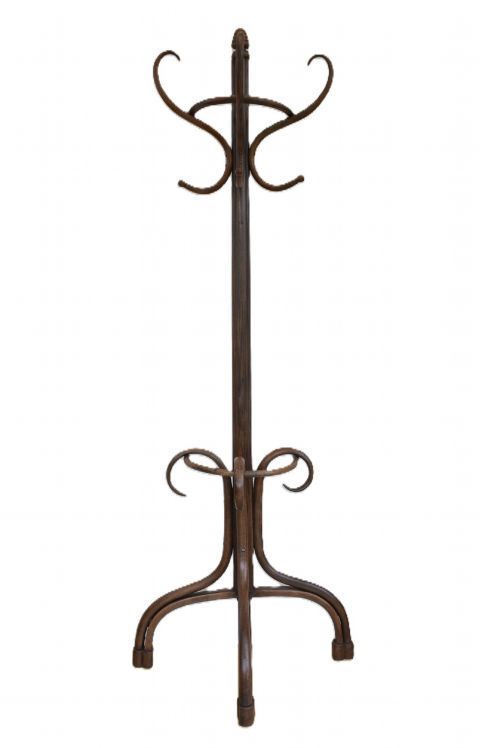

Bentwood Coat Stand
A bentwood coat stand offers a sturdy, graceful post for hats and coats, bringing organic curves into a hallway.
Bentwood Coat Stand
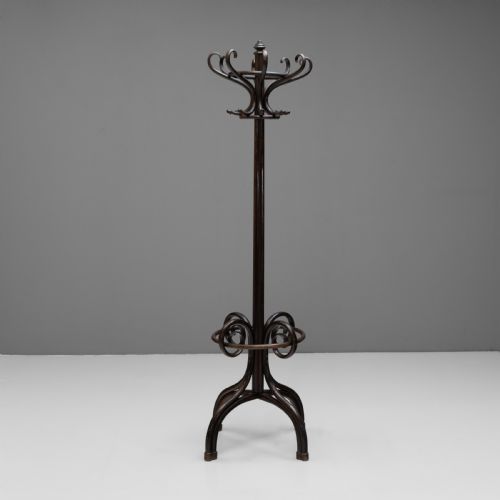
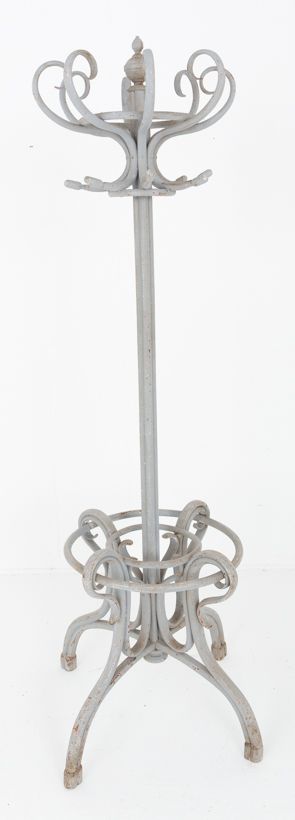
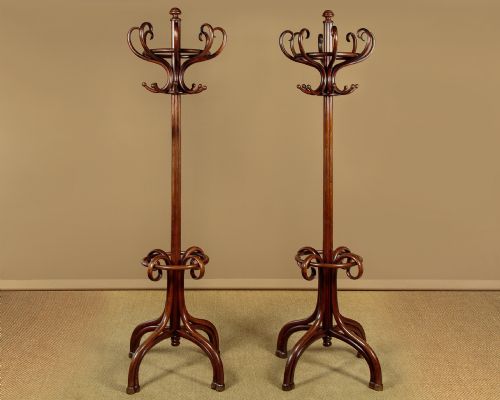
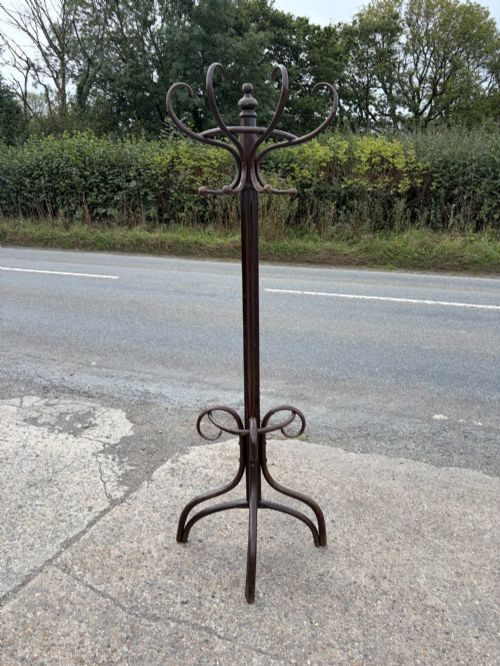
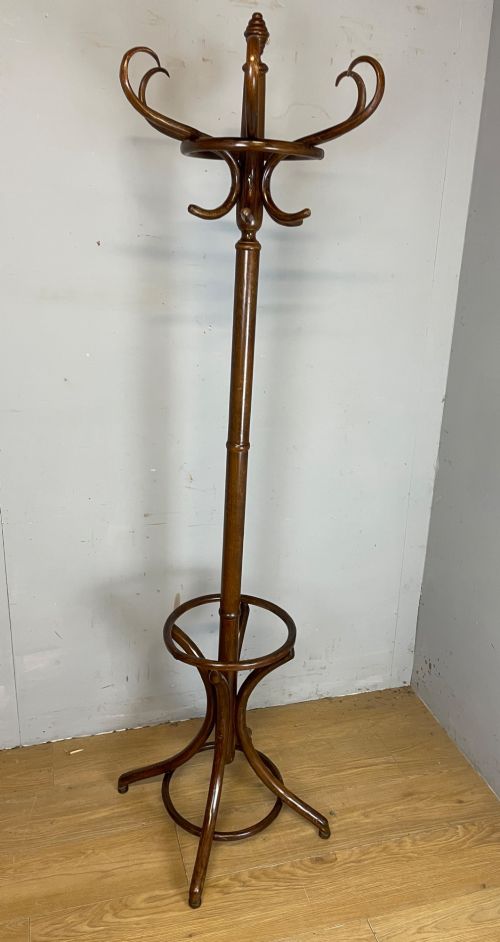
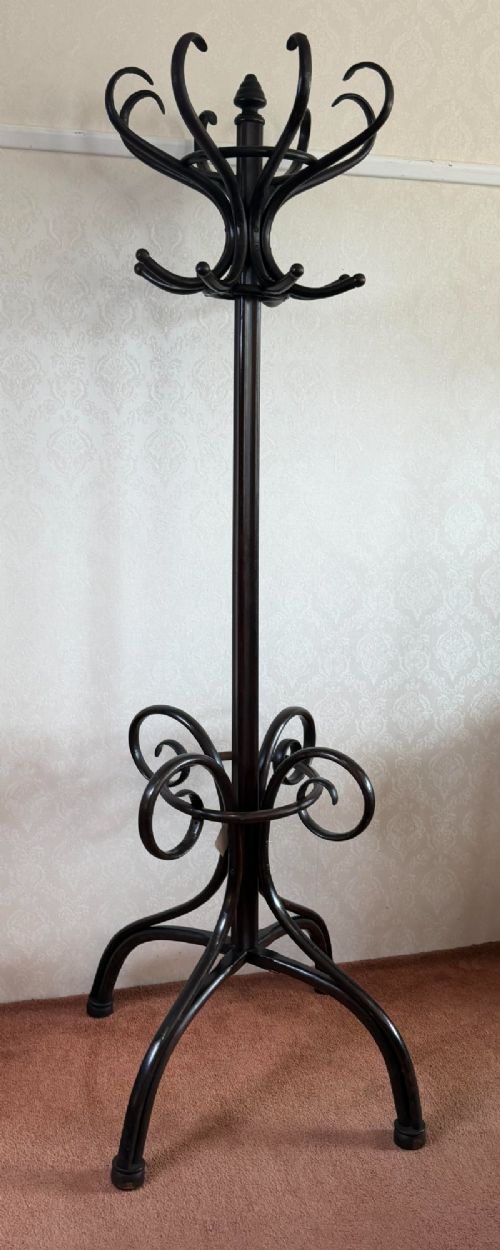
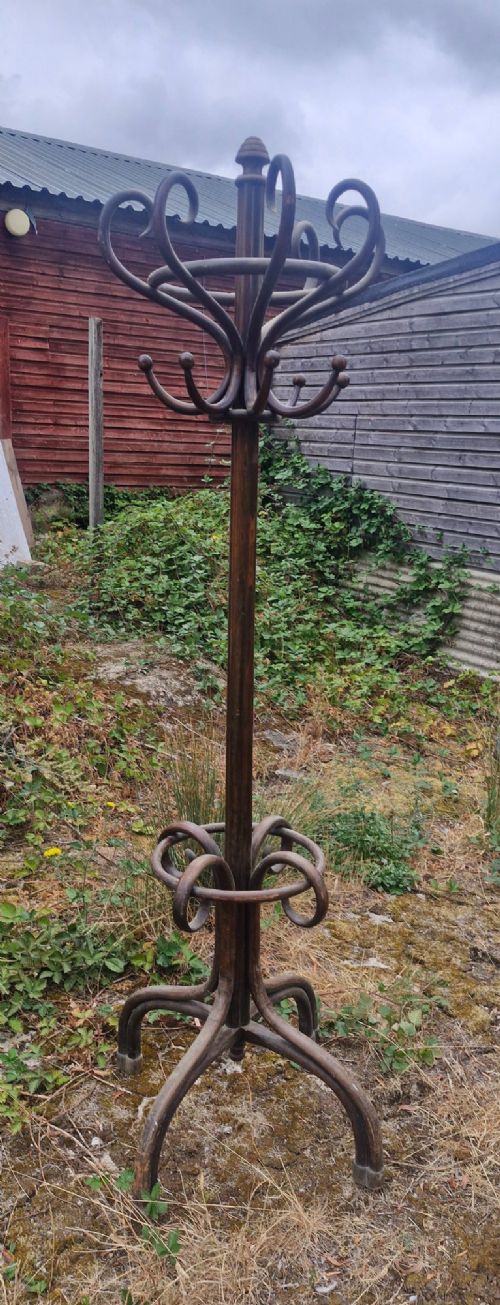
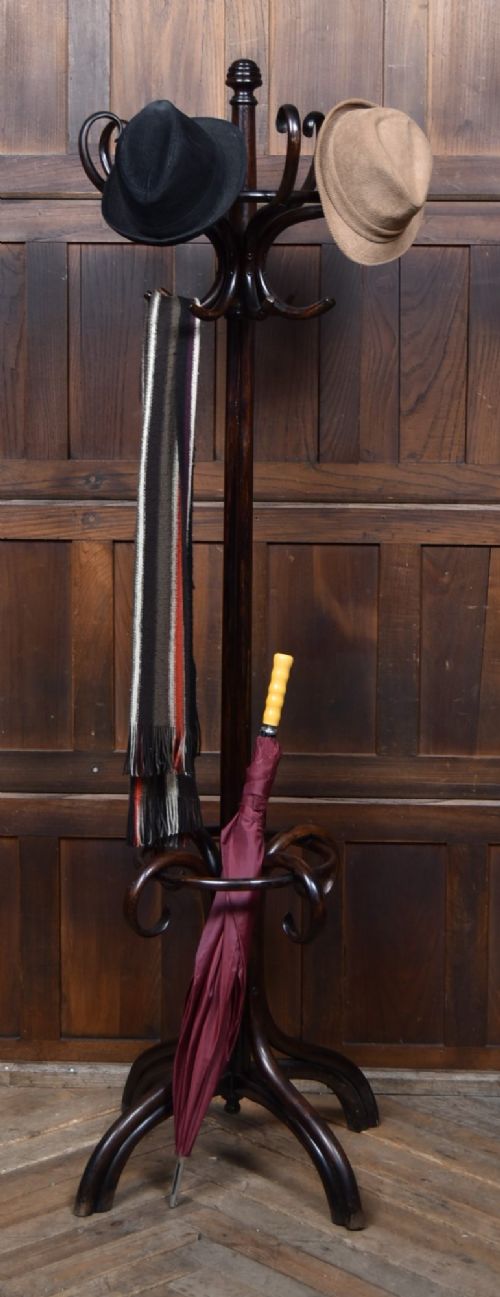
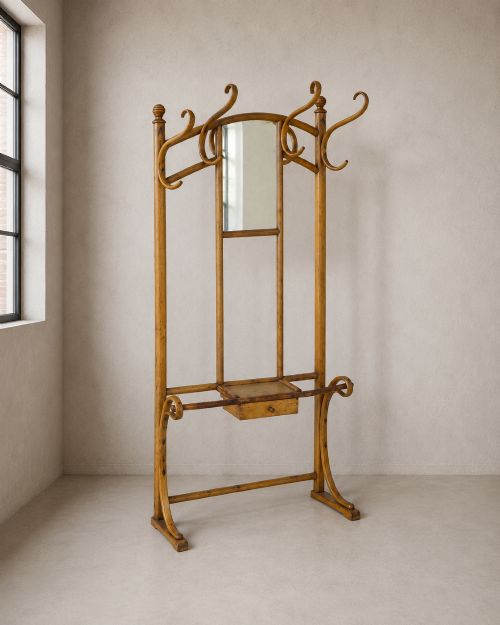
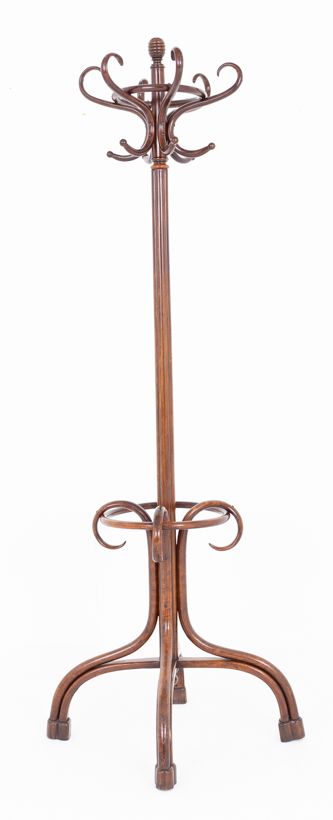
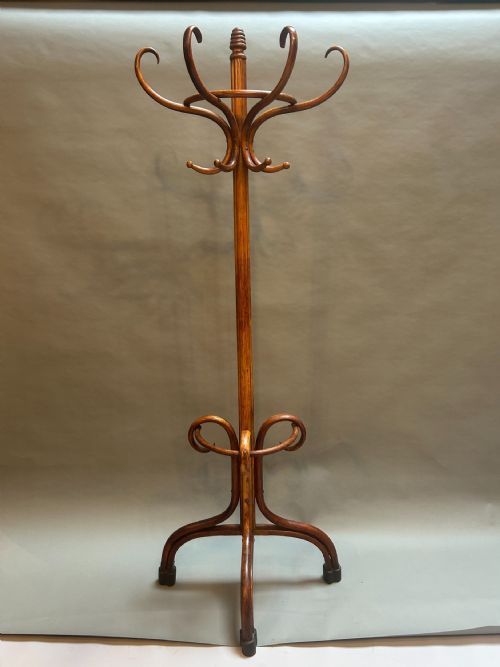
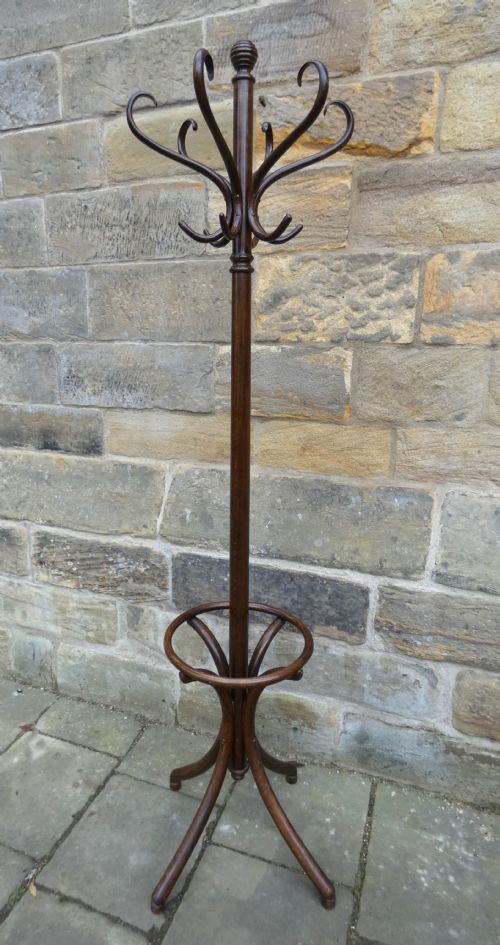
A bentwood coat stand is a tall, freestanding piece designed to hold garments and headwear in a hallway or entrance. The forms seen here include standard upright posts, half-round wall-standing designs, and revolving variants with multiple tiered hooks.
Most examples date from the late nineteenth century through to the interwar decades, spanning the Victorian, Edwardian, and early twentieth-century periods. These furnishings range from simple umbrella-holding hall stands to large, double-top configurations intended for busy domestic spaces.
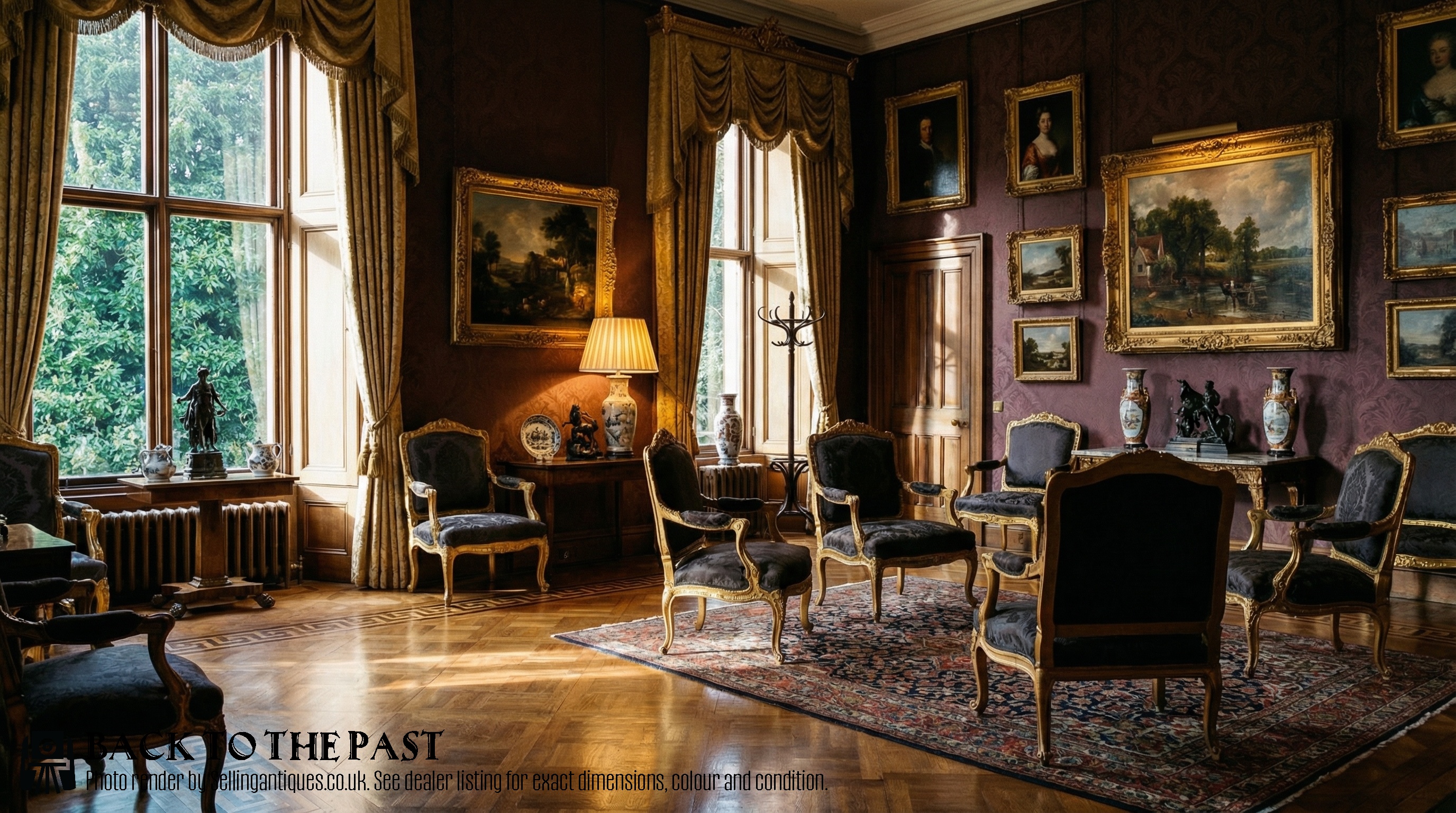
How they were made
These items are constructed primarily from beech or beechwood, selected for its tight grain and strength. Wood is subjected to steam to soften the fibres, allowing craftsmen to bend the timber into tight, curving arches without snapping.
Makers finished the bent components with a clear wood stain or ebonised surfaces, sometimes presenting honey-coloured tones that highlight the natural grain. Structural integrity relies on secure screw joints and metal collars binding the curved hooks to the central column.
Bentwood Coat Stand Retail Price Guide 2026
Typical asking prices for bentwood coat stand among the pieces listed under this phrase on Sellingantiques today, from the lower quarter to the upper quarter. They describe what is for sale here now, not the wider market.
Listings feature beech and bentwood items spanning the Victorian era, Edwardian period, and the 1920s.
What varies in quality
Quality shows in the smoothness of the steam-bending and the symmetry of the curved scrollwork. Superior items maintain rigid stability at the base, whilst lesser examples suffer from wobbles due to warped timber or weakened joints over decades of service.
Finer productions feature branded paper labels, maker stamps, or cast metal collars stamped by prominent makers. The thickness of the central column and the complexity of the double-top tier also separate standard utility items from more ambitious workshop designs.
Thonet·Fischel
The Bentwood Coat Stand Glossary
- Bentwood
- Wood that has been shaped by exposure to steam and pressure. This technique allows for continuous, flowing curves.
- Demi-Lune
- Half-round in shape, designed to sit flush against a hallway wall. These half-round stands save floor space in narrow corridors.
- Hall Tree
- An alternative term for a stand combining coat hooks, hat rings, and often umbrella compartments. They anchor the entrance of a period home.
- Thonet
- A pioneering Austrian firm famous for popularising steam-bent furniture. Their stamped pieces remain highly sought after by collectors.
- Ebonised
- Wood stained or painted black to imitate ebony. This dark finish appears on selected formal Edwardian examples.
Bentwood Coat Stand: Frequently Asked Questions
How do I date my coat stand?
Examine the construction methods, labels, and screw threads to estimate the production era. Pieces bearing maker stamps or paper labels often point to late nineteenth or early twentieth-century workshops.
Simpler, unbranded models frequently date to the Edwardian period or the 1920s. Comparing the complexity of the scrollwork with documented catalogue designs helps narrow down the decade.
Are these stands stable enough for heavy coats?
Traditional bentwood designs are engineered to support substantial winter garments and heavy hats when balanced properly. Distributing weight evenly across the upper hooks prevents the tall post from leaning.
Heavier models featuring wide, splayed feet offer greater floor stability than smaller variants. Placing them on level flooring ensures daily use remains safe and secure.
How should I clean stained beech wood?
Maintain the surface by wiping gently with a dry or barely damp microfibre cloth to remove dust. Avoid harsh chemical cleaners that can strip the vintage wood stain or damage the polished finish.
Applying a quality beeswax periodically nourishes the beech and preserves its sheen. Keep the stand away from direct radiators to prevent the steam-bent timber from drying out and cracking.