
Thonet Style Coat Rack
These thonet style coat rack pieces combine steam-bent ingenuity with domestic utility, offering a sculptural silhouette that anchors a hallway.
Thonet Style Coat Rack
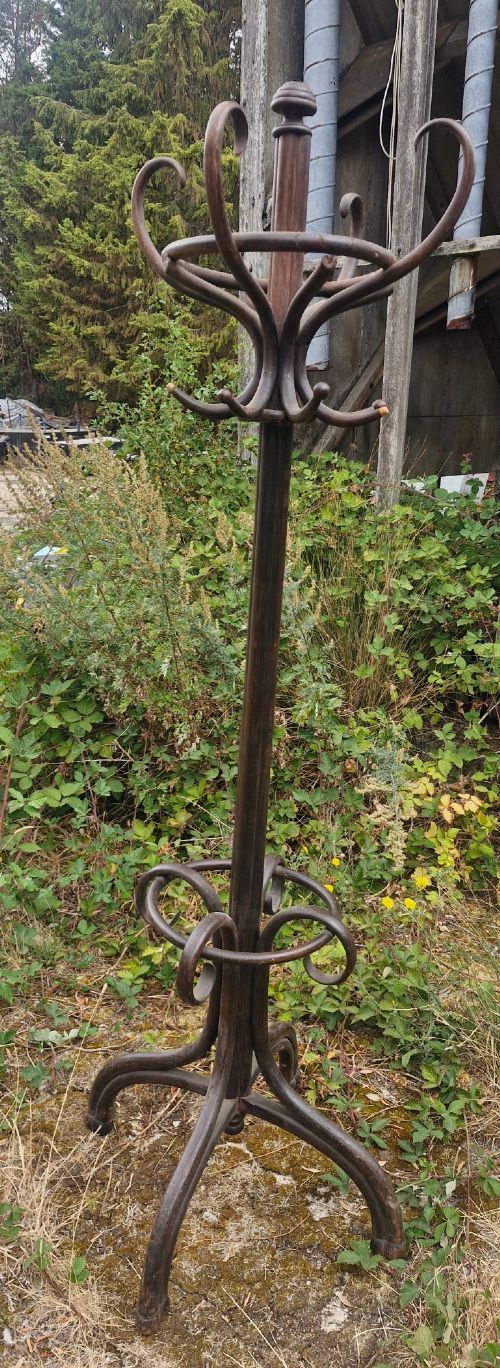
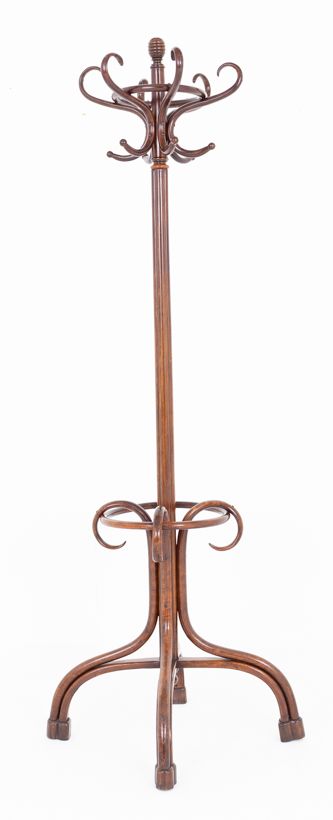
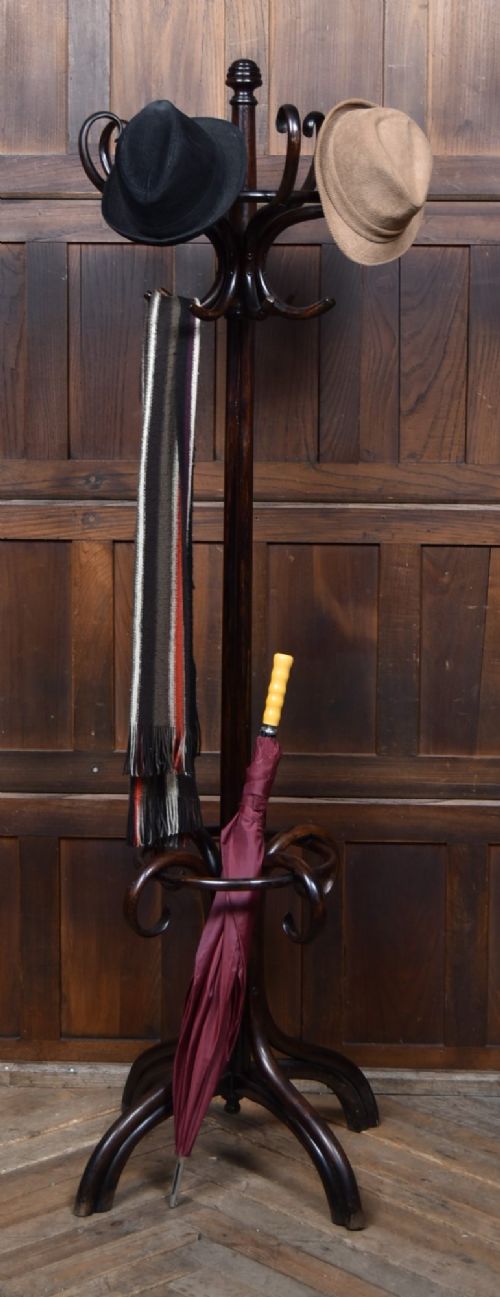
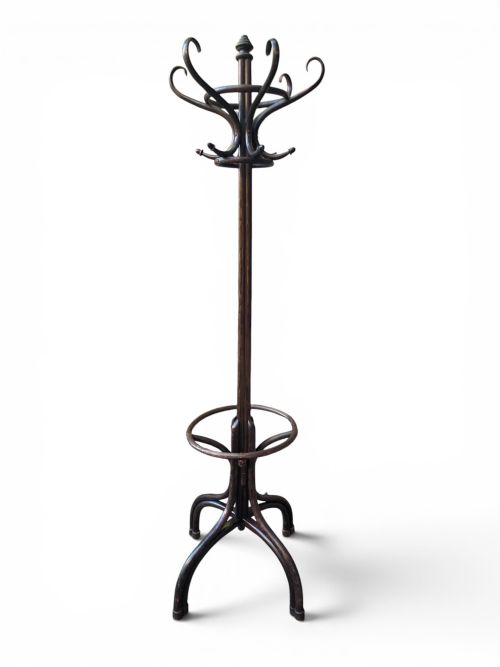
A thonet style coat rack brings inventive nineteenth-century curves into the hallway, serving to suspend hats, coats, and walking sticks in a compact footprint. These freestanding pieces and wall-mounted racks emerge primarily from the Victorian and Edwardian eras, stretching into the nineteen-thirties.
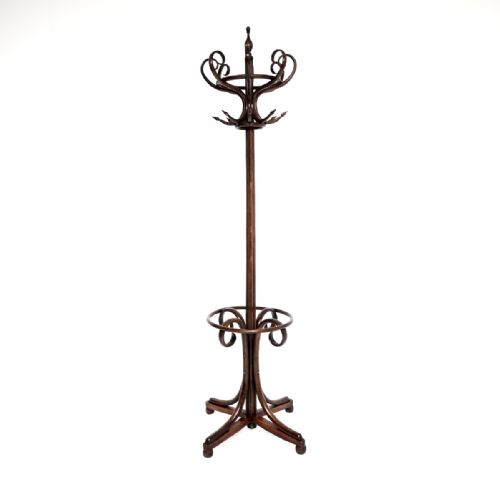
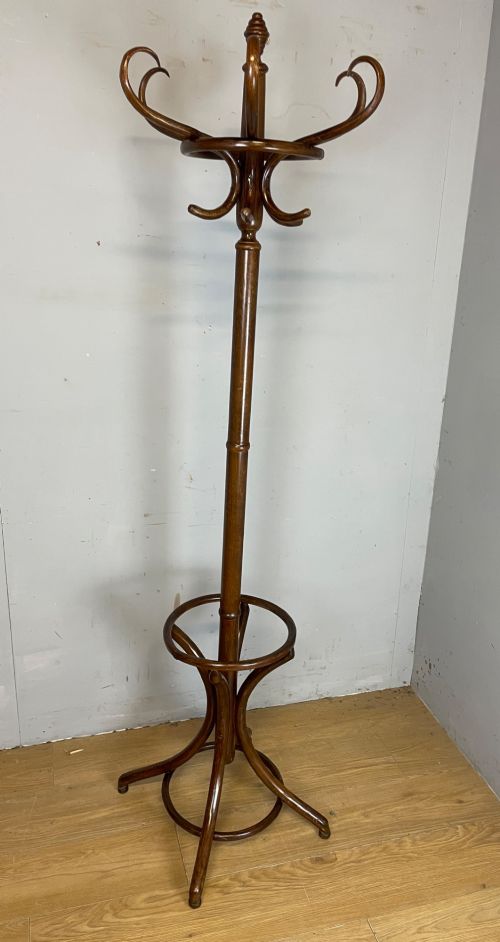
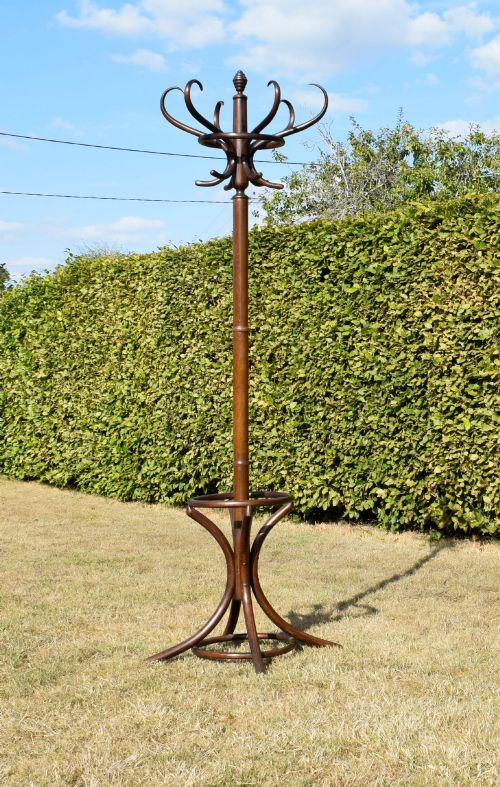
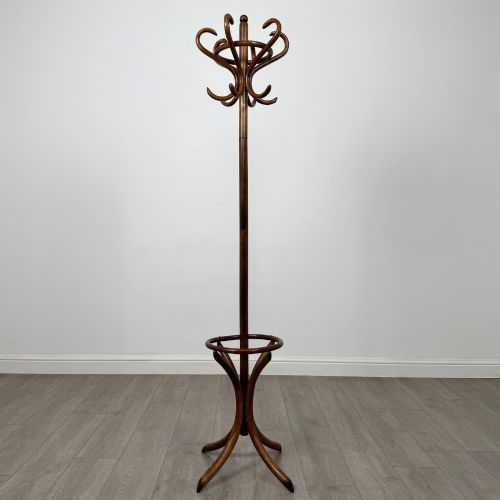
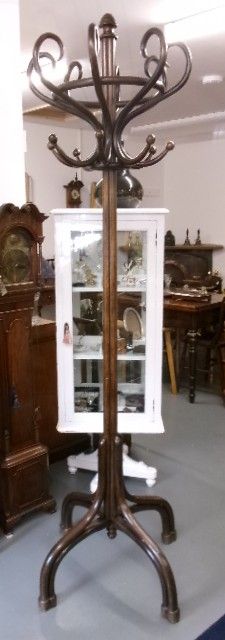
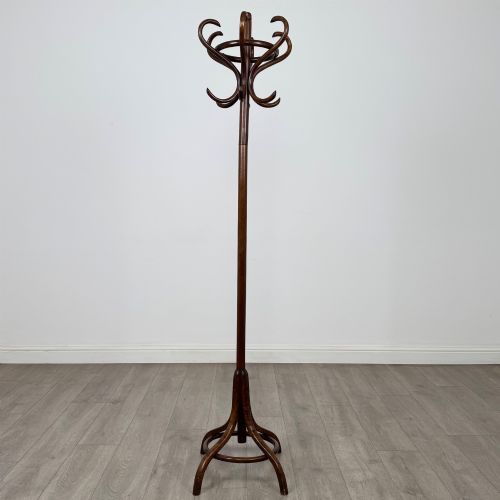
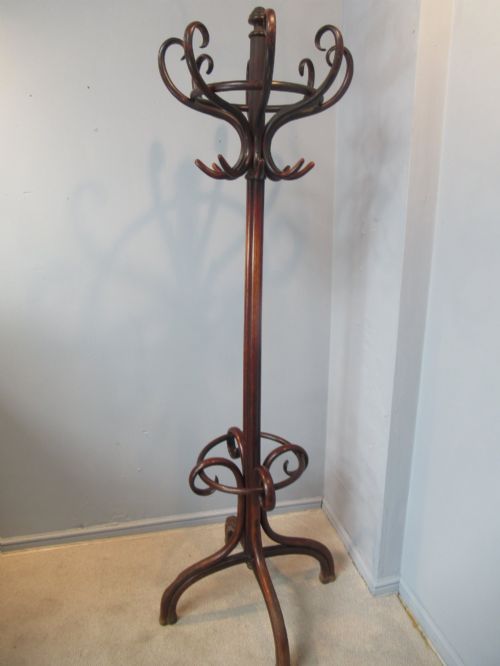
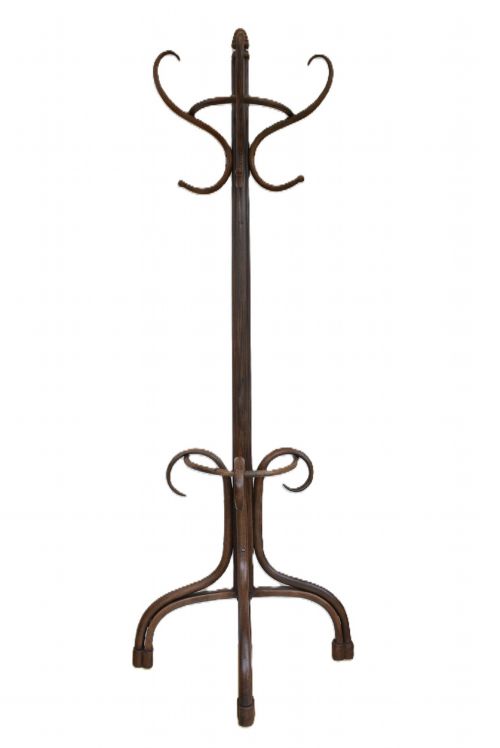
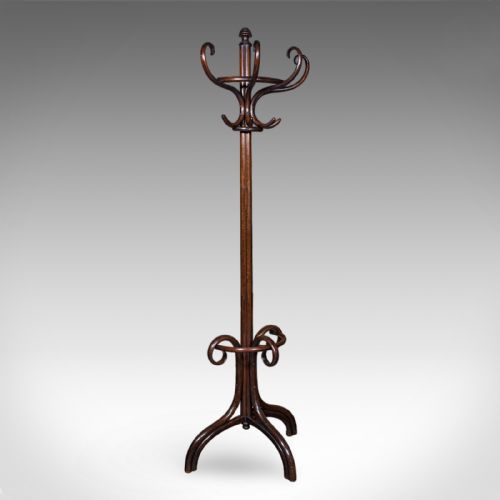
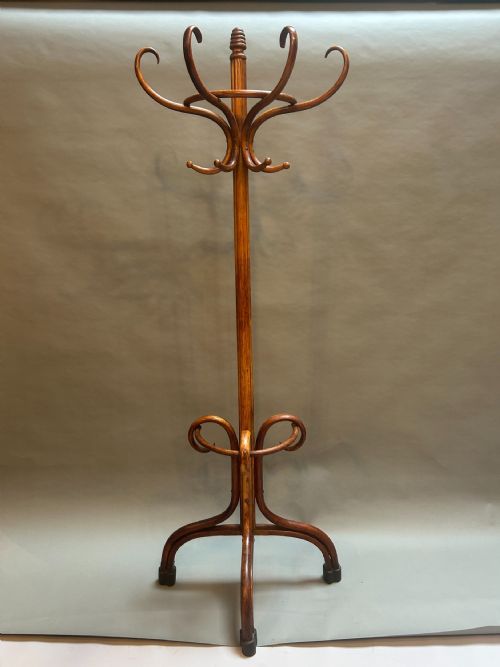
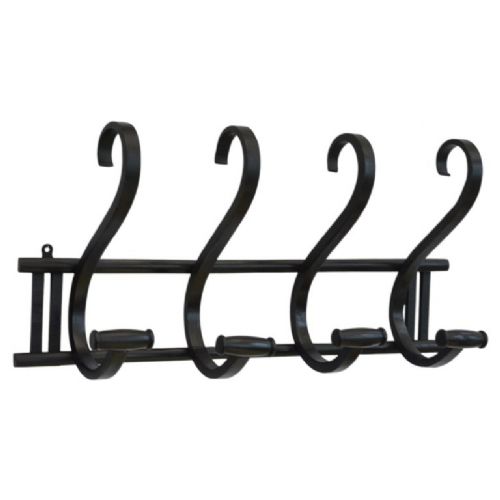
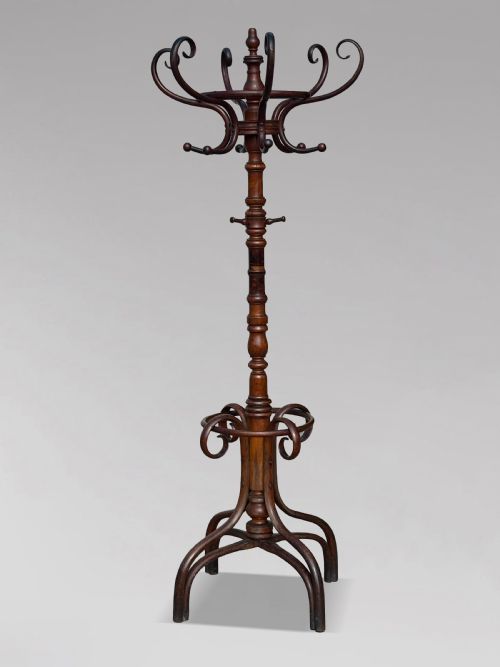
The version most commonly met on this page is the tall floor-standing bentwood hat and coat stand, often featuring a central turned column surrounded by scrolled upper hooks and a lower ring for umbrella storage. Pieces appear in full-round configurations alongside half-round or demi-lune variants designed to sit flush against a wall.
Originating in Austrian traditions and the workshops inspired by Michael Thonet, these items span periods from the late nineteenth century through the early twentieth century. Makers such as Fischel also contributed notable examples to this lineage of steam-bent furniture.
Materials and Construction
Makers relied predominantly on beech, bentwood, and steamed beechwood, exploiting the timber's unique response to moisture and heat. Steaming rendered the solid wood pliable, allowing craftsmen to pull and bend straight lengths into sweeping, continuous curves without losing structural integrity.
The sections were joined using precise manual fitting, screws, and internal blocks, maintaining a light yet resilient frame. Surfaces often received a dark wood stain or an ebonised finish, while selected examples incorporated glass elements.
Thonet Style Coat Rack Retail Price Guide 2026
Typical asking prices for thonet style coat rack among the pieces listed under this phrase on Sellingantiques today, from the lower quarter to the upper quarter. They describe what is for sale here now, not the wider market.
Some Edwardian stands feature a revolving top, letting you spin your hat collection like a carousel before heading out into the rain.
Assessing Quality and Execution
The distinction between standard utility items and finer examples rests on the fluidity of the curves and the cleverness of the double top constructions. Heavier quality stands demonstrate superior gauge in the bent timber components, resulting in greater rigidity across the tiered hanging rings.
Design sophistication also sets individual pieces apart, seen in revolving top mechanisms or half-round wall configurations that required precise joinery. Original labelling, such as factory marks from makers like Fischel, elevates the historical interest of a piece.
Fischel
The Thonet Style Coat Rack Glossary
- Bentwood
- Wood shaped by applying steam to solid timber, rendering it flexible enough to bend into permanent curves. This technique defines the airy framework of these stands.
- Demi Lune
- A half-moon shape allowing furniture to stand flat against a wall. Half-round hall stands utilise this profile to save floor space.
- Ebonised
- Timber finished with a dark stain or black coating to imitate ebony. This treatment gives the beech surface a formal, polished appearance.
- Hall Tree
- An alternative term for a hall stand combining coat hooks, hat receptacles, and stick holders. These multi-functional pieces organise entranceways.
- Revolving
- Describing an upper tier that turns on a central pivot to provide easy access to hanging items. This mechanism represents a more complex configuration.
Thonet Style Coat Rack: Frequently Asked Questions
What is a bentwood coat stand?
A bentwood coat stand is a vertical piece of furniture constructed from steam-bent timber components designed to hold garments and headwear in an entrance hall.
These items utilise curved wooden arms radiating from a central pole to distribute weight evenly.
How do I place a half round stand?
A half round or demi-lune stand rests flat against an entrance wall to maximise floor space in narrow hallways.
This configuration keeps walking sticks and coats accessible without blocking narrow passageways.
Are these stands sturdy enough for daily use?
Heavier quality bentwood stands are engineered to support multiple winter coats and heavy hats without losing balance.
The circular lower ring additionally catches the drips from wet umbrellas while steadying the base.
How do I date a bentwood hall stand?
Dating relies on stylistic clues, construction methods, and period characteristics ranging from Victorian origins to nineteen-thirties production.
Earlier nineteenth-century examples often display maker labels or heavier timber gauges compared to later twentieth-century iterations.