
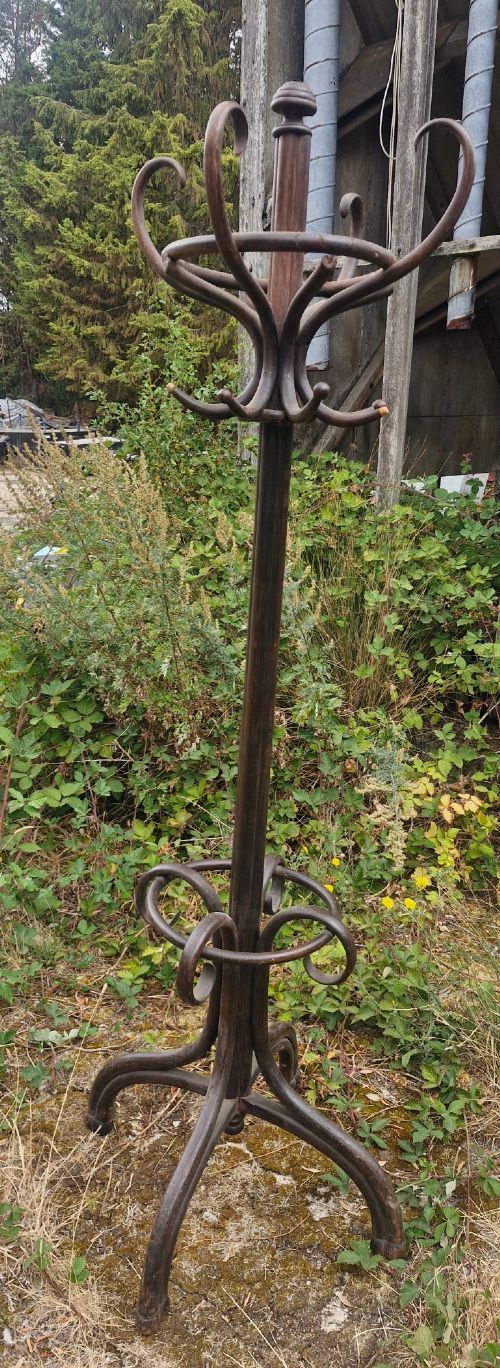
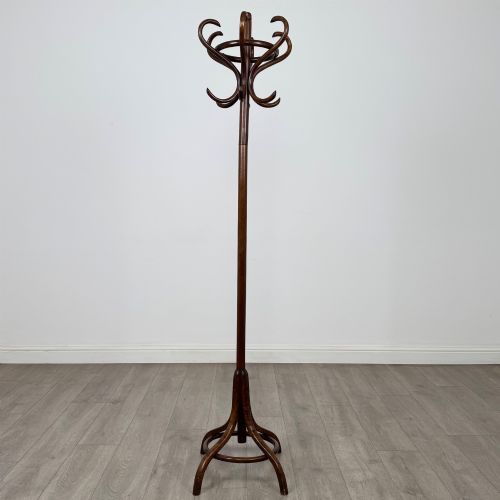
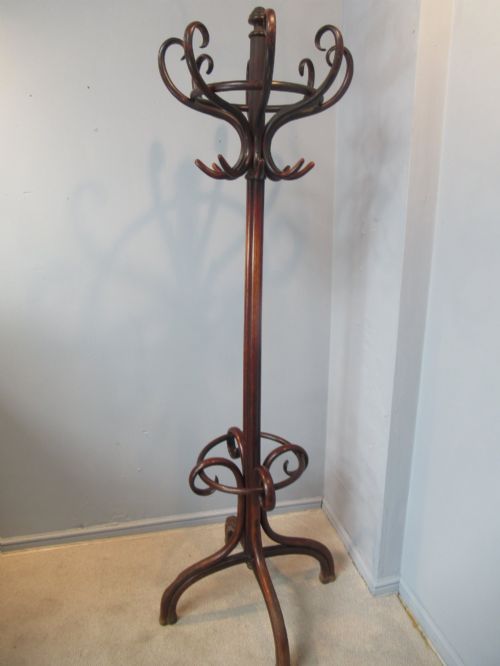
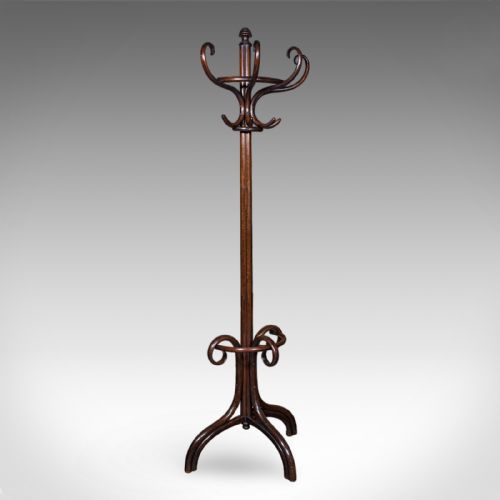


Beechwood Coat Stand
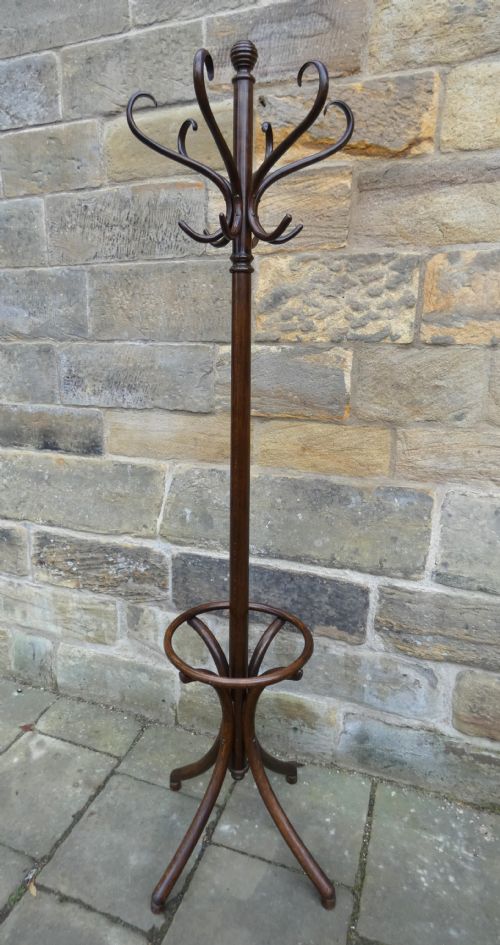
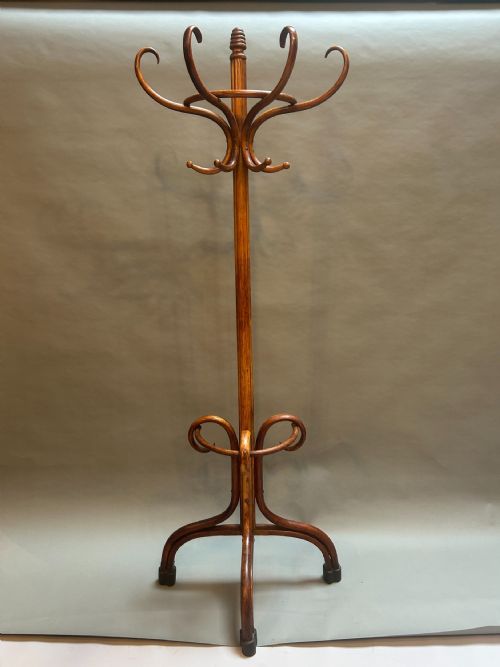
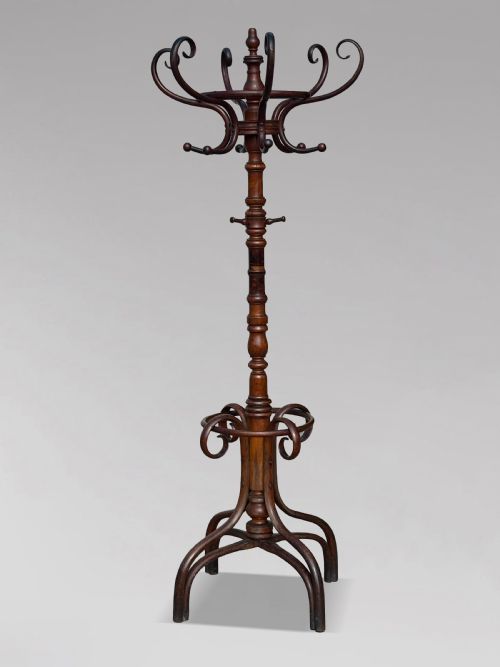
These beechwood coat stand examples bring steam-bent curves and practical upright forms straight from Victorian and Edwardian halls into modern spaces.
Beechwood Coat Stand
A beechwood coat stand is a tall, vertical piece of furniture designed for organising outerwear, hats, and umbrellas in hallways and entrance spaces. These pieces emerge from the nineteenth and early twentieth centuries, spanning Victorian, Edwardian, and later periods.
Most items encountered here adopt the bentwood method, utilising steam-formed timber to create light yet resilient frames. Forms range from simple hat and coat stands to elaborate half hall stands and demi lune variations.
Makers often integrated revolving top sections and designated umbrella rings into the overall structure. This combination of vertical posts and curved hooks provides compact storage suited to narrow vestibules.
How they were made
Production relies heavily on solid beechwood, selected for its ability to accept steam-bending without losing structural integrity. Craftsmen subjected the timber to moisture and heat before forcing the wood into curved forms using specialised metal straps and wooden moulds.
Finishes typically involve wood stain and protective wood finishes to highlight the natural grain of the beech while protecting the surface from daily wear. Component parts are often joined through threaded screws and sturdy mechanical fastenings, particularly beneath revolving sections.
Object forms documented here range from basic hat and coat stands to complex hall stands equipped with umbrella rings and revolving tops.
What varies in quality
Quality in a beechwood coat stand depends largely on the crispness of the steam-bent curves and the overall stability of the vertical column. Finer pieces demonstrate precise symmetry in their scrolling hooks and secure joints that withstand regular weight from heavy garments.
The presence of maker labels, such as those from Thonet or Fischel, elevates the standing of an individual piece. Lesser examples may show clumsier joinery or simpler turnings without the refined proportions found in fine workshop output.
Thonet·Fischel
The Beechwood Coat Stand Glossary
- Bentwood
- Wood that has been shaped by heating and steaming. This technique allows manufacturers to produce curved structural elements without traditional joinery.
- Demi lune
- Half-moon shape. Such stands feature a flat back designed to sit flush against a hallway wall.
- Hall stand
- A piece of furniture combining coat hooks, hat racks, and umbrella storage. Many include integrated mirrors or small surfaces.
- Thonet style
- Furniture following the design principles pioneered by Michael Thonet. It emphasises lightweight bent beech construction and graceful curvilinear forms.
Beechwood Coat Stand: Frequently Asked Questions
How do I clean a beechwood coat stand?
Dust the bentwood frame regularly with a dry cloth to prevent dirt accumulation in the curved joints. Avoid harsh chemical cleaners that can strip the original wood finish.
Apply a mild furniture wax occasionally to nourish the beechwood and maintain its natural lustre. Keep the stand away from direct heat sources to prevent the steamed wood from drying out.
Are these coat stands stable enough for heavy coats?
These structures are engineered to balance weight evenly across multiple curved hooks radiating from a central post. Distributing heavy garments symmetrically prevents the upright frame from leaning.
Heavier items like winter coats sit securely when placed on the lower or middle tiers. The weighted or wide-spreading feet provide a solid foundation on most floor types.
What is a revolving top section?
A revolving top section allows the upper tier of coat hooks to spin independently around the central upright post. This mechanism lets users access hats and garments hanging on the back side without moving the entire piece.
Such rotating components often feature internal metal swivel mechanisms hidden beneath the bentwood housing. They represent a characteristic detail of advanced nineteenth-century hall stands.
How can I tell a Victorian stand from an Edwardian one?
Victorian examples often display heavier ornamentation, darker wood stains, and more complex turnings around the base and central shaft. They frequently incorporate mirrors or umbrella compartments into elaborate hall stand designs.
Edwardian pieces tend toward lighter proportions and simpler bentwood forms with fewer decorative flourishes. The focus shifts to clean curved lines and minimalist utility in the hallway.