
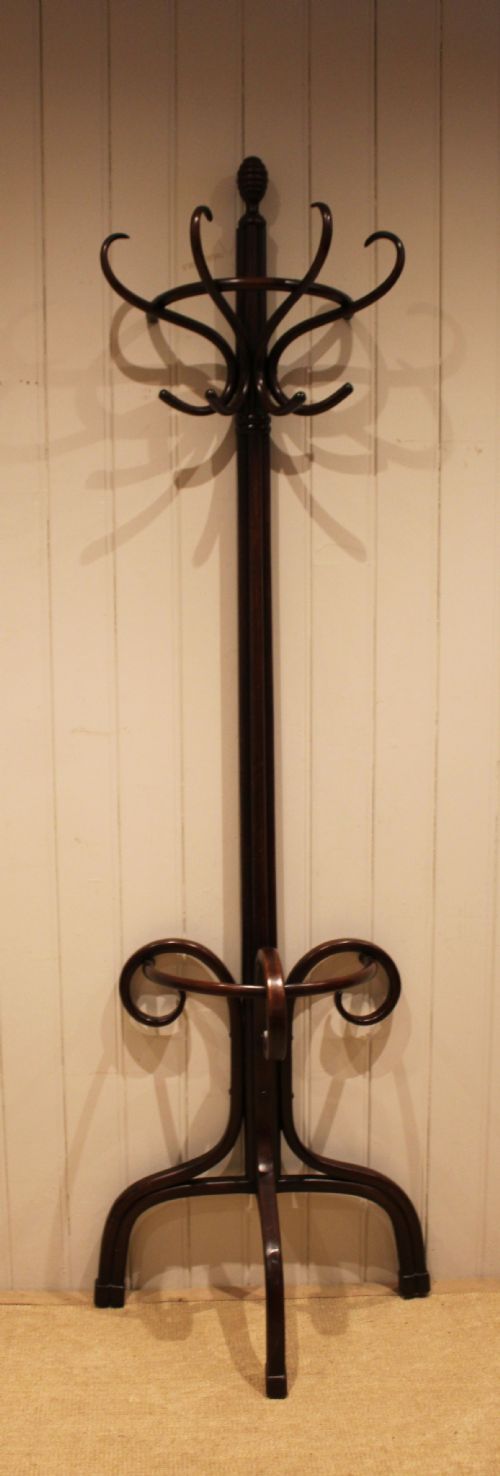


Vienna Bentwood Coat Rack
A vienna bentwood coat rack brings architectural curves into a hallway, offering light yet sturdy vertical storage.
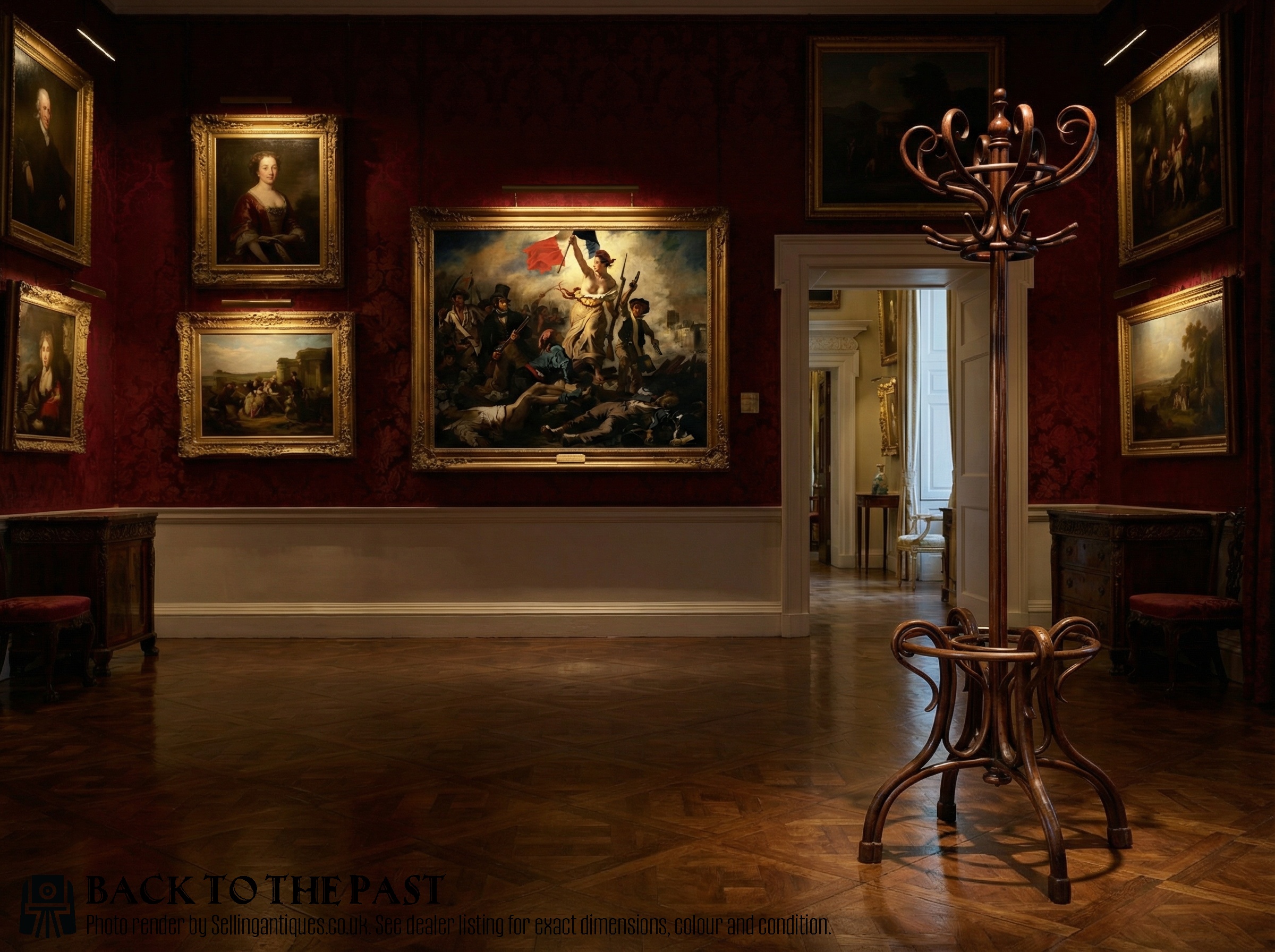
Vienna Bentwood Coat Rack
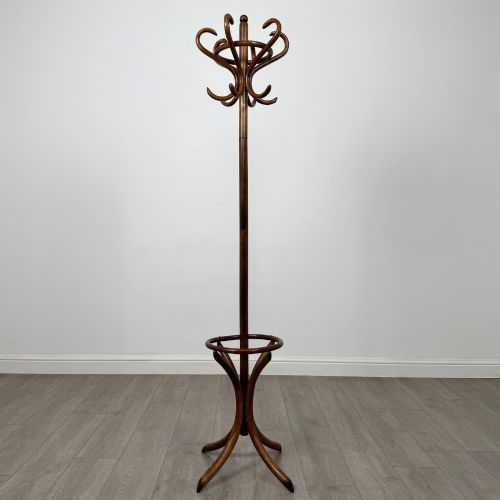
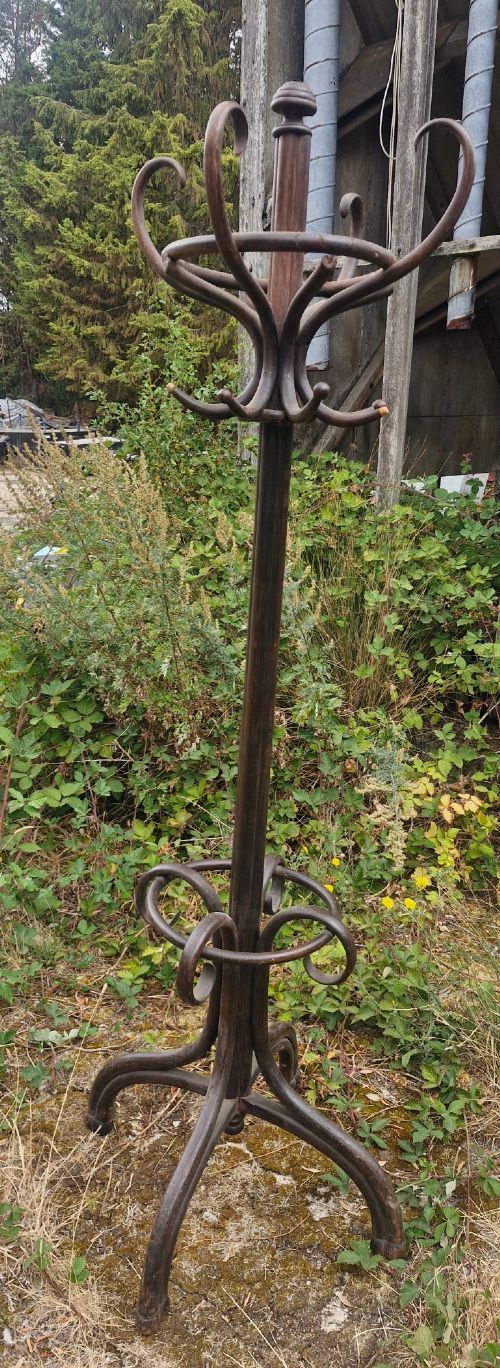
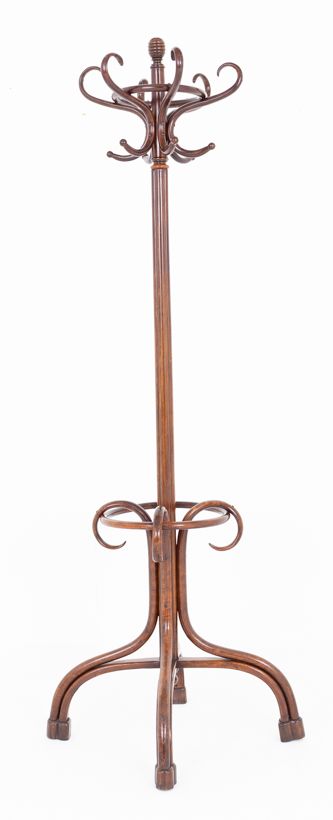
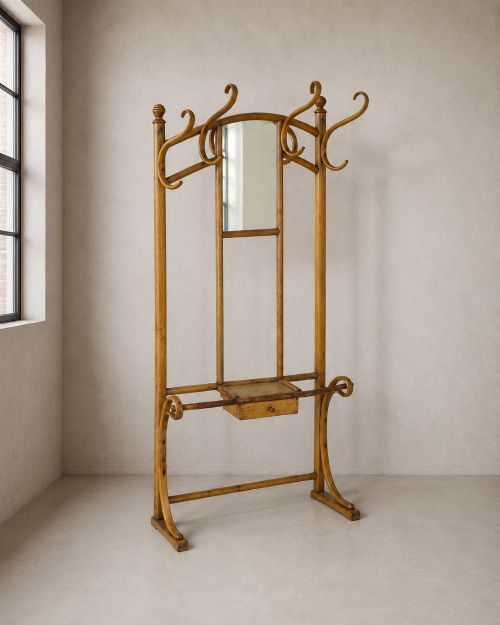
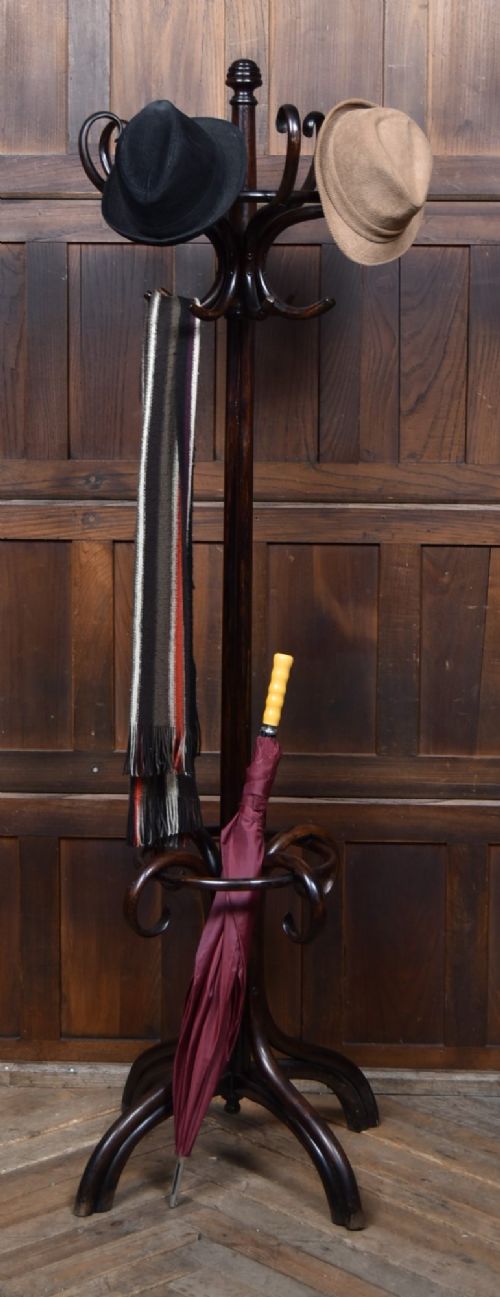
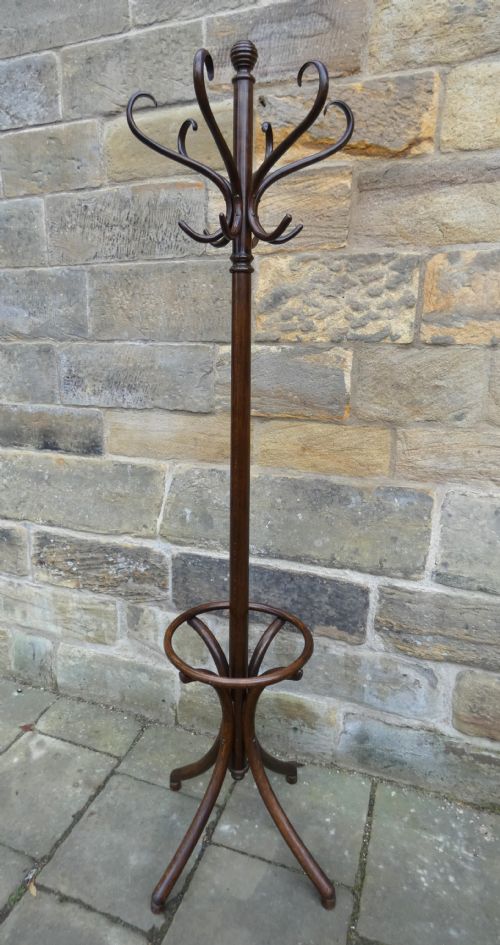
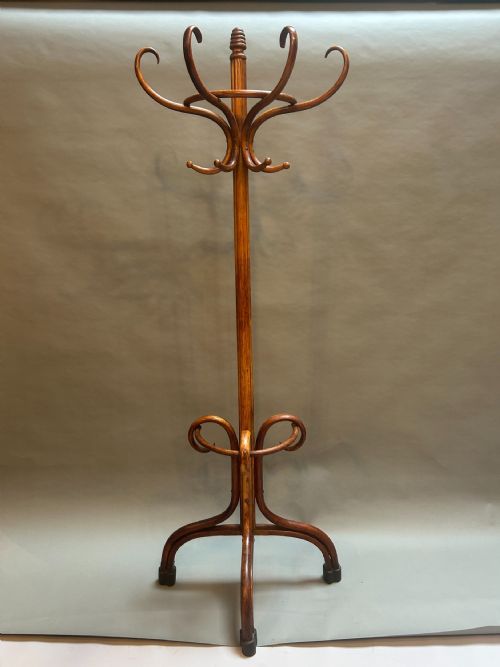
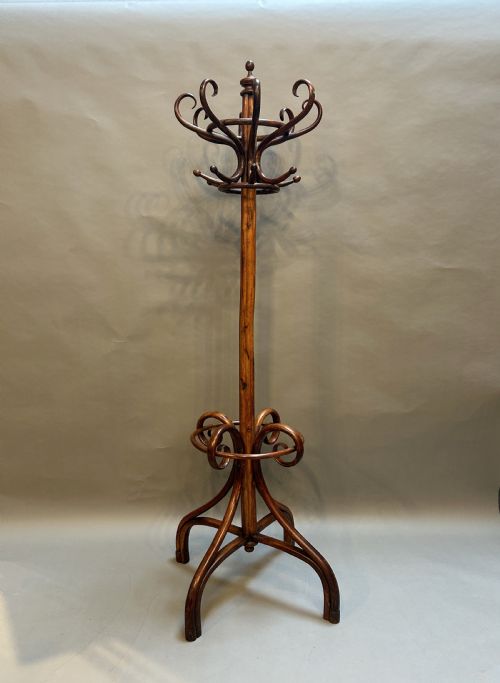
When you search for a vienna bentwood coat rack, you find tall freestanding vertical stands designed for hats and coats in domestic interiors. These pieces rely on steam-bent timber to create sweeping, curved profiles that defined late nineteenth and early twentieth century hallways. The pieces listed on this page span from the late Victorian and Edwardian eras into the 1930s, showing how these designs evolved over decades.
You are most likely to meet tall coat stands and hall stands fashioned from beech and beechwood. Formats range from simple revolving designs to large stands with demi-lune configurations and integrated umbrella holders. They bring genuine period utility to an entrance hall without occupying excessive floor space.
Construction and materials
Makers utilised solid beech and beechwood, subjecting the timber to steam treatment until it became pliable enough to shape into tight radii. This steam-bent wood technique allowed craftsmen to form continuous structural loops and scrollwork without relying on weak joints. Wood stain and traditional finishes were then applied to protect the grain while enhancing the natural warmth of the timber.
The characteristic strength of these pieces stems from this precise steaming process, which aligns the wood fibres rather than cutting across them. Metal hardware and glass components occasionally appear on specific hall stand variations, but steam-bent wood remains the primary structural medium across all recorded examples.
Vienna Bentwood Coat Rack Retail Price Guide 2026
Typical asking prices for vienna bentwood coat rack among the pieces listed under this phrase on Sellingantiques today, from the lower quarter to the upper quarter. They describe what is for sale here now, not the wider market.
Early hallway visitors could test their patience by spinning the revolving top section while waiting to be announced.
Distinguishing quality
Quality in these stands depends upon the fluidity of the curves and the integrity of the steam-bent joints. Superior examples display smooth, uniform radii without pinching or splintering along the outer edges of the bent timber. The proportion and balance of the upper branch assembly also dictate the overall sophistication of the piece.
Finer specimens often incorporate maker attribution through stamps or paper labels, alongside more complex configurations such as revolving top sections or demi-lune bases. The depth and consistency of the original wood finish further separate standard utility items from higher grade workshop production.
Thonet
The Vienna Bentwood Coat Rack Glossary
- Bentwood
- Wood shaped by exposure to steam and pressure. This technique allows craftsmen to produce complex curves that remain exceptionally strong.
- Beech
- A dense hardwood favoured for steam bending due to its excellent tensile strength. It takes stains evenly and shows a tight, consistent grain.
- Demi-Lune
- A half-moon shape used for the footprint or base of certain hall stands. This design allows the stand to sit flush against an entrance wall.
- Thonet
- A pioneering furniture firm associated with industrial steam bending. Their innovative workshop methods shaped the entire aesthetic of modern seating and stands.
Vienna Bentwood Coat Rack: Frequently Asked Questions
How do I date a bentwood coat stand?
Dating relies on structural markers, design patents, and applied maker labels or stamps. Earlier examples from the late nineteenth century often feature more elaborate scrollwork and distinct turning on the central column.
Later pieces moving into the 1930s tend toward cleaner lines and simpler geometric arrangements. Comparing the complexity of the bentwood elements helps narrow down the decade of production.
Are these coat stands stable enough for daily use?
These pieces were engineered specifically to hold heavy winter coats and hats without tipping. The wide footprint of the base provides natural balance when garments are hung evenly.
Placing heavier items on lower hooks helps maintain stability on uneven floors. Modern owners use them daily just as households did a century ago.
How should I clean a bentwood hall stand?
Maintenance requires only a soft, dry cloth to remove dust from the curved surfaces and turned wooden components. Avoid harsh chemical cleaners that can strip the historic wood stain and original finish.
Applying microcrystalline wax periodically helps nourish the beech timber and protects against dryness. Keeping the stand away from direct heat sources prevents the wood from warping.