
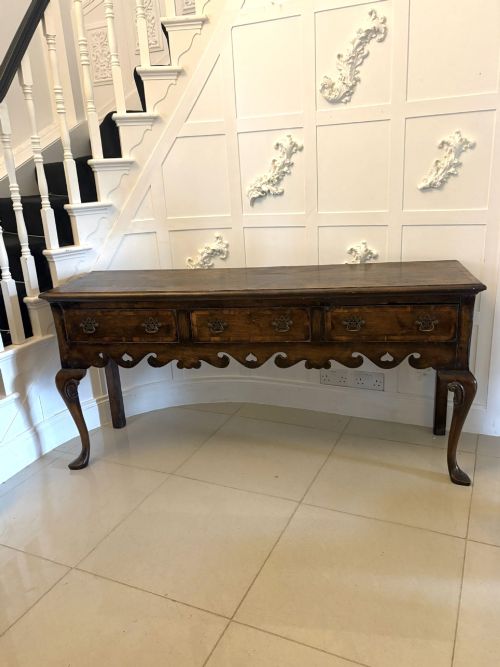
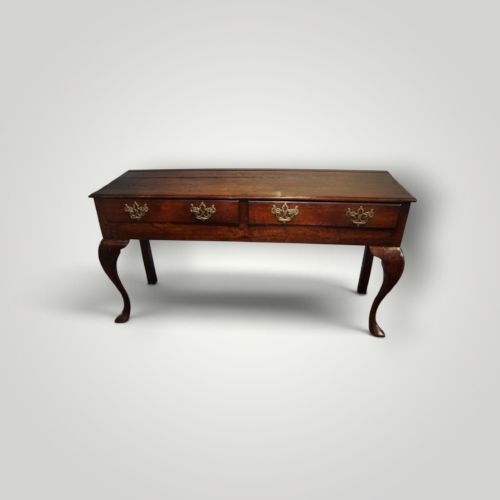
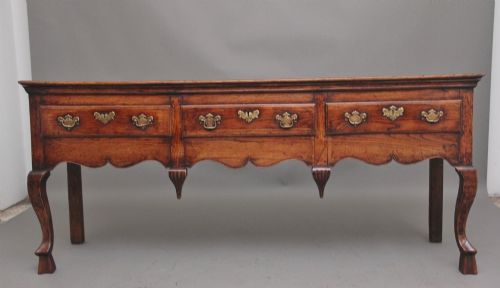
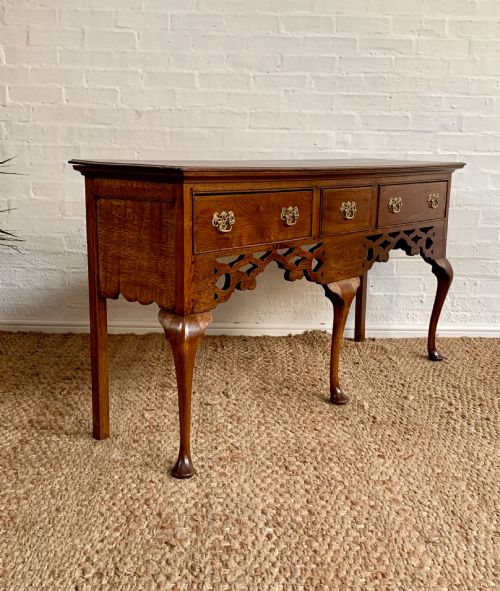


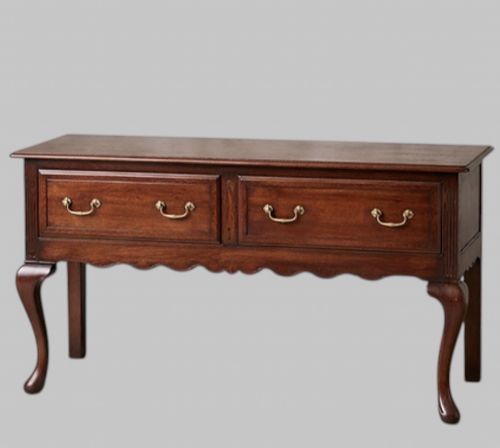


Cabriole Leg Oak Dresser
A cabriole leg oak dresser brings together sturdy timber and curving legs to offer both generous surface space and distinct period character.
Cabriole leg oak dressers
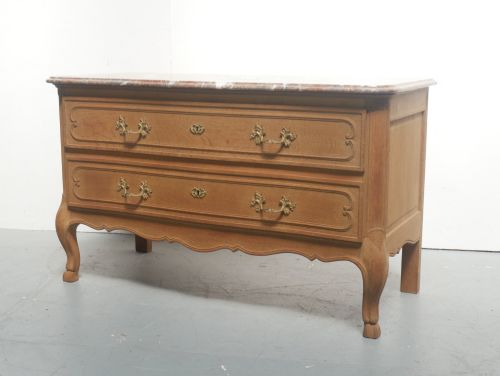
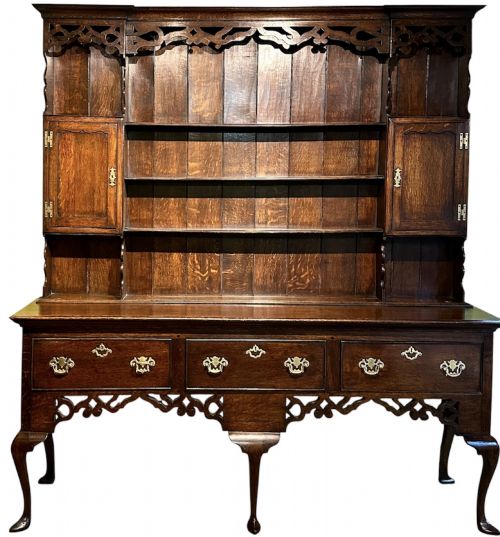
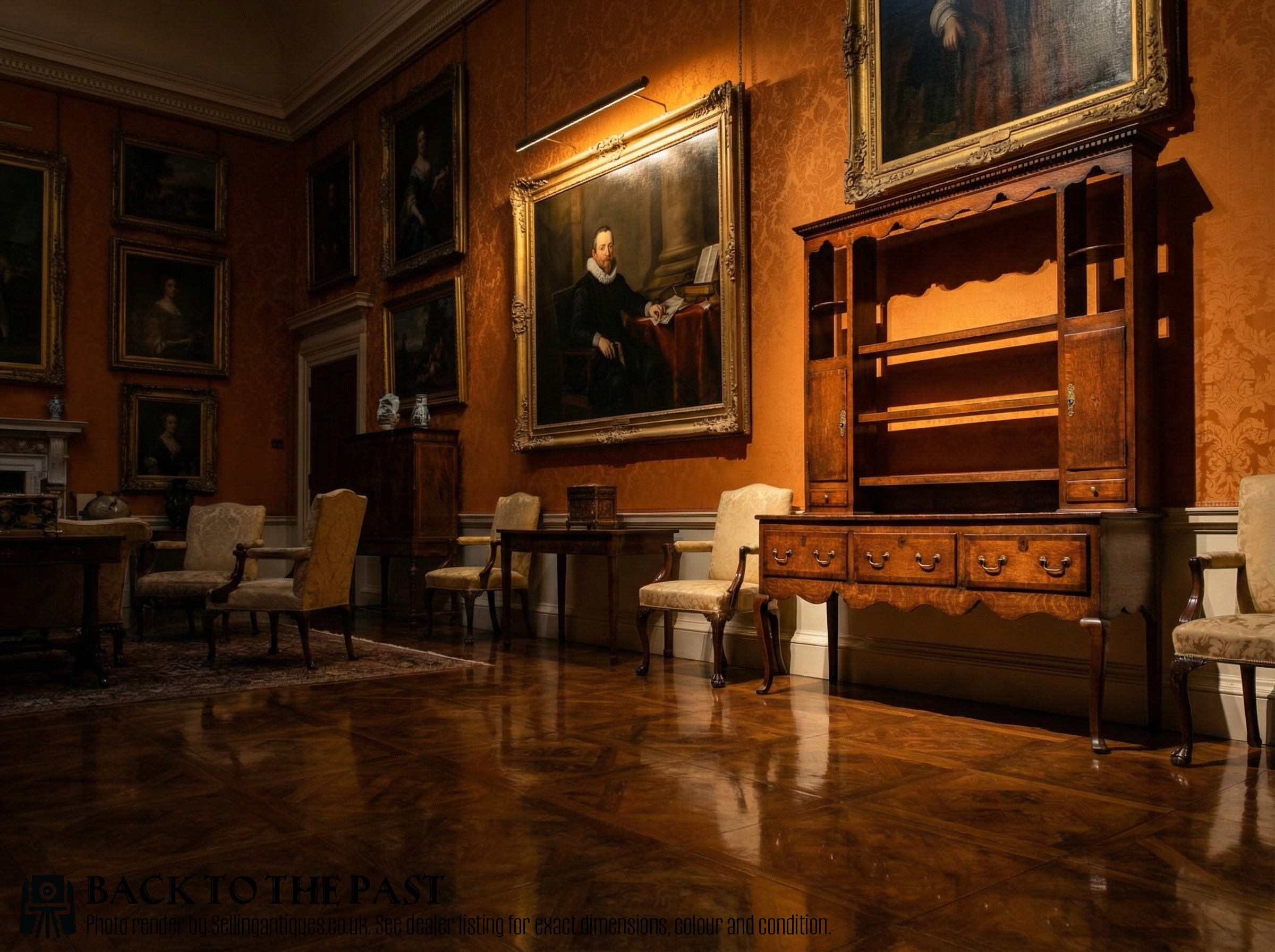
When you search for a cabriole leg oak dresser, you encounter pieces that originate primarily from the eighteenth century, spanning the George II and George III periods alongside later nineteenth century and nineteen-ten interpretations. These items typically appear as low dresser bases or console tables, some retaining their upper plate racks or shelves while others survive simply as robust lower units with multiple drawers.
The objects combine practical kitchen or dining storage with the refined, sweeping lines characteristic of country house and provincial workshops. You meet examples described variously as Welsh dressers, hutches, and sideboard bases, each demonstrating the utilitarian origins of regional British cabinet-making.
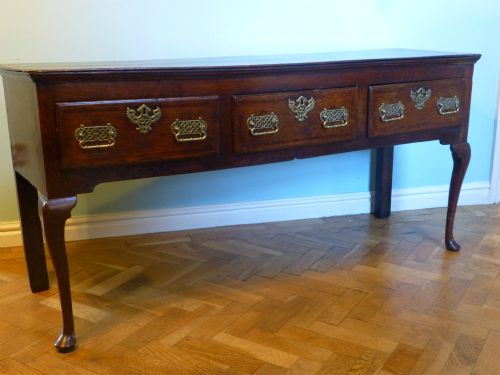
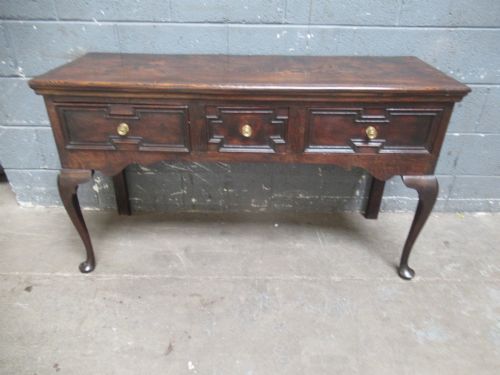
The most common form on this page is the dresser base featuring two or three drawers above four curving legs, often presenting a rich, deep-toned timber surface shaped by decades of domestic use.
Materials and construction
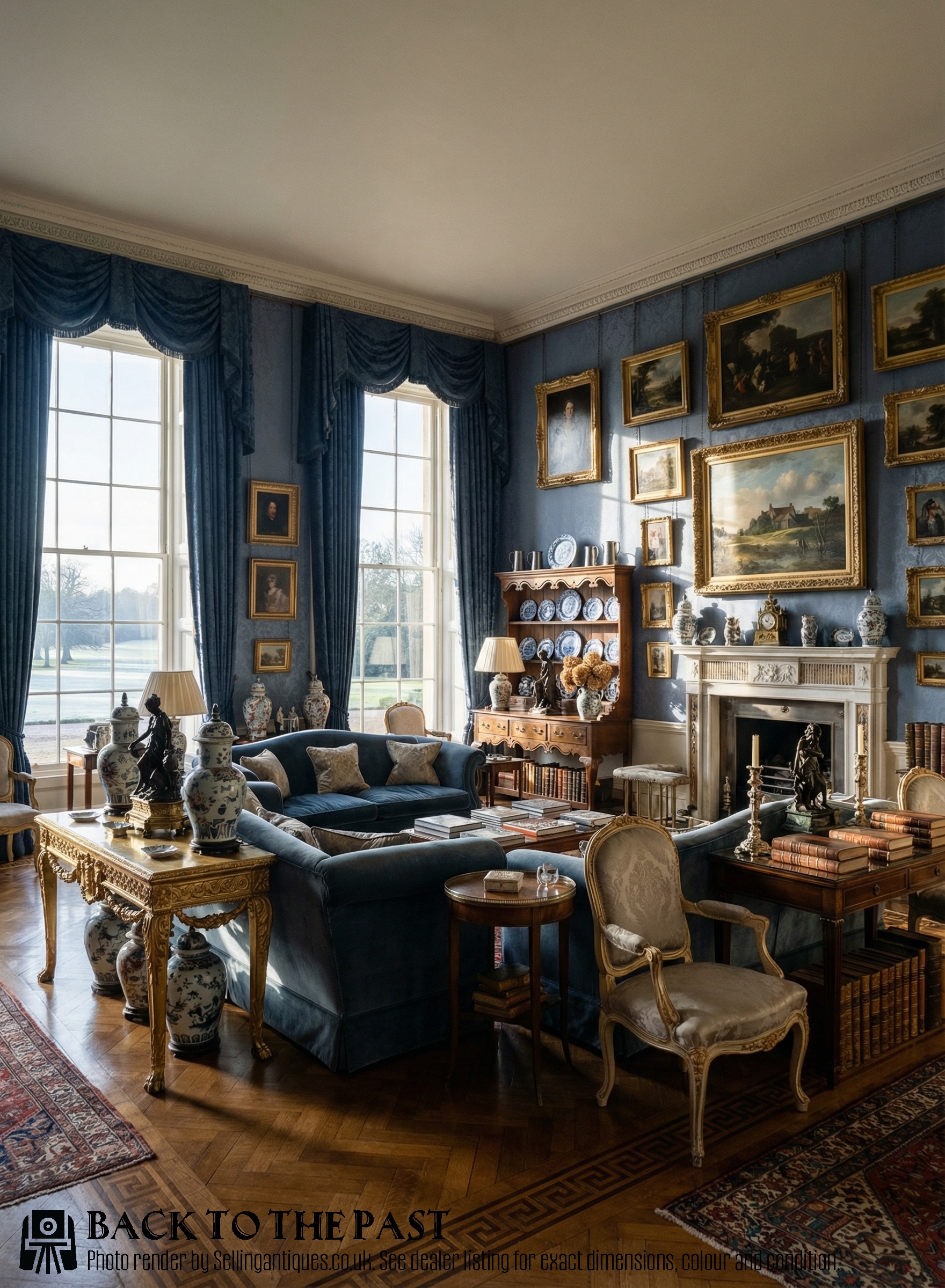
Makers built these pieces predominantly from solid oak, selecting timber for its density and durability before shaping the boards by hand. Brass fittings, including drop handles and key escutcheons, provide functional contrast to the dark wood.
The defining structural feature relies on shaping solid oak into curving cabriole legs, a joinery technique requiring precise skill to ensure the weight of the drawers and top is supported evenly across the curved profile.
Retail Price Guide 2026
Typical UK retail prices for cabriole leg oak dresser, calculated from the Sellingantiques database of over a million retail prices indexed since 2003. This retail price guide relies exclusively on Sellingantiques data; no external sources or auction records are used, so the figures do not describe the wider market.
Generations of kitchen elbow grease gave these oak tops a glow no factory finish can replicate.
Assessing quality
The upper tier of the range is distinguished by the depth of timber patina, the crispness of the cabriole curve, and the retention of original brass hardware. Pieces that display untouched surfaces and honest timber ageing command greater appreciation than those with heavily restored or replaced elements.
Proportion and drawer arrangement further separate ordinary examples from finer items, particularly where three-drawer layouts and well-balanced bases maintain a harmonious silhouette without heavy timber fatigue.

The Cabriole Leg Oak Dresser Glossary
- Cabriole leg
- A furniture leg that bends outward at the knee and tapers inward at the ankle, finishing in a simple pad or foot. This form was popularised during the early Georgian period and derives from animal limb shapes.
- Dresser base
- The lower section of a kitchen or dining dresser, constructed with drawers and cupboards without the upper shelving unit. Many survive independently as sideboards or console tables.
- Patina
- The deep, lustrous surface sheen developed on oak furniture over centuries through handling, waxing, and exposure to light. It signals age and regular domestic care.
- Plate rack
- The upper shelving superstructure designed to sit atop a dresser base for displaying ceramic plates and platters. Surviving examples attached to their original bases are increasingly uncommon.
Frequently Asked Questions
What is a cabriole leg oak dresser?
A cabriole leg oak dresser is a traditional storage unit featuring sturdy oak construction, multiple drawers, and characteristic curving legs that taper near the floor.
These pieces served functional roles in British homes for storing tableware and serving food before finding favour as decorative furniture.
How do I date a Georgian oak dresser?
Dating relies on examining construction methods, timber patination, drawer linings, and the style of the brass handles and escutcheons.
Eighteenth-century examples often display hand-cut dovetails and pegged joints rather than modern mechanical fastenings.
Where were these dressers originally used?
They originated in kitchens, dining rooms, and pantries across regions such as Wales and various English counties.
Their primary purpose was storing heavy crockery, linens, and utensils while providing a wide timber top for food preparation.
Can I use an antique dresser in a modern kitchen?
Yes, these robust oak units integrate well into contemporary spaces by offering practical surface area and substantial drawer storage.
Their neutral timber tones complement both traditional and minimalist interiors.